
August 14, 2026
Understanding India's Position in Global Precious Metals Markets
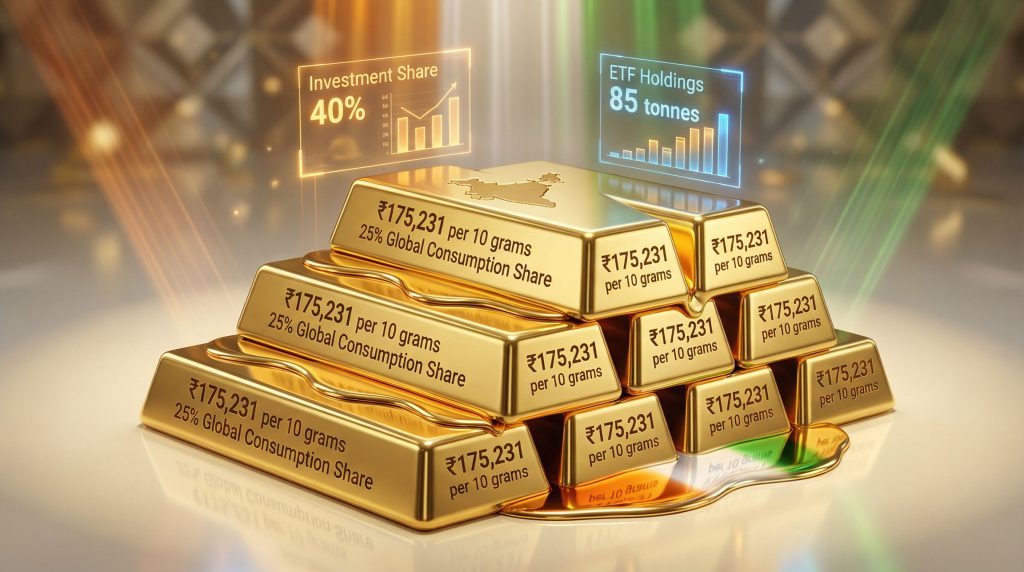
India's dominance in global precious metals markets extends far beyond simple consumption statistics. The nation commands approximately 25% of worldwide gold consumption, establishing it as the second-largest market after China. This massive market share reflects structural economic forces that distinguish India from Western markets in fundamental ways.
The depth of gold penetration across Indian society defies conventional economic models. According to comprehensive household surveys, 87% of Indian families own some form of gold, with ownership extending across all income levels. Remarkably, 75% of households in the lowest income decile possess gold assets, demonstrating that precious metals ownership transcends traditional wealth boundaries.
This extraordinary penetration rate indicates that gold as inflation hedge functions as essential financial infrastructure rather than discretionary luxury consumption. Furthermore, purchase patterns illustrate gold's integration into Indian economic life, with research indicating that one in every two households acquired gold within a recent five-year period.
This systematic acquisition behavior contrasts sharply with Western markets, where precious metals purchases typically respond to portfolio rebalancing or speculative positioning. The geographic distribution of Indian gold demand reveals additional structural complexities, with approximately two-thirds of consumption originating from rural regions.
In these areas, gold jewellery serves dual purposes as both cultural adornment and savings mechanism. In addition, in regions with limited banking infrastructure, gold effectively operates as a parallel financial system, providing liquidity access and wealth preservation capabilities that formal banking cannot consistently deliver.
Cultural integration creates demand persistence that economic models struggle to predict. Gold's ceremonial role in marriage ceremonies, religious rituals, and festival seasons establishes consumption patterns driven by cultural calendar timing rather than market conditions. This cultural embedding means that demand often remains stable during economic stress periods when Western theory would predict reduced luxury spending.
The COVID-19 pandemic provided a real-world demonstration of gold's functional role within Indian financial systems. When government lockdowns caused credit market disruptions, Indians utilised gold as collateral for emergency financing. Consequently, in extended lockdown scenarios, direct gold sales provided subsistence funding, illustrating how precious metals function as emergency liquidity reserves across income levels.
When big ASX news breaks, our subscribers know first
What Drives India's Unprecedented Gold Investment Surge?
India's investment revolution in precious metals reflects a fundamental transformation in how the nation approaches wealth preservation. Gold exchange-traded funds experienced their ninth consecutive month of inflows during January 2026, accumulating ₹240 billion ($2.5 billion) in a single month. This sustained investment momentum represents systematic capital allocation rather than sporadic market activity.
Table: India's Gold Investment Transformation (2024-2026)
| Metric | 2024 | 2025 | 2026 Forecast |
|---|---|---|---|
| ETF Holdings (tonnes) | 65 | 95 | 110+ |
| Assets Under Management (₹ trillion) | 0.6 | 1.2 | 1.8+ |
| Investor Accounts (millions) | 8.5 | 10.2 | 11.4+ |
| Mutual Fund Market Share (%) | 0.8 | 1.6 | 2.3+ |
The scale of assets under management expansion demonstrates institutional-quality capital flows entering precious metals markets. Total ETF assets reached ₹1.8 trillion by January 2026, representing a year-over-year tripling that indicates accelerating institutional adoption. This growth trajectory suggests that Indian gold demand is transitioning from primarily physical holdings toward sophisticated financial instruments.
Physical gold accumulation through ETFs reached unprecedented levels, with funds adding 15.5 tonnes during January 2026 alone. Cumulative holdings exceeded 100 tonnes for the first time, reaching 110 tonnes total. Furthermore, early February data indicated an additional 3 tonnes flowing into ETFs within the first twelve days.
Investor participation expansion reveals democratisation of sophisticated investment vehicles. ETF accounts grew by 1.2 million during January 2026, bringing total participants to 11.4 million. This rapid account growth suggests that technological barriers to ETF investment have declined substantially, enabling broader population access to previously institutional-only investment products.
Market share within India's mutual fund ecosystem reached historic levels, with gold ETFs representing 2.3% of total industry assets under management. This figure increased from 0.8% just one year prior, representing nearly a tripling of market share within the domestic fund industry. The growth rate indicates that gold ETFs are capturing disproportionate capital flows relative to traditional equity and bond funds.
A historically significant crossover occurred when gold ETF inflows eclipsed equity market inflows for the first time. This development suggests fundamental reallocation of investment capital between asset classes, indicating that Indian investors may be shifting portfolio weightings toward precious metals through our gold investment strategies.
The confluence of record-high prices with sustained investment demand indicates that Indian investors interpret price increases as validation of gold's inflation-hedging properties rather than signals for profit-taking.
Digital infrastructure improvements have enabled this investment transformation. Enhanced payment systems, regulatory clarity, and investor education programmes have democratised access to ETF products that were previously difficult for retail investors to access. This technological democratisation parallels similar developments in other emerging markets where digital financial services are expanding investment opportunities.
Investment behaviour patterns reveal asymmetric expectations about future price movements. Unlike Western markets where high prices typically trigger profit-taking, Indian investors demonstrate limited liquidation activity despite substantial price appreciation. However, this holding behaviour suggests confidence that current price levels do not represent cyclical peaks but rather secular trend beginnings.
Why Traditional Jewellery Demand Faces Structural Headwinds
Traditional jewellery consumption faces unprecedented challenges as domestic gold prices reached ₹175,231 per 10 grams, representing a 24% increase that has fundamentally altered consumer purchasing behaviour. This price denomination represents the standard retail metric for jewellery and small investment purchases across Indian markets.
Volume versus value dynamics reveal consumer adaptation strategies. While jewellery demand contracted 24% in unit terms, total expenditure increased 25-30% due to elevated prices per unit. This counterintuitive relationship demonstrates that consumers are purchasing fewer pieces while maintaining overall spending levels.
Consumer Adaptation Strategies:
- Staggered purchasing patterns replacing traditional lump-sum acquisitions
- Postponement strategies during periods of elevated price volatility
- Increased focus on investment-grade jewellery over purely ornamental pieces
- Shift toward lighter-weight designs to maintain affordability
- Enhanced price comparison shopping across regional markets
Measured purchasing behaviour characterises current jewellery market dynamics. Rather than emotional or ceremonial buying patterns, consumers demonstrate disciplined, economical decision-making that prioritises value optimisation. This behavioural shift indicates heightened price sensitivity among traditional jewellery buyers.
Regional demand patterns reflect varying adaptation capabilities across geographic markets. Rural consumers, who traditionally account for significant jewellery demand, face particular challenges as agricultural income growth has not kept pace with gold price appreciation. Conversely, urban consumers demonstrate greater flexibility in adjusting purchase timing and product selection.
Price Impact Analysis by Consumer Segment:
| Segment | Volume Impact | Value Impact | Adaptation Strategy |
|---|---|---|---|
| Rural Households | -30% | +18% | Delayed purchasing |
| Urban Middle Class | -20% | +25% | Quality upgrading |
| High-Income Urban | -10% | +35% | Minimal behavioural change |
Festival season dynamics have evolved significantly under price pressure. Traditional gift-giving patterns during major festivals increasingly emphasise smaller, higher-quality pieces rather than elaborate sets. This evolution maintains cultural practices while accommodating economic realities of elevated precious metals prices.
Marriage ceremony expenditures represent a critical stress point for jewellery demand. Wedding-related gold purchases, traditionally immune to price sensitivity due to cultural importance, now demonstrate delayed timing and reduced quantities. For instance, families increasingly spread gold acquisitions across extended periods rather than concentrating purchases around ceremony dates.
Liquidation activity remains surprisingly limited despite price appreciation opportunities. Unlike Western markets where high prices trigger substantial selling, Indian consumers maintain holding strategies based on expectations that current price levels represent the beginning of secular appreciation trends rather than cyclical peaks requiring profit-taking.
How Currency Dynamics Amplify Gold's Appeal
Currency depreciation created compounding effects on domestic gold pricing, combining international price increases with rupee weakness to generate substantial local price appreciation. This dual impact reinforced gold's traditional function as a hedge against currency debasement, particularly relevant for emerging market economies facing external monetary pressures.
Premium and discount cycles demonstrated sophisticated market mechanisms responding to policy expectations. January premiums reached $80 per ounce based on speculation about import duty increases. When anticipated policy changes failed to materialise, premiums quickly normalised and even flipped to discounts by February 11.
Import Market Dynamics:
| Period | Premium/Discount | Import Volume | Policy Factor |
|---|---|---|---|
| Early January | +$80/ounce | 85 tonnes | Duty hike speculation |
| Mid-January | +$45/ounce | 90 tonnes | Continued uncertainty |
| Early February | -$15/ounce | 95-100 tonnes | Policy clarity |
Import volume responses revealed market elasticity to both price and policy signals. Monthly imports reached 95-100 tonnes, representing a three-month high driven by both underlying demand and strategic inventory building ahead of potential policy changes. Import values increased 192% month-over-month to $12.1 billion, reflecting both volume and price effects.
Exchange rate volatility created hedging opportunities that sophisticated investors increasingly recognise. As the rupee weakened against major currencies, gold denominated in rupees provided natural currency hedging characteristics. This hedging function becomes particularly valuable during periods of global monetary policy uncertainty.
Regional price arbitrage opportunities emerged from premium/discount fluctuations, enabling sophisticated traders to optimise procurement timing and geographic sourcing. These arbitrage mechanisms contribute to market efficiency while providing profit opportunities for participants with adequate capital and market knowledge.
What Rural vs. Urban Demand Patterns Reveal About India's Economy
Geographic distribution patterns illuminate Indian gold demand structural characteristics that extend beyond simple urban-rural distinctions. Rural areas contribute approximately 60% of total consumption, reflecting gold's critical role in regions with limited formal financial infrastructure access.
Rural Market Characteristics:
- Seasonal demand tied directly to agricultural income cycles
- Monsoon performance correlation with purchasing power
- Gold jewellery serving dual purposes as adornment and emergency savings
- Limited liquidation during price rallies compared to urban markets
- Traditional physical preference over financial instruments
Agricultural cycle integration creates predictable demand patterns linked to harvest timing and commodity price realisations. Strong monsoon seasons typically correlate with increased rural gold purchases, while drought conditions suppress demand regardless of gold price movements. This agricultural linkage makes rural demand less responsive to precious metals price signals and more dependent on broader economic conditions.
Urban demand demonstrates greater sophistication and price responsiveness. Metropolitan consumers increasingly utilise gold ETFs, show greater willingness to time purchases based on price movements, and demonstrate higher liquidation rates during price appreciation periods. This behavioural difference suggests that urban consumers treat gold more as an investment asset while rural consumers maintain traditional wealth preservation approaches.
Financial inclusion patterns reveal gold's functional role in underserved markets. In regions where banking infrastructure remains limited, gold jewellery provides accessible wealth storage, emergency liquidity, and inflation protection capabilities. This functional role explains the persistent rural demand even during periods of significant price appreciation.
Income elasticity differences between geographic regions create varying demand sensitivity to economic conditions. Rural households typically demonstrate lower price elasticity for gold purchases during agricultural abundance periods, but higher income elasticity during economic stress. However, urban households show greater price elasticity but more consistent income-driven demand patterns.
How Policy Uncertainty Shapes Market Dynamics
Import duty speculation created substantial market volatility, demonstrating how policy expectations influence precious metals markets independent of fundamental supply-demand factors. Market participants' anticipation of duty increases generated $80-per-ounce premiums that quickly normalised when policy changes failed to materialise.
Policy Impact Mechanisms:
- Import duty expectations driving inventory hoarding behaviour
- GST structure changes affecting retail pricing strategies
- Central bank intervention policies influencing rupee-gold relationships
- Banking regulations impacting gold loan market accessibility
- Foreign investment rules affecting ETF structure and flows
Regulatory framework evolution supports growing institutional participation in precious metals markets. Improved clarity around ETF structures, foreign investment allowances, and taxation treatment has enabled the sophisticated investment products driving current market growth. These regulatory improvements distinguish India from other emerging markets with less developed precious metals investment infrastructure.
Tax policy considerations increasingly influence consumer behaviour across both physical and financial gold markets. GST structures, capital gains treatment for different holding periods, and import duty levels create incentives that shape timing and product selection decisions among sophisticated investors.
Banking sector policies affect gold market liquidity through lending and collateral mechanisms. Gold loan products, which allow physical gold to serve as collateral for rupee-denominated lending, create important linkages between precious metals holdings and broader credit markets. Consequently, policy changes affecting these lending mechanisms can significantly impact gold demand patterns.
The next major ASX story will hit our subscribers first
Why ETF Growth Signals Broader Financial Market Evolution
Institutional infrastructure development enables sophisticated precious metals investing that was previously inaccessible to retail participants. Regulatory clarity, digital payment systems, and investor education programmes have democratised access to ETF products that require minimal physical storage or security concerns.
Structural Market Changes:
- Digital payment adoption accelerating ETF accessibility across income levels
- Regulatory framework supporting diverse precious metals investment options
- Financial literacy programmes expanding sophisticated investor base
- Technology platforms simplifying complex investment processes
- Custodial services reducing physical storage requirements
Market maturation indicators suggest that India's precious metals markets are transitioning toward Western-style financial sophistication while maintaining cultural characteristics. The growth of ETF products alongside persistent physical demand demonstrates successful integration of traditional and modern approaches to gold investment.
Investor education improvements have enabled broader understanding of ETF mechanics, risk characteristics, and tax implications. Educational initiatives by financial institutions and regulatory bodies have reduced barriers to entry for sophisticated investment products, contributing to the rapid account growth observed across ETF platforms.
Technological infrastructure supporting ETF trading, settlement, and custody has reached institutional quality standards. Reliable digital platforms, secure custody arrangements, and efficient settlement mechanisms provide the foundation for continued growth in sophisticated precious metals investment products.
How Global Economic Uncertainty Reinforces Gold's Appeal
International monetary policy uncertainty amplifies gold's safe-haven characteristics, particularly relevant for emerging market economies facing external financial pressures. Central bank policy divergence, inflation concerns, and currency market volatility create conditions favouring precious metals allocation through our market relationship guide.
Global Risk Factors Supporting Gold Demand:
- Monetary policy uncertainty across major economies
- Geopolitical tensions affecting international trade and supply chains
- Persistent inflation concerns despite central bank interventions
- Currency market volatility across emerging market economies
- Banking sector stress signals in developed markets
Geopolitical risk factors contribute to precious metals demand through traditional safe-haven mechanisms. International tensions, trade policy uncertainty, and regional conflicts create conditions where gold serves as a hedge against systemic risks that cannot be diversified through traditional portfolio construction methods.
Banking sector developments in major economies create spillover effects that enhance precious metals appeal. Credit market stress, institutional failures, and regulatory responses in developed markets reinforce gold's role as an asset independent of banking system stability.
For instance, the ongoing gold market surge reflects these global uncertainties translating into increased precious metals demand across multiple markets. Furthermore, comprehensive analysis through our gold price forecast indicates that these trends will likely continue throughout 2025.
What Supply Chain Dynamics Reveal About Market Efficiency
Import and distribution mechanisms demonstrate sophisticated market efficiency despite regulatory complexity. Rapid premium adjustments based on policy expectations, swift volume responses to demand signals, and efficient geographic distribution reveal mature market infrastructure.
Supply Chain Efficiency Indicators:
- Import volumes responding rapidly to demand and policy signals
- Distribution networks adapting to evolving consumption patterns
- Recycling markets remaining limited due to price appreciation expectations
- Financing mechanisms supporting trade flow requirements
- Quality assurance systems maintaining consumer confidence
Market-making mechanisms ensure adequate liquidity across physical and financial precious metals products. Professional trading networks, financing facilities, and risk management systems provide the infrastructure supporting both retail and institutional participation in gold markets.
Recycling patterns reveal consumer expectations about future price movements. Limited scrap supply despite significant price appreciation indicates widespread expectations that current prices represent early stages of secular appreciation rather than cyclical peaks requiring profit-taking strategies.
Quality assurance and certification systems maintain consumer confidence across diverse product categories. Standardised purity measures, certified dealers, and regulatory oversight provide the trust infrastructure necessary for large-scale precious metals commerce.
How Demographic Trends Will Shape Future Demand
Generational wealth transfer creates unique dynamics as younger demographics inherit traditional gold holdings while embracing modern investment approaches. This demographic transition suggests future Indian gold demand patterns will blend cultural practices with financial sophistication.
Demographic Transformation Factors:
- Rising disposable incomes in expanding urban centres
- Evolving cultural practices around traditional gold gifting
- Technology adoption affecting purchasing behaviours and product preferences
- Educational advancement influencing investment sophistication
- Urbanisation trends shifting demand toward financial products
Educational trends correlate with investment product sophistication, suggesting continued growth in ETF and other financial precious metals products. Higher education levels typically associate with greater comfort with complex investment vehicles and reduced attachment to traditional physical holdings.
Urbanisation patterns indicate shifting demand composition over time. As India's population becomes increasingly urban, demand patterns may shift toward the investment-focused approaches currently observed in metropolitan areas while maintaining cultural significance of precious metals ownership.
Income growth trajectories across demographic segments suggest continued expansion of precious metals participation. Rising household incomes, particularly among young professionals, create additional capacity for both traditional jewellery and modern investment approaches to gold allocation.
What Market Evolution Indicates About Future Patterns
Current transformation patterns suggest Indian gold demand is evolving toward investment-heavy consumption while maintaining cultural significance. This evolution indicates market maturation rather than abandonment of traditional practices, creating hybrid demand patterns combining ancient practices with modern financial sophistication.
Investment demand projections indicate continued growth despite elevated prices, suggesting that Indian consumers view current price levels as representing early stages of long-term appreciation cycles. This expectation pattern supports continued ETF growth and reduced liquidation activity.
Jewellery market adaptation through design innovation, financing options, and cultural evolution maintains relevance despite price pressures. Industry participants are developing products and services that accommodate elevated prices while preserving cultural significance and aesthetic appeal.
Future Market Structure Projections:
| Demand Component | Current Share | 2027 Projection | Key Drivers |
|---|---|---|---|
| Investment Products | 35% | 45-50% | ETF growth, education |
| Traditional Jewellery | 50% | 35-40% | Price adaptation |
| Industrial/Other | 15% | 10-15% | Efficiency improvements |
Market infrastructure development supporting both traditional and modern approaches ensures continued broad-based participation across demographic and geographic segments. This infrastructure evolution positions India to maintain its dominant global market position while adapting to changing consumer preferences and economic conditions.
The resilience of Indian gold demand across diverse economic conditions, price environments, and demographic transitions demonstrates the metal's enduring importance within Indian financial and cultural systems. This persistence, combined with increasing sophistication in investment approaches, suggests continued market growth and evolution rather than fundamental disruption of traditional demand patterns. Furthermore, according to industry analysis, India's position as a key driver of global gold demand remains strong despite recent challenges. Additionally, experts suggest that Chinese and Indian demand will continue to fuel Asia's precious metals market expansion.
Ready to capitalise on Asia's precious metals market surge?
India's unprecedented gold investment transformation, with ETF inflows tripling to ₹1.8 trillion and sophisticated investors driving structural market changes, demonstrates the massive opportunities emerging across Asian precious metals markets. Discovery Alert's proprietary Discovery IQ model delivers real-time alerts on significant mineral discoveries across the ASX, instantly empowering subscribers to identify actionable opportunities ahead of the broader market and begin your 14-day free trial today to secure your market-leading advantage.