Industrial Waste Transformation Drives Europe's Resource Independence Strategy
Global supply chain vulnerabilities have exposed critical weaknesses in European raw material security, creating unprecedented demand for innovative resource recovery solutions. EU-funded mine waste transformation projects have emerged as a cornerstone strategy, demonstrating that traditional mining operations typically extract 85-95% of target minerals, leaving substantial quantities of valuable materials in waste streams that were previously considered economically unviable. Recent technological breakthroughs in bioleaching, precipitation chemistry, and selective extraction processes have fundamentally altered the economic equations governing secondary resource recovery from industrial waste streams.
The convergence of rising commodity prices, advanced processing technologies, and regulatory pressure for circular economy implementation has created conditions where mine waste valorization becomes not merely environmentally beneficial, but economically essential for European industrial competitiveness.
Revolutionary Recovery Performance Reshapes Mining Economics
Advanced Extraction Technologies Achieve Commercial Viability
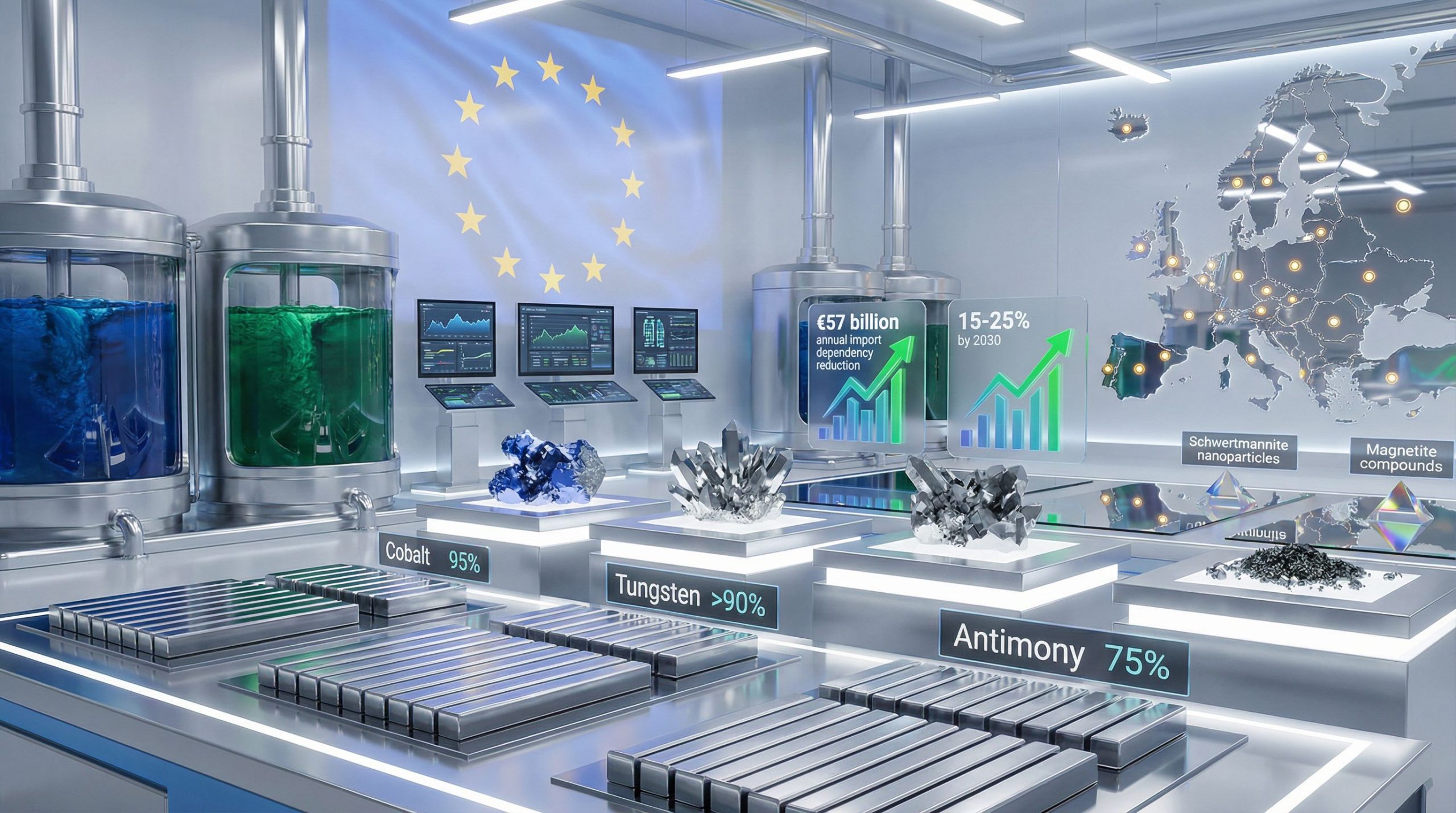
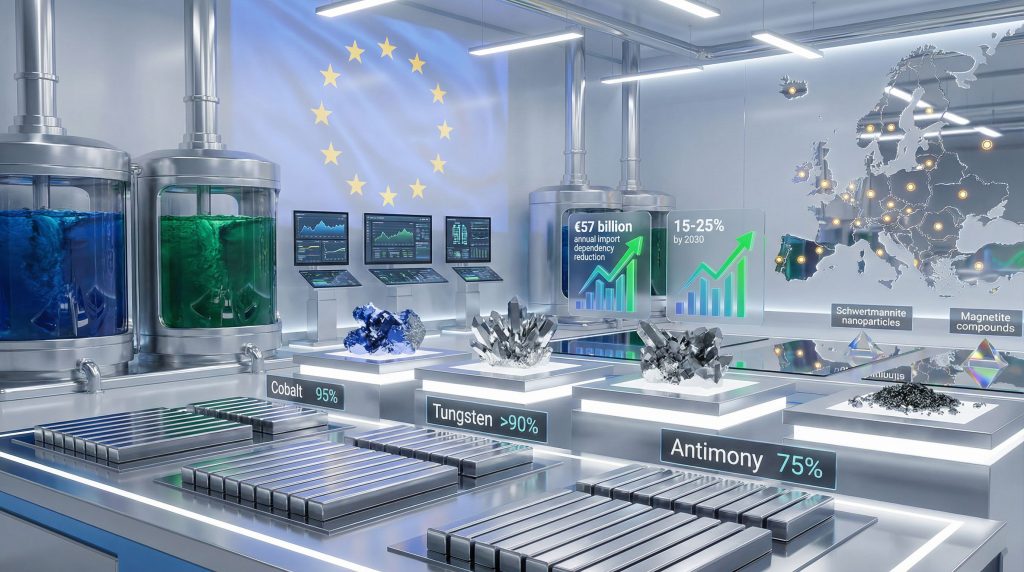
EU-funded mine waste transformation projects demonstrate recovery rates that challenge traditional assumptions about secondary resource processing. Pilot operations have achieved cobalt recovery rates reaching 95%, while tungsten extraction exceeds 90% efficiency levels. Antimony, crucial for semiconductor manufacturing and emerging liquid metal battery technologies, shows 75% recovery rates through specialized bioleaching processes.
These performance metrics represent significant advances over historical secondary processing operations, where recovery rates typically ranged between 40-60% for complex polymetallic waste streams. The enhanced efficiency stems from integrated processing approaches combining biological, chemical, and physical separation technologies optimized for specific mineralogical compositions.
Strategic Material Recovery Addresses Supply Vulnerabilities
| Metal | Recovery Rate | Primary Applications | Supply Risk Level |
|---|---|---|---|
| Cobalt | 95% | EV batteries, superalloys | Critical |
| Tungsten | >90% | Heavy alloys, defense applications | High |
| Antimony | 75% | Semiconductors, flame retardants | Critical |
| Iron | 100% | Environmental remediation compounds | Low |
The strategic significance extends beyond raw tonnage recovery. Furthermore, cobalt, essential for rechargeable battery cathodes, faces supply concentration risks with approximately 70% of global production originating from politically unstable regions. Additionally, these critical minerals security challenges highlight the importance of developing domestic recovery capabilities.
Processing Innovation Creates Dual-Value Streams
Advanced precipitation technologies generate iron compounds in Schwertmannite form, creating simultaneous value in environmental remediation and industrial applications. This iron-based product demonstrates exceptional effectiveness for arsenic removal from contaminated water sources while serving as a precursor for nanomagnetite synthesis used in specialized industrial processes.
The dual-application approach transforms traditional waste management cost centers into revenue-generating operations, fundamentally altering the economic models governing post-mining land management and environmental liability.
Circular Economy Integration Transforms Regional Development Models
Economic Transformation in Post-Mining Regions
Traditional mine closure scenarios impose perpetual environmental monitoring and maintenance costs on regional communities, typically ranging from hundreds of thousands to millions of euros annually per facility. However, waste management solutions through active waste valorization operations reverse this economic burden by creating sustained employment opportunities and generating tax revenue for local authorities.
Regional transformation models demonstrate particular effectiveness in areas with existing mining infrastructure, where processing facilities, skilled workforce, and regulatory familiarity create synergistic advantages for secondary resource operations. Moreover, these projects demonstrate how innovative mining industry trends can transform post-mining landscapes into productive industrial assets.
Technology Integration Pathways
Bioleaching systems utilize naturally occurring or engineered microbial consortia to solubilize target metals under controlled conditions, avoiding aggressive chemical extraction processes that generate additional environmental hazards.
The technological stack integrates multiple processing approaches:
• Selective Bioleaching: Microorganism-mediated metal dissolution optimized for specific mineral phases
• Controlled Precipitation: pH and temperature-managed recovery of individual metal species
• Environmental Product Development: Conversion of iron-rich residues into remediation compounds
• Quality Control Systems: Analytical protocols ensuring recovered materials meet industrial specifications
Investment Mobilization Through Public-Private Partnerships
Successful valorization operations require initial capital investments typically ranging from €10-20 million for commercial-scale facilities. Nevertheless, operational cost structures demonstrate significant advantages compared to primary extraction, with processing costs reduced by 40-60% due to pre-concentrated feed materials and established infrastructure utilization.
EU Funding Architecture Accelerates Innovation Deployment
Horizon Europe Programme Structure Drives Multi-National Collaboration
The European Union's research and innovation funding framework allocates substantial resources toward EU-funded mine waste transformation projects, with typical consortium funding ranging from €5-15 million over multi-year development cycles. These investments specifically target advancement from experimental proof-of-concept stages (Technology Readiness Level 3) through operational environment demonstrations (Technology Readiness Level 7-8).
Cross-border collaboration requirements mandate participation from multiple member states, fostering knowledge transfer and technological standardization across European mining regions. Successful projects demonstrate involvement of 15+ partners representing research institutions, industrial operators, and regional authorities across 11+ countries.
Critical Raw Materials Act Implementation Framework
The 2023 Critical Raw Materials Act establishes accelerated pathways for strategic projects, including:
• Streamlined environmental permitting processes for designated recovery operations
• Enhanced access to structural funds and regional development financing
• Strategic stockpiling support for domestically recovered materials
• Coordination mechanisms between national authorities and EU institutions
Technology Transfer Networks Expand Industry Adoption
According to the Raw Minerals Helix initiative, ecosystem development supporting mine waste valorization encompasses 300 expert members from 165 organizations across 45 countries. This network facilitates knowledge exchange between academic researchers, industrial practitioners, and policy makers, accelerating technology transfer from laboratory developments to commercial applications.
Collaborative structures enable smaller mining companies and regional operators to access advanced technologies developed through large-scale research consortia, democratizing innovation deployment across diverse operational contexts.
Spanish Pilot Demonstrates Industrial-Scale Viability
Cobre Las Cruces Facility Achieves Commercial Performance Standards
The industrial demonstration facility located at Cobre Las Cruces in southern Spain represents a culmination of 51 months of coordinated European research and development efforts. Consequently, the installation successfully processes complex sulfidic waste streams while achieving recovery specifications that support commercial viability across multiple commodity price scenarios.
Francisco Sánchez, Project Manager at Cobre Las Cruces, reports that the integrated processing approach maximizes metal recovery while minimizing environmental impact through optimized bioleaching, iron precipitation, and copper precipitation technologies operating in coordinated sequence.
Replication Potential Across European Mining Regions
The Spanish pilot serves as a reference design for adaptation across diverse European geological and regulatory environments. Key factors supporting replication include:
• Modular processing equipment suitable for varying waste stream compositions
• Standardized environmental monitoring and control systems
• Documented regulatory compliance pathways applicable across EU jurisdictions
• Economic models validated across different commodity price scenarios
Regional Innovation Ecosystem Development
Successful pilot operations create demonstration effects that attract additional investment and technological development within regional clusters. The Spanish experience indicates potential for developing specialized industrial districts focused on secondary resource processing, creating competitive advantages through concentrated expertise and supporting infrastructure.
Comparative Analysis Reveals Processing Advantages
Mine Waste Versus Electronic Waste Recovery Economics
| Waste Source | Primary Targets | Recovery Method | Processing Cost |
|---|---|---|---|
| Sulfidic mine waste | Base metals, critical materials | Bioleaching, precipitation | €8-12/kg recovered |
| Electronic waste | Rare earth elements, precious metals | Chemical dissolution, separation | €15-25/kg recovered |
| Tailings ponds | Copper, cobalt, zinc | Flotation, hydrometallurgy | €5-10/kg recovered |
Mine waste processing demonstrates cost advantages over electronic waste recovery due to higher material concentrations and lower collection/transportation requirements. Electronic waste processing faces logistical complexity and regulatory constraints governing hazardous material handling, while mine waste operations utilize existing infrastructure and established environmental management systems.
Technology Maturation Timelines Support Investment Planning
Commercial deployment pathways typically require:
- Proof-of-Concept Phase (12-18 months): Laboratory validation and process optimization
- Pilot Demonstration (24-36 months): Industrial-scale testing and regulatory approval
- Commercial Scaling (48-60 months): Full operational deployment and market integration
The documented progression from research concepts to operational facilities provides investors and regional authorities with predictable timelines for economic impact assessment and infrastructure planning.
Economic Models Support Investment Justification
Cost-Benefit Framework Analysis
Initial capital requirements for commercial-scale waste valorization facilities typically range from €10-20 million, varying based on processing capacity, waste stream complexity, and local infrastructure requirements. In contrast, operational cost structures demonstrate significant advantages compared to primary mining operations due to pre-concentrated feed materials and reduced exploration/development phases.
Commodity Price Sensitivity and Risk Management
Cobalt price volatility between $25,000-$80,000 per tonne over the 2020-2024 period illustrates market risks affecting valorization economics. However, diversified recovery streams including tungsten, antimony, and iron-based products provide hedging mechanisms against single-commodity price fluctuations.
Recovery operations maintain economic viability when cobalt prices exceed $35,000 per tonne, with break-even analysis supporting investment decisions across commodity cycle variations. Furthermore, tungsten market stability provides consistent revenue streams supporting project financing and operational predictability.
Environmental Cost Avoidance Creates Additional Value
Active valorization eliminates perpetual waste management obligations, avoiding costs ranging from €3-8 million annually for environmental monitoring, containment maintenance, and regulatory compliance. These avoided costs represent additional economic benefits beyond recovered material revenues, improving overall project returns and reducing long-term regional liabilities.
European Resource Strategy Implications
Supply Chain Resilience Through Domestic Recovery
Strategic import dependency reduction potential ranges from 15-25% by 2030 across critical material categories, based on successful scaling of waste valorization technologies throughout European mining regions. This domestic capacity enhancement reduces exposure to geopolitical supply disruptions while supporting industrial competitiveness in technology manufacturing sectors. Additionally, sustainability transformation initiatives contribute to these strategic objectives through comprehensive resource recovery approaches.
Innovation Leadership and Technology Export Opportunities
European advancement in mine waste processing technologies creates intellectual property assets suitable for technology licensing and equipment export to global mining regions. The established regulatory frameworks and environmental standards developed through EU-funded mine waste transformation provide competitive advantages in international markets where environmental compliance requirements continue expanding.
Successful valorization projects position Europe at the forefront of sustainable raw material production and circular industrial transformation, strengthening strategic autonomy while creating exportable innovation capabilities.
Strategic Stockpiling Enhancement Through Recovered Materials
Domestically recovered critical materials support strategic stockpiling objectives outlined in the Critical Raw Materials Act, providing buffer capacity during supply chain disruptions while maintaining cost-effectiveness compared to imported materials subject to transportation and political risks.
Implementation Challenges and Scaling Solutions
Technical Optimization Across Diverse Waste Compositions
European mining regions present varied geological conditions and historical processing technologies, creating diverse waste stream compositions requiring customized recovery approaches. Standardization efforts must balance process efficiency with adaptability to local mineralogical conditions and existing infrastructure capabilities.
Key technical challenges include:
• Process optimization for varying metal concentrations and mineral associations
• Equipment durability in corrosive chemical environments over extended operational periods
• Quality control standardization ensuring recovered materials meet industrial specifications
• Integration with existing waste management infrastructure and regulatory compliance systems
Regulatory Harmonization Requirements
Cross-border waste movement protocols require coordination between national authorities to enable efficient material flows between processing facilities and end-user industries. For instance, Europe's CORDIS research initiatives demonstrate how standardized environmental impact assessment procedures and product quality standards facilitate technology transfer and operational scaling across EU jurisdictions.
Investment Mobilization Strategies
Public-private partnership models distribute development risks between government agencies and private investors, enabling project advancement despite long payback periods and commodity price uncertainties. Moreover, green bond financing mechanisms provide access to sustainability-focused capital markets, while regional development funds support infrastructure improvements and workforce development programs.
Future Pathways for EU-Funded Mine Waste Transformation
Scaling Trajectories Based on Current Pilot Performance
Commercial deployment timelines indicate 3-5 years for widespread implementation across suitable European mining regions, with regulatory approval processes and project financing representing primary timeline constraints. Successful pilot demonstrations provide validated performance data supporting investment decisions and regulatory approvals for subsequent installations.
Integration with Broader Circular Economy Initiatives
Mine waste valorization aligns with comprehensive circular economy strategies encompassing electronic waste processing, industrial symbiosis development, and renewable energy infrastructure expansion. Furthermore, renewable energy transformations create opportunities for shared infrastructure, combined processing facilities, and integrated supply chains serving multiple industrial applications.
Long-Term Strategic Autonomy Implications
Sustained EU funding for mine waste transformation technology supports broader objectives of strategic autonomy in critical materials supply chains. Success in this sector demonstrates European capability for innovative resource management solutions applicable to other supply security challenges including rare earth element processing, battery material recovery, and specialized metal recycling operations.
The transformation of mine waste from environmental liability to strategic resource represents a paradigm shift enabling European industrial competitiveness while advancing sustainability objectives. Continued investment in research, development, and commercial deployment of these technologies positions Europe as a global leader in circular resource management and strategic materials security.
Looking to Capitalise on Europe's Resource Revolution?
Discovery Alert's proprietary Discovery IQ model delivers instant notifications about significant mineral discoveries on the ASX, helping investors identify actionable opportunities before the broader market. Explore why major mineral discoveries can generate exceptional returns and begin your 30-day free trial today to secure your market-leading advantage.