July 31, 2026
The ingreso al RIGI de la ampliación del proyecto Fénix represents a strategic inflection point for Argentina's competitive positioning in the global critical minerals market. This decision transcends purely sectoral considerations to become an indicator of the country's institutional capacity to attract and retain large-scale investments in capital-intensive sectors. Furthermore, this development aligns with broader critical minerals strategy frameworks emerging across resource-rich jurisdictions.
What Does the Entry of the Fénix Expansion into RIGI Mean for Argentine Mining?
The ingreso al RIGI de la ampliación del proyecto Fénix establishes methodological precedents that extend beyond the lithium sector. This approval through Resolution 431/2026 creates administrative jurisprudence applicable to future mining developments under the RIGI regime, particularly as global mining industry trends increasingly favour jurisdictions with stable regulatory frameworks.
RIGI Regulatory Framework and Strategic Objectives
The Large Investment Incentive Regime, established under Law 27,742, constitutes a regulatory architecture designed to address structural deficiencies in country risk perception that have historically limited foreign direct investment flows toward Argentine strategic sectors.
The formalisation of the ingreso al RIGI de la ampliación del proyecto Fénix establishes specific methodological precedents:
• Selective evaluation: Benefits apply exclusively to new incremental productive capacity
• Temporal conditionality: Disbursement schedule compliance with December 2026 deadline
• Progressive verification: Governmental monitoring of mandatory 40% initial investment
• Regulatory integration: Coexistence between RIGI regime and traditional mining frameworks
Impact on International Competitiveness of the Lithium Sector
Rio Tinto's decision to proceed with the Fénix expansion under RIGI reflects a comparative analysis of opportunity costs among competing jurisdictions within the "lithium triangle". This analysis incorporates variables that exceed purely geological considerations or direct operational costs.
Enhanced competitiveness factors:
| Dimension | Pre-RIGI | Post-RIGI |
|---|---|---|
| Fiscal predictability | Variable according to political circumstances | Guaranteed contractual stability |
| Exchange treatment | Subject to general regulations | Specific differentiated benefits |
| Regulatory certainty | Dependent on provincial frameworks | Unified federal framework |
| Planning horizon | Limited by electoral cycles | Extended institutional protection |
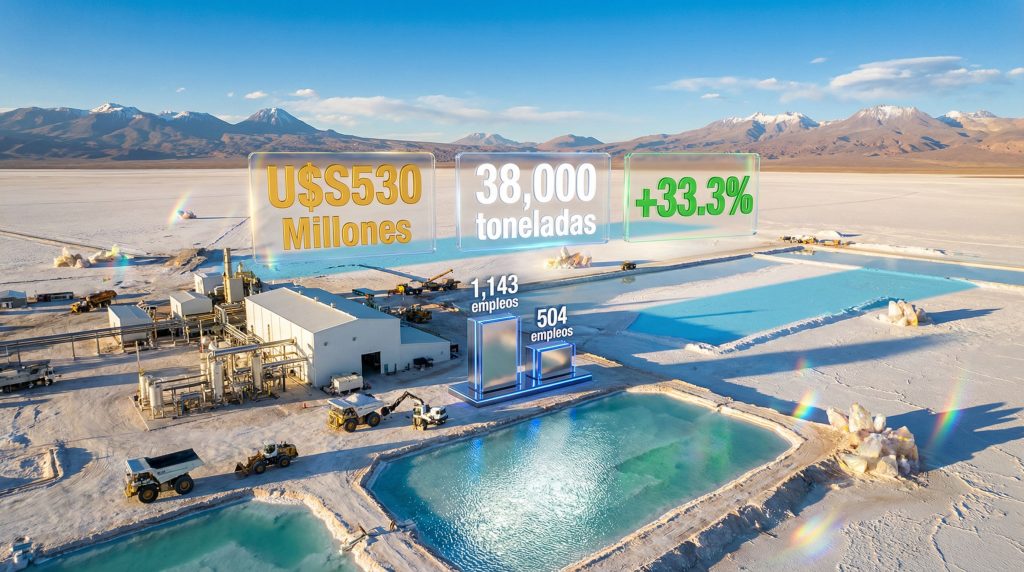
The USD 530 million investment committed under this regime signals institutional confidence that transcends short-term considerations, establishing Argentina as a viable jurisdiction for long-cycle projects in the critical minerals sector.
When big ASX news breaks, our subscribers know first
Technical Analysis of the Investment: Details of the US$530 Million
The investment structure committed by Rio Tinto for the Fénix expansion reflects a technological optimisation approach that prioritises operational efficiency over simple capacity expansion. This approach differentiates the project from traditional scaling models that replicate existing infrastructure without process innovation.
Breakdown of Planned Infrastructure
The USD 530 million investment distribution encompasses specific technological components that address limitations identified in the current operational configuration of the Fénix project. The integration of direct lithium extraction technology represents a significant methodological evolution compared to conventional solar evaporation processes.
Main expansion components:
• New selective adsorption plant: Direct lithium extraction (DLE) technology that improves recovery rates and reduces water consumption compared to traditional evaporation methods
• Additional carbonate facilities: Downstream processing capacity for lithium solution conversion to battery-grade carbonate
• Complementary well drilling: Brine extraction network expansion to feed incremental productive capacity
• Gas compressor plant in Salta: Dedicated energy infrastructure ensuring stable supply and reducing dependence on regional electrical networks
Projected Productive Capacity Increase
| Metric | Current Situation | Post-Expansion | Increase |
|---|---|---|---|
| Annual lithium carbonate production | 28,500 tonnes | 38,000 tonnes | +9,500 tonnes |
| Percentage increase | — | — | +33.3% |
| Annual export value | — | USD 165 million | — |
| Additional capacity as % of total | — | 25% | New capacity |
The 9,500 tonnes annual increase in lithium carbonate positions the Fénix project as one of the largest-scale producers in South America. This expansion approximately equals the complete productive capacity of medium-scale projects in the region, underlining the strategic magnitude of the investment.
How Does RIGI Benefit Lithium Projects in Catamarca?
The RIGI incentive framework introduces substantial modifications to the economic equation of large-scale mining projects, altering traditional profitability calculations and investment recovery periods. These benefits operate through multiple channels that reduce operational costs, increase cash flows, and mitigate regulatory risks.
Fiscal Incentives and Tax Stability
The RIGI benefit architecture establishes a fiscal protection umbrella that addresses historical vulnerabilities of mining projects in emerging jurisdictions. This framework provides particularly valuable support for companies evaluating Argentina lithium insights and regional investment opportunities.
Implemented stability mechanisms:
• Long-term regulatory predictability: Contractual guarantees that shield projects against unilateral changes in provincial or national regulatory frameworks
• Specific exchange benefits: Preferential access to foreign exchange markets and flexibility in export liquidation
• Differentiated fiscal treatment: Specific tax regime that improves operational margins compared to general tax frameworks
The exclusive application to incremental capacity in the Fénix case establishes a targeting precedent that avoids subsidising existing operations whilst incentivising new investments.
Regional Economic Impact: Employment and Local Development
The Fénix expansion generates multiplier economic effects that extend beyond the direct impact of mining operations. These effects operate through employment channels, local procurement, technology transfer, and regional capacity development that reconfigure provincial economic structure.
Job Generation by Phase
| Project Phase | Direct Employment | Indirect Employment | Total | Estimated Duration |
|---|---|---|---|---|
| Construction | 686 | 457 | 1,143 | 18-24 months |
| Operation | 302 | 202 | 504 | 20+ years |
| Employment multiplier | — | 0.67:1 | — | — |
The employment contraction between construction and operation phases (from 1,143 to 504 positions) reflects the capital-intensive nature of modern mining operations. However, operational employment stability over decades compensates for the temporality of construction positions.
Integration with Local Suppliers
The 60% local procurement commitment significantly exceeds minimum regulatory requirements, establishing a territorial economic integration model that maximises regional multiplier effects. This commitment creates opportunities for local businesses whilst supporting broader economic development objectives.
Priority local procurement categories:
• Construction services: Earth moving, civil construction, heavy transport services
• Operational inputs: Basic chemical reagents, industrial safety elements, maintenance services
• Specialised services: Analysis laboratories, environmental services, logistics and storage
• Supplier development: Technical training programmes for local companies
Strategic Positioning in the Lithium Triangle
The Fénix expansion operates within a geopolitical context where lithium resource control acquires strategic dimensions comparable to traditional energy resources. This dynamic converts mining investment decisions into elements of national geoeconomic positioning.
Regional Competition: Argentina vs Chile and Bolivia
The South American "lithium triangle" concentrates approximately 60% of known global reserves of this mineral, establishing a natural oligopolistic configuration that grants structural competitive advantages to these three countries. Understanding these dynamics is crucial for developing effective investment strategies in the region.
Comparative advantages by country:
| Country | Main Advantages | Main Challenges |
|---|---|---|
| Chile | Established infrastructure, mature regulatory framework | Water restrictions, growing social pressure |
| Bolivia | Highest concentration reserves, state control | Technological limitations, market access |
| Argentina | Geological diversity, RIGI regime | Historical regulatory volatility, infrastructure |
The RIGI implementation seeks to position Argentina as a competitive alternative to Chile, offering comparable regulatory stability with potential for lower operational costs and greater contractual flexibility.
Salar del Hombre Muerto Competitive Advantages
Salar del Hombre Muerto presents distinctive geological characteristics that position it favourably within the global landscape of lithium resources:
Differentiating geological attributes:
• Lithium concentration: 600-800 mg/L in brines, superior to regional averages
• Magnesium/lithium ratio: Relatively low, facilitating processing and reducing costs
• Hydrological characteristics: Stable aquifer with predictable recharge rate
• Geographic location: Road access from main urban centres of NOA
Risk Analysis and Project Challenges
The implementation of the Fénix expansion faces multidimensional risk vectors requiring specific mitigation strategies. These risks operate on different temporal scales and demand differentiated approaches according to their nature and probability of materialisation.
Regulatory and Political Factors
The stability of the RIGI framework depends on political continuity that transcends electoral cycles. Changes in governmental administrations could generate pressure to modify contractual terms, especially in contexts of economic volatility or fiscal pressure.
Identified regulatory risks:
• Tax changes: Pressure to increase tax burdens in fiscal deficit contexts
• Exchange modifications: Alterations in export liquidation regime
• Environmental regulations: Tightening of standards that increase compliance costs
• Contractual renegotiation: Social or political pressure to revise concession terms
Environmental Considerations and Sustainability
Salar operations face growing scrutiny for water and ecosystem impact. The NOA region presents water vulnerabilities that could generate social conflict or regulatory restrictions. However, the Australian Bureau of Statistics reports on similar projects demonstrate that proper environmental management can mitigate many of these concerns.
Critical environmental challenges:
• Water management: Balance between brine extraction and natural aquifer recharge
• Community impact: Relations with indigenous populations and local agricultural producers
• Biodiversity: Protection of high-altitude ecosystems and endemic species
• Climate change: Adaptation to changing precipitation and temperature patterns
The next major ASX story will hit our subscribers first
Investment Perspectives: What's Next for Mining RIGI?
The success of Fénix implementation will establish determining precedents for the effectiveness of the RIGI regime as an instrument for attracting foreign direct investment. The results of this pilot project will influence investment decisions by other multinational operators evaluating opportunities in Argentina.
Project Pipeline Under Evaluation
The RIGI project portfolio reflects sectoral diversification that transcends the mining sector, establishing the regime as a multisectoral investment platform. Recent media coverage highlights the growing momentum behind RIGI approvals across multiple sectors.
Current pipeline status:
| Sector | Projects Presented | Projects Approved | Committed Investment (USD millions) |
|---|---|---|---|
| Mining | 15 | 8 | $18,500 |
| Energy | 7 | 3 | $5,200 |
| Infrastructure | 3 | 1 | $2,300 |
| Total | 25 | 12 | $26,000 |
Mining projects in advanced evaluation:
• Lithium: 4 additional projects in Catamarca, Jujuy and Salta
• Copper: 3 projects in San Juan and Mendoza
• Gold: 2 projects in Santa Cruz and Chubut
• Critical minerals: 1 rare earth project in Córdoba
Expectations for New Memberships in 2026
Projections for 2026 suggest acceleration in RIGI presentations and approvals, driven by improved country risk perception and success of pioneer projects:
New membership driving factors:
• Effectiveness demonstration: Compliance with schedules and commitments by approved projects
• Administrative simplification: Optimisation of evaluation and approval processes
• Regulatory clarification: Resolution of interpretative ambiguities in regime application
• Macroeconomic context: Stabilisation of fundamental economic variables
2026 new membership projection:
• First semester: 8-10 new projects presented
• Second semester: 6-8 additional projects
• Expected approvals: 60-70% of presented projects
• Additional committed investment: USD 12,000-15,000 million
Impact on Country Risk Perception
The RIGI effectiveness as a country risk reduction instrument depends on its capacity to generate measurable success cases that demonstrate governmental commitment to contractual stability. The ingreso al RIGI de la ampliación del proyecto Fénix constitutes a critical test case for validating these perception improvement mechanisms.
Risk perception improvement indicators:
• Sovereign bond spreads: Reduction of risk premiums in international markets
• Credit ratings: Potential improvement in specialised agency ratings
• FDI flows: Increase in total foreign direct investment toward Argentina
• Competitiveness indices: Improvement in international investment climate rankings
Frequently Asked Questions about RIGI and Lithium Projects
What Differentiates RIGI from Other Promotion Regimes?
RIGI distinguishes itself fundamentally through its federal contractual stability architecture that transcends traditional provincial frameworks. Whilst previous regimes depended on provincial administrative discretion, RIGI establishes national-level legal guarantees that shield investments against unilateral regulatory changes.
The regime conditionality operates through verifiable mutual commitments: fiscal and exchange benefits in exchange for measurable investment, employment, and local procurement. This contractual structure reduces uncertainty and facilitates project evaluation by international investors.
How Are Projects Evaluated for RIGI Entry?
The RIGI evaluation process employs objective technical criteria that prioritise territorial economic impact, technical viability, and capacity for commitment compliance:
Applied evaluation criteria:
• Investment magnitude: Minimum amounts that justify granted benefits
• Employment impact: Direct and indirect job position generation
• Local integration: Procurement commitments with national suppliers
• Technical viability: Engineering soundness and implementation plans
• Environmental sustainability: Compliance with applicable environmental standards
What Long-term Guarantees Does the Regime Offer?
RIGI guarantees operate through multiple layers of legal protection that include tax stability, preferential exchange treatment, and shielding against unilateral regulatory modifications. The effectiveness of these guarantees depends fundamentally on Argentine institutional stability and respect for established legal frameworks.
The ingreso al RIGI de la ampliación del proyecto Fénix demonstrates the regime's practical application whilst establishing precedents for future projects across Argentina's mining sector.
Disclaimer: This analysis is based on publicly available information at the time of writing. Price, demand, and profitability projections are subject to market volatility and unpredictable geopolitical factors. Investors should conduct independent risk evaluation before making investment decisions.
Could This Be Your Gateway to Argentina's Mining Renaissance?
Discovery Alert's proprietary Discovery IQ model delivers real-time alerts on significant mineral discoveries across the ASX, instantly empowering subscribers to identify actionable opportunities ahead of the broader market. Understand why major mineral discoveries can lead to significant market returns by exploring Discovery Alert's dedicated discoveries page, showcasing historic examples of exceptional outcomes, and begin your 14-day free trial today to position yourself ahead of the market.