
International Law and Energy Infrastructure Control During Crisis
The complex intersection of international law and energy security reveals critical vulnerabilities in the global system when geopolitical tensions escalate. Understanding the legal foundations for resource control during conflicts requires examining established frameworks that govern state sovereignty, territorial integrity, and economic warfare. These principles become particularly relevant when analyzing how energy infrastructure can become both a target and a strategic asset in international disputes, particularly when major powers consider whether to Trump seize Iranian oil assets.
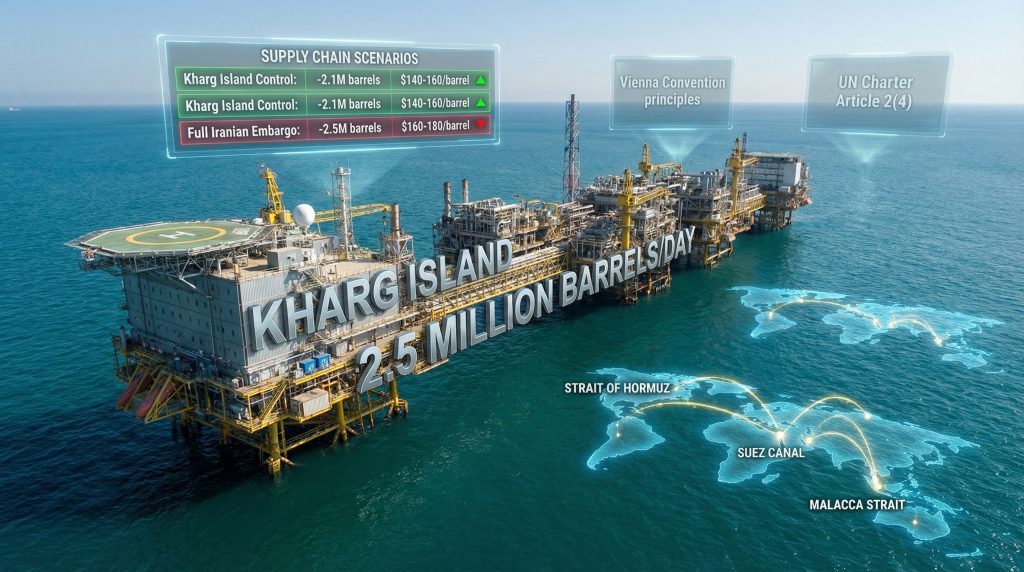
International legal frameworks provide specific guidance on resource sovereignty and territorial control. The Vienna Convention establishes fundamental principles governing state authority over natural resources within sovereign territory, while the UN Charter Article 2(4) explicitly prohibits the acquisition of territory through force or threat of force. These foundational documents create the legal architecture within which energy asset disputes must be evaluated.
Customary international law regarding economic warfare has evolved through state practice and international court decisions over decades. The Geneva Conventions address the protection of civilian infrastructure, including energy facilities, during armed conflict. These legal precedents create specific obligations for state actors and establish frameworks for determining when energy infrastructure targeting crosses into violations of international humanitarian law.
Historical precedents demonstrate how legal justifications for energy asset control have been applied in practice:
- Iraq oil fields (2003-2011): Coalition forces justified resource protection under UN Security Council resolutions and the doctrine of protective occupation
- Libya intervention (2011): NATO distinguished between asset freezing under UN sanctions and actual territorial control of production facilities
- Venezuela sanctions regime: Economic pressure maintained legal separation from territorial seizure through financial system restrictions
- Soviet oil nationalisation (1917-1920): Compensation disputes established precedents for property rights recognition and state succession obligations
Domestic legal authorities in major powers create additional constraints on unilateral energy asset seizure. The War Powers Resolution establishes timeline limitations for sustained military operations without congressional authorisation. The International Emergency Economic Powers Act provides broad executive authority for economic sanctions but maintains distinctions between financial restrictions and territorial occupation.
When big ASX news breaks, our subscribers know first
Global Energy Governance and Strategic Infrastructure Vulnerability
Strategic infrastructure vulnerability extends far beyond individual production facilities to encompass entire supply chain networks. The concentration of global oil exports through specific chokepoints creates systemic risks that affect international energy governance. Critical export terminals represent single points of failure that can disrupt regional and global supply patterns.
Recent statements by President Trump regarding Iranian oil assets, specifically mentioning Kharg Island as a potential target, have demonstrated the immediate market impact of infrastructure threats. The potential decision to Trump seize Iranian oil assets reflects broader geopolitical tensions that have been developing alongside the ongoing US‑China trade war and other global conflicts.
Oil prices rose above $116 per barrel following these March 29, 2026 statements, indicating market perception of elevated supply disruption risks. The oil price rally demonstrates how geopolitical tensions can immediately impact global energy markets.
Maritime security implications extend beyond immediate production disruption to affect international shipping lanes and insurance markets. The deployment of 2,500 US marines to the Middle East coinciding with these statements represents a measurable escalation in military positioning that affects regional stability calculations.
Supply chain disruption modelling reveals the interconnected nature of global energy flows:
| Scenario | Daily Supply Impact | Price Projection | Duration Estimate |
|---|---|---|---|
| Kharg Island Control | -2.1M barrels | $140-160/barrel | 6-18 months |
| Full Iranian Embargo | -2.5M barrels | $160-180/barrel | 12-24 months |
| Regional Conflict Escalation | -4.2M barrels | $200+/barrel | 18+ months |
Alternative routing scenarios through Caspian Sea pipelines demonstrate limited capacity for rapid supply substitution. Regional production increases from Saudi Arabia exploration, UAE, and Iraq face infrastructure constraints that prevent immediate compensation for major supply disruptions. Strategic petroleum reserve deployment requires coordinated international action and faces political limitations on release quantities and timing.
Diplomatic Consequences and Alliance Relationship Stress
Alliance coordination faces unprecedented strain when energy infrastructure becomes a diplomatic bargaining tool. The Ukraine conflict has revealed how energy targeting creates cascading diplomatic complications beyond immediate participants. President Volodymyr Zelensky reported on March 30, 2026, that Ukraine's allies requested the country scale back long-range strikes on Russian energy infrastructure due to the Middle East energy crisis.
This development represents a fundamental shift in alliance dynamics, where energy security concerns override military support solidarity. The Russian uranium ban serves as another example of how energy-related sanctions create complex diplomatic challenges. Zelensky characterised Ukraine's energy infrastructure strikes as reciprocal responses to Russian attacks on Ukrainian power infrastructure.
Furthermore, restraint would require corresponding concessions from Moscow regarding Ukrainian energy facilities. NATO Article 5 implications for unilateral military action create legal complications when member states pursue energy asset seizure without collective authorisation.
EU energy security dependencies require coordinated sanctions approaches that become difficult to maintain when individual nations face severe supply constraints. This highlights the importance of developing comprehensive energy security strategy frameworks that can withstand geopolitical pressures.
International institution responses follow established protocols but face political limitations:
- UN Security Council: Permanent member veto powers prevent effective resolutions during major power confrontations
- International Court of Justice: Limited jurisdiction over territorial disputes involving non-consenting states
- World Trade Organization: Sanctions procedures require lengthy investigation processes incompatible with crisis timelines
- International Energy Agency: Emergency response protocols depend on member state cooperation and political will
Regional power balance shifts accelerate when energy infrastructure control changes hands. The Syria reconstruction process demonstrates how energy partnerships reshape diplomatic relationships, with Syrian President Ahmad al-Sharaa signing memoranda of understanding with Siemens Energy on March 30, 2026, alongside capacity reservation agreements that represent diplomatic normalisation through infrastructure investment.
Economic Warfare Effectiveness Compared to Military Asset Seizure
Economic warfare through sanctions creates measurably different outcomes compared to direct military asset seizure. The UK government's escalation of efforts to confiscate Russian shadow fleet vessels represents an intermediate approach between pure sanctions and territorial control. Russia has utilised aging, unmarked tankers to circumvent Western restrictions since 2022, creating what industry experts describe as one of the most opaque trading systems in the global energy economy.
Shadow fleet operations demonstrate the limitations of traditional sanctions approaches. Secondary sanctions impact on third-party trading partners requires extensive monitoring and enforcement capabilities that strain international cooperation. Financial system isolation through SWIFT exclusion creates immediate disruptions but faces circumvention through alternative payment systems and bilateral arrangements.
However, the prospect for decisions to Trump seize Iranian oil assets represents a more aggressive approach than traditional economic warfare. Technology transfer restrictions on upstream oil equipment create longer-term supply constraints but require coordinated international enforcement. Insurance and shipping service denial strategies face similar coordination challenges and create opportunities for sanctions evasion through non-participating jurisdictions.
| Policy Tool | Implementation Cost | Effectiveness Rating | International Support |
|---|---|---|---|
| Enhanced Sanctions | Low | Medium | High |
| Naval Blockade | Medium | High | Medium |
| Asset Seizure | High | Very High | Low |
| Diplomatic Pressure | Very Low | Low | Very High |
Precedent-setting risks from asset seizure include sovereign wealth fund vulnerability to retaliatory actions and international investment protection treaty violations. Energy infrastructure targeting normalisation could undermine customary international law protections for civilian infrastructure during conflicts.
Operational Challenges in Foreign Infrastructure Control
Military requirements for sustained infrastructure occupation far exceed initial seizure capabilities. Force projection requirements include specialised technical expertise for oil facility operations, security perimeter establishment against asymmetric threats, and comprehensive logistics support systems for remote facilities.
Economic management complexities involve revenue distribution mechanisms and legal ownership claims that lack clear international precedents. International buyer willingness to purchase disputed oil faces legal liability concerns and potential sanctions violations. Technical maintenance requirements for aging infrastructure require specialised expertise often unavailable through military personnel.
Environmental liability considerations include operational accident responsibility and long-term facility condition maintenance. Exit strategy planning requires transition timeline development and compensation negotiation frameworks with recognised governments.
Historical precedents provide limited guidance for modern infrastructure control scenarios:
- Afghanistan mineral resources: Extraction efforts faced continuous security threats and infrastructure development costs that exceeded revenue potential
- Iraq oil sector reconstruction: Technical capacity requirements and security costs created unsustainable financial burdens for occupying forces
- Libya post-intervention: Institutional collapse led to production decline and infrastructure degradation that continues years after initial intervention
- Syria energy sector: Current reconstruction reveals coordination complexity, with Syria generating less than 20% of pre-war electricity capacity despite infrastructure investment agreements
Syria's energy losses of $107 billion reported to the UN in 2022 demonstrate the scale of infrastructure replacement costs. The Siemens Energy memorandum of understanding represents systematic approaches to facility restoration that require sustained international cooperation and technical expertise transfers.
Global Energy Security Architecture Transformation
Strategic reserve policy evolution requires coordinated release mechanisms among International Energy Agency member states that face political constraints during extended crises. Reserve capacity expansion in response to supply volatility creates significant infrastructure investment requirements and storage location security concerns.
Alternative energy acceleration due to fossil fuel supply uncertainty represents a fundamental shift in investment patterns. Renewable energy projects face different geopolitical risks but require substantial upfront capital investments and extended development timelines that cannot address immediate supply disruptions.
Investment pattern shifts away from geopolitically sensitive regions affect long-term supply development. Political risk insurance premium increases for Middle East projects create financing challenges for necessary infrastructure maintenance and expansion projects. The consideration to Trump seize Iranian oil assets adds another layer of uncertainty to regional investment calculations.
Technology development focus on energy storage and grid resilience requires sustained research and development investments. Domestic production incentives for energy independence face economic constraints related to resource availability and extraction costs in many consuming nations.
Regulatory framework adaptations include emergency powers legislation updates and international arbitration mechanism development. Maritime law evolution regarding economic zone enforcement creates new precedents for resource control during conflicts.
According to Trump's controversial statements about Iran, energy transition equipment and systems represent critical dependencies that cannot be easily substituted during supply disruptions. The interconnected nature of modern energy infrastructure means that localised conflicts can create global system vulnerabilities.
Climate policy integration with energy security objectives creates competing priorities for policymakers. Short-term supply security requirements may conflict with longer-term decarbonisation goals, requiring careful balance in policy development and implementation.
The next major ASX story will hit our subscribers first
Historical Precedents and Policy Learning
Resource control precedents from the Suez Crisis (1956) demonstrate how international responses to canal nationalisation established frameworks for collective action and economic pressure coordination. The Iranian oil nationalisation crisis (1951-1953) created precedents for compensation negotiations and state recognition issues that remain relevant for current disputes.
Gulf War (1991) coalition building for resource protection showed successful international cooperation models but required clear UN authorisation and broad alliance support. The Crimean annexation (2014) demonstrated how energy infrastructure control combined with sanctions creates sustained international tensions without clear resolution mechanisms.
Lessons from intervention failures reveal consistent patterns across different conflicts and regions. Afghanistan's mineral resource development faced insurmountable security challenges and infrastructure costs. Iraq's post-2003 oil sector reconstruction required extensive technical assistance and security expenditures that strained international cooperation.
Libya's post-intervention production decline resulted from institutional collapse and continued conflict that prevented effective resource management. Syria's ongoing energy sector reconstruction demonstrates the complexity of rebuilding damaged infrastructure while maintaining international cooperation and technical expertise transfers.
What Are the Key Risks of Energy Asset Seizure?
The primary risks include escalation of military tensions, violation of international law, disruption of global supply chains, and potential for retaliatory actions. In addition, occupied infrastructure requires sustained military presence and technical expertise that may exceed operational capabilities.
How Do Financial Sanctions Compare to Physical Asset Control?
Financial sanctions typically enjoy broader international support but face circumvention challenges through alternative payment systems. Physical asset control provides more direct supply disruption but creates legal liability and operational complexity that sanctions avoid.
Crisis Management and Long-term Strategic Adaptation
Immediate response frameworks require multilateral coordination through existing alliance structures combined with economic pressure escalation before military intervention consideration. Diplomatic channel maintenance for conflict de-escalation remains essential even during active military positioning and threat communication.
Emergency response preparation for supply disruption scenarios includes strategic reserve coordination and alternative supply source development. These preparations require sustained international cooperation and advance planning that may conflict with immediate political objectives.
Long-term strategic adaptations focus on energy diversification acceleration to reduce geopolitical dependencies and international law clarification regarding economic warfare boundaries. The ongoing debates about whether to Trump seize Iranian oil assets highlight the need for clearer international frameworks governing energy infrastructure during conflicts.
Crisis management institutionalisation through enhanced cooperation mechanisms requires new international frameworks and sustained political commitment. Expert analysis of the risks suggests that such actions could have far-reaching consequences beyond immediate energy markets.
Technology investment prioritisation for energy independence capabilities must balance security objectives with economic constraints and environmental goals. The interconnected nature of global energy systems means that complete independence remains economically unfeasible for most nations, requiring careful risk management rather than total supply autonomy.
Investment Disclaimer: This analysis discusses geopolitical scenarios and energy market dynamics that involve significant uncertainty and speculation. Energy infrastructure investments face complex political, environmental, and economic risks that cannot be fully predicted or quantified. Readers should consult qualified financial and political risk advisors before making investment decisions related to energy assets or companies operating in geopolitically sensitive regions.
The evolving relationship between international law, energy security, and crisis management continues to create new precedents and policy challenges. Understanding these dynamics requires ongoing analysis of legal frameworks, market mechanisms, and diplomatic processes that shape global energy governance during periods of heightened international tension.
Ready to Capitalise on Energy Market Volatility?
Discovery Alert's proprietary Discovery IQ model delivers real-time alerts on significant ASX mineral discoveries, including energy-related exploration companies positioned to benefit from global supply disruptions and geopolitical tensions. With oil prices reaching $116 per barrel and energy security becoming increasingly critical, investors need instant access to actionable opportunities in the ASX mining sector to stay ahead of market movements. Begin your 14-day free trial today to secure your market-leading advantage during these unprecedented times.
