
July 28, 2026
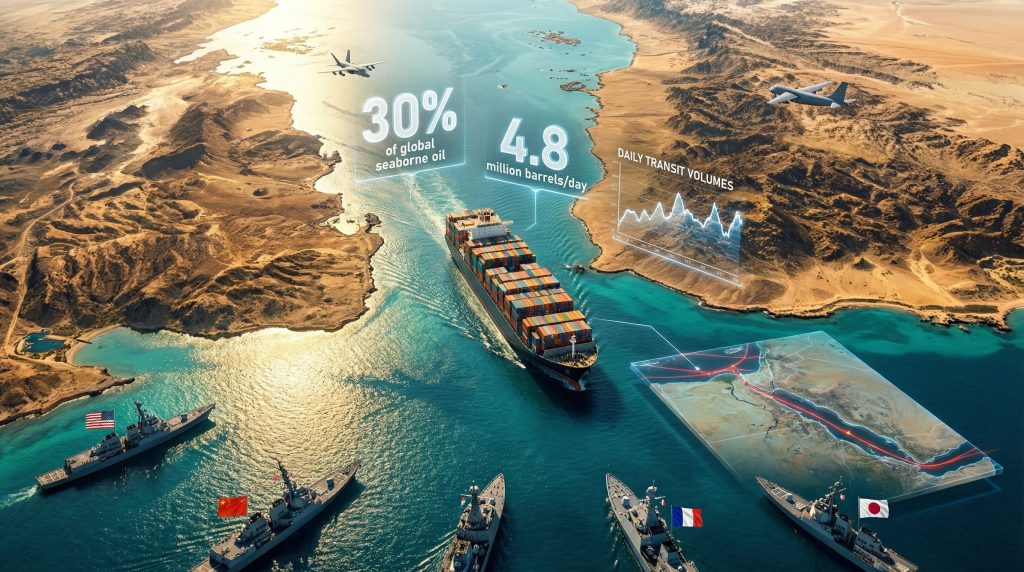
Global maritime security faces an unprecedented transformation as strategic competitors leverage narrow waterways to project economic power across vast distances. The control of maritime chokepoints has evolved from traditional naval dominance to sophisticated proxy warfare, creating new paradigms for international trade vulnerability and geopolitical risk assessment.
The Iran Bab al-Mandeb threat represents a critical evolution in asymmetric maritime strategy, where relatively modest investments in coastal denial capabilities can generate disproportionate economic leverage over global supply chains. This strategic calculation fundamentally alters how markets, governments, and international institutions must assess long-term stability risks in an interconnected world economy.
How Does Iran's Bab al-Mandeb Strategy Reshape Global Trade Security?
The Strategic Geography of Maritime Chokepoints
The Bab al-Mandeb strait presents unique geographical advantages for maritime disruption strategies, spanning just 18-32 kilometers between Yemen's coastline and Djibouti's territorial waters. This narrow passage serves as the critical gateway connecting the Red Sea to the Gulf of Aden, forming an essential link in the maritime route to the Suez Canal.
Recent shipping data indicates this corridor facilitates the transit of approximately 4.8 million barrels of oil daily, representing roughly 12% of global seaborne petroleum movements. The strategic significance extends beyond energy commodities, with container shipping routes carrying an estimated 40% of Europe-Asia trade passing through these waters.
The geographical constraints create natural advantages for coastal denial operations, as the narrow passage limits maneuvering options for large commercial vessels. Furthermore, it provides defensive positions for small, fast-attack craft operating from Yemen's extensive coastline.
Iran's Asymmetric Naval Doctrine Evolution
Iran's approach to maritime denial has undergone significant tactical refinement since 2019, emphasizing distributed operations through proxy forces rather than direct naval confrontation. This methodology allows Tehran to maintain plausible deniability while projecting power across multiple maritime domains simultaneously.
The Houthi maritime capabilities have expanded substantially, incorporating:
- Advanced anti-ship missile systems with ranges exceeding 200 kilometers
- Unmanned surface vessels capable of autonomous navigation
- Naval mining capabilities for area denial operations
- Integrated coastal radar networks providing real-time targeting data
This distributed architecture proves remarkably resilient to conventional countermeasures, as targeting individual components fails to eliminate the broader operational network. Intelligence assessments suggest that reconstruction timelines for damaged capabilities range from 3-8 weeks for most systems, significantly shorter than traditional military infrastructure.
Integration with Broader Middle Eastern Strategic Objectives
The Bab al-Mandeb strategy forms part of Iran's comprehensive regional influence campaign, creating multiple pressure points that can be activated independently or in coordination. This approach generates strategic leverage that extends well beyond the immediate maritime domain.
Regional analysts note that simultaneous pressure across multiple chokepoints would force adversaries to divide response capabilities. This could potentially reduce the effectiveness of countermeasures at any single location, demonstrating how tariffs impact on markets extends beyond traditional trade policy.
The coordination mechanisms between Iranian Revolutionary Guard Corps naval units and Houthi maritime operations demonstrate sophisticated command and control integration. Moreover, this shows how regional conflicts increasingly affect global economic stability through maritime disruption.
When big ASX news breaks, our subscribers know first
What Makes the Bab al-Mandeb Iran's Most Effective Economic Weapon?
Comparative Analysis of Maritime Leverage Points
| Chokepoint | Daily Oil Transit | Alternative Routes | Disruption Cost |
|---|---|---|---|
| Strait of Hormuz | 21% global supply | Limited overland pipelines | $200+ billion annually |
| Bab al-Mandeb | 4.8 million barrels/day | Cape of Good Hope | $9 billion per day |
| Suez Canal | 12% global trade | Africa circumnavigation | 10-15 day delays |
The comparative analysis reveals that Bab al-Mandeb offers unique strategic advantages despite lower absolute traffic volumes than Hormuz. The Red Sea route's integration with European supply chains creates disproportionate economic vulnerability, particularly for manufacturing sectors dependent on just-in-time delivery systems.
Insurance market data from Lloyd's of London indicates that war risk premiums for Red Sea transits have increased by 150-200% during periods of heightened tension. In contrast, OPEC oil market influence traditionally affects prices through production quotas rather than shipping lane disruptions.
This differential reflects the limited naval presence available for escort operations in the Red Sea compared to the Persian Gulf. Consequently, the vulnerability creates opportunities for Iran to project power with relatively modest investments.
Multi-Vector Pressure Campaign Mechanics
Iran's strategic doctrine emphasizes the cumulative impact of simultaneous chokepoint pressure rather than single-point disruption. Economic modelling suggests that concurrent disruptions at Hormuz and Bab al-Mandeb would generate cascading effects throughout global supply chains.
European energy security assessments indicate particular vulnerability to Red Sea disruptions, as approximately 35% of EU crude imports transit through this route. Unlike Middle Eastern oil reaching Europe via the Persian Gulf, Red Sea disruptions cannot be easily compensated through alternative pipeline networks.
The psychological impact on shipping markets amplifies the economic effects, as insurance costs and routing decisions begin incorporating disruption probabilities weeks or months before actual incidents occur. This creates economic leverage even during periods of relative stability, demonstrating the US‑China trade war impact extends beyond bilateral relationships.
Insurance Premium Escalation Across Global Shipping
Maritime insurance markets demonstrate heightened sensitivity to Bab al-Mandeb risks compared to other geopolitical flashpoints. War risk coverage for Red Sea transits now incorporates specific provisions for:
- Extended detention periods at safe harbours during escalation
- Cargo transfer costs for alternative routing arrangements
- Schedule disruption compensation for container shipping delays
- Crew hazard pay and evacuation insurance coverage
These insurance mechanisms create immediate economic pressure on shipping operators, often prompting route diversions before actual maritime incidents occur. The resulting supply chain disruptions can persist for 6-12 weeks after initial triggers, extending economic impact well beyond the immediate crisis period.
Why Are Current Market Reactions Underpricing Long-Term Risks?
Oil Market Psychology vs. Structural Realities
Recent crude oil price movements suggest market participants are incorporating diplomatic optimism rather than structural risk assessment into pricing models. The 2% decline in Brent crude following ceasefire speculation reflects short-term sentiment rather than fundamental changes in Iran's maritime capabilities or strategic objectives.
Volatility analysis from previous Middle Eastern crises reveals consistent patterns of initial market overreaction followed by gradual risk repricing as situations evolve. The 2019 tanker incidents in the Strait of Hormuz demonstrated similar market behaviour, with initial 15-20% price spikes followed by gradual normalisation over 3-6 week periods.
However, current market pricing may underestimate the structural changes in Iran's maritime strategy since 2019. Enhanced proxy capabilities and improved coordination mechanisms suggest higher baseline risks than historical precedents indicate, particularly given how oil price trade war dynamics create additional market volatility.
Geopolitical Premium Removal May Prove Premature
Energy market analysis indicates that geopolitical risk premiums have been partially removed from crude pricing despite ongoing structural tensions. Options market data shows reduced implied volatility for energy futures, suggesting trader confidence in diplomatic resolution pathways.
This confidence may prove misplaced given the fundamental strategic incentives driving Iran's maritime policies. Tehran's regional influence strategy relies heavily on maintaining credible threats to global commerce, making complete resolution unlikely even under successful diplomatic frameworks.
Historical precedent from Iran-U.S. negotiations suggests that tactical de-escalation often accompanies strategic capability building. This creates periods of apparent calm while underlying capabilities continue expanding, similar to how the trade war commodity impact persisted despite temporary diplomatic breakthroughs.
Supply Chain Resilience Stress Testing
Manufacturing sector assessments reveal significant vulnerabilities to extended maritime disruptions, particularly in industries dependent on Asian component sourcing. Just-in-time inventory systems lack resilience to handle 10-15 day delays associated with Cape of Good Hope routing.
Container shipping capacity constraints would rapidly emerge under alternative routing scenarios, as South African ports lack sufficient throughput capacity to handle displaced Red Sea traffic. Current estimates suggest 40-60% capacity shortfalls during peak displacement periods.
Strategic petroleum reserve drawdown capabilities provide limited buffer against sustained disruptions, with most European nations maintaining 30-90 day emergency reserves. These reserves prove insufficient for extended disruption scenarios while simultaneously managing normal consumption and industrial demand.
How Do Great Power Naval Deployments Change the Strategic Calculus?
Military Infrastructure Competition in the Horn of Africa
The Horn of Africa has emerged as a critical nexus for great power naval competition, with multiple nations establishing permanent military facilities within striking distance of the Bab al-Mandeb strait. This concentration of military assets creates new dynamics for crisis management and escalation control.
Base Locations and Capabilities:
- U.S. Camp Lemonnier (Djibouti): Approximately 4,000 personnel, drone operations, rapid response capabilities
- Chinese PLA Support Base: Naval logistics hub, estimated 2,000 personnel, submarine support facilities
- French Base 188: Counter-piracy operations, 1,500 personnel, maritime patrol aircraft
- Japanese Self-Defense Force: Anti-piracy mission support, 600 personnel, helicopter capabilities
The proximity of competing military installations creates potential for miscalculation during crisis periods, as operational responses may be misinterpreted as threatening manoeuvres by rival forces. Command coordination mechanisms remain underdeveloped despite shared interests in maritime security.
Escalation Ladder Management
Naval deployment patterns suggest increasingly sophisticated approaches to crisis management, with graduated response capabilities designed to provide options between diplomatic protest and full military engagement. These capabilities include:
- Enhanced maritime patrol frequency to demonstrate presence
- Escort convoy operations for commercial shipping protection
- Freedom of navigation operations to challenge territorial claims
- Targeted strikes against specific maritime denial assets
- Sustained campaign operations against broader infrastructure networks
The challenge lies in maintaining escalation control when multiple naval forces operate in close proximity during high-tension periods. Rules of engagement protocols require constant updating to address new scenarios and technological capabilities.
Coalition Coordination Challenges
International naval cooperation faces significant constraints despite shared interests in maritime security. Different legal frameworks, operational procedures, and political objectives complicate unified response planning.
Recent multilateral exercises have revealed interoperability gaps in:
- Communication protocols between different naval systems
- Intelligence sharing mechanisms for real-time threat assessment
- Command authority structures during combined operations
- Rules of engagement alignment across different national forces
These coordination challenges may prove critical during rapid escalation scenarios, where response timing and unified messaging significantly impact crisis resolution prospects.
What Investment Sectors Face Maximum Exposure to Bab al-Mandeb Disruption?
Energy Market Vulnerability Assessment
European energy markets demonstrate particular sensitivity to Red Sea shipping disruptions, as alternative supply routes require significant cost and time penalties. LNG shipping patterns show 65% of Qatar-Europe deliveries transit through the Bab al-Mandeb, creating concentrated vulnerability points.
Refinery operations face operational constraints under extended disruption scenarios, as crude oil inventory systems cannot accommodate indefinite delays without production adjustments. European refining margins would likely expand significantly during sustained disruptions, benefiting integrated oil companies with flexible sourcing capabilities.
Renewable energy transition timelines may accelerate under sustained fossil fuel supply uncertainty, creating investment opportunities in European wind and solar development projects. Policy frameworks already emphasise energy independence, making additional supply disruptions catalytic for renewable investment acceleration.
Shipping and Logistics Sector Analysis
Container shipping operators face immediate margin compression during disruption periods, as alternative routing costs cannot be fully passed through to customers under existing contract structures. Cape of Good Hope routing adds approximately $2,000-3,000 per container in additional costs.
Port congestion effects cascade globally as shipping schedules become disrupted, creating secondary bottlenecks at European and Asian terminals. Historical data from the 2021 Suez Canal blockage indicates 6-8 week recovery periods for normal schedule resumption following major routing disruptions.
Maritime insurance sector revenues increase substantially during crisis periods, though claims exposure also rises. War risk coverage premiums can increase by 200-400% during active disruption periods, creating significant revenue opportunities for specialised marine insurers.
Defence and Security Investment Implications
Naval vessel construction demand has increased substantially as nations reassess maritime security requirements. European defence spending specifically targets:
- Corvette and frigate procurement for escort operations
- Maritime patrol aircraft for surveillance capabilities
- Unmanned surface vehicles for reconnaissance missions
- Coastal defence missile systems for port protection
Cybersecurity investments focus on protecting critical maritime infrastructure from electronic warfare and cyber attacks. Port management systems, shipping communications networks, and navigation systems require enhanced protection against sophisticated state-sponsored threats.
Surveillance technology deployment accelerates across Red Sea shipping lanes, creating opportunities for satellite imagery providers, maritime radar manufacturers, and automated identification system developers.
How Might Resolution Scenarios Unfold Over Different Timeframes?
Short-Term Diplomatic Pathways (3-6 months)
Immediate diplomatic resolution pathways centre on Arab mediator effectiveness in facilitating back-channel negotiations between Iran and the United States. Historical precedent suggests that Saudi Arabia and Oman possess the most credible mediation capabilities given their relationships with both parties.
Economic pressure mechanisms provide leverage for compromise, as sustained high oil prices create domestic political challenges for all parties. European allies particularly emphasise diplomatic resolution given their energy supply vulnerabilities and limited military response capabilities.
Face-saving mechanisms prove critical for sustainable agreements, requiring careful calibration of public messaging while allowing substantive private concessions. Previous Iran negotiations demonstrate the importance of:
- Sanctions relief frameworks that appear gradual and conditional
- Security guarantee structures that address Iranian regional influence concerns
- Economic compensation mechanisms for maritime disruption damages
- Verification protocols that satisfy international monitoring requirements
Medium-Term Strategic Realignment (6-18 months)
Regional security architecture modifications may emerge from sustained crisis management requirements. Gulf Cooperation Council naval coordination mechanisms require enhancement to address distributed threat scenarios more effectively.
Energy supply diversification acceleration creates structural changes in global energy trade patterns. European energy import strategies increasingly emphasise:
- North American LNG expansion to reduce Middle Eastern dependence
- African renewable energy partnerships for long-term supply security
- Strategic reserve capacity increases to handle longer disruption periods
- Alternative pipeline development through Turkey and the Caucasus
Maritime security cooperation frameworks require institutionalisation beyond ad hoc crisis response mechanisms. Permanent multilateral naval coordination structures may emerge, similar to counter-piracy operations but with broader mandates.
Long-Term Structural Changes (2-5 years)
Alternative trade route infrastructure development becomes economically viable under sustained disruption risks. India-Middle East-Europe Economic Corridor projects gain strategic priority as overland alternatives to maritime chokepoints.
Naval power balance shifts in the Indian Ocean reflect sustained great power competition for maritime influence. Chinese naval expansion accelerates in response to increased Western presence, creating new stability challenges across multiple maritime domains.
Economic integration versus strategic competition tensions require careful management as trade interdependence conflicts with security concerns. Supply chain friendshoring initiatives accelerate across multiple industries, potentially reducing global efficiency while improving security resilience.
The next major ASX story will hit our subscribers first
What Are the Broader Implications for Global Trade Architecture?
Chokepoint Vulnerability Mitigation Strategies
Global supply chain architecture faces fundamental reassessment as single-point-of-failure risks become apparent across multiple industries. Strategic planning increasingly incorporates multi-modal transportation options and distributed supply sourcing to reduce chokepoint dependencies.
Overland pipeline development priorities shift toward projects that bypass maritime vulnerabilities entirely. Trans-Arabian Peninsula pipelines and Central Asian corridor development gain strategic importance despite higher initial construction costs.
Digital supply chain monitoring systems require enhancement to provide real-time visibility across alternative routing options. Artificial intelligence applications for logistics optimisation become critical for managing complex multi-route scenarios during disruption periods.
Regional Power Balance Evolution
Saudi Arabia's Red Sea security investments reflect recognition that the kingdom's economic diversification depends heavily on reliable maritime commerce. NEOM project success requires sustained shipping access through Red Sea routes, creating strong incentives for security investment.
UAE port infrastructure expansion strategy positions Dubai and Abu Dhabi as critical transshipment hubs capable of handling diverted traffic from disrupted routes. Port capacity doubling initiatives specifically target container handling capabilities for Red Sea alternatives.
Egypt's Suez Canal revenue protection measures include both military enhancements and diplomatic engagement strategies. Canal expansion projects and alternative route development within Egyptian territory provide additional revenue streams while reducing single-route dependency.
Economic Resilience Building Measures
Supply chain diversification imperatives extend beyond geographic distribution to encompass supplier redundancy, inventory buffer expansion, and alternative technology adoption. Manufacturing sectors particularly emphasise dual-sourcing strategies for critical components.
Critical resource stockpiling protocols require updating to address longer disruption scenarios than previously anticipated. Strategic reserves increasingly focus on:
- Extended duration capabilities (180+ day reserves versus current 90-day standards)
- Regional distribution networks to prevent single-point storage vulnerabilities
- Allied sharing mechanisms for crisis mutual support
- Private sector coordination for combined government-industry stockpiling
International cooperation mechanism strengthening becomes essential for managing complex, multi-domain crises that exceed individual nation capabilities. Permanent crisis coordination structures may emerge to supplement existing international institutions with specialised maritime security mandates.
The Iran Bab al-Mandeb threat continues to evolve as a defining challenge for global maritime security, requiring sustained international attention and coordinated response mechanisms. Furthermore, reports suggest that Iran's strategic capabilities in this region represent a significant escalation in asymmetric warfare tactics.
Investment Disclaimer: Geopolitical risk assessment involves significant uncertainty regarding timing, escalation patterns, and resolution outcomes. Maritime security investments may experience substantial volatility based on diplomatic developments, military incidents, or technological changes. Investors should conduct independent research and consider professional advice before making investment decisions based on geopolitical analysis.
Ready to Capitalise on Geopolitical Market Opportunities?
Discovery Alert's proprietary Discovery IQ model delivers instant notifications on significant ASX mineral discoveries, helping investors identify actionable opportunities that emerge during periods of geopolitical uncertainty and commodity market volatility. Explore how major mineral discoveries have historically generated substantial returns during global supply chain disruptions, then begin your 14-day free trial to position yourself ahead of market movements.