July 21, 2026
The landscape of global economic vulnerability has entered uncharted territory as energy price shocks reshape fundamental assumptions about stability, growth, and monetary policy. Central banks across developed economies face an unprecedented combination of persistent inflation pressures, supply chain bottlenecks, and geopolitical uncertainty that defies conventional policy frameworks. The transmission mechanisms connecting energy costs to broader economic performance are revealing structural weaknesses that decades of globalisation have embedded deep within international trade networks.
Financial markets are simultaneously grappling with conflicting signals regarding conflict duration, supply restoration timelines, and policy response effectiveness. The Iran war impact on oil price dynamics extends far beyond commodity trading floors, creating ripple effects through currency markets, sovereign debt pricing, and corporate earnings forecasts across multiple sectors. Economic modelling exercises currently underway in government institutions worldwide suggest preparation for scenarios that would fundamentally alter consumption patterns, industrial production strategies, and international economic relationships.
What Economic Shockwaves Are Iran War Oil Prices Creating?
Inflation Acceleration Across Major Economies
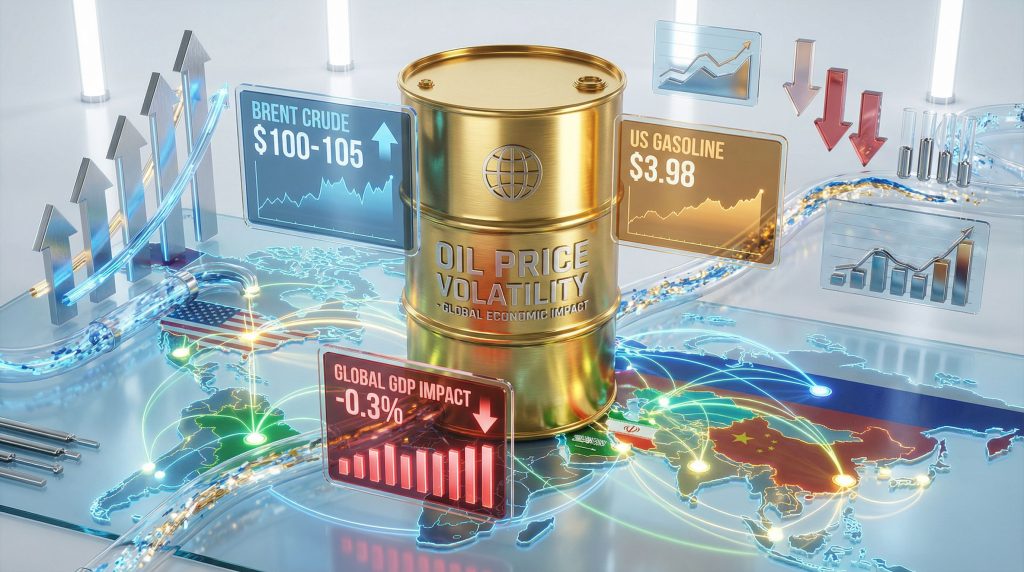
Current Brent crude pricing has escalated to approximately $108 per barrel as of late March 2026, representing a substantial 77% increase from the pre-conflict December 2025 baseline of $61 per barrel. This dramatic price surge has generated immediate transmission effects across consumer markets, with US gasoline prices reaching $3.98 per gallon by March 25, 2026—marking a 30% increase since conflict commencement.
The Federal Reserve's assessment framework reflects institutional uncertainty regarding inflation persistence, with Chair Jerome Powell acknowledging that conflict-related economic effects remain difficult to predict. Furthermore, government modelling exercises examining crude oil scenarios reaching $200 per barrel represent standard contingency planning rather than market predictions, designed to ensure policy preparedness across multiple potential outcomes.
European natural gas pricing has escalated to approximately $65 per megawatt-hour, with stress-test projections suggesting potential escalation to $90 per megawatt-hour under sustained conflict scenarios. The European Central Bank President has indicated preparedness to implement rate increases if warfare continues, characterising inflation transmission as potentially temporary while maintaining cautious monetary policy positioning.
Energy inflation transmission operates through multiple economic channels:
- Direct fuel costs affecting transportation and heating expenses
- Secondary transmission through petrochemical feedstock price increases
- Transportation service cost escalations
- Power generation input cost adjustments
- Manufacturing supply chain cost pressures
Developing nations experience disproportionate inflationary pressure due to limited foreign currency reserves, reduced capacity for energy subsidy implementation, and structural dependencies on energy imports without domestic production alternatives. In addition, the asymmetrical vulnerability across developed economies reflects differing degrees of domestic energy production capacity and pre-existing inflationary conditions.
GDP Growth Projections Under Energy Stress
Economic output forecasts for oil-importing nations indicate measurable quarterly contractions across energy-intensive sectors. Industrial production slowdowns have emerged in cement, steel, chemicals, and refining industries, while service sector resilience varies significantly based on transportation dependency and energy-intensive operational requirements. Moreover, this oil price rally analysis provides deeper insights into how trade policies amplify energy market volatility.
| Economic Indicator | Pre-Conflict (Dec 2025) | Current Level (Mar 2026) | Projected Peak Scenario |
|---|---|---|---|
| Brent Crude ($/barrel) | $61 | $108 | $150-200 |
| US Gasoline ($/gallon) | $3.14 | $3.98 | $5.50+ |
| EU Natural Gas ($/MWh) | $45 | $65 | $90+ |
| Global GDP Impact (%) | Baseline | -0.3% | -1.2% |
| Inflation Addition (%) | — | +0.5-0.6% | +2.0-3.0% |
The European Union faces particular challenges due to incomplete recovery from previous energy crises spanning 2021-2023, which depleted policy response capacity and elevated baseline import costs. However, European economies demonstrate reduced resilience compared to developing nations despite superior financial infrastructure and institutional frameworks.
When big ASX news breaks, our subscribers know first
Which Supply Chain Vulnerabilities Are Iran Conflicts Exposing?
Critical Transportation Corridor Analysis
The Strait of Hormuz represents a critical chokepoint through which approximately 21 million barrels per day of global crude oil supply normally transits. Current conflict conditions have disrupted standard throughput patterns, though Iran continues generating approximately $139 million daily in oil export revenues despite regional disruptions.
Barclays analysis indicates that prolonged Hormuz blockage scenarios could eliminate 14 million barrels per day of global oil supply, representing approximately 14% of global demand. This supply elimination magnitude would exceed historical precedents including the 1973 OPEC embargo and 1990-1991 Gulf War disruptions.
Maritime routing alternatives present significant logistical and cost challenges:
- Cape of Good Hope routing adds approximately 6,000 nautical miles
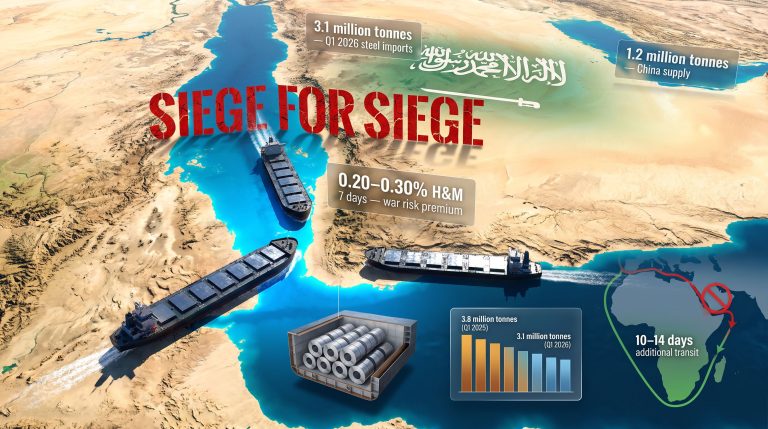
- Transit time increases of 10-14 days compared to Strait routing
- Insurance premium escalations for alternative shipping routes
- Limited alternative pipeline infrastructure capacity
- Reduced throughput volumes through non-maritime transport options
Technical vulnerabilities in the Strait of Hormuz include narrow channel width of approximately 21 miles at the narrowest point, creating potential blockade implementation opportunities through military or paramilitary action. Consequently, Saudi Arabian oil exports to China and India face downward pressure from regional security concerns and insurance cost increases, indicating that even non-Strait transport routes experience indirect conflict pressures.
Ukraine's drone campaign against Russian oil export terminals has eliminated approximately 40% of Russian oil export capacity in the Baltic region, demonstrating how regional conflicts create supply disruptions beyond primary conflict zones. Furthermore, Australia's liquefied natural gas outages contribute to global LNG supply constraints alongside Strait disruptions.
Strategic Petroleum Reserve Deployment Scenarios
Japan has explicitly urged the International Energy Agency to prepare for a second emergency oil release, indicating government expectations of extended conflict duration and sustained supply constraints. This represents escalation in reserve deployment authorisation, as strategic petroleum releases typically remain reserved for severe supply disruption events.
International Energy Agency coordination protocols establish consensus-based procedures for emergency reserve releases, requiring determination that supply disruptions meet defined severity thresholds. These coordination requirements create potential delays between supply disruption occurrence and reserve mobilisation implementation.
Strategic petroleum reserve effectiveness depends on multiple factors:
- Release timing relative to market expectations
- Current inventory levels across member nations
- Demand destruction occurring from price signals
- Reserve replenishment strategies in post-crisis periods
- Fiscal implications for governments depleting emergency reserves
Reserve releases create temporary supply increases but do not address underlying geopolitical constraints producing supply disruptions. However, the United States maintains the world's largest strategic petroleum reserve, though federal government modelling of $200 per barrel scenarios includes analysis of reserve release timing, quantities, and market effectiveness assumptions.
How Are Energy Import Dependencies Reshaping Geopolitical Alliances?
Asia-Pacific Energy Security Recalibrations
India has acquired 60 million barrels of Russian crude oil for April 2026 delivery, representing substantial diversification from traditional Middle Eastern suppliers amid Strait vulnerability concerns. This procurement strategy indicates India's strategic pivot toward securing non-Persian Gulf energy supplies through alternative sourcing arrangements.
Indian refiners demonstrate cautious approaches regarding Iranian crude purchases despite US waiver authorisation, suggesting commercial and reputational risk assessments override legal authorisation mechanisms. For instance, China's state-owned enterprise Sinopec has declined Iranian crude purchases despite waiver availability, indicating risk-mitigation strategies prioritising supply certainty over cheaper Iranian crude access.
China's top shipping companies are resuming Middle East routing amid ceasefire negotiation developments, suggesting shipping industry assessments view conflict duration as potentially limited. Meanwhile, Venezuela's oil production has climbed to 1.1 million barrels per day, offering alternative non-Middle Eastern sourcing for Asia-Pacific importers, though transportation distances and US sanctions constraints remain limiting factors.
Asian energy importers are executing parallel diversification strategies:
- Russian crude import expansion for supply security
- Limited Iranian exposure due to sanctions risk
- Venezuelan production monitoring for alternative sourcing
- Strategic petroleum reserve accumulation during pricing volatility
Japan's central bank and government coordination suggests high-level assessment that sustained conflict requires emergency reserve mobilisation, indicating expectations of extended supply disruption durations. Additionally, Australia's liquefied natural gas supply constraints affect regional LNG pricing for liquid natural gas imports, particularly impacting Japan and South Korea lacking domestic gas production.
European Energy Diversification Accelerations
European Union natural gas pricing has reached $65 per megawatt-hour with projections potentially reaching $90 per megawatt-hour under sustained conflict scenarios. This pricing exceeds previous crisis-period peaks and constrains European industrial competitiveness significantly across energy-intensive manufacturing sectors.
Shell has publicly warned of looming fuel shortages across Europe with April supply constraints expected, indicating refinery utilisation pressures and distribution network limitations. Moreover, European gasoline exports are shifting toward Asia as regional fuel scarcity drives price arbitrage incentives, creating domestic shortages despite continued global production levels.
Germany and South Korea collectively face rare earths supply shortages, demonstrating that energy crises create secondary supply chain disruptions in critical technology input materials. Japan's petrochemical producers are curtailing output due to naphtha shortages, showing energy-intensive manufacturing sectors reducing production due to input cost escalations rather than demand destruction alone.
European energy infrastructure remains insufficiently diversified from Russian pipeline dependency despite diversification initiatives spanning 2022-2025. However, the EU's recovery timeline from previous energy crises has been extended due to elevated baseline import costs and reduced policy response capacity available for current crisis management. This situation is further complicated by the OPEC production impact on global supply chains.
What Sectoral Economic Impacts Are Emerging From Oil Price Volatility?
Transportation and Logistics Cost Structures
Airline industry responses include fuel surcharge implementations and route optimisation strategies to manage elevated jet fuel costs. US gasoline price increases of approximately 26.8% annually from $3.14 to $3.98 per gallon directly impact trucking industry margin compression and freight pricing adjustments across domestic shipping networks.
Maritime freight rates demonstrate strong correlations with bunker fuel costs, affecting international shipping expenses and container transport pricing. Transportation sector vulnerabilities extend beyond direct fuel costs to include:
- Fleet utilisation optimisation strategies
- Route planning adjustments for fuel efficiency
- Price pass-through mechanisms to consumers
- Contract renegotiation for fuel cost sharing
- Alternative transportation mode evaluation
Manufacturing Competitiveness Shifts
Petrochemical industry input cost escalations affect plastic production, synthetic materials manufacturing, and chemical processing operations. Energy-intensive production facilities face capacity utilisation decisions based on profit margin analysis at elevated energy input costs.
Supply chain nearshoring acceleration has intensified due to transportation cost increases, encouraging domestic production expansion and regional sourcing strategies. Furthermore, the US oil production decline has exacerbated domestic supply constraints. Manufacturing sectors experiencing significant impact include:
- Cement production requiring high-temperature kilns
- Steel manufacturing with intensive energy requirements
- Aluminium smelting operations dependent on electricity costs
- Chemical processing requiring natural gas feedstocks
- Glass manufacturing requiring sustained high-temperature operations
Which Financial Market Mechanisms Are Amplifying Oil Price Movements?
Commodity Trading and Risk Premium Calculations
Futures market contango and backwardation patterns during geopolitical stress reflect market expectations regarding conflict duration and supply restoration timelines. Options volatility pricing incorporates risk premiums for potential supply disruption scenarios extending beyond current conflict zones.
Algorithmic trading responses to news flow and price momentum create amplification effects during rapid market movements. Professional trading strategies include:
- Hedge fund positioning in energy futures
- Systematic trading programme adjustments
- Risk parity portfolio rebalancing
- Cross-commodity arbitrage strategies
- Volatility trading optimisation
Currency Market Interactions and Petrodollar Flows
US dollar strength correlation with oil price increases affects emerging market currency pressures from elevated energy import costs. Central bank foreign exchange intervention patterns demonstrate attempts to manage currency depreciation against dollar-denominated energy imports.
Petrodollar flow dynamics create currency market pressures as oil-importing nations require increased dollar reserves for energy purchases. In addition, emerging market economies face particular vulnerability to currency depreciation cycles amplified by energy import cost increases and reduced foreign currency reserve capacity. These oil price trade dynamics further complicate international monetary policy coordination.
How Are Long-Term Energy Transition Timelines Being Accelerated?
Renewable Energy Investment Surge Analysis
Capital allocation shifts from fossil fuel expansion toward clean energy projects have accelerated due to energy cost volatility and supply security concerns. Grid infrastructure investment priorities focus on deployment speeds that enhance energy independence and reduce import dependencies.
Energy storage technology adoption rates have increased amid supply security concerns, with battery storage, pumped hydro, and compressed air energy storage receiving enhanced investment attention. The Guardian reports that China's green energy stocks have experienced surge conditions as Middle East conflicts redirect investment flows toward renewable energy alternatives.
Industrial Decarbonisation Timeline Compressions
Corporate net-zero target advancement reflects energy cost volatility impact on long-term strategic planning. Government policy acceleration for energy independence includes technology deployment incentives and regulatory fast-tracking for renewable energy infrastructure projects.
Industrial policy pivots toward energy efficiency include:
- Manufacturing process optimisation for reduced energy consumption
- Combined heat and power systems implementation
- Energy recovery technology deployment
- Process electrification substituting natural gas inputs
- Smart grid integration for demand response capabilities
The next major ASX story will hit our subscribers first
What Regional Economic Resilience Patterns Are Emerging?
Oil-Producing Nation Windfall Management
Oil-producing nations are experiencing revenue windfalls from elevated pricing, with Iran earning approximately $139 million daily despite regional conflict constraints. Sovereign wealth fund accumulation strategies during price spikes focus on economic diversification investment and infrastructure development funding.
Regional development project financing from energy revenues includes transportation infrastructure, industrial capacity expansion, and technology sector development. Furthermore, oil-producing nations are implementing fiscal policies to manage windfall revenues while preparing for eventual price normalisation periods.
Import-Dependent Economy Adaptation Strategies
Energy import-dependent economies are implementing fiscal policy adjustments including energy subsidy management and strategic reserve financing. Trade agreement renegotiations focus on energy security provisions and alternative supplier relationship development.
Industrial policy adjustments include:
- Energy efficiency mandate implementation
- Domestic energy production incentive programmes
- Strategic industry reshoring initiatives
- Alternative energy technology deployment acceleration
- Emergency economic support programme design
Which Economic Modelling Scenarios Are Governments Preparing For?
Stress Testing Frameworks for Extended Conflicts
Government institutions worldwide are conducting economic modelling exercises examining $200 per barrel oil impact assessments on national economies. Multi-year conflict duration modelling incorporates parameters for sustained supply disruptions, infrastructure damage, and regional stability considerations.
Cross-sector vulnerability mapping identifies critical dependencies on energy-intensive industries and transportation networks. Mitigation planning includes:
- Strategic reserve depletion timelines under different conflict scenarios
- Economic support programme design for affected industries
- International cooperation mechanisms for energy sharing
- Alternative energy infrastructure deployment acceleration
- Financial system stability assessment under energy price shocks
Policy Response Coordination Mechanisms
International monetary cooperation during energy crises includes central bank coordination for currency stability and inflation management. Trade policy adjustments encompass critical energy infrastructure protection and emergency import authorisation procedures.
Emergency economic support programme implementation includes targeted assistance for energy-intensive industries, transportation sector support, and consumer energy cost mitigation measures. Policy coordination frameworks establish procedures for rapid response implementation across multiple government agencies and international institutions. However, analysts remain cautious about potential oil price crash insights if geopolitical tensions subside.
The Iran war impact on oil price dynamics continues reshaping global economic assumptions, creating unprecedented challenges for policymakers, businesses, and consumers worldwide. Economic resilience depends increasingly on energy security, supply chain diversification, and adaptive policy frameworks capable of responding to prolonged geopolitical uncertainty.
This analysis incorporates forward-looking statements and economic projections that involve substantial uncertainty. Investment decisions should consider multiple risk factors including geopolitical developments, commodity price volatility, and changing regulatory environments. Past performance does not guarantee future results, and economic forecasts may prove inaccurate due to unforeseen circumstances.
Ready to Capitalise on Energy Market Volatility?
Discovery Alert's proprietary Discovery IQ model identifies significant mineral discoveries that often benefit from energy market disruptions, providing real-time alerts on ASX opportunities that could outperform during volatile commodity cycles. Explore how historic discoveries can generate substantial returns by visiting Discovery Alert's dedicated discoveries page and begin your 14-day free trial today to position yourself ahead of market shifts.