Iraq's strategic energy sector transformation accelerates as Iraq targets U.S. firms for West Qurna-2 stake transfer following sanctions pressure on Russian operator Lukoil. This transition represents more than simple operator replacement; it signals fundamental shifts in how petroleum-rich nations balance energy security, revenue stability, and geopolitical alignment. Furthermore, the implications extend across global energy markets as trade war global impacts continue reshaping international partnerships, while countries seek market volatility and hedging strategies to manage operational risks.
Strategic Forces Behind Iraq's American Energy Partnership Pivot
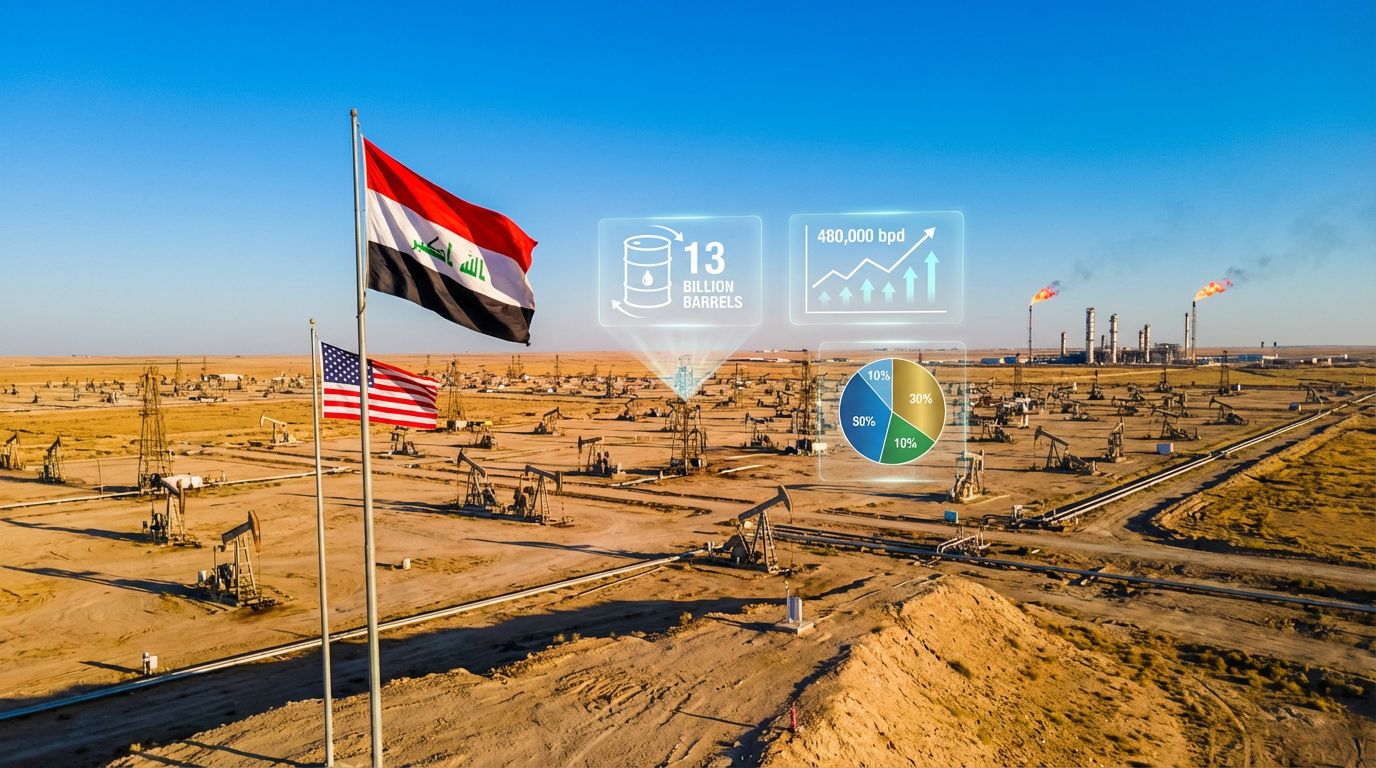
Iraq's decision to pursue American operators for West Qurna-2 represents a calculated response to multiple converging pressures that extend beyond simple sanctions compliance. The October 2025 U.S. sanctions on Lukoil created an immediate operational crisis for a field producing 480,000 barrels per day, forcing Baghdad to implement emergency measures while evaluating replacement options.
Risk Mitigation Through Operational Diversification
The Iraqi Oil Ministry's November 2025 assumption of crude marketing responsibilities from West Qurna-2 demonstrates sophisticated risk management during operator transitions. By maintaining production flows while negotiating with potential American replacements, Iraq avoided the revenue disruption that typically accompanies force majeure declarations in sanctioned environments.
This approach reflects broader dependency reduction strategies employed by petroleum exporters. Rather than maintaining concentrated exposure to Russian technical expertise, Iraq now seeks operational diversification that provides:
• Enhanced legitimacy in international energy markets
• Production continuity assurances during geopolitical volatility
• Access to Western technology and capital markets
• Alignment with U.S. strategic preferences for future project approvals
The 13 billion barrels of recoverable reserves at West Qurna-2 make operator selection particularly consequential for Iraq's long-term energy sovereignty. Unlike smaller fields where operational changes carry limited strategic impact, West Qurna-2's scale demands partners capable of sustaining complex reservoir management across decades.
Revenue Security Architecture Under Sanctions Pressure
Iraq's position as OPEC's second-largest producer amplifies the importance of maintaining stable cash flows from key assets during international sanctions regimes. The West Qurna-2 field represents approximately 9% of Iraq's total oil output, making operational disruptions particularly damaging to national budget planning.
| Economic Impact Metrics | West Qurna-2 Contribution |
|---|---|
| Daily Production | 480,000 barrels |
| Reserve Base | 13 billion barrels |
| National Output Share | ~9% |
| Operator Revenue Share | 75% |
| Production History | 15+ years proven performance |
The Iraqi government's statement that transferring West Qurna-2 management to American companies will "serve mutual interests, strengthen the stability of global markets and ensure Iraq's oil production and market share" reflects recognition that operator credibility directly affects revenue security. Western operators provide enhanced access to international banking systems, insurance markets, and customer bases that remain restricted for Russian entities under sanctions.
Budget stabilisation mechanisms for petroleum-dependent economies require predictable revenue streams that sanctions can severely disrupt. Iraq's proactive replacement of Lukoil with American operators prevents the revenue volatility that accompanies prolonged force majeure periods or production interruptions.
Market Dynamics Enabling Sanctioned Asset Transfers
The successful transition of assets from sanctioned entities to compliant operators depends on specific market conditions that align regulatory requirements with operational continuity. Iraq's West Qurna-2 transfer benefits from unique circumstances that facilitate rapid ownership changes while maintaining production stability.
Regulatory Compliance Framework for Cross-Border Acquisitions
U.S. sanctions on Lukoil created a constrained buyer environment where American companies gain preferential access to acquisition opportunities. The Trump administration's stated preference that "Lukoil's global assets are taken over by a U.S. entity" effectively screens out foreign competitors, narrowing negotiations to established American majors with proven Middle East operational experience.
This regulatory architecture paradoxically enables faster asset transfers by eliminating competitive uncertainty. Rather than managing complex international bidding processes with multiple regulatory jurisdictions, Iraq can focus negotiations on pre-qualified American operators already familiar with Treasury Department compliance requirements.
The timeline demonstrates efficient regulatory coordination:
• October 2025: U.S. announces Lukoil sanctions
• November 2025: Iraq assumes crude marketing control
• December 2025: Formal negotiations announced with American producers
This compressed timeline reflects streamlined approval processes when buyer and seller align with U.S. strategic objectives. Traditional acquisition timelines extending 12-18 months for international assets can be reduced significantly when regulatory approval is effectively pre-determined.
Production Continuity Protocols During Ownership Transitions
Iraq's operational approach during the Lukoil transition establishes a template for managing supergiant oilfield transfers without production loss. By separating crude marketing from technical operations, Baghdad maintained the 480,000 barrels per day production capacity while evaluating replacement operators.
This separation strategy addresses the fundamental challenge of operator transitions in complex petroleum projects: maintaining technical expertise while changing commercial relationships. Lukoil's continued technical oversight during November 2025 ensured reservoir management continuity while Iraq assumed revenue control and buyer negotiations.
The Iraqi government's intervention to maintain production flows during operator evaluation demonstrates sophisticated understanding that force majeure declarations can create cascading revenue losses extending far beyond immediate production interruptions.
Infrastructure integration challenges typically accompany established petroleum project transitions, particularly in supergiant fields with extensive surface facilities and complex reservoir management systems. However, West Qurna-2's mature development profile, established during its 2009-2014 ramp-up period, provides new operators with proven infrastructure requiring minimal capital investment for continued production.
Production Economics Driving West Qurna-2 Acquisition Interest
The economic fundamentals underlying West Qurna-2 create compelling investment opportunities for American energy companies seeking exposure to large-scale, mature production assets. With 13 billion barrels of recoverable reserves and demonstrated production capacity, the field offers rare access to supergiant-scale cash flows in a geopolitically strategic location.
Reserve Valuation Models for Supergiant Assets
West Qurna-2's position among the top 10 global oilfields by reserves creates unique valuation dynamics that favour integrated majors with extensive reservoir management capabilities. The field's 75% operator revenue share structure provides acquiring companies with substantial cash flow control, while Iraq retains ownership through government participation.
West Qurna-2 Economic Profile:
| Production Metric | Current Performance | Strategic Value |
|---|---|---|
| Recoverable Reserves | 13 billion barrels | Top-tier global asset |
| Daily Production | 480,000 barrels | Immediate cash flow |
| Operational History | 15+ years proven | De-risked production |
| Revenue Share | 75% operator control | Premium economics |
| Development Status | Fully ramped mature field | Minimal ramp-up capex |
The field's proven production profile eliminates typical exploration and development risks associated with new projects. Unlike frontier developments requiring substantial capital investment before production, West Qurna-2 offers immediate cash generation from established infrastructure.
Reserve quality considerations favour long-term value creation through enhanced recovery implementation. Supergiant fields typically maintain production for 40-50 years through secondary and tertiary recovery methods, suggesting substantial remaining value optimisation opportunities for technically sophisticated operators.
Cash Flow Optimisation Under American Operational Management
The transition from Russian to American operational control creates multiple avenues for cash flow enhancement through technology deployment and operational efficiency improvements. Major U.S. energy companies typically achieve cost reductions of 10-20% when acquiring mature international assets through:
• Digital transformation applications in reservoir monitoring
• Predictive maintenance systems reducing unplanned downtime
• Supply chain optimisation through established Middle East networks
• Enhanced oil recovery techniques extending productive life
Carbon capture integration possibilities provide additional value creation opportunities as ESG compliance becomes increasingly important for international petroleum operations. American operators' experience with environmental regulations positions them to implement emissions reduction technologies that enhance long-term operational permits and market access.
Production decline curve modelling under different operators reveals significant variance in long-term cash flows. While typical supergiant fields experience 3-7% annual decline rates after 15 years of operation, advanced reservoir management can reduce decline to 1-3% ranges through optimised recovery methods.
This operational variance directly impacts 30-40 year net present value calculations used in acquisition pricing, creating competitive advantages for companies with superior technical capabilities and capital access for enhanced recovery investments.
Investment Drivers Behind American Energy Company Interest
The strategic appeal of West Qurna-2 for major American energy companies extends beyond immediate production economics to encompass portfolio positioning, technology deployment opportunities, and geopolitical alignment benefits that enhance long-term value creation potential.
Middle Eastern Market Re-Entry Strategy
ExxonMobil and Chevron's confirmed interest in Lukoil's international assets, including West Qurna-2, reflects broader strategic repositioning toward Middle Eastern production growth. Both companies declined to comment following Iraq's invitation to U.S. companies announcement, but their previous expressions of interest indicate serious evaluation of acquisition opportunities.
Geographic diversification benefits for U.S. energy majors include:
• Access to low-cost, large-scale production offsetting North American shale decline rates
• Currency diversification through Middle Eastern revenue streams
• Portfolio rebalancing toward longer-lived reserves reducing capital intensity
• Regional expansion platforms for additional Iraqi project participation
The Iraqi government's commitment to "rebalance foreign participation in major upstream assets to attract Western investment" creates opportunities beyond West Qurna-2 acquisition. Successful operational performance at this supergiant field could position American companies for additional concessions as Iraq continues diversifying its operator base.
Technology Transfer and Enhanced Recovery Implementation
West Qurna-2's mature field status creates optimal conditions for advanced technology deployment that can substantially extend productive life and optimise recovery rates. The 13 billion barrel reserve base justifies significant capital investment in enhanced oil recovery methods that smaller fields cannot economically support.
Advanced drilling technique implementation potential includes:
• Horizontal drilling expansion for improved reservoir contact
• Multi-stage hydraulic fracturing in tight reservoir sections
• Intelligent completion systems for real-time production optimisation
• Automated surface facilities reducing operational costs
Digital transformation applications offer immediate operational improvement opportunities through integrated reservoir management systems, predictive analytics for equipment maintenance, and remote operations capabilities that reduce onshore staffing requirements while improving safety performance.
The field's established infrastructure provides platforms for carbon capture and storage pilot projects that could position Iraq as a regional leader in emissions reduction technology. American operators' experience with environmental compliance creates competitive advantages for implementing sustainability initiatives that enhance international market access.
Sanctions-Driven Asset Restructuring Impact on Global Energy Markets
The West Qurna-2 operator transition represents a significant case study in how international sanctions create forced asset restructuring that reshapes global energy investment patterns and strategic partnerships between producing nations and international oil companies.
Supply Chain Resilience Through Operational Diversification
Iraq's proactive replacement of Russian operators with American companies demonstrates sophisticated supply chain risk management that prioritises operational continuity over political relationships. This transition establishes important precedents for other petroleum-rich nations evaluating operator diversity strategies.
The implications extend beyond Iraq to influence global energy security architecture:
• Producing nations increasingly prioritise operator nationality in strategic planning
• International oil companies must demonstrate sanctions compliance across all operations
• Technology transfer becomes differentiating factor in operator selection
• Western companies gain competitive advantages in sanctioned-entity replacement scenarios
Furthermore, these developments intersect with broader geopolitical tensions, including the US ban on Russian uranium and how Trump tariffs and OPEC policies influence resource allocation decisions. Additionally, resource-dependent nations like Australia face parallel energy exports challenges requiring strategic diversification similar to Iraq's approach.
The management transition at West Qurna-2 demonstrates how energy security considerations increasingly outweigh traditional commercial relationships when geopolitical pressures create operational risks for producing nations.
Market pricing implications for distressed energy asset sales favour buyers with regulatory compliance advantages and established relationships with both producing nations and consumer markets. American companies' access to U.S. banking systems, insurance markets, and customer bases provides premium valuations for assets divested from sanctioned entities.
Precedent Framework for Future Sanctioned Asset Transfers
The Iraq-Lukoil-American company transition creates replicable frameworks for similar operator changes in other jurisdictions where Russian energy companies face divestiture pressure. The compressed timeline and operational continuity achieved provide templates for:
• Government intervention strategies maintaining production during transitions
• Regulatory approval processes for sanctioned-entity asset acquisitions
• Technical handover protocols preserving reservoir management expertise
• Commercial structure modifications accommodating new operator capabilities
Timeline expectations for comparable regulatory approval processes suggest 6-9 month periods from initial sanctions announcement to completed operator transition, significantly shorter than typical international asset acquisition timelines of 12-18 months.
This acceleration reflects streamlined approval when buyer selection aligns with sanctioning authority strategic preferences, creating efficiency gains that benefit both producing nations and acquiring companies through reduced transaction uncertainty and faster cash flow realisation.
Due Diligence Framework for American Company Evaluations
The acquisition evaluation process for West Qurna-2 requires comprehensive technical, political, and economic analysis addressing the unique challenges of acquiring assets from sanctioned entities while ensuring operational continuity in complex geopolitical environments.
Technical Asset Assessment Protocols
Mature supergiant field evaluations demand specialised expertise in reservoir engineering, infrastructure condition analysis, and long-term production optimisation potential. West Qurna-2's 15+ years of operational history provides substantial data for technical assessment, but acquiring companies must evaluate:
• Current reservoir pressure maintenance effectiveness
• Infrastructure condition after years of operation under sanctions pressure
• Deferred maintenance requirements affecting near-term capital expenditures
• Enhanced recovery implementation opportunities and associated costs
Environmental liability assessment becomes particularly important for American companies subject to strict U.S. environmental compliance standards. Historical operational practices under Russian management may require remediation investments to meet Western environmental standards, affecting acquisition valuations and operational budgets.
Reservoir engineering evaluation protocols must account for potential data gaps or accessibility restrictions during the transition period. Comprehensive reservoir modelling requires detailed geological, geophysical, and production data that may be incomplete during rapid ownership transitions.
Political Risk Evaluation Models
Operating in Iraq requires sophisticated political risk assessment addressing multiple layers of government relationships, regional security considerations, and international sanctions compliance. American companies must evaluate:
Government Relations Stability Factors:
• Iraqi federal government support for long-term American operator presence
• Kurdistan Regional Government relationship implications
• Local community engagement requirements and social licence considerations
• Regulatory change probability affecting foreign operator agreements
Regional security considerations for long-term operations include infrastructure protection requirements, personnel security protocols, and contingency planning for political instability affecting production continuity.
The evolving sanctions landscape creates additional complexity requiring ongoing compliance monitoring and adaptation to changing regulatory requirements affecting Russian-origin assets and Iraqi government relationships.
Competitive Positioning Analysis for Leading Acquisition Candidates
The constrained buyer pool for West Qurna-2 creates unique competitive dynamics where operational capabilities, financial resources, and strategic alignment with both Iraqi and American government preferences determine selection probability.
ExxonMobil's Strategic Advantages Through Regional Experience
ExxonMobil's prior involvement in Iraqi petroleum development, including the Majnoon field project, provides significant competitive advantages for West Qurna-2 acquisition evaluation. The company's established relationships with Iraqi government officials and understanding of local operational challenges create differentiation versus competitors without regional experience.
Operational synergies between Basra province developments could generate cost savings through:
• Shared infrastructure utilisation for transportation and processing
• Integrated supply chain management across multiple projects
• Technical expertise transfer between adjacent field operations
• Consolidated administrative functions reducing overhead costs
ExxonMobil's technical expertise in supergiant field management, demonstrated through decades of international operations, aligns with West Qurna-2's reservoir complexity and long-term optimisation requirements.
Alternative Bidder Assessment Framework
Chevron's international heavy oil development capabilities provide alternative technical approaches for West Qurna-2 optimisation, particularly for enhanced recovery implementation in mature reservoir sections. The company's experience with complex reservoir management and advanced recovery techniques offers different operational advantages.
Competitive Factor Analysis:
| Evaluation Criteria | ExxonMobil Advantages | Chevron Advantages |
|---|---|---|
| Regional Experience | Established Iraqi relationships | Global heavy oil expertise |
| Technical Capabilities | Supergiant field management | Enhanced recovery leadership |
| Financial Resources | Integrated major balance sheet | Strong cash flow generation |
| Strategic Alignment | Majnoon synergy potential | Portfolio diversification fit |
Independent producer participation potential exists through consortium structures where American majors provide financial backing and technical expertise while specialised operators contribute focused reservoir management capabilities.
National oil company partnership opportunities for risk sharing could involve Iraqi participation alongside American operators, creating hybrid ownership structures that satisfy both countries' strategic objectives while distributing investment risks and operational responsibilities.
Investment Implications and Strategic Value Assessment
The West Qurna-2 asset transfer represents broader transformation indicators in global energy investment patterns, where sanctions compliance and geopolitical alignment increasingly influence asset allocation decisions and strategic portfolio positioning.
Energy Security Transformation Signals
Iraq's systematic approach to replacing Russian operators with American companies indicates fundamental shifts in producer-nation strategic thinking about energy security and operator diversification. This transition provides measurement frameworks for understanding changing dynamics in international petroleum partnerships.
Investment flow redirection patterns from sanctioned to compliant operators create new opportunities for Western energy companies seeking large-scale production growth. The constrained competitive environment for sanctioned-entity assets may provide acquisition opportunities at favourable valuations relative to traditional market transactions.
Portfolio rebalancing signals from major integrated oil companies suggest increasing emphasis on geopolitically stable, large-scale assets that provide predictable cash flows and growth platforms for additional regional development.
Long-Term Value Creation Opportunities
Production optimisation potential under American operational management extends beyond immediate efficiency improvements to encompass technology deployment, environmental compliance enhancement, and market access expansion that create sustainable competitive advantages.
Value Creation Framework:
• Operational Excellence: Digital transformation and automation reducing costs
• Technology Integration: Enhanced recovery methods extending field life
• ESG Compliance: Environmental standards meeting international requirements
• Market Access: Western operator credentials enhancing crude marketing opportunities
ESG compliance improvements through Western operator standards address growing international emphasis on environmental, social, and governance factors in petroleum operations. American companies' experience with strict environmental regulations positions them to implement sustainability initiatives that enhance long-term market access and operational permits.
The successful integration of West Qurna-2 under American management could establish templates for additional Iraqi asset diversification, creating platform opportunities for expanded regional presence and additional acquisition opportunities as sanctions pressures continue reshaping global energy investment patterns.
Consequently, as Iraq targets U.S. firms for West Qurna-2 stake transfer, this transition serves as a blueprint for how energy-dependent nations can maintain production stability whilst navigating complex geopolitical environments through strategic operator diversification.
Disclaimer: This analysis is based on publicly available information and industry observations. Investment decisions should be made based on comprehensive due diligence and professional investment advice. Geopolitical developments and regulatory changes may significantly impact the outcomes described.
Looking to Capitalise on Energy Sector Transformations?
While Iraq's strategic pivot to American energy partnerships demonstrates how geopolitical shifts create investment opportunities, Discovery Alert's proprietary Discovery IQ model identifies emerging mineral discoveries with similar transformative potential on the Australian Stock Exchange. Discover how major mineral discoveries can generate substantial returns by exploring Discovery Alert's dedicated discoveries page, then begin your 30-day free trial to position yourself ahead of market-moving announcements.