July 2, 2026
Why Iron Ore Is the Commodity Serious Investors Keep Underestimating
The global commodities landscape tends to reward the loudest narratives. Gold captures headlines during uncertainty cycles, lithium surges on electrification themes, and copper earns its reputation as an economic bellwether. Yet quietly, year after year, iron ore generates more mining revenue than any other single commodity on earth. That structural reality rarely sparks investor excitement, but for those willing to look past the noise, it points toward an opportunity hiding in plain sight — particularly in projects such as the Oceanic Iron Ore Hopes Advance project in Quebec.
The case for iron ore is not built on speculation. It is built on the basic arithmetic of civilisation. Every building constructed, every vehicle assembled, every piece of defence infrastructure fabricated requires steel, and steel requires iron ore. As the world's emerging economies continue expanding their urban footprints and middle classes, the demand trajectory for steel inputs remains structurally intact across multi-decade timeframes.
What has changed, however, is the nature of that demand. Not all iron ore is created equal, and the divergence between commodity-grade material and high-purity product is widening. That gap is reshaping who wins and who loses across the entire iron ore development landscape, with direct implications for how investors should be thinking about iron ore price trends and project selection.
When big ASX news breaks, our subscribers know first
The Grade Premium That Changes Everything
Understanding Iron Ore Quality Tiers
The iron ore market does not operate like gold, where a single spot price applies universally. Every iron ore deposit produces a distinct product, and pricing is calculated relative to benchmark grades with premiums or discounts applied depending on iron content and impurity levels.
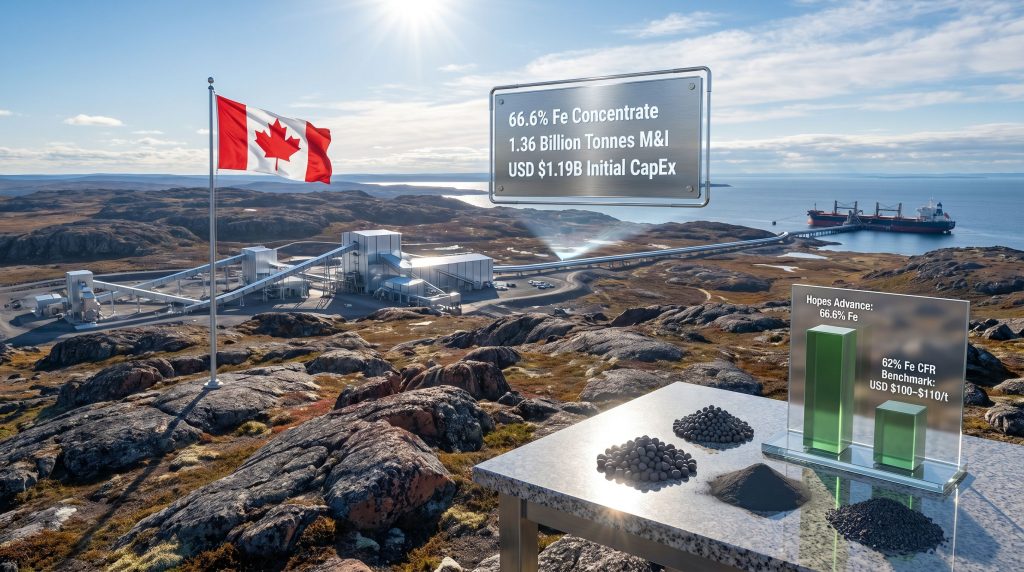
The most widely referenced industry benchmark is the 62% Fe CFR (cost and freight) price, which has traded in the USD $100 to $110 per tonne range through 2025 and into 2026. This serves as the pricing anchor from which individual products are adjusted up or down. A product carrying elevated silica, alumina, or phosphorus content will trade below benchmark, while a product exceeding 65% Fe purity commands a meaningful premium.
The reason that premium exists, and why it is likely to grow over time, comes down to supply fundamentals. Iron ore above 65% Fe purity is found in finite quantities globally. The geological conditions required to produce such high-purity concentrates are uncommon, and the existing producers of such material face natural depletion pressures. As steelmakers increasingly adopt direct reduction (DR) technology to lower carbon emissions, their feedstock requirements shift decisively toward higher purity inputs. Understanding the various iron ore market types and deposit categories is consequently essential for evaluating which projects are best positioned to benefit.
The Simandou Factor: New Supply or Just Replacement?
One dynamic worth examining carefully is the Simandou project in Guinea, a massive iron ore development backed by Rio Tinto and other partners that has seen approximately USD $20 billion in investment and is expected to ramp toward 120 million tonnes per annum at full capacity. Market commentary has at times framed this as a bearish price catalyst — the arrival of a major new supply source into an already substantial market.
The more nuanced read, however, is that Simandou's output largely offsets the natural depletion occurring at existing iron ore operations globally. It is not incremental supply on top of a stable base; it is replacement supply for ore bodies being exhausted. The psychological impact on markets may be temporarily negative, as sentiment often overreacts to headline production figures, but the fundamental supply balance argument remains supportive of stable to firming prices in the medium term.
The critical insight for investors is that short-term psychological pressure from large project announcements should not be confused with a structural shift in supply-demand dynamics. Depletion replacement is not the same as oversupply.
Geopolitics and the New Sourcing Calculus
Why Origin Now Matters as Much as Grade
Until relatively recently, iron ore procurement decisions were driven almost entirely by price and logistics. Jurisdiction of origin was a secondary consideration at best. That calculation has shifted fundamentally as supply chain disruption events, geopolitical realignments, and trade policy fragmentation have elevated sourcing origin to a primary procurement variable. Furthermore, the impact of tariffs on iron ore markets has added another layer of complexity to global sourcing strategies.
The seaborne iron ore market is heavily concentrated around Australian and Brazilian production. While both countries are broadly stable, concentration risk is real, and the global trend toward ally-sourced commodity supply has accelerated across multiple mineral categories. Iron ore is increasingly part of that conversation.
Canada sits in a uniquely advantageous position within this realignment. Its status as a politically stable, allied nation with strong rule of law, established mining regulations, and deep infrastructure expertise makes Canadian-sourced iron ore a natural destination for procurement diversification strategies. This is not a government-designated status for any individual project, but rather the natural consequence of jurisdictional credibility in a fragmented global trade environment.
Emerging Market Demand: Beyond China
For decades, Chinese steel production has dominated where seaborne iron ore flows. That concentration created its own risks, both for buyers dependent on Chinese mill activity and for producers needing China to remain an unconstrained offtake market. The China steel and iron ore market continues to evolve, however, and the expansion of credible alternative demand centres is changing that equation meaningfully.
| Target Market | Key Demand Driver | High-Grade Ore Relevance |
|---|---|---|
| Japan | Government-mandated quality sourcing requirements | High |
| India | High-grade domestic depletion, projected 40% net import dependency by 2030 | High |
| Middle East | Infrastructure development boom requiring steel inputs | Medium-High |
| Europe | Supply chain diversification and carbon-efficient steel policies | Medium |
Japan's government has formally mandated a shift toward higher-quality iron ore procurement, creating policy-backed demand for premium-grade material. India represents perhaps the most structurally compelling emerging demand story, as the country's domestic high-grade iron ore reserves are being depleted at a pace that is expected to push India into net importer status for approximately 40% of its iron ore requirements by 2030. The Middle East's infrastructure ambitions across multiple nations continue to generate sustained appetite for steel inputs. Together, these markets represent a meaningful diversification of demand that reduces the China concentration risk that has historically made iron ore a more volatile investment proposition.
The Hopes Advance Project: A Structural Outlier in the Development Pipeline
Location, Scale, and Resource Profile
The Oceanic Iron Ore Hopes Advance project in Quebec occupies one of the most historically significant iron ore regions on the continent — the Labrador Trough of Northern Quebec, situated near Ungava Bay. The project is 100% owned by Oceanic Iron Ore Corp and hosts a resource totalling over 1.36 billion tonnes measured and indicated at 32.1% Fe.
What distinguishes Hopes Advance from a product quality perspective is the 66.6% Fe concentrate the project produces, combined with a low impurity profile. That grade sits comfortably above the 65% Fe threshold that triggers meaningful pricing premiums in the current market and positions the project's output directly within the feedstock tier most sought after by steelmakers transitioning toward lower-emission production methods.
According to recent project updates from Oceanic, the current mine plan covers three of ten identified deposits across a 28-year mine life, meaning the resource underpinning the project represents only a fraction of the geological inventory available across the full Hopes Advance landholding. Seven additional deposits remain outside the current study scope entirely, representing substantial long-term optionality that does not yet appear in formal project economics.
The Tidewater Advantage: Infrastructure That Changes the Economics
Iron ore development is as much a logistics and transportation business as it is a mining business. An often-cited but genuinely important figure is that transportation costs can account for up to 50% of the all-in cost of iron ore production once rail haulage and port handling are factored in. For landlocked deposits requiring extensive rail corridors to reach tidewater, those costs are not just high in dollar terms — they require massive throughput volumes to achieve viable payback periods, which in turn drives up capital requirements.
Hopes Advance sidesteps this cost structure entirely. The project is located 26 kilometres from tidal access, with a planned slurry pipeline connecting the processing facility directly to a private port, eliminating any rail dependency. In a capital-intensive sector where every infrastructure shortcut represents a genuine competitive advantage, this distinction is substantial.
The practical consequence is visible in the project's economics relative to comparable Quebec peers:
| Cost Metric | Hopes Advance | Typical Quebec Iron Ore Peer |
|---|---|---|
| Initial Capital Expenditure | USD $1.19 billion (2019 PEA) | USD $5 billion+ |
| Operating Cost | ~USD $30 per tonne | Materially higher |
| Rail Requirement | None | Significant capital obligation |
| Post-Tax NPV (8% discount) | USD $1.4 billion | Varies |
| IRR | ~17% | Varies |
A USD $30 per tonne operating cost in the current iron ore price environment is not just competitive — it positions the project with meaningful margin resilience across a wide range of price scenarios. Projects requiring USD $5 billion or more in upfront capital to fund rail and port construction face a fundamentally different risk profile and require sustained higher iron ore prices to generate comparable returns.
High-Grade Concentrate and the Critical Mineral Pathway
One less-discussed dimension of the Hopes Advance project profile is its potential eligibility for critical mineral designation. Advances in hydrogen iron ore reduction technology are furthermore increasing the strategic value of high-purity concentrates, as direct reduction processes require precisely the kind of feedstock that Hopes Advance is designed to produce.
Should Oceanic elect to further refine its concentrate to meet direct reduction iron specifications, the resulting product could qualify as a critical mineral under both federal and provincial Canadian frameworks. This pathway has not been formally pursued, but the geological and metallurgical foundation exists within the current project design. The implications for financing, policy support access, and offtake market positioning could be meaningful if that strategic decision is made.
The global high-purity iron ore development landscape is concentrated in just two regions at meaningful scale: Quebec and Brazil. Brazil's high-grade assets are predominantly consolidated under Vale and are being developed within that corporate structure. That leaves Quebec, and specifically projects like the Oceanic Iron Ore Hopes Advance project in Quebec, as among the most significant remaining standalone development opportunities globally for high-grade iron ore.
The Development Roadmap: From Current Position to Production Decision
Capital Requirements and Funding Strategy
The path from current project status to Final Investment Decision is estimated to require approximately USD $80 million over a three-and-a-half to four-year timeframe. Oceanic raised approximately USD $50 million in February 2026, which represents the majority of that capital requirement. The balance of roughly USD $30 million is expected to be raised through future equity activity ahead of FID.
The post-FID financing structure follows an established model common in large-scale iron ore development. A strategic partner — likely a steel producer or trading house seeking secure long-term offtake — would acquire up to approximately 50% of project equity in exchange for offtake rights and would arrange project-level debt financing targeting a roughly 50/50 debt-to-equity split. This structure mirrors precedents from multiple major iron ore projects globally and keeps Oceanic's dilution manageable while securing the balance sheet capacity needed for construction.
Key Milestones on the Path to FID
- Prefeasibility Study (PFS) — targeted for Q4 2026, updating the 2019 PEA with current capital and operating cost estimates
- Environmental permitting restart — currently underway, representing the most critical timeline component
- Engineering and optimisation studies — ongoing to refine project design parameters
- Strategic partnership and offtake structuring — anticipated to involve a major steel industry participant
- Final Investment Decision — projected approximately three to four years from mid-2026
The PFS is a particularly significant near-term catalyst because the existing 2019 Preliminary Economic Assessment, while informative, is now seven years old. The updated figures for capital expenditure, operating costs, and project economics are expected to reflect significant engineering advancement and potentially incorporate market feedback from early offtake discussions. The release of that study could serve as a meaningful re-rating event for the company.
Why the NAV Discount Represents an Asymmetric Setup
Oceanic Iron Ore currently trades at approximately 0.1 times NAV, a valuation multiple more consistent with early-stage exploration stories than a project with over 1.36 billion tonnes of measured and indicated resource, completed preliminary economics, tidewater infrastructure access, and a credible management team with a documented track record. Junior mining developers at equivalent stages of advancement typically trade at 0.3 to 0.6 times NAV.
| Attribute | Hopes Advance | Global Peer Average (Developers) |
|---|---|---|
| Resource Size | 1.36 Bt M&I | Varies widely |
| Product Grade | 66.6% Fe | 62-65% Fe typical |
| Tidewater Access | Yes | Rare |
| Rail Requirement | None | Common |
| Jurisdiction Risk | Low (Canada) | Variable |
| Current NAV Multiple | ~0.1x | 0.3-0.6x typical |
The compression in valuation has a historical explanation. The project entered a strategic hibernation period that lasted approximately 12 years, driven first by the iron ore price collapse in 2013, when the commodity fell to around USD $50 per tonne and remained there for five to six years, and subsequently by shareholder composition issues that required resolution before meaningful project advancement could resume. With those constraints now addressed and the project formally reactivated, the gap between current market pricing and fundamental project value represents a significant asymmetry.
Management Credibility and Capital Alignment
A Track Record Built Across Multiple Development Cycles
The people behind a development-stage mining company matter enormously, because technical merit alone does not build mines. Capital allocation decisions, partner relationship management, regulatory navigation, and investor communication collectively determine whether a project reaches production or stalls indefinitely.
Oceanic's leadership brings documented evidence of execution at scale. The team was involved in Atlantic Gold, which was developed and ultimately sold for CAD $800 million in 2019, and in Artemis Gold's Blackwater project in British Columbia, which progressed from an enterprise value of approximately CAD $30 million to a value approaching CAD $8 billion as the project was built out and expanded. These outcomes span precious metals development but demonstrate the ability to take complex, capital-intensive projects from resource stage through to operational and transactional success.
Insider Ownership as a Confidence Indicator
Management and board members collectively hold approximately 60% of Oceanic shares on a fully diluted basis. That level of insider alignment is exceptional by junior mining standards, where management ownership of 10% to 20% is more typical. When decision-makers have that proportion of personal capital exposed to project outcomes, their incentive structures are directly aligned with shareholder value creation in a way that dilution-heavy, fee-driven management teams are not.
High insider ownership does not guarantee project success, but it does substantially reduce the risk of decisions being made that benefit management at the expense of shareholders. With 60% skin in the game, the interests run in one direction.
The next major ASX story will hit our subscribers first
Supporting Infrastructure and Regional Context
Quebec's Northern Development Framework
Quebec's provincial government has committed CAD $2.6 billion through 2028 under the Northern Action Plan, a regional development framework targeting infrastructure connectivity and economic activity in Northern Quebec. While this does not constitute project-specific government support for Hopes Advance, it does represent a meaningful backdrop of infrastructure investment across the broader region in which the project operates, reducing some of the isolation risk that has historically characterised Northern Quebec iron ore development.
Hopes Advance has been identified within regional planning contexts as a potential significant contributor to Northern Quebec's economic development, a recognition that reflects the project's scale rather than any formal designation or approval status. In addition, independent mining data on the project confirms the resource's scale and geological consistency across the deposit footprint, further supporting the project's development credentials.
Morgan Lake and Roberts Lake: Optionality in Reserve
A Disciplined Focus on the Primary Asset
Beyond Hopes Advance, Oceanic holds the Morgan Lake and Roberts Lake project areas, which carry historical resource estimates and a product profile consistent with the high-grade character of the primary deposit. These assets are best understood as long-term optionality rather than near-term development priorities.
The management team has been explicit about capital discipline on this point. Establishing current mineral resources for Morgan Lake and Roberts Lake would require tens of millions of dollars in exploration expenditure that would not generate near-term project value. The economics being advanced are based entirely on Hopes Advance, which itself covers only three of ten identified deposits. The additional project areas represent a future avenue of growth, most likely funded through operating cash flows once Hopes Advance reaches production, rather than a present capital allocation priority.
Frequently Asked Questions: Oceanic Iron Ore and Hopes Advance
What is the Hopes Advance iron ore project?
Hopes Advance is a 100%-owned iron ore development project located in the Labrador Trough of Northern Quebec, Canada. It hosts a resource of over 1.36 billion tonnes measured and indicated, produces a 66.6% Fe concentrate with low impurities, and has tidewater access via a 26-kilometre pipeline to a private port facility.
Why does tidewater access matter so much for iron ore economics?
Transportation costs can account for up to half of the all-in cost of iron ore production. Projects requiring extensive rail infrastructure must justify that capital through very large-scale output, which drives total upfront investment above USD $5 billion for typical Quebec peers. Hopes Advance avoids this entirely, enabling a capital cost of approximately USD $1.19 billion and an operating cost of around USD $30 per tonne.
What is the 62% Fe CFR benchmark and why does it matter?
It is the most widely used reference price in the iron ore industry, representing 62% iron content delivered to China. All other iron ore products are priced relative to this benchmark, with higher-grade products above 65% Fe typically commanding premiums due to their scarcity and growing demand from lower-emission steelmaking processes.
When is the Hopes Advance Prefeasibility Study expected?
The PFS is targeted for Q4 2026 and will update the 2019 Preliminary Economic Assessment with current capital cost, operating cost, and project economics estimates incorporating seven years of additional engineering and market intelligence.
How is the project financed through to Final Investment Decision?
Oceanic raised approximately USD $50 million in February 2026. Total estimated capital to reach FID is approximately USD $80 million, with the balance to be raised through future equity. Post-FID, a strategic partner is expected to acquire up to 50% project equity in exchange for offtake rights and to arrange debt financing for construction.
What makes Hopes Advance different from other iron ore developers globally?
The combination of high-grade concentrate at 66.6% Fe, tidewater access eliminating rail dependency, a 28-year mine life, low operating costs, and a tier-one Canadian jurisdiction creates a profile that is rare among standalone iron ore development projects globally. Most comparable high-grade iron ore assets in Quebec and Brazil are either in production or controlled by major producers.
The Convergence Case for a Rare Asset Class
Iron ore occupies an unusual position in the commodity investment universe. It generates more global mining revenue than any other commodity, yet it consistently receives less investor attention than gold, copper, or battery metals. Within iron ore, the high-purity segment operates under even more specific supply constraints that are not widely understood outside the specialist mining community.
The Oceanic Iron Ore Hopes Advance project in Quebec sits at the intersection of several independently compelling investment arguments: grade premium dynamics in a market moving toward lower-emission steelmaking, jurisdictional credibility in an era of supply chain realignment, infrastructure advantage in a logistics-intensive industry, and a valuation discount rooted in historical circumstance rather than fundamental weakness.
None of this constitutes investment advice, and commodity development projects carry substantial execution, financing, and market risk that investors must assess independently. The timeline to production is measured in years, the capital requirements are significant, and iron ore price movements can be volatile and unpredictable. Prefeasibility studies, environmental permitting, and strategic partnership formation all carry their own uncertainties.
What is clear is that the structural argument for high-purity iron ore supply from allied jurisdictions is gaining credibility across procurement, policy, and financial circles simultaneously. Projects that can demonstrate low-cost production, long mine life, and tidewater logistics in that environment deserve rigorous attention from commodity-focused investors.
This article is intended for informational and educational purposes only and does not constitute financial or investment advice. Mining development projects involve significant risks including commodity price volatility, permitting uncertainty, capital availability, and execution challenges. Readers should conduct their own independent due diligence before making any investment decisions.
Further Exploration: Readers seeking deeper engagement with iron ore market dynamics, junior mining development strategies, and commodity investment frameworks can explore related educational content through Commodity Culture on YouTube, which features in-depth conversations with resource sector executives and industry specialists.
Want to Be First When the Next Major Iron Ore Discovery Hits the ASX?
Discovery Alert's proprietary Discovery IQ model scans ASX announcements in real time, instantly identifying high-potential mineral discoveries — including iron ore — and delivering actionable alerts to subscribers before the broader market reacts. Explore historic discovery returns on Discovery Alert's dedicated discoveries page and begin your 14-day free trial to position yourself ahead of the next significant find.