Jindalee Lithium Ltd
- ASX Code: JLL
- Market Cap: $42,289,888
Jindalee Lithium Clears Final Permitting Step for McDermitt Drilling Ahead of September 2026 Start
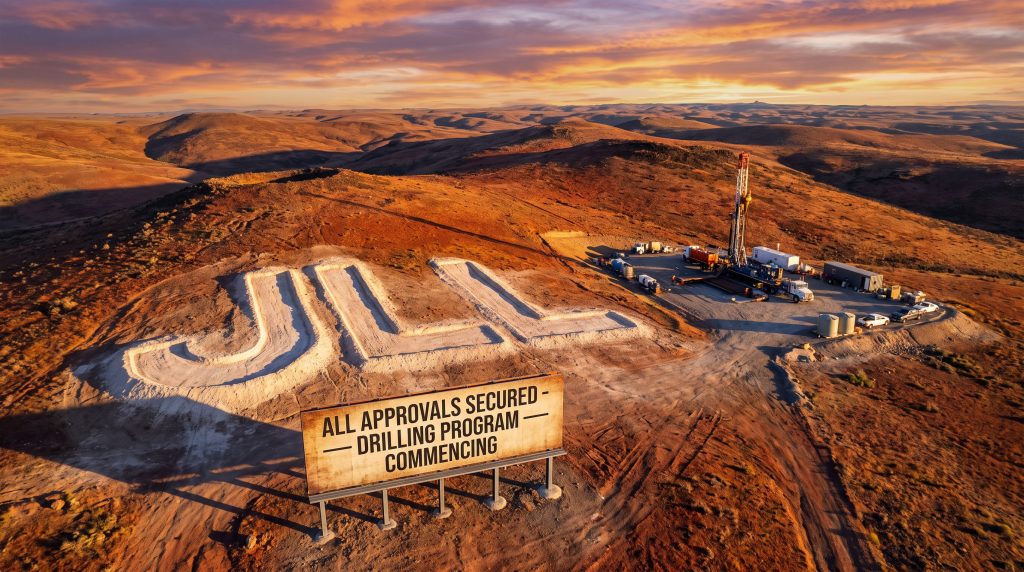
Jindalee Lithium Limited (ASX: JLL) has reported that all major approvals needed to begin Phase 1 drilling at its McDermitt Lithium Project in Oregon are now in place, clearing the way for a planned September 2026 start, subject to wildfire conditions easing and a fire waiver being issued. The update marks a shift from permitting and planning into field execution at a project that hosts a 21.5 Mt lithium carbonate equivalent (LCE) resource, according to the company's 2023 Mineral Resource Estimate.
The final approval came from the Oregon Department of Geology and Mineral Industries (DOGAMI), a state-level permit required alongside the federal Exploration Plan of Operations (EPO) already approved by the US Bureau of Land Management (BLM) in December 2025. According to the ASX announcement, Jindalee's wholly owned US subsidiary, HiTech Minerals Inc., has already contracted Forged Drilling Corp. for the program.
For investors, the importance of this update lies less in discovering a new target and more in improving confidence in an already defined large-scale lithium resource. Furthermore, the planned drilling is intended to support the next stage of technical work for the McDermitt Feasibility Study.
When big ASX news breaks, our subscribers know first
The Final Piece Falls Into Place
According to the announcement, the EPO allows for a staged drilling campaign of up to 168 drill sites across McDermitt. Phase 1 accounts for up to 100 drill sites and will focus on the central part of the deposit inside the mine design outlined in the company's November 2024 Pre-Feasibility Study (PFS).
DOGAMI approval was the final major regulatory requirement for this first stage. With that approval now secured, Jindalee stated that site mobilisation planning is well progressed and site preparation works are expected to begin ahead of drilling.
A near-term operational variable remains wildfire risk. Jindalee noted that Oregon is experiencing its worst wildfire season on record in 2026, with more than 2 million acres burned and several major fires still active. As a result, drilling is expected to begin in September 2026 only if fire risk eases and a fire waiver is granted.
Managing Director Commentary
"We are delighted to have received the final permits for Phase 1 of the EPO drilling program at McDermitt and look forward to commencing the program next month, subject to receipt of the fire waiver. This work will provide critical data for the McDermitt Feasibility Study," said Ian Rodger, Managing Director and CEO of Jindalee Lithium.
The company also reported that risk management plans have been prepared for the drilling campaign, including staging water trucks on site for drilling use, dust suppression and emergency fire response.
What Phase 1 Drilling Is Designed to Deliver
This is not frontier exploration in the usual sense. McDermitt is already a defined lithium resource, so the Phase 1 program is aimed at gathering the data needed to reduce uncertainty and refine project planning.
According to the project update in the ASX announcement, Phase 1 is expected to cover three main workstreams:
- Infill drilling to improve resource confidence in areas currently classified as Indicated and Inferred
- Metallurgical and geotechnical sampling using fresh drill core to support processing and mine design studies
- Environmental and hydrogeological data collection to support permitting and feasibility work
Infill drilling means drilling between existing holes to produce a denser set of data. In practical terms, this helps geologists assess grade continuity, thickness and geometry with greater precision. That matters because higher-confidence resources are generally more useful in advanced mine planning and financing discussions.
The company stated that the drilling will use a mix of reverse circulation (RC) and core drilling. RC drilling is commonly used to collect rock chips relatively quickly and cost effectively, while core drilling produces solid cylinders of rock better suited for detailed geological, metallurgical and geotechnical testing.
First results from the program are expected in the December 2026 quarter.
| Phase 1 Parameter | Detail |
|---|---|
| Total EPO drill sites approved | Up to 168 |
| Phase 1 drill sites | Up to 100 |
| Drilling methods | RC and core |
| Target area | Central deposit within PFS mine design |
| Drilling contractor | Forged Drilling Corp. |
| Planned start | September 2026, subject to fire waiver |
| First results expected | December 2026 quarter |
Understanding Why Resource Confidence Matters
For non-specialist investors following lithium stocks on the ASX, one of the most useful ways to interpret this drilling update is through the lens of resource classification.
A Mineral Resource Estimate (MRE) is an estimate of how much mineralised material is present, what grade it contains, and how confidently that estimate can be relied upon. Resources are usually grouped into three main categories:
- Measured: highest confidence, based on close-spaced and detailed drilling
- Indicated: moderate confidence, with enough data to support mine planning assumptions
- Inferred: lower confidence, where geological evidence exists but data density is still limited
Why Does Resource Classification Matter?
A large resource on its own does not automatically translate into a mine. As projects advance from scoping to pre-feasibility and then feasibility, investors often focus on how much of the resource sits in higher-confidence categories.
In Jindalee's case, Phase 1 drilling is intended to upgrade confidence levels within the central portion of the deposit. If successful, it could strengthen the technical basis of the future feasibility study and improve the reliability of mine planning assumptions.
This type of drilling can be particularly important because resource classification affects several downstream decisions, including:
- mine scheduling
- processing study assumptions
- infrastructure design
- financing discussions
- potential customer or offtake engagement
A simple way to view it is that larger amounts of higher-confidence material can reduce development uncertainty. That does not guarantee future outcomes, however, it can improve the quality of the technical dataset used to assess the project.
McDermitt Resource Scale Remains Central to the Investment Case
McDermitt's size continues to be a defining feature of the project. According to Jindalee's 27 February 2023 ASX announcement, the project hosts a total resource of 3,000 Mt grading 1,340 ppm lithium for 21.5 Mt LCE at a 1,000 ppm lithium cut-off grade.
The resource table reported by the company is set out below.
| Classification | Tonnage (Mt) | Li Grade (ppm) | LCE (Mt) |
|---|---|---|---|
| Indicated | 1,470 | 1,420 | 11.1 |
| Inferred | 1,540 | 1,270 | 10.4 |
| Total | 3,000 | 1,340 | 21.5 |
The focus of the current drilling stage is the central area within the PFS mine design, rather than the entire deposit footprint. That is consistent with an approach aimed at advancing the most relevant part of the resource for future development work first.
The company also reiterated that it holds 100% ownership of McDermitt through HiTech Minerals Inc. and retains unencumbered offtake rights. For investors, ownership structure can be relevant because it influences strategic flexibility, project control and potential future partnership options.
How the Drilling Programme Feeds Into the Feasibility Study
The ASX announcement links the upcoming drilling directly to the McDermitt Feasibility Study. That connection is important because feasibility studies require more detailed and higher-confidence inputs than earlier-stage technical studies.
The company stated that the programme is expected to provide:
- upgraded confidence in mineral resources
- fresh samples for metallurgical testwork designed to improve processing efficiencies
- geotechnical data essential to project planning
- environmental information, including groundwater and hydrogeological data
Metallurgical testwork examines how the ore responds to processing methods and whether recoveries or operating assumptions can be improved. Geotechnical work, by contrast, helps engineers understand rock strength, slope stability and ground conditions for mine and infrastructure design.
Taken together, these datasets are not headline-grabbing in the same way as a new discovery, but they are often the practical building blocks of project advancement.
Near-Term Milestones for Investors to Watch
With permitting largely addressed for Phase 1, the next set of milestones becomes more operational and data-driven. Based on the announcement, the near-term timeline includes:
- site preparation ahead of mobilisation
- issue of a fire waiver if conditions allow
- drilling commencement in September 2026
- ongoing Phase 1 work across up to 100 drill sites
- first results in the December 2026 quarter
Beyond that, the EPO allows for an additional 68 drill sites outside the first phase. The announcement does not state a schedule for those later sites, but the staged structure gives the company scope to expand work as datasets are incorporated into planning.
For investors, the first material catalyst is likely to be the initial drilling and sampling results. Those results are expected to be relevant not only for geology, but also for metallurgy, environmental studies and engineering assumptions feeding into the feasibility study.
Why This Update Matters in the Context of Jindalee's Development Stage
Jindalee is now operating in a post-PFS phase where incremental permitting, drilling and technical de-risking can be more important than broad conceptual narratives. The November 2024 PFS outlined the mine design area now being targeted in Phase 1, meaning the planned work is tied to a defined development concept rather than a standalone exploration campaign.
That distinction matters considerably. At this stage, investors are often assessing whether a company can convert technical studies into execution milestones. Securing both the federal BLM approval and the state DOGAMI permit suggests that Jindalee has progressed through a key procedural gate for on-ground work at McDermitt.
There are still conditions attached to the immediate timetable. The company has clearly stated that a September 2026 start remains subject to wildfire risk easing and a fire waiver being granted. That caveat is important, particularly given the severity of current conditions in Oregon.
Even so, the latest announcement indicates that Jindalee has moved beyond a major permitting uncertainty and into mobilisation planning. In practical terms, that shifts investor attention toward execution, results flow and how effectively the new drilling data supports the next phase of study work.
The next major ASX story will hit our subscribers first
What to Watch From Here
Jindalee Lithium's latest ASX announcement positions McDermitt for a transition from approvals to field activity. All major Phase 1 permits are now in place, a drilling contractor has been appointed and the company expects to begin work in September 2026, subject to fire-related clearance.
The significance of the programme lies in its purpose. According to Jindalee, the drilling is expected to improve resource confidence, supply fresh samples for metallurgical and geotechnical studies, and collect environmental and hydrogeological data needed for the feasibility process.
For ASX investors tracking lithium development stories, the key question is straightforward: can Phase 1 convert McDermitt's large resource base into a more refined and development-ready dataset? The first indications are expected in the December 2026 quarter, when initial results are scheduled to be reported.
Want to Stay Ahead of Major ASX Mineral Discoveries as They Happen?
Discovery Alert's proprietary Discovery IQ model delivers real-time alerts on significant ASX mineral discoveries — from large-scale lithium development stories like McDermitt to transformative new finds across more than 30 commodities — giving investors the insights needed to act decisively ahead of the broader market. Explore Discovery Alert's dedicated discoveries page to see how historic mineral discoveries have generated substantial returns, then begin your 14-day free trial to secure your market-leading edge.