
June 18, 2026
Industrial Safety in the Spotlight: Why Smelter Maintenance Remains One of Mining's Deadliest Blind Spots
Across the global metals processing industry, a persistent and underappreciated paradox exists: the most dangerous moments inside a smelter often occur not during full production, but during the brief windows when equipment is being cleaned, serviced, or inspected. Maintenance intervals, widely regarded as routine operational necessities, can transform controlled industrial environments into volatile hazard zones when dust accumulation, confined spaces, and ignition sources converge. It is within this precise context that the Kazzinc plant explosion in Kazakhstan must be understood — not merely as an isolated tragedy, but as a case study in the systemic risks embedded in non-ferrous metals processing at scale.
When big ASX news breaks, our subscribers know first
What Happened at the Kazzinc Facility on 5 May 2026?
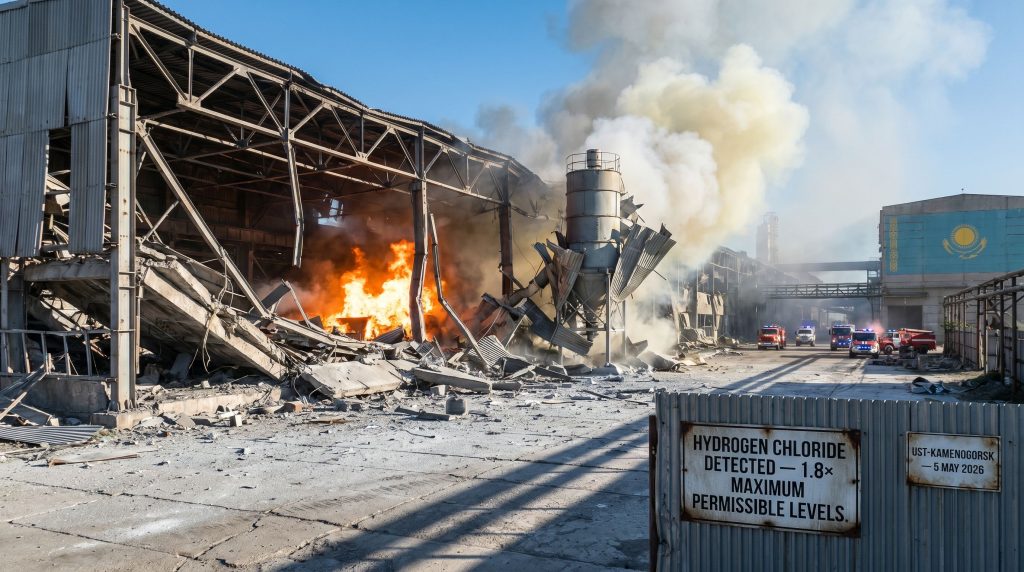
At approximately 8:15 a.m. local time (03:15 GMT) on Monday, 5 May 2026, an explosion ripped through the dust-collection unit of the Kazzinc zinc smelting complex in Ust-Kamenogorsk, eastern Kazakhstan. The blast ignited a fire that burned across an estimated 120 square metres before emergency services extinguished it. The force of the explosion was sufficient to cause a partial structural collapse of one building on site.
Kazakhstan's Emergency Situations Ministry confirmed the incident on the same day. Two workers were fatally killed, and five additional individuals sustained injuries requiring medical treatment. Rescue teams conducted active searches for further victims in the immediate aftermath.
| Category | Confirmed Figure |
|---|---|
| Fatalities | 2 |
| Workers Injured | 5 |
| Fire Area | ~120 square metres |
| Buildings Partially Collapsed | 1 |
| Incident Time (local) | 8:15 a.m. |
| Incident Time (GMT) | 03:15 |
According to Kazzinc's own confirmation, the explosion originated during cleaning operations being carried out on the smoke extractor, specifically within the facility's dust-collection unit. This detail is operationally significant: it identifies a routine maintenance activity, rather than a production malfunction, as the trigger point for the cascade of events that followed. Reports from mining news outlets confirm the severity of the event and the immediate emergency response that was mobilised.
Understanding Dust-Collection Unit Hazards in Zinc Smelting Environments
To appreciate why a cleaning operation inside a dust-collection unit can produce a catastrophic explosion, it is necessary to understand the physical and chemical environment inside a zinc smelter. Zinc smelting operations generate substantial volumes of fine metallic particulates, including zinc oxide, lead dust, and sulphur compounds. These accumulate progressively within dust-collection systems and smoke extraction equipment during normal production runs.
When maintenance personnel disturb accumulated dust in a confined space — particularly when the surrounding environment contains heat sources, electrical equipment, or friction-generating tools — the conditions for deflagration become highly favourable. Deflagration is a rapid combustion event that propagates through a dust cloud at subsonic speeds, releasing enormous pressure in confined or semi-confined structures.
Unlike detonation, deflagration can occur at lower dust concentrations and across a wider range of particulate types, making it particularly treacherous in mixed-material smelter environments. Furthermore, the mining industry's ongoing efforts around safety and sustainability have not yet fully addressed the persistent danger of maintenance-phase incidents.
The specific hazard profile of zinc smelting environments includes:
- Zinc oxide dust, which is both a respiratory hazard and a combustible particulate under specific concentration thresholds
- Lead dust accumulation, which compounds toxicity exposure risk during maintenance activities
- Sulphur dioxide and sulphur compound residues from the roasting process, which can react chemically with moisture or mechanical heat sources
- High-temperature infrastructure that retains heat between operational cycles, creating latent ignition risk during scheduled maintenance windows
- Confined space geometry within dust-collection units, which amplifies blast pressure during a deflagration event
Post-incident investigations at comparable facilities globally have repeatedly identified a consistent cluster of causal factors: inadequate atmospheric testing before maintenance commencement, absent or improperly applied lockout/tagout (LOTO) procedures, insufficient dust removal prior to entry, and a lack of continuous gas monitoring during the work period. Whether these factors apply to the Kazzinc incident will form the core of any formal investigation.
Industrial safety literature consistently identifies dust-collection and smoke extraction systems as among the highest-risk maintenance zones in any smelter environment. The combination of accumulated reactive particulates, confined geometry, and the physical disturbance created by cleaning operations generates a hazard profile that demands pre-entry atmospheric testing, continuous monitoring, and verified equipment isolation before any maintenance commences.
What Is Kazzinc and Why Does This Facility Carry Global Significance?
Kazzinc was established in 1997 and has since grown into one of Central Asia's most strategically significant non-ferrous metals producers. Its flagship facility in Ust-Kamenogorsk operates as a fully integrated processing complex, handling a multi-commodity product range that includes:
- Zinc (primary product)
- Lead
- Copper
- Gold (processed through an on-site refinery)
- Silver
The company's operational footprint extends across three Kazakhstani regions: East-Kazakhstan, Akmola, and Ulytau, reflecting the scale and geographic spread of its mining and processing activities.
The ownership structure of Kazzinc places it at the intersection of international capital and national strategic interest:
| Stakeholder | Ownership Share | Profile |
|---|---|---|
| Glencore | ~70% | Switzerland-headquartered global mining and commodities company |
| Samruk-Kazyna | ~30% | Kazakhstan's sovereign wealth and state assets fund |
Glencore's controlling stake makes Kazzinc a material asset within its global base metals portfolio. The Ust-Kamenogorsk complex, as the operational centrepiece of the company, carries significance well beyond Kazakhstan's borders — particularly given zinc's role in galvanisation, battery technology, and infrastructure-grade steel manufacturing. In addition, Glencore's restructuring activities across its global smelting operations have placed heightened scrutiny on how the company manages safety and operational risk at facilities like Kazzinc.
The Environmental Picture: A Discrepancy That Demands Scrutiny
One of the more concerning dimensions of the Kazzinc plant explosion in Kazakhstan was the divergence between early corporate environmental assurances and findings from independent monitoring. Kazzinc's initial statement indicated that no hazardous pollutant emissions had been detected. However, data subsequently gathered by Kazhydromet, Kazakhstan's independent hydrometeorological monitoring body, told a different story.
| Assessment Source | Finding |
|---|---|
| Kazzinc (initial statement) | No hazardous pollutant emissions detected |
| Kazhydromet (independent monitoring) | Hydrogen chloride detected at 1.8 times maximum permissible levels on Belinsky Street |
| Overall air pollution index | No elevated readings reported during initial assessments |
Hydrogen chloride is a corrosive gas capable of irritating respiratory mucous membranes and, at sustained exposure levels, producing more serious pulmonary health effects. Its detection at 1.8 times the maximum permissible concentration on a residential street adjacent to the facility is not a finding that can be easily reconciled with an initial corporate assessment of zero hazardous emissions.
No broad environmental emergency was declared, and authorities confirmed that ongoing air quality monitoring remained active following the incident. However, the data gap between corporate reporting and independent measurements raises a fundamental question about the reliability of in-house environmental monitoring systems during and immediately after a high-pressure combustion event — precisely when external contamination risk is at its peak.
For residents of Ust-Kamenogorsk, a city with a long history of concentrated metallurgical activity, this discrepancy will likely intensify existing community expectations around transparent, independently verified environmental reporting. Consequently, the consideration of natural capital in mining operations becomes especially relevant when assessing the full environmental cost of such incidents throughout any formal investigation.
Kazakhstan's Industrial Safety Context: Structural Risks in Extractive Economies
Kazakhstan's extractive industries underpin a substantial share of national GDP. The country ranks among the world's leading producers of zinc, uranium, and chromite, with its metallurgical processing infrastructure concentrated in regions like East Kazakhstan, where industrial activity and residential population centres exist in close proximity.
Industrial accidents at processing facilities involving dust hazards, chemical exposure, and structural failure have historically represented a persistent challenge across Central Asian mining jurisdictions. The density of metallurgical infrastructure in the Ust-Kamenogorsk region means that cumulative risk exposure for local communities is disproportionately high relative to other industrialised areas.
Kazakhstan's industrial safety regulatory framework falls under the Ministry of Industry and Infrastructure Development, with the Emergency Situations Ministry responsible for disaster response coordination. The prompt confirmation issued by the Emergency Situations Ministry on 5 May 2026 reflects an established rapid-response protocol.
However, safety professionals and industry analysts have long observed that in post-Soviet industrial jurisdictions, the gap between written regulatory standards and consistent on-the-ground enforcement can be significant. Pre-maintenance inspection regimes, in particular, represent an area where procedural documentation and actual operational compliance frequently diverge.
The distance between codified safety standards and daily operational practice is one of the most persistent risk factors in emerging-market mining jurisdictions. Incidents like the Kazzinc explosion may serve as catalysts for regulators to strengthen pre-maintenance inspection requirements, mandatory atmospheric testing protocols, and enforcement consistency at high-hazard processing facilities.
The next major ASX story will hit our subscribers first
Glencore's Stake Sale: A Transaction Complicated by Timing
The Kazzinc plant explosion in Kazakhstan occurred against a backdrop that adds significant transactional complexity to an already consequential incident. Glencore is currently in active negotiations to divest its approximately 70% stake in Kazzinc to Shakhmurat Mutalip, a Kazakhstani businessman, in a move that would substantially reshape domestic ownership of the country's largest zinc producer.
The explosion's timing — mid-negotiation — introduces several layers of complexity that both parties will need to navigate. Furthermore, broader mining industry trends in 2025 suggest that safety incidents increasingly carry transactional consequences well beyond immediate remediation costs:
- Due diligence reassessment — The prospective buyer may require updated operational and safety audits before proceeding on previously agreed terms
- Liability allocation questions — Determining where responsibility for incident-related costs and remediation sits between an outgoing majority owner and an incoming acquirer requires careful contractual review
- Reputational considerations — Glencore, as current majority owner and operational controller of the facility, faces scrutiny over the safety culture and maintenance protocols in place at the time of the incident
- Regulatory approval timing — Any formal investigation findings could affect the timeline for regulatory approvals required to complete the ownership transfer
- Valuation implications — If investigation findings identify systemic maintenance failures rather than isolated human error, the scope of required safety remediation could materially affect the agreed transaction terms
A successful domestic transfer of Kazzinc ownership would represent a meaningful shift in the governance of Kazakhstan's non-ferrous metals sector. Whether this transition proceeds on its original timeline will depend significantly on how investigators characterise the root causes of the 5 May explosion.
How Zinc Smelter Risk Compares Across Non-Ferrous Processing Environments
Placing the Kazzinc incident within a broader comparative framework of non-ferrous metals processing hazards helps contextualise why dust-collection unit failures are particularly severe in zinc smelting operations specifically.
| Facility Type | Primary Hazard | Common Incident Type |
|---|---|---|
| Zinc smelter | Reactive metal dust, sulphur dioxide | Dust explosions, gas release events |
| Lead smelter | Heavy metal particulates | Toxic exposure, fire events |
| Copper refinery | Acid processing systems, electrical infrastructure | Chemical burns, electrical fires |
| Gold refinery | Cyanide compounds, mercury | Toxic spills, chemical exposure events |
Zinc smelting environments sit at the more hazardous end of this spectrum for dust explosion risk because the combination of high-temperature production processes, reactive particulate accumulation, and the chemical composition of the dust itself creates a wider ignition window compared with, for example, a copper refinery where primary hazards are more contained within known chemical processes.
Global analysis of industrial dust explosions across sectors — including grain handling, pharmaceutical manufacturing, and metals processing — consistently points to a common cluster of preventable causal factors:
- Failure to conduct pre-entry atmospheric testing for combustible dust concentrations
- Incomplete or absent lockout/tagout (LOTO) procedure implementation before maintenance commences
- Inadequate housekeeping practices that allow secondary dust accumulation on structural surfaces
- Insufficient training in confined-space entry protocols for maintenance personnel
- Absence of continuous gas and particulate monitoring during the maintenance window itself
The Kazzinc investigation will almost certainly assess each of these factors against the specific conditions present during the 5 May cleaning operation.
Key Questions the Investigation Must Answer
Beyond the immediate response, several critical questions will shape both the regulatory response and the Glencore-Mutalip transaction's trajectory. Effective risk communication in mining contexts demands that operators provide clear, timely, and accurate information to regulators and communities alike — and this incident is no exception:
- Was a formal pre-maintenance risk assessment conducted for the dust-collection unit cleaning operation?
- Were atmospheric combustible dust concentration levels measured before maintenance personnel entered the smoke extractor system?
- Were LOTO procedures applied to all energy sources connected to the dust-collection unit?
- What was the documented maintenance schedule for this system, and when was it last serviced prior to 5 May?
- How were the hydrogen chloride readings detected by Kazhydromet reconciled with Kazzinc's initial environmental assessment?
- What operational status has the Ust-Kamenogorsk facility adopted following the incident, and what remediation scope has been identified?
The answers to these questions carry weight not just for the families of those affected, and for the injured workers currently receiving medical treatment, but for the broader governance of industrial safety standards across Kazakhstan's metals processing sector.
Frequently Asked Questions
How many people were killed in the Kazzinc explosion?
Two workers lost their lives in the explosion at the Kazzinc zinc processing facility in Ust-Kamenogorsk on 5 May 2026. A further five individuals sustained injuries and received medical treatment following the incident.
What caused the Kazzinc plant explosion?
The explosion originated in the facility's dust-collection unit during a cleaning operation on the smoke extractor. The blast triggered a fire and caused partial structural collapse of one building on site.
Who owns the Kazzinc facility in Kazakhstan?
Glencore, the Switzerland-headquartered global mining and commodities company, holds approximately 70% of Kazzinc. The remaining 30% is owned by Samruk-Kazyna, Kazakhstan's state assets fund.
Was there environmental contamination from the Kazzinc explosion?
Independent monitoring by Kazhydromet detected hydrogen chloride at 1.8 times the maximum permissible level on Belinsky Street near the facility. Kazzinc's initial statement indicated no hazardous emissions, and no broad environmental emergency was declared.
Is Glencore selling its stake in Kazzinc?
Glencore is currently in negotiations to sell its approximately 70% stake in Kazzinc to Shakhmurat Mutalip, a Kazakhstani businessman. The explosion occurred during this active negotiation period, introducing additional complexity to the transaction.
What products does Kazzinc produce?
Kazzinc is Kazakhstan's largest zinc producer and also processes lead, copper, gold, and silver. Its primary operations are concentrated across the East-Kazakhstan, Akmola, and Ulytau regions.
Disclaimer: This article is based on information reported as of 6 May 2026. Details regarding the incident, investigation outcomes, transaction status, and environmental assessments may evolve as further information becomes available. This article does not constitute financial or investment advice. Readers should conduct independent research before making decisions related to companies or assets referenced herein.
Want to Stay Ahead of Significant ASX Mineral Discoveries as They Happen?
Discovery Alert's proprietary Discovery IQ model delivers real-time alerts on major ASX mineral discoveries, transforming complex data across more than 30 commodities into clear, actionable insights for both short-term traders and long-term investors. Explore historic discoveries and their remarkable returns, then begin your 14-day free trial at Discovery Alert to position yourself ahead of the broader market.