The Middle East's energy infrastructure operates within a complex web of geopolitical tensions, where strategic assets become prime targets in broader regional conflicts. Understanding these vulnerabilities requires examining how modern energy networks function as both economic lifelines and political leverage points. When critical facilities face coordinated attacks, the ripple effects extend far beyond immediate production losses, affecting regional stability, international investment flows, and long-term energy security strategies. The intricate relationship between energy infrastructure and geopolitical stability creates scenarios where operational resilience becomes as important as production capacity itself. Furthermore, the Khor Mor gas field attack and resumption demonstrates these complex dynamics in real-time.
Understanding Iraq's Critical Energy Infrastructure Vulnerabilities
Iraq's energy sector faces unprecedented security challenges as production facilities become increasingly targeted in regional conflicts. The Kurdistan Region of Iraq (KRI) operates several critical energy assets that serve as primary power sources for millions of residents, creating single points of failure within the broader regional grid system.
The Strategic Importance of Kurdistan's Gas Production Network
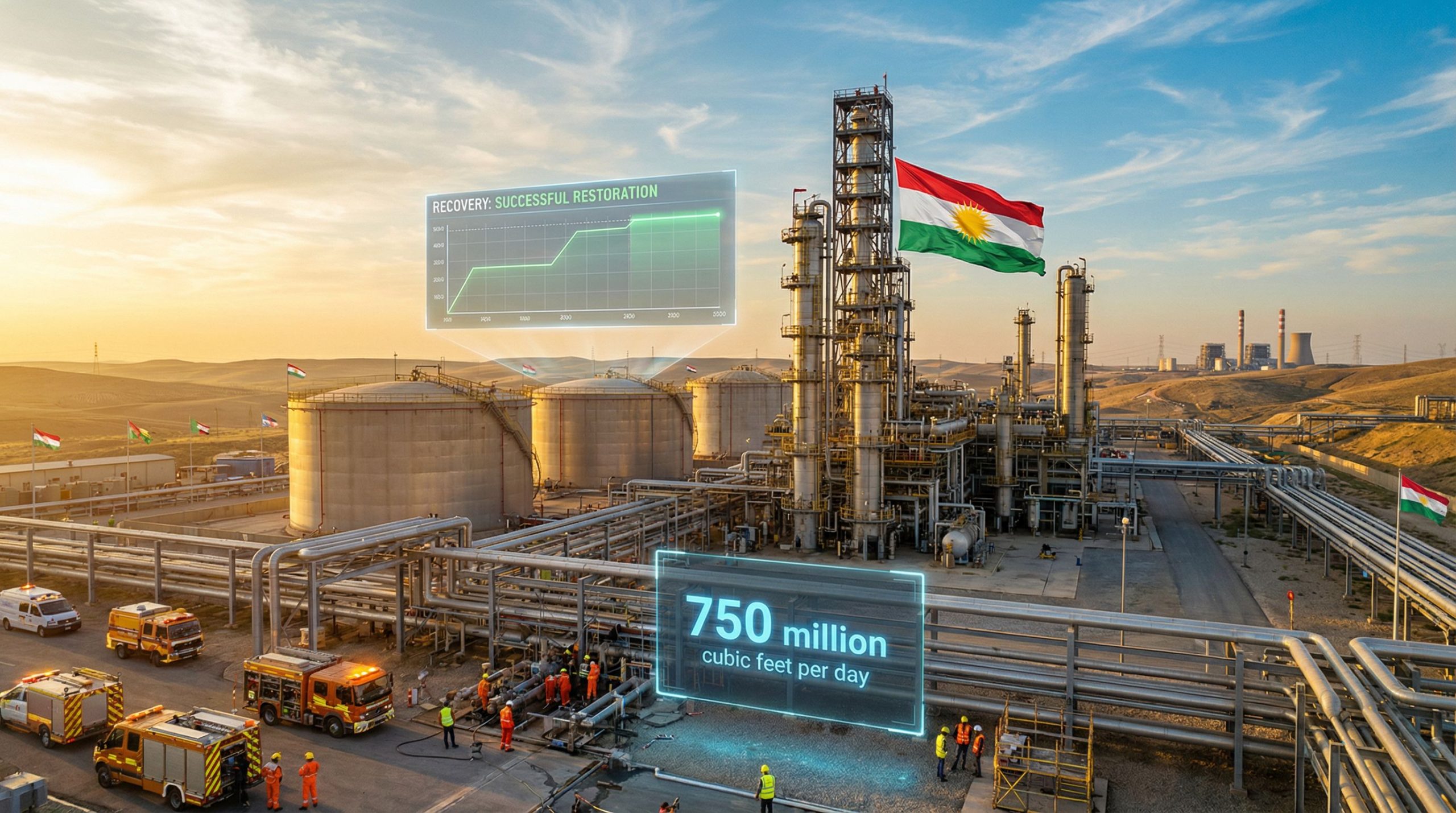
The Kurdistan Region's energy infrastructure centers around several key facilities that process natural gas for regional power generation. The Khor Mor gas field, located between Sulaymaniyah and Kirkuk, represents the region's largest gas processing operation with a current capacity of 750 million cubic feet per day (mcf/d). This facility supplies natural gas directly to power generation plants serving millions across Iraqi Kurdistan.
Recent expansion projects have significantly increased regional processing capacity. The KM250 expansion project, completed ahead of schedule in October 2025, added 250 mcf/d to total processing capability, representing a 50% increase from baseline operations. This expansion milestone was characterised as "vital to meeting rising electricity demand across northern Iraq."
The geographic positioning of major gas fields creates both strategic advantages and vulnerabilities. Located between major urban centers, these facilities must balance accessibility for distribution networks against exposure to security threats. The concentration of processing capacity in relatively few locations means that targeted attacks can have disproportionate regional impact.
Regional Power Grid Dependencies and Single Points of Failure
Iraq's northern regions demonstrate significant dependency on centralised gas processing for electricity generation. When primary facilities experience disruptions, the power grid faces immediate stability challenges that cascade across residential, commercial, and industrial sectors.
Recent incidents highlight these dependencies. The November 27, 2025 attack on Khor Mor's storage infrastructure caused widespread power outages across the northern region, demonstrating how a single facility's operations directly correlate with regional electrical supply. Emergency protocols included deploying fuel tanker trucks from Erbil to maintain compensatory fuel delivery to power plants during the gas supply interruption.
The regional grid's vulnerability stems from limited redundancy in primary energy sources. While backup fuel delivery systems exist, they operate at reduced capacity and face their own security challenges. The November 29, 2025 attack on fuel tanker trucks, which killed one person and injured several others, illustrated how attackers systematically target both primary and backup energy supply chains.
Geopolitical Context Behind Energy Asset Targeting
Energy infrastructure attacks in Iraqi Kurdistan reflect broader regional tensions between various political and military factions. Security analysts have linked recent attacks to escalating tensions between Iran-backed militias and Kurdish authorities, indicating that energy facilities serve as proxy battlegrounds for larger geopolitical conflicts.
The pattern of attacks suggests strategic coordination aimed at maximum economic and political impact. Previous July 2025 strikes on Kurdistan oilfields reduced output by approximately 150,000 barrels per day, whilst the November 2025 incidents shifted focus to natural gas infrastructure and power generation systems. This evolution in targeting strategy demonstrates attacker adaptation to maximise regional disruption.
Prime Minister of the Kurdistan Region, Masrour Barzani, acknowledged the strategic targeting pattern, stating: "I have spoken with the company's (Dana Gas) leadership to thank them and their workforce for their extraordinary resilience and determination amid 11 attacks on the Khor Mor field." This statement confirms sustained pressure on critical energy infrastructure rather than isolated incidents.
What Makes the Khor Mor Field a Regional Energy Linchpin?
The Khor Mor gas field attack and resumption demonstrates the facility's critical role as the cornerstone of Iraqi Kurdistan's energy independence strategy. Moreover, the field combines substantial production capacity with strategic geographic positioning. Its role extends beyond simple gas extraction to encompass regional power generation, economic development, and energy security planning for millions of residents.
Production Capacity and Regional Supply Chain Integration
Khor Mor's current processing capacity of 750 mcf/d positions it as one of the largest gas infrastructure assets in the Kurdistan Region. The facility's output directly feeds multiple power generation plants across Iraqi Kurdistan, creating an integrated supply chain from extraction to electricity distribution.
The recent KM250 expansion project represents a significant milestone in regional energy development. Completed ahead of schedule in October 2025, this expansion added 250 mcf/d to total processing capacity, effectively increasing baseline production by 50%. The accelerated completion timeline demonstrates operational efficiency despite challenging security conditions.
Regional supply coverage extends across northern Iraq's electricity grid, including major urban centres like Erbil and surrounding regions. The facility's integration with regional power generation creates direct correlation between gas production levels and electricity availability for civilian and industrial users. This dependency relationship makes Khor Mor operations critical for maintaining social and economic stability across Iraqi Kurdistan.
Production scheduling at Khor Mor must account for both seasonal demand variations and security disruptions. The facility operates continuous processing to meet baseload electricity generation requirements, whilst maintaining flexibility for emergency shutdowns and rapid restoration procedures. The 72-hour restoration timeline achieved following the November 27, 2025 attack demonstrates sophisticated crisis management capabilities.
Joint Venture Structure and International Investment Exposure
The Khor Mor field operates under a joint venture structure involving UAE-based Dana Gas and Crescent Petroleum through the Pearl Petroleum consortium. This international partnership brings significant technical expertise and financial resources whilst creating complex stakeholder relationships that extend beyond regional boundaries.
US investment components add another layer of international involvement in Khor Mor operations. The damaged storage tank from the November 2025 attack was "among the new facilities partially financed by the United States as part of efforts to strengthen Iraq's domestic energy reliability." This US financial involvement indicates strategic interest in reducing Iraqi energy import dependency and enhancing regional stability through energy self-sufficiency.
The joint venture structure provides operational advantages through:
• Technical expertise from international energy companies with global project experience
• Financial resources for major expansion projects and infrastructure upgrades
• Risk distribution across multiple corporate entities and national interests
• Access to international markets for equipment, services, and potential export opportunities
Despite repeated security disruptions, Dana Gas and Crescent Petroleum remain committed to long-term investment in the region. The early completion of the KM250 expansion project during a period of heightened security threats demonstrates confidence in regional stability and operational capabilities. This sustained commitment provides continuity for regional energy planning and economic development initiatives.
International partnership structures also create complex security considerations. Foreign investment in critical infrastructure attracts attention from various political and military factions seeking to influence regional dynamics. The targeting of US-financed facilities specifically highlights how international involvement can increase security risks whilst providing operational benefits.
How Do Coordinated Attacks Impact Regional Energy Security?
The systematic targeting of Iraq's energy infrastructure reveals sophisticated attack strategies designed to maximise economic disruption and political pressure. Recent incidents demonstrate how coordinated strikes can cascade across multiple sectors, affecting power generation, fuel distribution, and regional economic stability. Additionally, these patterns connect to broader challenges such as energy transition challenges facing the global energy sector.
Pattern Analysis of Recent Infrastructure Strikes
The November 2025 attack sequence against Iraqi Kurdistan's energy sector followed a deliberate progression targeting both primary and backup systems. This coordinated approach demonstrates attacker understanding of regional energy dependencies and emergency response protocols.
| Date | Target | Attack Type | Primary Impact | Secondary Impact | Recovery Time |
|---|---|---|---|---|---|
| November 27, 2025 | Khor Mor storage tank | Rocket strike | Gas production halt | Widespread power outages | 72 hours |
| November 29, 2025 | Fuel tanker convoy (Erbil) | Rocket attack | 1 fatality, several injured | Disrupted compensatory fuel delivery | Ongoing |
| July 2025 | Kurdistan oilfields | Multiple strikes | ~150,000 bpd reduction | Regional fuel shortages | Multiple days |
The escalation pattern shows strategic targeting evolution from oil infrastructure (July) to gas facilities and fuel distribution networks (November). This progression suggests attackers adapt their methods to identify and exploit the most vulnerable components of regional energy supply chains. The systematic approach maximises disruption whilst minimising attacker exposure through quick-strike tactics.
Attack timing analysis reveals coordination designed to compound regional difficulties. The November 29 fuel tanker attack occurred during active restoration efforts at Khor Mor, specifically targeting the compensatory fuel delivery system deployed to maintain power generation during the primary facility's downtime. This secondary targeting demonstrates sophisticated understanding of emergency response procedures.
The documented "11 attacks on the Khor Mor field" referenced by PM Barzani indicates sustained pressure rather than opportunistic incidents. This sustained campaign approach creates ongoing operational uncertainty and forces continuous resource allocation to security measures rather than expansion or optimisation projects.
Operational Resilience and Emergency Response Protocols
The rapid restoration of Khor Mor operations following the November 27 attack demonstrates well-developed crisis management capabilities. Gas supply resumed to power plants at 2 a.m. local time on November 30, representing a 72-hour total restoration timeline from attack to full operational status.
Emergency response coordination involved multiple stakeholder levels:
• Immediate safety protocols including facility shutdown and damage assessment procedures
• Round-the-clock repair operations with emergency teams working continuously to restore capability
• Alternative fuel delivery coordination through tanker truck deployment from Erbil
• Regional grid stabilisation through power plant operations management
• Security enhancement including adjusted protocols following convoy attacks
The KRG Ministry of Electricity confirmed that operations were restored after emergency teams worked around the clock to repair the damage and stabilise supply to regional grids. This coordinated response demonstrates established protocols for managing energy infrastructure disruptions, though the November 29 attack on fuel tankers revealed vulnerabilities in backup supply systems.
Operational resilience extends beyond immediate crisis response to encompass long-term adaptation strategies. The early completion of the KM250 expansion project during a period of heightened security threats indicates management commitment to maintaining development timelines despite disruption risks. This forward momentum suggests confidence in security measures and operational continuity planning.
Emergency response protocols must balance speed of restoration with safety considerations. The three-day restoration timeline reflects thorough damage assessment procedures and safety verification before resuming operations. This methodical approach, whilst requiring extended downtime, ensures sustainable restoration rather than hasty repairs that might create additional vulnerabilities.
What Are the Economic Implications of Energy Infrastructure Disruptions?
Energy infrastructure attacks create immediate financial losses and long-term economic uncertainties that extend far beyond the targeted facilities. The November 2025 Khor Mor gas field attack and resumption demonstrates how production disruptions cascade across regional economies, affecting power generation revenues, alternative fuel costs, and broader investment climate considerations. These impacts mirror challenges seen in other global energy markets, including evolving oil price dynamics and shifting market conditions.
Immediate Financial Impact Assessment
The 72-hour production halt at Khor Mor resulted in complete suspension of 750 mcf/d processing capacity, creating direct revenue losses for the joint venture operators. Whilst specific financial figures remain proprietary, the facility's role in supplying power generation plants across Iraqi Kurdistan means production interruptions directly correlate with regional electricity shortages and associated economic disruption.
Regional power outages affect multiple economic sectors simultaneously. Industrial operations requiring consistent electricity supply face production delays or temporary shutdowns. Commercial establishments lose revenue during outage periods, whilst residential areas experience disrupted daily activities. The cumulative economic impact extends beyond direct energy sector losses to encompass broader regional economic activity.
Alternative fuel delivery costs escalate significantly during primary facility disruptions. The deployment of fuel tanker trucks from Erbil to compensate for Khor Mor's temporary offline status represents additional operational expenses not budgeted under normal operating conditions. These compensatory measures typically operate at higher per-unit costs compared to pipeline gas delivery systems.
Infrastructure damage assessment and repair costs create additional financial burdens for facility operators. The November 27 storage tank damage required extensive repair operations and safety verification procedures before restoration. Replacement costs for damaged US-financed infrastructure components may involve complex international contracting and financing arrangements.
Security-related expenses increase substantially following attack incidents. Enhanced protective measures, additional security personnel, and upgraded defensive systems represent ongoing operational cost increases that persist long after immediate repairs are completed. These security investments, whilst necessary for operational continuity, reduce available capital for expansion and optimisation projects.
Long-term Investment Climate Considerations
Repeated infrastructure attacks create risk premium adjustments in regional energy investment calculations. International investors must account for security disruption probabilities when evaluating project returns and financing terms. The sustained attack pattern documented at Khor Mor influences regional investment attractiveness compared to more stable operating environments.
Despite security challenges, the early completion of the KM250 expansion project demonstrates continued investor confidence in regional operations. This sustained commitment indicates that long-term energy demand growth and strategic positioning outweigh short-term security risks for established operators. However, new investment considerations may require higher return thresholds to compensate for elevated risk levels.
Insurance costs and coverage availability become critical factors in project financing decisions. Energy infrastructure in conflict-prone regions faces higher insurance premiums and potentially limited coverage options for certain risk categories. These insurance considerations directly impact project economics and financing structure requirements.
Regional energy independence versus import dependency trade-offs gain strategic importance during periods of infrastructure vulnerability. The emphasis on strengthening Iraq's domestic energy reliability through US-financed infrastructure investments reflects policy recognition that energy self-sufficiency provides economic stability benefits that justify security-related costs.
Disclaimer: Economic impact assessments in this analysis are based on publicly available information and may not reflect complete financial exposure or proprietary cost structures of affected operators.
How Do Geopolitical Tensions Manifest in Energy Asset Targeting?
Energy infrastructure serves as both economic foundation and political leverage point in Middle Eastern regional conflicts. The systematic targeting of facilities like Khor Mor reflects broader geopolitical strategies where energy assets become proxy battlegrounds for competing national and ideological interests. These dynamics are increasingly complicated by global trade tensions, including US‑China trade tensions affecting international energy markets.
Iran-backed Militia Strategic Objectives
Security analysts have linked recent attacks to escalating tensions between Iran-backed militias and Kurdish authorities, indicating energy infrastructure targeting serves multiple strategic purposes beyond immediate economic disruption. These attacks represent asymmetric warfare tactics designed to pressure regional political alignment without engaging in direct military confrontation.
The targeting pattern suggests specific objectives related to regional influence projection:
• Undermining Kurdish regional autonomy through economic pressure and infrastructure vulnerability demonstration
• Discouraging US investment in regional energy projects by increasing operational risks and security costs
• Testing regional defence capabilities and response coordination between Kurdish and federal Iraqi authorities
• Creating economic leverage for political negotiations and regional influence discussions
The escalation from oil infrastructure (July 2025) to gas facilities and power generation systems (November 2025) indicates strategic adaptation to maximise regional impact. Natural gas infrastructure targeting directly affects civilian electricity supply, creating broader social pressure compared to oil facility attacks that primarily impact export revenues and government finances.
The sustained campaign approach, with 11 documented attacks on Khor Mor according to PM Barzani, demonstrates persistent pressure rather than opportunistic targeting. This sustained effort requires significant resource allocation and coordination, suggesting institutional backing rather than independent militia operations.
Kurdistan Regional Government Response Strategies
The KRG's response to energy infrastructure attacks balances immediate security measures with long-term diplomatic and economic strategies. KRG authorities have called for enhanced security cooperation with Baghdad and international partners to safeguard vital energy assets, indicating recognition that regional capabilities alone cannot provide adequate protection.
Multilateral security cooperation frameworks involve several coordination levels:
• Federal-regional cooperation between Erbil and Baghdad authorities for intelligence sharing and response coordination
• International partnership engagement with US and allied nations providing technical assistance and financing
• Private sector collaboration with joint venture partners on facility hardening and security enhancement measures
• Diplomatic outreach to address underlying political tensions contributing to targeting decisions
The KRG's continued commitment to energy sector expansion despite security challenges demonstrates strategic prioritisation of energy independence over risk avoidance. The successful completion of the KM250 expansion project during heightened security threats indicates government confidence in protective capabilities and long-term regional stability prospects.
Regional authorities frame energy infrastructure protection as essential for broader Iraqi stability, warning that continued strikes could jeopardise regional stability and energy security across Iraq. This messaging positions Kurdish energy assets as critical national infrastructure worthy of federal protection rather than purely regional concerns.
What Does Rapid Recovery Reveal About Operational Preparedness?
The 72-hour restoration timeline achieved following the November 27 Khor Mor gas field attack and resumption demonstrates sophisticated crisis management capabilities and institutional preparedness for security disruptions. This rapid recovery reveals significant investments in emergency response protocols, technical capabilities, and stakeholder coordination systems.
Crisis Management and Business Continuity Planning
The successful restoration of full operations within three days required coordinated response across multiple operational domains. Emergency teams worked around the clock to repair damage and stabilise supply to regional grids, indicating established protocols for managing infrastructure disruptions under time-sensitive conditions.
Crisis management effectiveness stems from several preparedness factors:
• Pre-positioned repair capabilities including specialised equipment and technical personnel ready for rapid deployment
• Established communication protocols between facility operators, government authorities, and regional power generation plants
• Alternative supply coordination through fuel tanker deployment and backup power generation systems
• Safety verification procedures ensuring thorough damage assessment before resuming operations
• Security adaptation protocols allowing continued operations under enhanced protective measures
The immediate deployment of fuel tanker trucks from Erbil to compensate for gas supply interruption demonstrates pre-planned backup systems. Whilst these alternative delivery methods operate at reduced efficiency compared to pipeline systems, their rapid activation prevented complete regional power system collapse during facility restoration.
The November 30 resumption of gas supply to power plants at 2 a.m. local time indicates careful timing coordination to minimise disruption during peak demand periods. This scheduling consideration demonstrates operational sophistication beyond simple technical repair capabilities, encompassing regional grid management and demand forecasting.
Stakeholder communication throughout the crisis maintained transparency whilst managing public and investor confidence. PM Barzani's public acknowledgment of operator resilience and the Ministry of Electricity's operational updates provided consistent messaging that balanced security concerns with operational continuity assurance.
Infrastructure Redundancy and Risk Mitigation Measures
The rapid recovery timeline suggests significant investments in infrastructure hardening and redundancy systems that minimise single-point-of-failure vulnerabilities. Whilst complete details remain proprietary for security reasons, the restoration speed indicates robust engineering and operational planning.
Modern energy facilities incorporate multiple redundancy layers to maintain operational continuity during partial system failures. These may include backup processing systems, alternative storage configurations, and flexible distribution networks that can accommodate temporary capacity reductions whilst maintaining essential services.
Risk mitigation extends beyond physical infrastructure to encompass human resource capabilities and organisational preparedness. The sustained operations despite 11 previous attacks on Khor Mor indicates institutional learning and adaptation that improves response capabilities over time. Each incident provides operational intelligence for enhancing future preparedness measures.
The early completion of the KM250 expansion project during a period of security threats demonstrates management commitment to long-term capacity enhancement despite short-term risks. This forward-looking approach suggests confidence that current risk mitigation measures provide adequate protection for continued investment and development.
The integration of US-financed infrastructure components creates additional complexity in replacement and repair procedures. International financing and contracting requirements may extend restoration timelines for certain facility components, making rapid recovery achievements more significant from a logistical coordination perspective.
How Will This Incident Shape Future Energy Security Policies?
The November 2025 attack sequence at Khor Mor provides critical lessons for energy security policy development across the Middle East region. The demonstrated vulnerabilities and response capabilities will likely influence infrastructure protection frameworks, investment strategies, and international cooperation mechanisms for years to come. These developments occur alongside broader industry trends, including evolving natural gas forecasts and market dynamics.
Enhanced Protection Frameworks for Critical Infrastructure
Future energy security policies must address the systematic targeting patterns demonstrated in recent attacks, moving beyond reactive security measures toward comprehensive vulnerability assessment and threat anticipation. The evolution from oil infrastructure targeting to gas facilities and fuel distribution networks requires adaptive protection strategies.
Multi-layered security frameworks will likely incorporate several protection levels:
• Perimeter defence systems including advanced detection technology and rapid response capabilities for facility protection
• Intelligence integration between regional, federal, and international security agencies for threat assessment and early warning
• Infrastructure hardening focusing on critical facility components most vulnerable to missile and rocket attacks
• Alternative system redundancy ensuring backup capabilities can maintain essential services during primary facility disruptions
• Recovery acceleration through pre-positioned repair resources and streamlined restoration procedures
The targeting of US-financed infrastructure components specifically highlights the need for enhanced protection of international investment projects. Future policy frameworks must balance transparency in international partnerships with security requirements for protecting sensitive facility information and defensive capabilities.
Technological solutions will likely focus on counter-drone and missile defence systems adapted for energy infrastructure protection. The precision targeting demonstrated in recent attacks suggests sophisticated attacker capabilities that require equally advanced defensive countermeasures for effective deterrence.
Regional cooperation protocols must evolve to address cross-border threats that transcend individual facility security measures. Enhanced security cooperation with Baghdad and international partners will require formalised frameworks for information sharing, joint response procedures, and coordinated threat assessment across multiple jurisdictions.
Investment Strategy Adaptations for High-Risk Environments
Energy sector investment strategies will increasingly incorporate security risk assessment as a primary factor in project evaluation and financing decisions. The sustained targeting of Khor Mor demonstrates that traditional risk assessment models may underestimate security-related operational disruptions and associated costs.
Risk-adjusted return requirements for Middle Eastern energy projects will likely increase to compensate for elevated security-related operational costs and potential disruption losses. This adjustment may affect project financing terms, investment timeline expectations, and minimum economic thresholds for project approval.
Insurance product evolution will address conflict-zone energy infrastructure coverage gaps revealed by recent attacks. Traditional energy sector insurance may not adequately cover systematic targeting scenarios or recovery costs associated with specialised security measures required for continued operations.
Investment model modifications will likely emphasise operational continuity capabilities and rapid recovery potential as key evaluation criteria. The 72-hour restoration timeline achieved at Khor Mor demonstrates the economic value of robust crisis management capabilities, potentially justifying higher initial capital investments in redundancy and preparedness systems.
International partnership structures may require enhanced security coordination agreements that extend beyond traditional commercial relationships. Joint venture arrangements will likely incorporate specialised security clauses, threat response protocols, and cost-sharing arrangements for protective measures and recovery operations.
Disclaimer: Investment strategy and policy predictions presented in this analysis are speculative assessments based on current operational patterns and may not reflect actual future policy decisions or market developments.
What Are the Broader Regional Energy Security Implications?
The Khor Mor gas field attack and resumption sequence illuminates fundamental challenges facing Middle Eastern energy security planning. The incident demonstrates how local infrastructure vulnerabilities can cascade across regional energy networks, affecting international investment flows and strategic policy decisions far beyond the immediate operational area.
Kurdistan's Role in Iraq's Energy Independence Strategy
Iraq's domestic energy reliability efforts centre significantly on Kurdish regional production capabilities, particularly natural gas facilities that reduce dependence on imported fuel for electricity generation. The Khor Mor field's 750 mcf/d processing capacity represents a substantial portion of regional energy self-sufficiency infrastructure.
The strategic importance extends beyond immediate production volumes to encompass broader energy independence objectives:
• Domestic production expansion reducing reliance on volatile international energy imports and regional supply disruptions
• Export potential development through excess capacity that could generate foreign currency revenue for regional and federal governments
• Infrastructure investment attraction demonstrating operational viability despite security challenges to encourage additional energy sector development
• Regional stability enhancement through energy security that supports economic growth and social stability across Iraqi Kurdistan
The emphasis on strengthening Iraq's domestic energy reliability through US-financed infrastructure investments reflects recognition that energy independence provides strategic advantages worth significant security-related costs. This policy approach positions regional energy assets as national security infrastructure rather than purely commercial ventures.
Federal-regional cooperation frameworks for energy sector development must balance Kurdish autonomy with national energy security objectives. The coordination required for effective infrastructure protection and emergency response demonstrates interdependence that extends beyond traditional federal-regional political relationships.
Pipeline security considerations become increasingly important as regional production capacity grows. Expanded export potential requires transportation infrastructure that faces similar security vulnerabilities as production facilities, creating additional complexity for regional energy security planning.
International Stakeholder Response and Support Mechanisms
US energy security assistance and infrastructure financing represent strategic investments in Middle Eastern stability through energy sector resilience. The targeting of US-financed storage tanks at Khor Mor highlights the intersection between international development assistance and regional security challenges.
International cooperation frameworks will likely evolve to address demonstrated vulnerabilities:
• Technical assistance programmes focusing on infrastructure hardening and security enhancement capabilities for critical energy facilities
• Intelligence sharing arrangements between international partners and regional authorities for threat assessment and early warning systems
• Financial support mechanisms that account for elevated security costs and risk premiums in project financing calculations
• Diplomatic engagement initiatives addressing underlying political tensions that contribute to systematic infrastructure targeting
• Emergency response coordination ensuring rapid international assistance for critical infrastructure restoration and continuity
Regional ally coordination on energy supply chain protection extends beyond individual facility security to encompass broader supply network resilience. This comprehensive approach recognises that energy security vulnerabilities can cascade across interconnected regional systems regardless of specific facility ownership or operational control.
Private sector resilience planning increasingly incorporates geopolitical risk assessment alongside traditional commercial and technical factors. The sustained commitment demonstrated by Dana Gas and Crescent Petroleum despite repeated disruptions indicates that long-term strategic positioning may outweigh short-term security costs for experienced regional operators.
Investment prioritisation by international stakeholders will likely emphasise projects with demonstrated crisis management capabilities and rapid recovery potential. The 72-hour restoration achievement at Khor Mor provides a benchmark for operational resilience that may influence future investment allocation decisions and partnership arrangements.
International financing terms may increasingly incorporate security-related performance metrics and recovery capability assessments as standard evaluation criteria. This evolution reflects recognition that traditional energy project assessment models may inadequately account for security disruption scenarios and associated operational challenges.
According to Reuters, operations resumed at Iraq's largest gas field after emergency teams completed repairs to damaged infrastructure. Moreover, the broader implications extend to regional energy market development and international energy security policy coordination. Successful models for managing energy infrastructure security in challenging environments provide templates for application in other regions facing similar geopolitical tensions and systematic targeting patterns.
Disclaimer: Regional energy security analysis presented here is based on publicly available information and current operational patterns. Actual policy developments and international cooperation arrangements may differ from speculative assessments provided in this analysis.
Looking to Capitalise on Critical Energy and Resource Opportunities?
Discovery Alert's proprietary Discovery IQ model delivers real-time alerts on significant ASX mineral discoveries, enabling investors to identify actionable opportunities across energy-critical commodities before the broader market reacts. Explore why strategic mineral discoveries can generate substantial returns and begin your 30-day free trial today to position yourself ahead of the market in this rapidly evolving energy security landscape.