The Technical Foundation of LIBS in Mining Applications
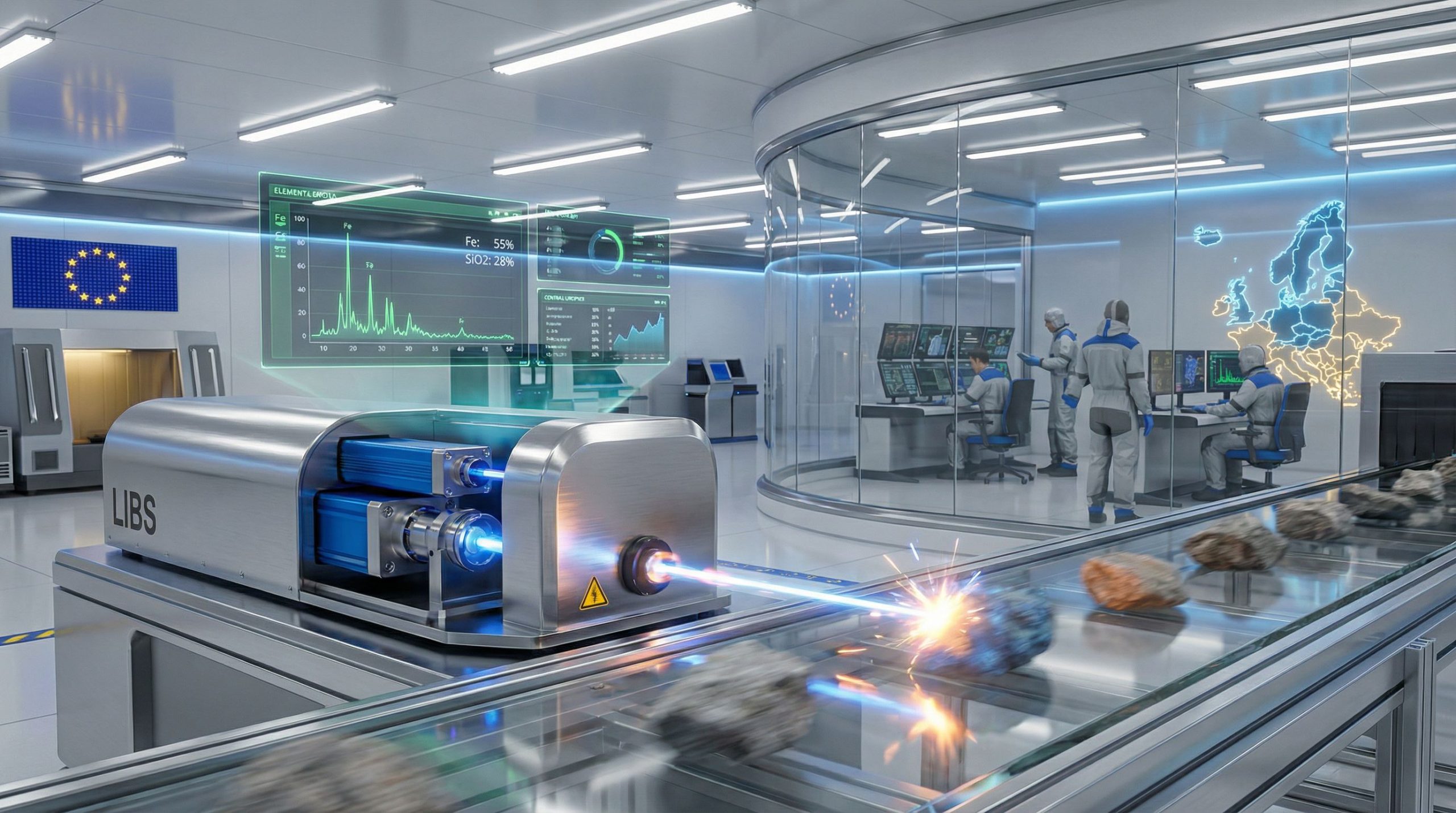
LIBS technology in European mining represents a paradigm shift in how mining operations approach elemental analysis. The technology operates by directing focused laser pulses at material samples, creating a microscopic plasma that atomizes surface elements. This plasma emission generates unique spectral signatures that reveal the precise elemental composition within milliseconds.
Unlike traditional X-ray fluorescence methods that require extensive sample preparation and laboratory processing, LIBS technology delivers immediate results with minimal material handling. The system's laser components, typically operating at wavelengths between 1064 and 266 nanometers, can penetrate surface contaminants and analyze bulk material composition directly. Detection capabilities range from parts-per-million sensitivity for trace elements to full percentage analysis for major constituents.
The hardware architecture consists of three primary components: the laser excitation source, spectrometric detection array, and integrated data processing unit. Modern LIBS systems can simultaneously detect over 70 elements across the periodic table, with analysis cycles completing in under five seconds. Operating temperature ranges extend from -20°C to +50°C, making the technology suitable for diverse European mining environments from Nordic iron ore operations to Mediterranean aggregate quarries.
Operational Performance Metrics and Capabilities
LIBS technology demonstrates superior performance characteristics compared to conventional analytical methods across multiple operational parameters. Analysis speed represents the most significant advancement, with elemental identification completing in sub-second timeframes versus hours or days required for laboratory assaying. This acceleration enables real-time decision-making that transforms mining workflow efficiency.
Detection thresholds vary by element but typically achieve parts-per-million sensitivity for critical metals including copper, lead, zinc, and precious metals. Major elements like iron, aluminum, and silicon can be quantified with accuracy levels exceeding 95% when properly calibrated. Sample preparation requirements are virtually eliminated, as LIBS can analyze material directly from drill cores, conveyor streams, or stockpiles without chemical treatment or grinding.
Environmental tolerance specifications allow continuous operation in dust-laden atmospheres, high-humidity conditions, and vibration-intensive mining environments. Modern LIBS units incorporate protective housings and automated cleaning systems that maintain optical clarity during extended deployment periods.
Real-Time Integration Across Mining Operations
Exploration and Resource Definition Enhancement
The exploration phase benefits significantly from LIBS technology implementation through accelerated geological characterization and improved resource modeling accuracy. Portable LIBS units enable field geologists to conduct immediate elemental analysis during drilling programs, transforming the traditional core logging process from a multi-day laboratory-dependent workflow to real-time geological interpretation.
Furthermore, integration with mineral exploration insights allows spatial correlation of analytical results with geological mapping, creating detailed three-dimensional models of ore body characteristics. This capability proves particularly valuable in complex European geological settings where mineralization patterns may be irregular or discontinuous.
Remote deployment capabilities support exploration programs in challenging terrain common across European mining regions. Battery-powered portable units can operate for extended periods in field conditions, enabling comprehensive site evaluation without logistical constraints of sample transportation and laboratory scheduling.
Production Optimization Through Continuous Monitoring
Conveyor-mounted LIBS systems revolutionize production operations by providing continuous ore stream analysis throughout the extraction and processing workflow. These installations monitor material composition in real-time, enabling automated sorting decisions that optimize plant feed quality and reduce processing costs.
In addition, blast hole optimization applications utilizing AI in drilling and blasting use pre-detonation compositional data to design explosive patterns that minimize ore dilution and maximize liberation. Geological boundaries identified through LIBS analysis inform blast engineers about optimal placement of explosive charges to preserve ore integrity while effectively fragmenting waste rock.
Grade control implementation extends beyond traditional techniques by incorporating statistical process control methodologies that maintain consistent ore quality parameters. Continuous monitoring enables immediate detection of grade variations, allowing operators to adjust extraction patterns and maintain optimal mill feed specifications.
European Regulatory Compliance and Environmental Monitoring
Environmental Stewardship Applications
European mining operations face increasingly stringent environmental regulations that demand comprehensive monitoring and documentation of environmental impacts. LIBS technology supports compliance efforts through precise characterization of potentially harmful elements in waste materials, enabling proactive environmental protection measures.
Heavy metal detection capabilities allow operators to identify and segregate materials containing elevated concentrations of elements like cadmium, mercury, or arsenic before placement in long-term storage facilities. This preventive approach significantly reduces the risk of acid rock drainage formation and subsequent groundwater contamination.
Consequently, real-time compliance reporting becomes feasible through automated data collection and analysis systems that document environmental performance metrics continuously. Integration with environmental management systems enables comprehensive tracking of waste characterization, water quality parameters, and air emission factors required under EU environmental directives.
Critical Raw Materials Strategy Support
The European Critical Raw Materials Act emphasizes supply chain security and domestic resource development, areas where LIBS technology in European mining provides substantial strategic value. Rare earth element detection capabilities enable identification of previously unrecognised strategic mineral occurrences during routine mining operations.
However, supply chain traceability applications utilising compositional fingerprinting document material origin and processing history, supporting transparent sourcing requirements increasingly demanded by downstream industries. This capability proves particularly valuable for materials destined for renewable energy applications where ethical sourcing documentation is essential.
Resource efficiency metrics derived from LIBS analysis support circular economy principles by optimising material utilisation and minimising waste generation. Moreover, the technology supports critical minerals energy transition initiatives by enabling precise compositional data that transforms waste streams into valuable byproducts.
Economic Impact Assessment and Operational Benefits
Processing Plant Performance Enhancement
| Operational Parameter | Conventional Methods | LIBS-Enhanced Operations | Performance Improvement |
|---|---|---|---|
| Ore sorting accuracy | 75-85% | 90-95% | +10-15 percentage points |
| Processing throughput | Baseline capacity | +15-25% increase | Variable by operation |
| Energy consumption per tonne | Standard consumption | -10-20% reduction | Efficiency gains |
| Water usage efficiency | Baseline usage | -15-30% reduction | Conservation benefits |
| Concentrate grade consistency | ±5% variation | ±2% variation | Quality improvement |
Feed grade consistency improvements result from pre-concentration sorting that removes diluting materials before processing. Recovery rate optimisation occurs through precise mineral liberation analysis that informs grinding and flotation parameter adjustments. Concentrate quality enhancement derives from real-time compositional control that maintains product specifications within tight tolerance ranges.
Tailings management efficiency improves through accurate waste characterisation that enables selective placement and chemical treatment of problematic materials. Environmental compliance costs decrease as a result of reduced monitoring requirements and lower risk of regulatory violations.
Financial Performance Implications
Capital investment requirements for LIBS technology typically range from €200,000 to €800,000 per installation, depending on system complexity and integration requirements. Operating cost reductions of 15-30% in analytical expenses result from eliminated laboratory fees and reduced sample transportation costs.
Payback periods generally fall within 18-36 months for medium-scale operations, with larger installations achieving faster returns through economies of scale. Revenue enhancement opportunities include increased metal recovery rates, premium pricing for certified product quality, and reduced penalty costs from impurity control.
Maintenance requirements remain manageable through modular system designs that enable component replacement without extended downtime. Technical support infrastructure development by equipment suppliers ensures operational continuity across European mining regions.
Technology Integration and Digital Mining Ecosystems
Data Management and Analytics Platforms
Modern LIBS installations integrate seamlessly with established mining software platforms including Whittle optimisation tools, MineSight geological modelling systems, and Vulcan three-dimensional mine planning applications. Machine learning algorithms applied to LIBS data streams enable predictive geological modelling that anticipates ore body characteristics ahead of mining operations.
Cloud-based data storage solutions support remote monitoring capabilities that allow technical specialists to oversee multiple operations from centralised locations. Interoperability protocols ensure compatibility with existing SCADA systems and process control infrastructure without requiring extensive modifications to established workflows.
For instance, real-time data visualisation tools present complex analytical information in accessible formats that support rapid decision-making by operations personnel. Historical data analysis capabilities enable continuous improvement of mining strategies through identification of optimal operational parameters.
Automation and Autonomous Operations Integration
LIBS technology in European mining serves as a crucial enabling component for autonomous mining operations by providing the real-time compositional data necessary for automated decision-making. Integration with autonomous haulage systems enables grade-based material routing that optimises truck utilisation and minimises handling costs.
Robotic sampling systems equipped with LIBS analytical capabilities eliminate human exposure to hazardous environments while maintaining comprehensive geological characterisation. Automated ore sorting systems utilising artificial intelligence algorithms make sorting decisions based on LIBS compositional analysis, achieving consistently superior performance compared to human operators.
Predictive maintenance applications monitor LIBS equipment performance parameters to optimise maintenance scheduling and prevent unexpected failures. System diagnostics capabilities enable remote troubleshooting that minimises technical support response times.
Regional Implementation Across European Mining Sectors
Nordic Region Applications
Iron ore operations across Sweden and Finland have emerged as early adopters of LIBS technology for grade control applications, leveraging the system's ability to distinguish between different iron ore grades and identify deleterious elements like phosphorus and sulfur that affect steel quality. The technology proves particularly valuable in complex ore bodies where traditional sampling methods struggle to capture grade variability.
Base metal mining operations in Norway utilise LIBS for sulfide mineral identification, enabling precise separation of valuable copper, zinc, and lead-bearing materials from barren pyrite. Environmental monitoring applications in legacy mining areas demonstrate the technology's capability for contamination assessment and remediation planning.
Rare earth exploration projects in Greenland employ portable LIBS units for rapid screening of pegmatite formations, identifying areas with elevated concentrations of critical elements including lithium, cesium, and tantalum. The harsh Arctic environment serves as a proving ground for equipment durability and reliability.
Central European Mining Applications
Polish copper mining operations have implemented LIBS-based ore sorting systems that improve concentrate grades while reducing processing costs. Real-time sulfur content monitoring enables optimisation of smelting processes and reduction of sulfur dioxide emissions.
Lithium exploration programmes across the Czech Republic and Austria utilise LIBS technology for pegmatite analysis, rapidly identifying zones with commercial lithium potential. The technology's ability to detect lithium directly addresses a key analytical challenge in this emerging critical metal sector.
German coal operations employ LIBS for ash and sulfur content monitoring, supporting compliance with emission standards and optimising combustion efficiency. Furthermore, aggregate quality assessment applications across construction material operations ensure product specifications meet European construction standards.
Future Technology Development and Market Projections
Emerging LIBS Capabilities and Innovations
Technology miniaturisation trends focus on developing handheld and drone-mounted LIBS systems that expand deployment flexibility across diverse mining environments. Enhanced detection limits through laser power optimisation and improved spectrometer sensitivity enable analysis of increasingly challenging materials.
Multi-element simultaneous analysis improvements reduce measurement times while expanding the range of detectable elements. Integration with advanced sensor technologies provides comprehensive material characterisation that combines elemental composition with mineralogical identification.
Artificial intelligence integration enhances analytical accuracy through pattern recognition algorithms that compensate for matrix effects and environmental interference factors. Machine learning applications enable predictive modelling of equipment performance and maintenance requirements.
Market Adoption and Growth Projections
European mining sector adoption of LIBS technology in European mining is projected to grow at 15-20% annually through 2030, driven by increasing emphasis on operational efficiency and environmental compliance. Technology maturity indicators suggest mainstream adoption will occur by 2027-2030 as equipment costs decline and performance capabilities expand.
Competitive landscape developments include expansion of European equipment suppliers and increased investment in research and development initiatives. EU mining research programmes provide funding support for LIBS technology development and demonstration projects across member states.
Market projections should be viewed as estimates based on current industry trends and may be subject to significant variation due to technological developments, regulatory changes, and economic conditions.
Implementation Strategy and Best Practices
Technology Deployment Roadmap
Successful LIBS implementation typically follows a four-phase approach beginning with pilot testing and proof-of-concept validation. This initial phase establishes baseline performance metrics and identifies integration challenges specific to individual mining operations.
Phase two focuses on integration with existing operational systems, including data management platforms and process control infrastructure. Comprehensive testing ensures compatibility and identifies optimisation opportunities that maximise return on investment.
Full-scale deployment in phase three involves installation of production-scale equipment and comprehensive operator training programmes. Performance monitoring during this phase validates projected benefits and identifies areas for continued optimisation.
Advanced analytics and predictive modelling implementation in phase four leverages accumulated data to enable sophisticated decision-making capabilities that maximise the technology's strategic value.
Workforce Development and Training Requirements
Successful LIBS implementation requires development of technical skills spanning geological interpretation, equipment operation, and data analysis. Integration with existing geological and metallurgical expertise ensures optimal utilisation of the technology's capabilities.
Certification programmes and professional development pathways provide structured approaches to skills development that support career advancement for mining professionals. Change management strategies address organisational challenges associated with technological transformation and ensure successful adoption across all operational levels.
Collaboration between equipment suppliers, educational institutions, and mining companies supports development of comprehensive training programmes tailored to specific operational requirements.
Technical Challenges and Implementation Considerations
Analytical Limitations and Mitigation Strategies
Matrix effects in complex ore compositions present ongoing challenges for LIBS analysis accuracy, particularly in polymetallic deposits common across European mining regions. Calibration strategies utilising ore-specific reference materials address these challenges while maintaining analytical precision.
Environmental interference factors including dust accumulation, moisture content, and temperature variations require systematic mitigation approaches. Automated cleaning systems, environmental enclosures, and temperature compensation algorithms maintain measurement quality under challenging field conditions.
Data quality assurance protocols ensure analytical results meet regulatory and operational requirements. Validation procedures incorporate parallel analysis using established methods during initial deployment phases to verify LIBS performance under specific operating conditions.
Regulatory and Standardisation Development
The absence of standardised LIBS protocols for mining applications presents challenges for widespread adoption and regulatory acceptance. Industry collaboration efforts focus on developing consensus standards that ensure measurement quality and facilitate technology acceptance.
Calibration reference material availability remains limited for many mining applications, requiring development of matrix-matched standards that reflect specific ore compositions. Quality assurance requirements for regulatory compliance necessitate comprehensive documentation of analytical procedures and performance verification.
Integration with existing analytical method validation frameworks ensures LIBS results meet established quality standards while providing the operational benefits of real-time analysis.
Strategic Implications for European Mining Competitiveness
Competitive Advantage Development
Enhanced operational efficiency through LIBS technology implementation supports cost leadership strategies that improve competitiveness in global mineral markets. Environmental performance improvements strengthen social licence to operate and support sustainable business practices increasingly demanded by stakeholders.
Technology leadership positioning in analytical capabilities demonstrates innovation capacity that attracts investment and partnership opportunities. Supply chain resilience benefits from improved resource characterisation enable better planning and risk management across mining operations.
However, mining industry innovation integration with broader digitalisation initiatives positions European mining companies at the forefront of industry transformation trends that will define competitive advantage in coming decades.
Long-term Industry Transformation Potential
LIBS technology contributes significantly to European mining sector digitalisation efforts that enhance productivity, safety, and environmental performance. Support for sustainable mining practices aligns with circular economy goals and climate change mitigation strategies.
Enhancement of critical raw material security through improved resource identification and utilisation supports European strategic autonomy objectives. Foundation development for next-generation autonomous mining operations positions the industry for continued technological advancement.
The transformation potential extends beyond individual operations to encompass entire mining value chains, creating opportunities for new business models and collaborative approaches that maximise resource utilisation while minimising environmental impact.
Disclaimer: Future industry projections and technology development timelines involve inherent uncertainties and should be evaluated in conjunction with comprehensive risk assessments and professional technical consultation.
Looking to Stay Ahead of European Mining Technology Developments?
Discovery Alert's proprietary Discovery IQ model delivers instant notifications when ASX mining companies announce significant technological breakthroughs and mineral discoveries, keeping you informed of emerging opportunities that could reshape the mining sector. Discover how major mineral discoveries have historically delivered exceptional returns to early investors, and begin your 30-day free trial today to position yourself ahead of the market.