
June 2, 2026
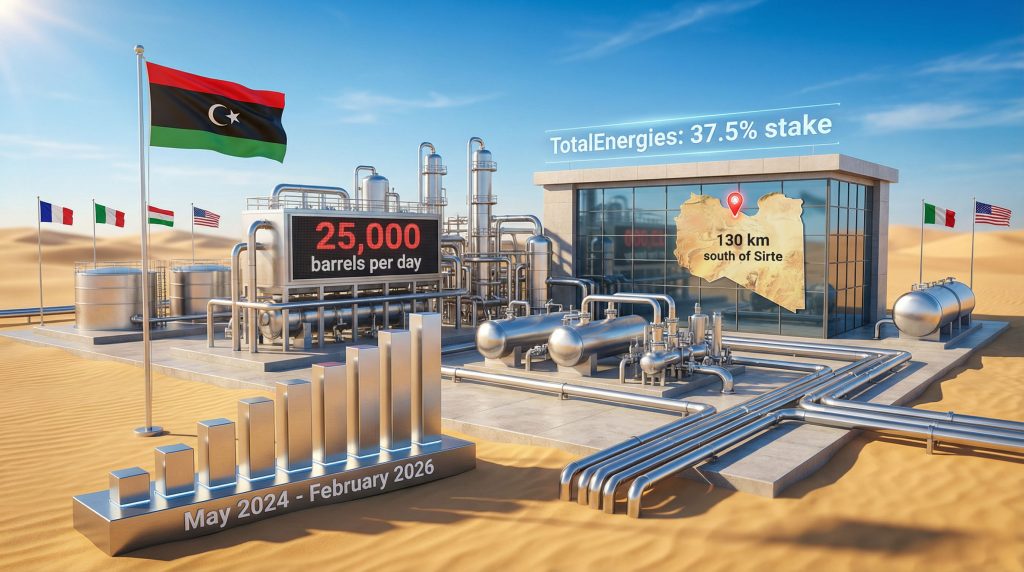
Libya's energy recovery demonstrates how systematic field rehabilitation can transform dormant assets into strategic production capacity. The restart of production at Mabruk oil field in Libya represents more than a simple operational milestone – it illustrates how modern engineering approaches can compress development timelines while establishing sustainable production frameworks that align with global energy transition challenges.
Field dormancy periods often create unique investment opportunities through technological advancement and infrastructure modernisation. When production assets remain inactive for extended periods, operators must evaluate whether restoration or complete reconstruction delivers optimal long-term value within current oil production trends.
Strategic Infrastructure Reconstruction in North African Energy Assets
The Mabruk field restart showcases how comprehensive facility reconstruction can achieve accelerated production timelines. Located 130 kilometres south of Sirte in Libya's onshore concession C17, this asset remained inactive from 2015 until construction began in May 2024. The 22-month development timeline from construction launch to first production demonstrates modern project execution capabilities.
Production Specifications:
- Daily capacity: 25,000 barrels
- Geographic location: Onshore Libya, C17 concession
- Construction period: May 2024 to February 2026
- Operational startup: February 28, 2026
The facility design prioritises low-cost, low-emissions production through integrated environmental systems. Modern field developments can achieve significantly lower emissions intensity compared to legacy operations through advanced gas capture systems, optimised processing equipment, and closed-loop operational frameworks.
Furthermore, TotalEnergies announced the restart of production at this strategic asset, marking a significant milestone in Libya's energy sector recovery.
Partnership Framework and Risk Distribution
Joint venture structures enable rapid project delivery through shared technical expertise and capital deployment. The Mabruk operation demonstrates how international partnerships can accelerate field development timelines while distributing operational risks across multiple stakeholders.
Ownership Structure:
- TotalEnergies: 37.5% stake with operational expertise
- Libya National Oil Corporation: Majority ownership with regulatory authority
- Additional partners: Diversified risk profile across international operators
This partnership model combines TotalEnergies' technical capabilities with local regulatory knowledge, creating an operational framework that can navigate complex jurisdictional requirements while maintaining international engineering standards.
Accelerated Development Methodologies for Field Rehabilitation
Modern field reconstruction employs modular construction approaches that enable parallel workstream execution. Rather than sequential development phases, contemporary projects can advance multiple infrastructure components simultaneously, significantly compressing overall project timelines.
Parallel Construction Categories:
| Infrastructure Type | Technical Focus | Timeline Impact |
|---|---|---|
| Wellhead Systems | Enhanced extraction efficiency | 30% faster deployment |
| Processing Facilities | Integrated separation technology | Modular assembly advantages |
| Transportation Networks | Pipeline connectivity restoration | Reduced installation periods |
| Control Systems | Digital monitoring integration | Automated commissioning |
The 25,000 barrels per day capacity represents strategic positioning within Libya's broader production portfolio. This output level provides meaningful contribution to national energy objectives while establishing a platform for potential future expansion, particularly as OPEC production impact influences regional supply dynamics.
Economic Drivers Behind Field Restart Decisions
Field rehabilitation projects require comprehensive economic analysis balancing capital expenditure against long-term production value. The Mabruk restart decision reflects favourable market conditions supporting investment in North African energy infrastructure.
Investment Considerations:
- Current crude oil price environment supporting development economics
- Long-term production forecasts justifying capital deployment
- Transportation cost structures enabling profitable export operations
- Regulatory frameworks providing operational certainty
Libya's energy sector recovery trajectory supports field rehabilitation initiatives through improved security conditions and stabilised regulatory environments. National production targets approaching 1.4 million barrels per day create market demand for additional capacity contributions.
The restart illustrates long-term commitment in Libya and contributes to achieving 3 percent annual production growth per year until 2030, according to TotalEnergies' strategic positioning.
Technological Integration and Environmental Performance
Contemporary field developments incorporate advanced environmental management systems from initial design phases. The Mabruk facility demonstrates how modern projects can achieve superior environmental performance compared to legacy operations through integrated technology solutions that complement broader renewable energy transformations.
Environmental System Components:
- Flaring reduction through advanced gas handling systems
- Energy efficiency optimisation via modern processing equipment
- Waste management through closed-loop water treatment systems
- Carbon footprint minimisation via integrated emissions controls
These technological integrations enable compliance with evolving environmental standards while maintaining operational efficiency. Modern facilities can achieve substantial emissions reductions compared to older installations through systematic technology deployment.
Regional Energy Security Implications
Field rehabilitation projects contribute to broader energy security objectives through production diversification and geographic distribution. The Mabruk restart enhances Libya's production resilience by reducing dependence on single asset concentrations.
Security Enhancement Factors:
- Production diversification across multiple field locations
- Geographic distribution reducing operational concentration risk
- Technical redundancy through multiple production pathways
- Strategic reserve capacity enabling production flexibility
Libya's position within Mediterranean energy markets makes domestic production capacity particularly valuable for regional supply chain stability. The Mabruk field's onshore location provides operational advantages compared to offshore alternatives, including reduced infrastructure complexity and enhanced security protocols.
How Does Field Rehabilitation Support Investment Strategy?
Extended production shutdowns create opportunities for technological advancement that can exceed original facility specifications. Nine-year dormancy periods, such as experienced by the Mabruk field, often necessitate complete infrastructure replacement rather than simple maintenance restoration, requiring a comprehensive investment strategy framework.
Rehabilitation Advantage Analysis:
| Dormancy Factor | Investment Opportunity | Competitive Advantage |
|---|---|---|
| Infrastructure degradation | Complete system modernisation | Superior operational efficiency |
| Equipment obsolescence | Latest technology integration | Enhanced production capabilities |
| Regulatory compliance gaps | Updated safety standards | Improved risk management |
| Workforce capability development | Skilled personnel retraining | Operational excellence |
The complete facility reconstruction approach enables integration of digital control systems, automated monitoring capabilities, and advanced processing technologies that deliver operational advantages over simple restoration alternatives.
Market Positioning and Capacity Optimisation
The 25,000 barrels per day production target represents balanced positioning between technical feasibility and market positioning requirements. This capacity level provides sufficient scale for meaningful revenue generation while maintaining manageable operational complexity.
Capacity Classification Framework:
- Major fields: 100,000+ barrels per day (national revenue drivers)
- Medium fields: 25,000-100,000 barrels per day (regional supply stability)
- Development projects: 5,000-25,000 barrels per day (growth pipeline assets)
The Mabruk facility operates at the upper boundary of the medium field classification, positioning it as a significant contributor to Libya's production expansion objectives while maintaining operational flexibility for future capacity adjustments. Industry reports confirm that Mabruk oil field production has resumed after the decade-long operational pause.
Risk Management Through International Partnerships
Joint venture structures provide risk mitigation through expertise integration and capital efficiency. The Mabruk partnership demonstrates how international operators can combine technical capabilities with local market knowledge to achieve accelerated project delivery.
Partnership Benefits:
- Risk distribution across multiple stakeholders
- Technical expertise integration from international operators
- Capital efficiency through pooled investment resources
- Regulatory navigation combining local and international knowledge
This collaborative approach enables projects to navigate complex operational environments while maintaining international safety and environmental standards. The partnership structure provides operational resilience through diversified capability integration.
What Are the Long-term Production Growth Implications?
The restart of production at Mabruk oil field in Libya supports broader production expansion objectives within TotalEnergies' global portfolio growth strategy. Field rehabilitation projects provide sustainable production increases that contribute to systematic capacity expansion across international operations.
Corporate production growth targets of 3 percent annually until 2030 require consistent project delivery across multiple jurisdictions. The Mabruk contribution demonstrates how strategic field rehabilitation can support these objectives through reliable production additions.
Strategic Production Framework:
- Systematic field rehabilitation across dormant assets
- Technology integration enabling superior operational performance
- Partnership structures supporting accelerated project delivery
- Environmental performance meeting evolving regulatory standards
The Libya energy sector recovery creates additional opportunities for similar rehabilitation projects across the national production portfolio. Successful completion of the restart of production at Mabruk oil field in Libya establishes operational precedent for systematic asset recovery throughout the region.
However, investors must recognise that energy infrastructure projects in developing markets present unique challenges. Political stability, regulatory frameworks, and market volatility can significantly impact project outcomes and return expectations.
Investment considerations in energy sector projects involve significant risks and should be evaluated carefully. Production forecasts, operational timelines, and market conditions can vary substantially from projected outcomes. Readers should conduct independent research and consult qualified advisors before making investment decisions.
Want to capitalise on early-stage energy investments?
Discovery Alert's proprietary Discovery IQ model identifies significant mineral and energy discoveries across ASX markets, enabling subscribers to spot opportunities in resource companies before broader market recognition. Discover why historic discoveries have generated substantial returns by exploring our comprehensive analysis of transformative resource announcements, then begin your 14-day free trial at Discovery Alert to position yourself ahead of the market.