June 3, 2026
Technical Mechanisms Driving Lithium Recovery Innovation
Modern energy storage demands have catalyzed intensive research into selective mineral recovery from high-temperature industrial processes. While conventional lithium sourcing relies on extensive evaporation pond networks requiring 18-24 months for concentration, alternative extraction pathways leverage existing thermal infrastructure to achieve comparable results in hours rather than years. This fundamental shift in processing timeframes represents a convergence of energy production and critical mineral recovery technologies.
Geothermal power systems naturally circulate mineral-rich brines through engineered infrastructure designed for sustained high-temperature operation. These circulation networks present unique opportunities for direct lithium extraction from geothermal brines, where dissolved lithium concentrations typically range from 50-400 mg/L within already-heated fluid streams. The integration challenge centres on maintaining power generation capacity while simultaneously recovering dissolved minerals through parallel processing circuits.
When big ASX news breaks, our subscribers know first
Understanding the Technical Foundation
Direct lithium extraction from geothermal brines fundamentally differs from surface mining approaches by utilising naturally heated, continuously circulated mineral solutions. Geothermal brines contain dissolved lithium alongside major constituents including sodium (15,000-120,000 mg/L), potassium (1,000-10,000 mg/L), and various interference species that create selectivity challenges for recovery technologies.
The thermal characteristics of geothermal systems provide distinct advantages for mineral processing. Brine temperatures typically maintain 150-300°C during circulation cycles, eliminating energy requirements for heating that characterise conventional lithium processing operations. This thermal stability enables continuous operation of selective recovery systems without temperature cycling stresses that degrade conventional mining equipment.
Integration points between power generation and mineral recovery systems include:
• Heat exchanger modifications allowing parallel mineral extraction circuits
• Pressure management protocols maintaining reservoir integrity during dual-purpose operation
• Reinjection system compatibility ensuring long-term resource sustainability
• Automated chemistry monitoring preventing scale formation and equipment damage
Energy balance considerations become critical when designing integrated systems. Geothermal power plants typically achieve 10-30% thermal efficiency, with substantial waste heat available for secondary recovery processes. Furthermore, understanding lithium brine market insights becomes essential when evaluating commercial viability across different geographical regions.
Brine Composition Variables and Processing Implications
Complex ionic matrices in geothermal brines create unique engineering challenges absent in conventional lithium mining operations. Lithium selectivity becomes critical when competing cations outnumber target lithium ions at 100:1 to 1000:1 molar ratios. Silica concentrations of 50-500 mg/L pose precipitation risks during cooling phases, requiring continuous pH control between 6.5-7.5 to prevent equipment fouling.
Magnesium and calcium interference levels of 100-2,000 mg/L and 50-500 mg/L respectively demand sophisticated separation chemistry to achieve battery-grade lithium specifications exceeding 99.5% purity. These competing ions can saturate conventional ion exchange materials, reducing lithium recovery efficiency and increasing regeneration chemical consumption.
Process Flow Engineering Fundamentals
Integrating lithium recovery with existing geothermal power generation requires careful engineering of parallel processing circuits that avoid disrupting electrical output. Heat exchanger modifications typically utilise plate-frame or shell-tube designs with titanium or stainless steel 316/317 construction to resist high-salinity, high-temperature environments over multi-decade operational periods.
Critical design parameters for integrated systems include:
• Pressure drop limitations below 2 bar across extraction circuits to maintain reinjection targets
• Temperature approach differential of 5-15°C optimising lithium kinetics while preserving thermal energy
• Parallel flow configurations processing 5-15% of total brine flow to avoid power generation interference
• Sequential extraction downstream of power cycles capturing partially cooled but thermally elevated brines
Brine circulation pathway optimisation must accommodate dual-purpose operation without triggering power plant safety shutdowns. Standard geothermal power cycles operate at pressures of 10-50 bar and temperatures of 160-220°C at plant inlets, with reinjection temperatures maintained at 50-90°C to preserve reservoir integrity and minimise thermal shock over 25-30 year operational lifespans.
Reinjection System Requirements and Environmental Compliance
Treated brine streams require re-equilibration before deep reinjection to maintain subsurface reservoir pressure and thermal stability. pH adjustment protocols, solids removal to below 2 microns, and temperature conditioning ensure compatibility with geological formations while preventing long-term reservoir degradation.
Reinjection flow rates must match or exceed extraction rates to maintain reservoir pressure balance. Environmental monitoring systems track discharge composition, subsurface pressure trends, and thermal stability indicators to ensure regulatory compliance throughout project operational phases.
Primary DLE Technologies for Geothermal Applications
Three distinct technological approaches dominate direct lithium extraction from geothermal brines: ion exchange systems, membrane-based separation technologies, and solvent extraction methodologies. Each approach offers specific advantages and limitations when applied to high-temperature, high-salinity geothermal environments.
Ion Exchange and Adsorption Systems
Ion exchange technology utilises engineered bead materials with lithium-selective ligand chemistry to preferentially capture lithium ions over competing sodium and potassium cations present at vastly higher concentrations. Polystyrene-based cross-linked copolymers incorporating crown ether or similar chelating functionality achieve selectivity ratios enabling commercial lithium recovery from complex brine matrices.
Technical specifications for ion exchange systems include:
• Bead diameter range of 0.5-2 mm optimising surface area exposure and pressure drop balance
• Contact time requirements of 15-60 minutes residence time achieving 90%+ recovery at commercial flow rates
• Regeneration chemistry utilising dilute hydrochloric acid or sodium chloride solutions at 60-80°C
• Durability targets limiting bead degradation below 5% per 500-cycle operation through mechanical, chemical, and thermal stress resistance
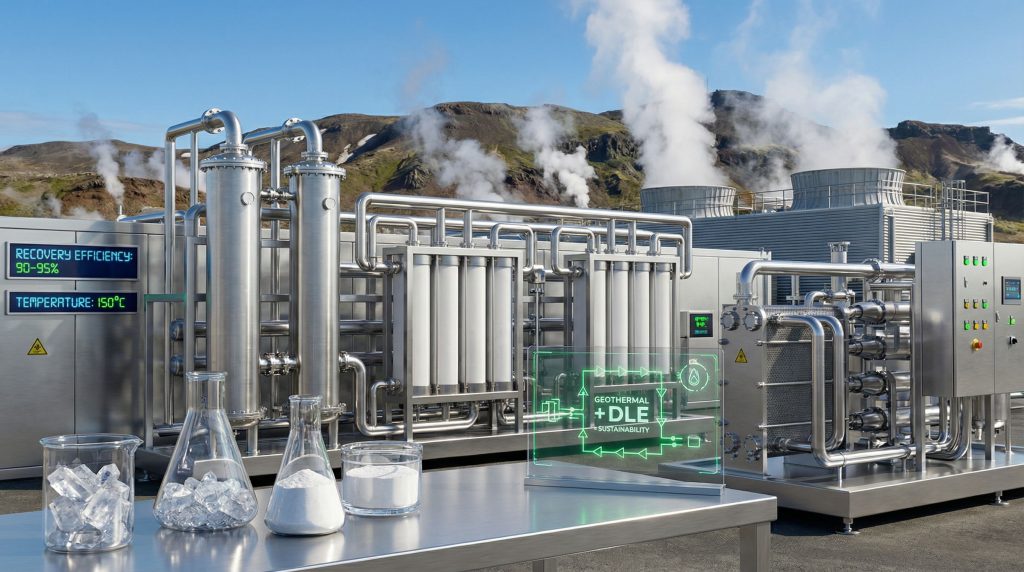
Recovery efficiency typically achieves 90-95% of dissolved lithium from feed brine streams, with throughput capacity ranging from 100-500 kg lithium carbonate equivalent per cubic metre of sorbent material per cycle. Modern lithium brine extraction techniques continue evolving to improve selectivity and reduce operational costs.
| Performance Metric | Typical Range | Optimisation Target |
|---|---|---|
| Lithium Recovery Rate | 85-95% | >92% sustained |
| Regeneration Frequency | 4-8 cycles/day | 6-12 cycles/day |
| Sorbent Durability | 500-2000 cycles | >1500 cycles |
| Product Purity | 95-99% | >99.5% battery grade |
Membrane-Based Separation Technologies
Electrodialysis systems employ selective membrane materials to concentrate lithium through electrical potential gradients while rejecting competing ionic species. Perfluorinated ion-exchange membranes with cation exchange capacity of 0.8-1.2 meq/g enable three-compartment cell designs achieving systematic lithium concentration increases.
Current density optimisation in electrodialysis stacks operates between 50-300 A/m² depending on brine conductivity and membrane material specifications. Power consumption typically requires 3-5 kilowatt-hours per kilogram of lithium carbonate equivalent produced, representing significant operational cost components requiring optimisation for commercial viability.
Key membrane technology parameters include:
• Fouling resistance mechanisms preventing silica precipitation and scale adhesion
• Concentration gradient management through staged voltage application between 5-50V
• Trans-membrane pressure differential monitoring ensuring sustained performance
• Product purity achievement targeting battery-grade specifications above 99.5% lithium carbonate
Recent advances in direct lithium extraction have demonstrated promising results in pilot-scale operations, particularly in geothermal applications where temperature and composition advantages can be leveraged effectively.
Solvent Extraction Methodologies
Solvent extraction processes utilise organic solvents with selective lithium distribution coefficients to achieve phase-transfer concentration through countercurrent contactors. Multi-stage extraction towers operating at 2-4 equilibrium stages can increase lithium concentration 5-10x per stage through selective phase transfer mechanisms.
Organic solvent selection requires demonstration of low water solubility below 100 ppm, high lithium distribution coefficients exceeding 5, chemical stability at 100-150°C operational temperatures, and environmental safety profiles compatible with geothermal site operations. Solvent decomposition rates increase exponentially above 150°C, requiring careful thermal management and periodic solvent replacement cycles.
Critical solvent extraction design considerations:
• Phase separation efficiency achieving greater than 99.5% separation purity when temperature and interfacial tension remain within ±2°C and ±5 dyne/cm ranges
• Organic solvent recovery rates of 95-99% through closed-loop recycling systems
• Temperature sensitivity management where ±5°C variations cause 15-20% efficiency fluctuations
• Degradation product monitoring to prevent interference with lithium selectivity over 6-12 month operational cycles
Operational Challenges Defining Commercial Viability
Commercial deployment of direct lithium extraction from geothermal brines faces distinct operational challenges absent in conventional lithium mining operations. Complex brine chemistry, process economics, and production rate optimisation create interdependent technical and financial constraints requiring integrated solutions.
Brine Chemistry Complexity Management
High-impurity geothermal environments demand sophisticated chemistry management protocols to maintain consistent lithium recovery performance. Silica concentrations of 50-500 mg/L create precipitation risks during cooling phases, requiring continuous monitoring and scale inhibitor injection at 0.5-2 ppm dosing levels to prevent equipment fouling.
Critical chemistry management requirements include:
• Real-time composition analysis enabling automated process adjustments
• pH management systems maintaining 6.5-7.5 ranges preventing scale formation
• Corrosion control through material selection for high-temperature, high-salinity conditions
• Precipitation prevention protocols managing silica, magnesium, and calcium interference
Magnesium and calcium concentrations typically ranging 100-2,000 mg/L and 50-500 mg/L respectively compete directly with lithium for ion exchange sites and membrane transport capacity. These competing species require pre-treatment or selective rejection strategies to achieve battery-grade product specifications consistently.
Process Economics and Scalability Analysis
Economic viability of geothermal lithium extraction depends on optimising operational expenditure components while achieving consistent production targets. Sorbent and media replacement typically represents 40-60% of operational costs, with energy consumption contributing 15-25% and maintenance requirements adding 10-20% of total operational expenditure.
| Cost Component | Percentage of OPEX | Key Variables |
|---|---|---|
| Sorbent/Media Replacement | 40-60% | Durability, regeneration efficiency |
| Energy Consumption | 15-25% | Pumping, heating, cooling requirements |
| Maintenance & Labour | 10-20% | Automation level, complexity |
| Chemical Reagents | 8-15% | Regeneration chemistry, pH control |
Production rate optimisation requires balancing continuous versus batch processing trade-offs while maintaining alignment with geothermal power cycles. Capacity factor improvements through mineral recovery integration can enhance overall project economics by creating dual revenue streams from electricity sales and lithium production.
Quality Control and Product Specifications
Achieving battery-grade lithium carbonate specifications exceeding 99.5% purity requires multi-stage purification protocols removing residual sodium, potassium, and magnesium contamination below 50 ppm thresholds. Quality control systems must demonstrate consistent performance over seasonal variations and accommodate storage requirements for batch shipping.
Seasonal variation management becomes critical in regions with variable geothermal resource availability. Storage capacity design must accommodate production rate fluctuations while maintaining product quality during extended storage periods before shipment to battery-grade lithium refinery facilities.
Geothermal DLE Technical Integration Strategies
Successful integration of lithium extraction with geothermal power generation requires systematic engineering approaches addressing infrastructure requirements, performance optimisation, and long-term operational sustainability. Multi-stage process design enables retrofitting existing power plants while maintaining electrical generation capacity.
Multi-Stage Process Design Framework
Comprehensive process integration follows systematic staging approaches beginning with pre-treatment systems and progressing through primary extraction, purification, and product finishing. Each stage requires specific engineering solutions addressing the unique challenges of high-temperature, high-salinity geothermal environments.
Stage 1: Pre-treatment and Impurity Removal
• Solids filtration to below 2 microns preventing downstream equipment damage
• pH adjustment and scale inhibitor injection maintaining chemistry stability
• Temperature conditioning optimising extraction kinetics and equipment protection
Stage 2: Primary Lithium Extraction and Concentration
• Ion exchange, membrane, or solvent extraction systems achieving 85-95% lithium recovery
• Automated regeneration cycles maintaining consistent performance
• Real-time monitoring enabling process optimisation and fault detection
Stage 3: Purification and Product Finishing
• Multi-stage separation removing competing cations below battery-grade specifications
• Crystal formation and dehydration producing lithium carbonate or lithium hydroxide
• Quality assurance testing confirming product specifications before packaging
Stage 4: Brine Conditioning and Reinjection Preparation
• pH neutralisation and temperature adjustment for reservoir compatibility
• Final solids removal ensuring injection well protection
• Flow rate balancing maintaining reservoir pressure stability
Infrastructure Requirements and Modular Design
Modular plant design approaches enable retrofitting existing geothermal facilities while minimising disruption to power generation operations. Equipment selection prioritises corrosion resistance, thermal cycling tolerance, and maintenance accessibility in remote geothermal locations.
Capital investment structures for geothermal lithium extraction typically require equipment costs ranging $10-50 million depending on processing capacity and technology selection. Installation complexity varies significantly between retrofit applications and greenfield developments, with retrofit projects requiring careful integration with existing power plant infrastructure.
Essential infrastructure components include:
• Extraction units designed for continuous operation in high-salinity environments
• Heat exchangers, pumps, and circulation systems maintaining thermal efficiency
• Waste heat recovery systems optimising overall energy balance
• Environmental monitoring and discharge compliance systems ensuring regulatory adherence
Performance Benchmarking and Optimisation Metrics
Systematic performance evaluation requires establishing benchmarking metrics enabling comparison across different geothermal sites and technology configurations. Key performance indicators must address both technical efficiency and economic viability over multi-decade operational periods.
Critical performance metrics include:
• Lithium recovery rate per unit of brine processed enabling site-specific optimisation
• Energy consumption per kilogram of lithium carbonate equivalent compared to conventional mining
• Water consumption ratios and recycling efficiency minimising freshwater requirements
• Carbon intensity comparison demonstrating environmental advantages over hard-rock mining operations
Continuous improvement protocols utilising automated data collection and analysis enable real-time optimisation of extraction parameters while maintaining consistent product quality. Machine learning applications can identify optimal operating conditions based on brine chemistry variations and seasonal resource fluctuations.
The next major ASX story will hit our subscribers first
Economic Feasibility and Revenue Optimisation
Economic viability of direct lithium extraction from geothermal brines requires comprehensive analysis of capital requirements, operational costs, and revenue optimisation strategies. Dual-revenue models combining electricity sales with lithium production create unique financial dynamics requiring sophisticated project finance approaches.
Capital Investment Structure and Project Finance
Capital investment requirements vary significantly based on processing capacity, technology selection, and site-specific integration challenges. Equipment costs typically range from $10-50 million for commercial-scale installations, with additional requirements for permitting, environmental assessments, and grid integration infrastructure.
Major capital expenditure components include:
• Extraction and purification equipment engineered for geothermal conditions
• Installation and commissioning costs varying with site accessibility and complexity
• Permitting timeline management addressing environmental and regulatory requirements
• Grid integration infrastructure optimising power purchase agreement terms
Financing structures must accommodate extended development timelines and technology risk associated with emerging extraction technologies. Project finance arrangements typically require demonstration of technical feasibility through pilot project validation before achieving commercial-scale funding commitments.
Revenue Model Analysis and Market Integration
Dual-revenue streams from electricity sales and lithium production create opportunities for enhanced project economics while requiring sophisticated market risk management. Electricity revenues provide stable base income streams, while lithium sales offer exposure to high-growth battery materials markets with inherent price volatility.
Revenue optimisation strategies include:
• Long-term offtake agreements providing price stability for lithium products
• Power purchase agreements ensuring consistent electricity revenue streams
• Capacity factor improvements through integrated mineral recovery operations
• Government incentives and critical mineral support programmes enhancing project returns
Price volatility management requires sophisticated hedging strategies addressing lithium market fluctuations while maintaining exposure to long-term growth trends in electric vehicle and energy storage markets. Moreover, understanding the broader battery metals investment landscape enables strategic positioning within evolving supply chains and emerging market opportunities.
Risk Assessment and Mitigation Frameworks
Comprehensive risk assessment must address technology maturity, resource sustainability, market competition, and regulatory evolution over multi-decade operational periods. Technology risk requires validation through pilot project demonstration before committing to commercial-scale deployment.
Primary risk categories include:
• Technology maturity requiring pilot project validation and performance demonstration
• Resource depletion scenarios and reserve life considerations over 25-30 year operational periods
• Market competition from conventional lithium sources including brine operations and hard-rock mining
• Regulatory changes affecting geothermal operations, environmental compliance, and mineral rights
Resource sustainability assessment requires long-term reservoir modelling ensuring consistent brine availability and composition over extended operational periods. Reservoir pressure maintenance and thermal stability become critical factors determining project viability throughout the asset lifecycle.
Global Resource Distribution and Regional Development
Worldwide distribution of lithium-rich geothermal resources varies significantly in terms of brine quality, accessibility, and development potential. Regional differences in resource characteristics, regulatory frameworks, and market access create distinct development strategies for different geographic areas.
Resource Quality Assessment and Geographic Distribution
High-grade geothermal lithium resources concentrate in specific geological settings characterised by volcanic activity, deep circulation systems, and favourable brine chemistry. Resource quality assessment must consider lithium concentration, competing ion levels, and overall brine complexity when evaluating commercial potential.
Major geothermal lithium regions include:
• Salton Sea (California): High-grade brines with lithium concentrations up to 400 mg/L but complex chemistry requiring advanced separation technology
• Reykjanes Peninsula (Iceland): Lower-grade but cleaner brine compositions with reduced impurity management requirements
• Indonesian archipelago: Extensive geothermal resources with emerging lithium potential across multiple volcanic island systems
• Chilean Andes: High-altitude geothermal fields with lithium-rich characteristics in proximity to established mining operations
Indonesia's geothermal capacity represents significant untapped potential with estimates ranging 23-30 GW of possible resources, though only approximately 2 GW achieved operational status by 2024. Consequently, pilot projects in these regions demonstrate integration potential while establishing engineering templates for broader deployment.
Technology Deployment and International Collaboration
International technology transfer frameworks enable deployment of advanced extraction technologies in regions lacking domestic development capabilities. Joint venture structures facilitate risk sharing while providing access to specialised engineering expertise and financing resources.
Deployment strategies include:
• Pilot project scaling methodologies validating technology performance in diverse geological settings
• Government support mechanisms providing funding, permitting assistance, and market development incentives
• Technology transfer agreements enabling local capability development and knowledge sharing
• International supply chain integration connecting remote geothermal resources with global battery materials markets
The USTDA-funded Indonesian pilot project exemplifies international collaboration approaches combining American extraction technology with Indonesian geothermal resources and development expertise. This framework creates opportunities for technology scaling across multiple geothermal fields while building local technical capabilities.
Technology Evolution and Future Development Pathways
Emerging developments in extraction technology, process optimisation, and market integration indicate substantial evolution potential for direct lithium extraction from geothermal brines. Advanced materials research, automation integration, and environmental optimisation drive continuous improvement in commercial viability.
Next-Generation Process Improvements
Advanced materials development focuses on enhanced selectivity and durability for ion exchange media, membrane materials, and solvent systems operating in extreme geothermal environments. Nanotechnology applications and molecular engineering approaches promise significant performance improvements over current generation technologies.
Technology advancement areas include:
• Advanced sorbent materials achieving higher lithium selectivity and extended operational durability
• Artificial intelligence integration enabling real-time process optimisation and predictive maintenance
• Modular design standardisation facilitating rapid deployment and cost reduction
• Zero liquid discharge systems achieving complete environmental compliance and resource conservation
Automation integration enables continuous optimisation of complex multi-variable processes while reducing labour requirements in remote geothermal locations. Machine learning applications can optimise extraction parameters based on real-time brine chemistry analysis and historical performance data.
Additionally, research published in Nature Communications demonstrates promising advances in membrane selectivity and energy efficiency for lithium extraction applications, indicating potential breakthrough improvements in commercial viability.
Market Integration and Supply Chain Development
Future market integration requires positioning geothermal lithium production within evolving battery supply chains while addressing transportation logistics for remote locations. Product specification evolution toward next-generation battery chemistries may create new opportunities for geothermal-sourced lithium products.
Market development factors include:
• Supply chain positioning relative to battery manufacturing hubs affecting transportation costs and delivery times
• Product specification requirements for next-generation battery chemistries including solid-state and lithium-metal systems
• Circular economy integration with battery recycling operations creating closed-loop material flows
• International trade frameworks addressing critical mineral supply chain security and diversification
Transportation and logistics optimisation becomes critical for remote geothermal locations lacking existing infrastructure connections to major shipping networks. Developing regional processing capabilities and establishing strategic storage facilities can enhance market access and reduce logistics costs.
Furthermore, critical raw materials for green transition considerations drive government policies supporting domestic lithium production capabilities, creating additional market incentives for geothermal extraction projects.
Environmental and Regulatory Evolution
Regulatory frameworks continue evolving to address environmental impacts, resource sustainability, and community engagement requirements for geothermal lithium operations. International standards development and life cycle assessment methodologies provide frameworks for sustainable resource development.
Regulatory development trends include:
• Life cycle assessment methodologies enabling comprehensive sustainability validation
• Water rights and subsurface resource management addressing competing use demands
• Community engagement frameworks ensuring social licence and benefit sharing
• International standards development creating consistent operational and environmental requirements
Environmental monitoring technologies enable real-time assessment of operational impacts while demonstrating compliance with evolving regulatory requirements. Continuous improvement in environmental performance supports long-term social licence while enabling access to green financing and investment capital.
Important Disclaimer: This article contains analysis of emerging technologies and market developments that involve inherent uncertainties. Economic projections, technology performance estimates, and market forecasts should not be considered guaranteed outcomes. Readers should conduct independent research and consult qualified professionals before making investment decisions related to geothermal lithium extraction technologies or related market opportunities.
Want to Capitalise on Mineral Discovery Opportunities?
Discovery Alert's proprietary Discovery IQ model delivers instant notifications on significant mineral discoveries across the ASX, including breakthrough developments in battery metals and critical minerals extraction technologies. Subscribers receive real-time insights into actionable investment opportunities, enabling them to position themselves ahead of market movements in emerging sectors like geothermal lithium extraction. Begin your 14-day free trial today to access immediate alerts and comprehensive market intelligence powered by advanced AI technology.