Ore Resources Ltd
- ASX Code: OR3
- Market Cap: $74,470,589
Ore Resources Unveils Capital-Lite Lithium Production Blueprint With Standout Economics at Kangaroo Hills
Ore Resources (ASX: OR3) has released the Ore Resources Kangaroo Hills lithium scoping study results for its 100%-owned Kangaroo Hills Lithium Project in the Eastern Goldfields, outlining a development pathway the company describes as low-cost and rapid to execute. According to the announcement, the study reports a pre-tax net present value of $220.8 million, an internal rate of return of 4,995%, a payback period of four months on $24.9 million in capital, and total forecast revenue of $513.4 million over a 16-month operating life.
Alongside the study, the company declared an initial Mineral Resource Estimate of 3.10 Mt at 1.01% Li₂O, which underpins the production schedule outlined in the report.
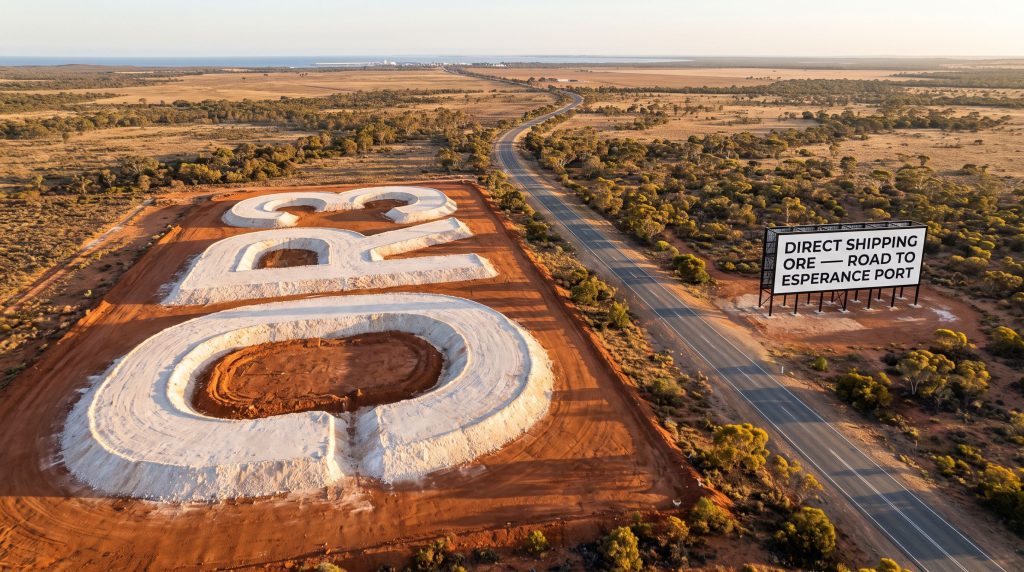
The proposed development pathway centres on a Direct Shipped Ore (DSO) model, a low-capital, contractor-driven approach that avoids the cost and complexity of constructing a full processing plant. Under the plan, ore would be mined, crushed, and trucked approximately 380km to the Port of Esperance for export. The study was completed by engineering consultant Sedgman Pty Ltd to an AACE Class 5 standard and is based entirely on Indicated Mineral Resources.
"The Study demonstrates that a contractor-led DSO development pathway at Kangaroo Hills offers a low-cost, rapid pathway to substantial free cashflow generation, underpinned by robust technical and operating outcomes."
— Nick Rathjen, Managing Director and CEO, Ore Resources
When big ASX news breaks, our subscribers know first
The DSO Model: A Fast, Capital-Efficient Route to Cash Flow
What Is Direct Shipped Ore, and Why Does It Matter?
Direct Shipped Ore refers to lithium-bearing ore that is mined, crushed, and exported in its natural state, without first being processed through a beneficiation plant to produce spodumene concentrate. This distinction carries significant implications for project economics.
Building a concentrator — the type of plant needed to produce high-grade spodumene concentrate, typically around 6% Li₂O — involves substantial capital expenditure, multi-year construction timelines, and considerable technical complexity. A DSO operation removes much of that burden. Consequently, ore moves from pit to port with only a crushing and screening step in between.
The trade-off is that DSO commands a lower price per tonne than concentrate. However, according to the report, when capital costs are minimised and margins remain wide, the resulting economics can still be compelling.
Key DSO Terms Glossary
| Term | Definition |
|---|---|
| DSO (Direct Shipped Ore) | Minimally processed ore exported in bulk without beneficiation |
| Spodumene Concentrate | High-grade lithium mineral product, typically around 6% Li₂O |
| Li₂O | Lithium oxide, the standard measure of lithium content in ore |
| CIF | Cost, Insurance and Freight, where the seller bears costs to the destination port |
| NPV8 | Net Present Value discounted at 8%, a standard measure of project worth |
| IRR | Internal Rate of Return, the annualised return implied by project cash flows |
| AACE Class 5 | Early-stage study standard with approximately ±35% cost accuracy |
| JORC 2012 | Australian standard for reporting mineral resources and exploration results |
| Indicated Resource | A resource category with sufficient geological confidence to support mine planning |
| Strip Ratio | The ratio of waste material to ore moved in open pit mining |
| ROM | Run-of-Mine, referring to ore delivered directly from the pit before processing |
Project at a Glance: Key Metrics for Investors
| Parameter | Value |
|---|---|
| Total Material Mined | 11.1 Mt |
| Ore Mined (Plant Feed) | 1.26 Mt |
| Mine Life | 16 months |
| Strip Ratio | 7.9:1 (waste:ore) |
| Plant Recovery | 95% |
| Total DSO Production | 1.19 Mt |
| Average DSO Product Grade | 1.07% Li₂O |
| DSO Price Assumption | $430/t CIF China |
| Gross Revenue | $513.4 million |
| Total Operating Costs | $251.1 million |
| Capital Cost (CAPEX) | $24.9 million |
| Net Cash Flow (pre-tax) | $237.5 million |
| NPV8% (pre-tax) | $220.8 million |
| IRR (pre-tax) | 4,995% |
| Payback Period | 4 months |
According to the report, the pricing assumption is based on a battery-grade lithium carbonate price of US$24,500/t, translated into a DSO price of $430/t CIF China using a 1.25% pricing linkage and an AUD/USD exchange rate of 0.71.
Maiden Mineral Resource: The Foundation of a Development-Ready Project
Coinciding with the study release, Ore Resources declared its first Mineral Resource for Kangaroo Hills, underpinned by more than 38,000 metres of RC, air core, and diamond drilling completed since lithium mineralisation was discovered in 2022.
Mineral Resource Estimate, August 2026
| Category | Tonnes (Mt) | Li₂O (%) | Ta₂O₅ (ppm) | Contained Li₂O (t) | Contained Ta₂O₅ (lb) |
|---|---|---|---|---|---|
| Indicated | 2.71 | 1.05 | 118 | 28,400 | 708,700 |
| Inferred | 0.38 | 0.74 | 113 | 2,800 | 95,500 |
| Total | 3.10 | 1.01 | 118 | 31,200 | 804,200 |
Resources are reported above a 0.40% Li₂O cut-off within an optimised pit shell. Mineral Resources are not Ore Reserves.
Approximately 90% of the total resource sits in the Indicated category, and the mine plan for the scoping study is sourced exclusively from Indicated resources. No Inferred material and no oxide material has been included in the production schedule — an approach the company states reduces geological risk relative to studies relying on lower-confidence resource categories.
The resource is hosted within spodumene-bearing lithium-caesium-tantalum pegmatites at the Big Red, Rocky, and Potoroo deposits, described in the report as shallow north-dipping systems with consistent geometry and lithium grades. Metallurgical testwork completed in 2024 indicated spodumene accounts for more than 90% of contained Li₂O, and that the ore is amenable to conventional processing techniques including Dense Media Separation and froth flotation.
Furthermore, the resource carries an average grade of 118 ppm Ta₂O₅, which the company states is comparable to several regional lithium operations that produce tantalum concentrates as a by-product. Tantalum represents a potential additional revenue stream that the company intends to evaluate further.
The Economics in Detail: Operating Cost Breakdown and Sensitivity
Total operating costs are estimated at approximately $210/t CIF DSO product, against a revenue assumption of $430/t, implying an operating margin of approximately $220/t DSO.
Operating Cost Structure (Life of Mine)
| Cost Category | $/t DSO | Total LOM ($M) |
|---|---|---|
| Mining | $4.85/t rock | 54.0 |
| Crushing (Processing) | $17.40/t ROM | 21.9 |
| Haulage | $62.08/t DSO | 74.1 |
| Storage and Ship Loading | $13.93/t DSO | 16.6 |
| Shipping | $35.25/t DSO | 42.1 |
| Royalties | $35.48/t DSO | 42.4 |
| Total | ~$210/t DSO | 251.1 |
Haulage represents the largest single cost component at approximately 29% of total operating costs, reflecting the roughly 380km road journey from site to Esperance. The contractor-operated model shifts the majority of costs from upfront capital to variable operating expenses, a design choice intended to preserve financial flexibility and reduce execution risk.
Capital Cost Breakdown
| Item | $M |
|---|---|
| Direct Costs and Allowances | 1.2 |
| Indirect Costs (incl. pre-stripping ~$17.2M) | 19.5 |
| Contingency | 4.1 |
| Total CAPEX | 24.9 |
The largest component of capital is waste pre-stripping at approximately $17.2 million, classified as an indirect cost. This reflects the contractor-delivered model, under which there is no owner investment in mobile mining fleets, crushing infrastructure, or maintenance facilities.
Sensitivity to Key Variables
According to the sensitivity analysis, DSO pricing is by far the dominant value driver. A ±20% change in DSO price produces an approximate ±42% variation in NPV. Selling costs — comprising haulage, storage, shipping, and royalties — represent the second most influential factor at approximately ±14% NPV impact. Mining costs, capital costs, processing costs, and mining dilution showed comparatively modest sensitivity.
| Variable (±20% change) | NPV Low ($M) | NPV High ($M) |
|---|---|---|
| DSO Price | 128.0 | 313.7 |
| DSO Selling Costs | 189.1 | 252.5 |
| Mining Dilution | 212.4 | 229.0 |
| Mining Costs | 212.7 | 228.9 |
| Capital Costs | 215.9 | 225.8 |
| Processing + G&A | 216.9 | 224.8 |
Base Case NPV: $220.8M
Infrastructure, Logistics, and Location Advantages
Kangaroo Hills occupies a position in the Eastern Goldfields that the company describes as advantaged. Located approximately 17km south of Coolgardie, the project has direct sealed highway access to Esperance and sits within a region with established mining services, a skilled workforce, and all-year access.
The proposed logistics chain follows a straightforward sequence:
- Ore mined from Big Red and Rocky open pits via conventional drill-and-blast and load-and-haul methods
- Crushed to a nominal P80 of 40mm through a two-stage modular contractor-operated plant
- Loaded onto road trains at the mine site product stockpile
- Transported approximately 380km to the Port of Esperance
- Stored at third-party bulk storage facilities, with Southern Ports' Multi-User Shed 4 identified as the preferred option
- Ship-loaded for CIF delivery to international offtake partners
The Port of Esperance is described in the report as an established bulk commodity export facility already handling iron ore, grain, and mineral products. In addition, the existing bulk handling infrastructure is expected to reduce the need for owner-funded port development, with no dedicated loading facilities, rail sidings, or unloading infrastructure required under the proposed strategy.
Mineral Resources Ltd's (ASX: MIN) Mt Marion lithium operation sits approximately 30km to the east, placing Kangaroo Hills within an established lithium mining district.
A Multi-Layered Upside Story
The scoping study adopted a conservative pit design, using a revenue factor of 0.54, to minimise stripping requirements and operating costs. This means a portion of economically viable material was intentionally excluded from the study to support a lower-risk, faster-to-execute development profile.
Key Upside Drivers Not Captured in the Base Case
-
Excluded economic material. Approximately 1.0 Mt of Indicated material within the larger economic pit shell (revenue factor 1.00) was excluded from the mine plan. Management believes that sustained or improved lithium prices could see this material readily incorporated to extend mine life.
-
Exploration growth. The Big Red, Rocky, and Potoroo pegmatites remain open along strike and at depth, with further step-out drilling planned. The nearby Miriam Lithium Project, where outcropping spodumene-bearing pegmatites have been mapped across a corridor approximately 6km long and 1.5km wide, adds further discovery potential with no historical drilling completed to date.
-
Ore sorting. Preliminary investigations are underway at Big Red using bulk core samples from July 2026 diamond drilling. Ore sorting technology has the potential to reject barren and low-grade material before crushing, which could improve feed grade and product quality.
-
Domestic ore sales. DSO product could potentially be sold to domestic lithium processing facilities in Western Australia rather than exported, an arrangement that the company states could generate transport cost savings for both parties.
-
Tantalum by-product. The average grade of 118 ppm Ta₂O₅ is comparable to grades at several lithium operations currently recovering tantalum as a by-product. Gravity and magnetic separation processes could potentially be incorporated into the flowsheet, subject to further testwork.
-
Pathway to concentrate production. The DSO operation is described as the first phase of a longer-term development strategy, with infrastructure, workforce relationships, and capital generated from DSO intended to support a future transition to a standalone spodumene concentrate operation.
Approvals Pathway and Timeline to Development
A Project Agreement with the Marlinyu Ghoorlie Native Title Applicants was executed in February 2026, establishing a framework for collaboration across exploration and future mine development and supporting the pathway toward Mining Lease grants.
Mining Leases M15/1095 and M15/1920 are currently pending grant and are expected to be received later in 2026. Environmental baseline studies are underway, including flora and vegetation surveys, soil characterisation, waste rock characterisation, surface water hydrology, and hydrogeology assessments. Detailed flora and fauna surveys are scheduled for September and October 2026.
The company is targeting receipt of all required approvals by Q2 2027, at which point the operation would be fully permitted and ready to commence mining.
Indicative Development Timeline
| Milestone | Target Timing |
|---|---|
| Environmental baseline studies completed | September to November 2026 |
| Approval documents finalised and submitted | December 2026 |
| Mining Lease grant | Late 2026 |
| All regulatory approvals received | Q2 2027 |
| Final Investment Decision (FID) | Mid-2027 |
| Project commencement to first DSO production | Less than 2 months post-FID |
| Payback of capital | Within 4 months of project commencement |
Funding Strategy: Non-Dilutive by Design
Ore Resources has been engaged in discussions with potential strategic and commercial offtake partners for a non-dilutive prepayment funding solution to cover the $24.9 million upfront capital requirement. The company has stated it believes it has a reasonable basis to expect that appropriate funding will be available, given the project's economics and short payback profile.
The project is currently unencumbered by offtake agreements, providing commercial flexibility. Under the study, DSO product would be sold on a CIF basis from Esperance, with options across spot sales, short-term contracts, and structured pricing arrangements.
"We are progressing discussions with potential strategic and commercial partners for a simple, non-dilutive finance arrangement to fund this initial development of Kangaroo Hills."
— Nick Rathjen, Managing Director and CEO, Ore Resources
The next major ASX story will hit our subscribers first
Why Investors Should Follow Ore Resources
The Ore Resources Kangaroo Hills lithium scoping study results represent a significant shift for a company that has moved from regional exploration to a fully-costed development plan within a compressed timeframe. The economic model, according to the announcement, is one that management describes as compelling even under conservative pricing assumptions.
Several factors distinguish this development case:
- Capital discipline. At $24.9 million, the proposed CAPEX is a fraction of what a conventional lithium concentrator would typically require. The four-month payback period, as reported in the study, suggests the project could largely self-fund from operating cash flows soon after commencement.
- Resource quality. With 90% of the Mineral Resource classified as Indicated, and the mine plan drawing exclusively from Indicated material, the production profile reflects a comparatively conservative, higher-confidence basis.
- Speed to market. The DSO model is designed to move from project commencement to first production in under two months, according to the study, offering a comparatively rapid route to cash generation relative to conventional concentrator developments.
Investors should note that the scoping study is preliminary in nature, based on low-level technical and economic assessments that are not sufficient to support the estimation of Ore Reserves or provide certainty of an economic development outcome. Furthermore, additional study, approvals, and funding arrangements remain necessary before a Final Investment Decision can be made.
Ready to Take a Closer Look at Ore Resources and the Kangaroo Hills Project?
With a maiden Mineral Resource in place, a fully-costed scoping study outlining a $24.9 million capital pathway to potential pre-tax net cash flow of $237.5 million, and a development timeline targeting first production within months of a Final Investment Decision, Ore Resources (ASX: OR3) is positioning itself as a near-term lithium producer in one of Australia's most established mining regions. For investors seeking to understand the full scope of the Kangaroo Hills opportunity — including the project's economics, approvals pathway, and multi-layered upside drivers — visit the Ore Resources website at oreresources.com.au.