Locksley Resources Ltd
- ASX Code: LKY
- Market Cap: $26,676,532
Locksley Resources Pauses U.S. Exploration as Antimony Price Collapse Forces Strategic Rethink
Locksley Resources ceases Mojave Project exploration in California, marking a significant shift in the company's strategic direction for its U.S. critical minerals portfolio. According to an announcement dated 17 August 2026, the decision reflects both geological constraints identified at the project level and a sharp deterioration in antimony market conditions over the past 12 months.
When big ASX news breaks, our subscribers know first
What Has Changed and Why It Matters
The announcement confirms that Locksley's two primary U.S. exploration prospects, the Desert Antimony Mine (DAM) and the El Campo rare earths project, both situated within the broader Mojave Project in California, do not currently justify further material exploration expenditure. Active field exploration at both sites has ceased with immediate effect.
The review was described as comprehensive, spanning technical, regulatory and commercial considerations. The Board concluded that whilst exploration confirmed mineralisation at both sites, the results to date have not demonstrated sufficient geological scale or continuity to warrant continued capital deployment.
This conclusion was reached particularly against the backdrop of one of the more severe antimony price corrections in recent market history.
The Antimony Price Collapse: A Key Catalyst
According to S&P Global's Critical Minerals Market Report (August 2026), antimony spot prices have fallen sharply from mid-2025 peaks.
| Metric | Mid-2025 Peak | Current Level (2026) | Change |
|---|---|---|---|
| European CIF Spot Price (Antimony Metal) | US$63,000/t | US$27,000/t | More than -57% |
| Implied Value Erosion per Tonne | -US$36,000/t | ||
| Antimony Trioxide (Downstream Benchmark) | More than -41% |
The correction followed a period of record prices driven by Chinese export controls, which prompted a broader supply response globally. As additional supply entered the market and elevated prices began to constrain downstream demand, the benchmark price reversed sharply.
For an early-stage exploration company assessing whether to commit further capital to an antimony-bearing asset, this shift in the commodity price environment materially alters the underlying economics.
Chair Bevan Tarratt commented: "Our priority is to allocate capital to opportunities with a credible pathway to commercial scale. The review has concluded that further material expenditure on the Mojave Project is not warranted based on the results and market conditions presently available."
Technical Review: What the Geology Revealed
Beyond the commodity price backdrop, the technical review identified geological constraints that informed the Board's decision at both project sites.
Desert Antimony Mine (DAM)
- Diamond drilling confirmed antimony mineralisation hosted within subvertical quartz-stibnite veins and associated vein breccias.
- Mineralisation was confirmed below historical workings and reported to remain open in certain directions.
- The review identified structural complexity and limited demonstrated continuity, presenting a challenge for resource definition.
- Additional drilling, including relatively close-spaced drilling, would reportedly be required to establish the geological confidence necessary to assess resource potential.
El Campo Rare Earths
- Drilling confirmed rare earth element (REE) mineralisation below surface exposures.
- Having considered the results to date, the additional work required, prevailing market conditions and capital allocation priorities, the Board determined that further material exploration expenditure is not warranted at this time.
Non-Executive Technical Director Ian Stockton commented: "While previously reported exploration confirmed mineralisation at DAM and El Campo, the review identified that additional work, including further drilling, would be required to establish geological continuity and scale. When considered together with the material downturn in global antimony prices and the Company's capital allocation priorities, the projects do not currently justify further material exploration expenditure."
What Happens to the Assets Now?
Ceasing exploration does not equate to abandoning the assets. Furthermore, Locksley has outlined a low-cost holding strategy intended to preserve future optionality without ongoing capital commitment.
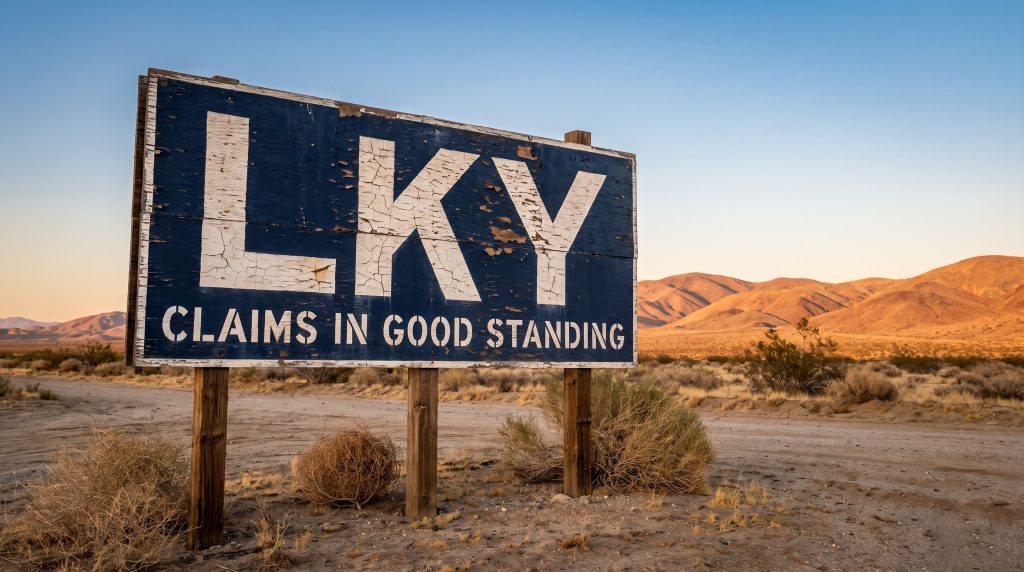
- Claims maintenance: Existing mineral claims will be maintained in good standing through applicable Bureau of Land Management (BLM) fees, county filings and regulatory compliance, subject to periodic Board review.
- Environmental close-out: Locksley has engaged specialist U.S. environmental and field contractors to complete core storage close-out, site safety inspections and required environmental rehabilitation on existing drill tracks and pads, in line with BLM Notice of Intent (NOI) and Plan of Operations (POO) permits.
- DeepSolv™ review ongoing: The company is reviewing its collaborative technical work on the DeepSolv™ hydrometallurgical technology with Rice University to determine whether additional work is to be undertaken. No decision on this programme has yet been made.
This approach — maintaining claims at minimal cost whilst closing out field operations in a compliant manner — reflects a balance between capital discipline and preserving optionality should conditions change.
Understanding the Key Concept: Geological Continuity
What Is Geological Continuity and Why Does It Matter for Investors?
Geological continuity describes the degree to which a mineralised zone, such as a vein containing antimony or rare earth elements, extends predictably through the ground in terms of grade, thickness and direction. High continuity means a deposit behaves consistently, making it comparatively easier and less costly to drill out, model and eventually mine.
Low continuity, as identified at DAM, means mineralisation is irregular, patchy or structurally complex. Even where individual drill holes return high-grade intersections, low continuity makes it difficult to connect those results into a coherent resource model without extensive additional drilling.
Why Does It Matter for Investors?
A discovery announcement reporting high-grade intersections represents only part of the picture. The commercial viability of any deposit ultimately depends on whether those intersections form part of a continuous, mineable body of sufficient scale. Without demonstrated continuity, the gap between an exploration result and a defined mineral resource remains wide, and closing that gap can be costly.
A Glossary of Key Terms
| Term | Definition |
|---|---|
| Stibnite | The primary ore mineral of antimony, a grey metallic mineral found in quartz veins |
| European CIF Spot Price | Cost, Insurance and Freight, the delivered price of a commodity at a European port and a key global benchmark |
| Hydrometallurgy | Processing of metals using aqueous chemistry (water-based solutions) rather than heat-based methods |
| DeepSolv™ | Locksley's proprietary hydrometallurgical technology under development with Rice University |
| BLM | Bureau of Land Management, the U.S. federal agency managing public land mineral rights |
| NOI / POO | Notice of Intent / Plan of Operations, BLM permitting instruments for exploration activities |
| Quartz-stibnite veins | Geological structures where antimony mineralisation occurs within quartz-filled fractures |
| Rare earth elements (REE) | A group of 17 metallic elements used in advanced technologies including electric vehicles and defence systems |
What Comes Next: Capital Reallocation in Focus
The announcement frames this review as part of a broader commitment to deploying capital into projects with the highest probability of commercial scale and value generation. With the U.S. exploration programme wound down, attention will consequently turn to how Locksley intends to redirect its resources.
Developments worth monitoring include:
- DeepSolv™ programme decision: The outcome of the Rice University technical review will clarify whether this hydrometallurgical technology remains a development priority.
- Claims status: Periodic Board reviews of the maintained claims will indicate whether market conditions or geological understanding have shifted sufficiently to warrant re-engagement.
- Capital redeployment: The company's stated intention to focus on higher priority opportunities points to a broader review of strategic direction, though specific details have not yet been disclosed.
The Investment Thesis: Capital Discipline as a Strategic Signal
For investors, the announcement conveys a clear message about how Locksley's Board approaches capital allocation. Rather than continuing to fund assets that have not demonstrated sufficient scale or geological continuity to support commercial development, the Board has opted to preserve capital whilst maintaining optionality at minimal cost.
Key considerations for investors monitoring Locksley:
- The antimony price correction of more than 57% that informed this review reflects a broader market phenomenon rather than a company-specific issue.
- Maintaining the U.S. claims at low cost preserves the option to re-engage should commodity prices recover or geological understanding improve.
- The DeepSolv™ technology partnership with Rice University remains under active review and could represent a distinct value pathway separate from the exploration assets.
- The stated focus on identifying higher priority opportunities points to an active capital allocation process underway at the Board level.
The next major ASX story will hit our subscribers first
Why Investors Should Continue Watching Locksley
Key Takeaway: Locksley Resources has demonstrated a willingness to make disciplined capital allocation decisions in response to changing market conditions and technical findings. With U.S. exploration overhead reduced, the company is positioned to redirect management attention and capital toward opportunities that meet its commercial scale threshold, whilst preserving optionality over its existing U.S. claims at minimal cost.
Decisions made in coming months regarding capital redeployment and the DeepSolv™ programme are likely to represent the next material milestones for the company.
The ability to step back from exploration activity that is not delivering the required results is often regarded as a hallmark of disciplined junior resource company management. Locksley Resources ceases Mojave Project exploration in California as a direct consequence of this disciplined approach, and investors focused on capital discipline over continued speculative exploration spending may find this decision relevant to their ongoing assessment of the company.
Want to Know More About Locksley Resources' Next Strategic Move?
With U.S. exploration costs reduced and capital now available for redeployment, Locksley Resources is at a pivotal point in its strategic evolution. From the ongoing DeepSolv™ technology review with Rice University to the Board's active search for higher-priority opportunities, the coming months could define the company's next chapter. Investors looking to stay ahead of developments should head to the Locksley Resources website to learn more about the company and its forward strategy.