
Manufacturing Crisis Exposes Critical Vulnerabilities in North American Aluminum Production
The aluminum industry operates through intricate networks of specialised facilities, each serving as critical nodes in global supply chains. When these facilities experience catastrophic disruptions, the ripple effects extend far beyond immediate production losses, revealing fundamental weaknesses in industrial resilience planning. The recent fire impact on Hindalco New York plant demonstrates how single-point failures can cascade through multiple industry sectors, affecting automotive manufacturing, aerospace applications, and packaging operations across an entire continent.
Industrial aluminium production requires massive capital investments in specialised equipment, particularly hot mill operations that transform raw ingots into finished products. These facilities cannot be quickly replaced or easily substituted, creating inherent supply chain vulnerabilities that many manufacturers have accepted as unavoidable risks. The complexity of modern aluminium processing means that when production halts, the impact multiplies through downstream industries that depend on specific grades and specifications of rolled aluminium products.
When big ASX news breaks, our subscribers know first
Critical Infrastructure Assessment of the Oswego Operations
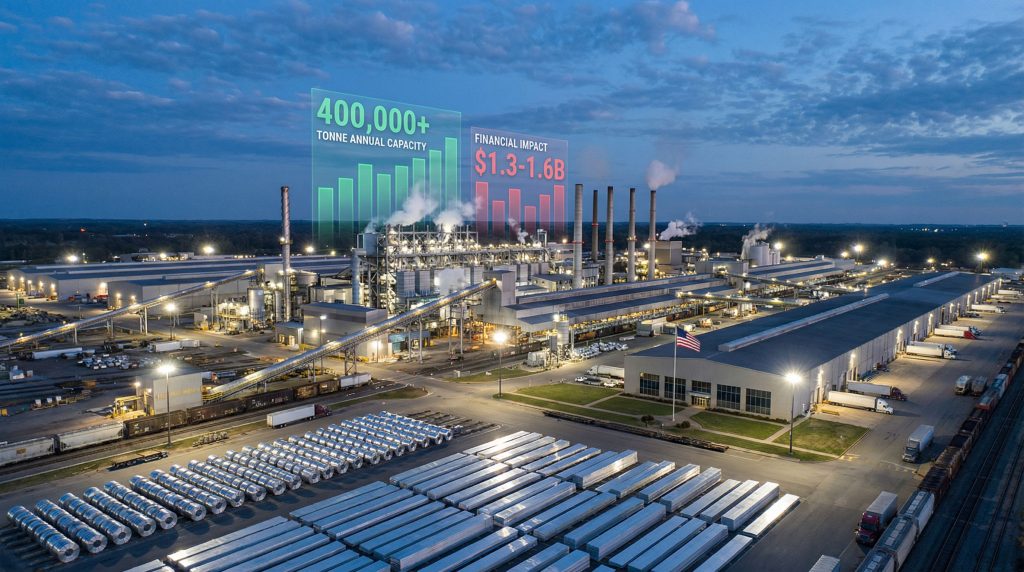
The Novelis facility in Oswego, New York represents a cornerstone of North American aluminium processing capacity, with annual production exceeding 400,000 tonnes of rolled aluminium products. This facility serves as a primary supplier to major automotive manufacturers, aerospace companies, and packaging producers throughout the eastern United States and Canada. The scale of operations at this single location illustrates the concentration risk inherent in modern industrial supply chains.
The hot mill operations at this facility utilise advanced metallurgical processes to produce aluminium sheets and coils meeting stringent quality specifications for critical applications. Automotive manufacturers require precise thickness tolerances and surface quality standards for body panels and structural components, while aerospace applications demand even more rigorous certification standards for safety-critical applications.
Geographic positioning analysis reveals several factors that make this facility irreplaceable in the short term:
- Strategic location within 500 miles of major automotive manufacturing centres
- Direct rail and trucking access to East Coast ports for international customers
- Established relationships with regional automotive original equipment manufacturers
- Specialised capability for high-strength aluminium alloys used in lightweighting applications
The facility's integration with regional energy infrastructure also creates dependencies that extend beyond simple production capacity. Hot mill operations require substantial electrical power inputs, and the facility's specific power management systems cannot be easily replicated at alternative locations without significant lead times and capital investment.
Financial Impact Escalation Reveals Insurance Coverage Gaps
Initial financial projections for the fire impact on Hindalco New York plant dramatically underestimated the scope of business disruption. Management's November 2024 assessment projected cash flow impacts between $550-650 million, but revised estimates released in January 2025 increased these projections to $1.3-1.6 billion, representing a 136-146% escalation in expected losses.
| Impact Category | Initial Estimate (Nov 2024) | Revised Projection (Jan 2025) | Variance Analysis |
|---|---|---|---|
| Direct Cash Flow Hit | $550-650M | $1.3-1.6B | 136-146% increase |
| Insurance Recovery | Not specified | 70-80% coverage | $260-480M recovery |
| Net Financial Impact | $550-650M | $260-480M | Reduced by insurance |
This dramatic revision highlights the challenge of accurately estimating business interruption losses for complex manufacturing operations. The initial estimates apparently focused primarily on direct property damage and immediate production losses, failing to account for the extended timeline required to rebuild specialised hot mill equipment and the cascading effects on customer relationships.
Revenue stream disruption became apparent in Q3 FY26 performance metrics:
- Shipment volumes declined by 11%, representing 72 kilotonnes of lost production
- EBITDA suffered a $54 million negative adjustment directly attributable to the facility closure
- Net income deterioration reached $327 million in additional losses beyond normal operating results
- Working capital strain emerged from inventory buildup at other facilities and potential customer penalty provisions
Furthermore, the insurance coverage analysis reveals typical gaps in industrial risk management. While property damage coverage appears adequate at 70-80% of total losses, this level of coverage may reflect standard market practices that have not kept pace with the true replacement costs of modern specialised manufacturing equipment.
Dual Incident Timeline Complicates Root Cause Analysis
The Oswego facility experienced two separate fire incidents, creating a complex investigation scenario that extends far beyond typical equipment failure analysis. The initial fire occurred on September 16, 2025, affecting hot mill operations during normal production. More concerning was the secondary fire that occurred during repair operations on November 20-21, 2025, approximately two months after the initial incident.
This dual-incident pattern raises questions about the adequacy of emergency response protocols and the safety of repair operations in fire-damaged industrial facilities. The fact that a second fire occurred during attempted repairs suggests potential issues with investment risk red flags in facility management systems.
The sequence of events indicates several concerning factors:
- Residual combustible materials not properly identified after the initial incident
- Inadequate cooling and monitoring procedures during equipment shutdown
- Possible design vulnerabilities in hot mill lubricant systems that create ongoing fire risks
- Emergency response protocols that may not account for the unique hazards of aluminium processing operations
More than four months after the initial incident, aluminium production has not fully resumed, indicating the severity of damage to critical processing equipment. The extended timeline for investigation and repair suggests that root cause analysis involves complex metallurgical and engineering factors beyond simple equipment replacement.
The hot mill operations involve high-temperature processes with specialised lubricants and coolants that can create fire hazards under certain conditions. Understanding the specific failure mechanisms will be crucial for preventing similar incidents at other aluminium processing facilities worldwide.
What Impact Has the Crisis Had on Automotive Supply Chains?
Ford Motor Company specifically flagged lower production levels in Q4 2025 as a direct result of the Novelis fires, with company management indicating that partial recovery is expected in 2026. This disclosure from a major automotive manufacturer provides concrete evidence of how facility-level disruptions affect finished goods production across multiple industry sectors.
The automotive industry's dependence on aluminium has created new vulnerability patterns:
- Lightweighting initiatives require specific aluminium alloys that cannot be easily substituted
- Body panel applications demand precise surface quality that limits alternative supplier options
- Just-in-time manufacturing practices reduce inventory buffers that might otherwise absorb short-term supply disruptions
- Quality certification processes for new suppliers can require months of testing and validation
Ford's production impact illustrates the broader challenge facing automotive manufacturers who have embraced aluminium-intensive vehicle designs. The industry's shift toward electric vehicles has increased aluminium content per vehicle, particularly for battery enclosures and structural components where weight reduction directly affects driving range.
Alternative suppliers face their own capacity constraints, as the aluminium rolling industry operates with relatively high utilisation rates during normal market conditions. When a major facility like Oswego goes offline, the remaining capacity cannot simply absorb the displaced production without affecting service to existing customers.
Consequently, the cost implications extend beyond direct material pricing. Transportation costs increase when manufacturers must source aluminium from more distant suppliers, and expedited shipping may be necessary to maintain production schedules. Quality control procedures must be adapted to ensure consistency across multiple suppliers, adding administrative complexity and potential delay risks.
Global Capacity Reallocation Reveals Supply Chain Inflexibility
Novelis operates aluminium processing facilities across multiple continents, but the fire impact on Hindalco New York plant demonstrates that global capacity cannot easily substitute for regional production losses. The company's target restart date for Oswego operations is the end of Q2 2026, indicating that alternative arrangements will need to sustain North American customers for approximately 12-15 months total disruption time.
International capacity reallocation faces several practical limitations:
- Transatlantic shipping adds 2-4 weeks to delivery schedules compared to domestic trucking
- Ocean freight costs have increased substantially for project cargo and oversized aluminium coils
- Different production facilities may not have identical capabilities for specialised aluminium grades
- Quality certification requirements may vary between facilities, requiring additional testing and documentation
The extended timeline for facility restart reflects the specialised nature of hot mill equipment. These systems cannot be purchased as off-the-shelf items and typically require 6-12 months for manufacturing and installation, plus additional time for commissioning and quality validation.
During the reconstruction phase, Hindalco has indicated plans to incorporate technology upgrades that may enhance future operational reliability. This approach, while potentially beneficial for long-term competitiveness, extends the timeline for return to full production capacity and aligns with broader industry evolution trends.
Moreover, workforce considerations add another dimension to the recovery timeline. Skilled operators for hot mill equipment require extensive training, and maintaining workforce capabilities during an extended shutdown presents challenges for personnel retention and skill maintenance.
The next major ASX story will hit our subscribers first
How Are Aluminium Market Pricing Dynamics Responding?
The loss of 400,000+ tonnes of annual aluminium rolling capacity creates measurable supply tightness in North American markets, particularly for specific product grades and specifications. The 72 kilotonnes of production lost in Q3 FY26 alone represents significant volume that must be absorbed by alternative suppliers or result in delayed deliveries to end customers.
Regional premium adjustments typically occur when major supply sources are disrupted:
- North American aluminium premiums may increase relative to London Metal Exchange benchmark pricing
- Spot market pricing becomes more volatile as buyers compete for limited available inventory
- Long-term supply contracts face renegotiation pressure as suppliers seek to adjust pricing for increased costs
- Import dependency increases as domestic buyers source material from European and Asian suppliers
The aluminium market operates with relatively transparent pricing mechanisms through exchanges like the London Metal Exchange, but regional premiums reflect local supply and demand imbalances. When a major regional supplier experiences extended downtime, these premiums typically adjust upward to reflect the tighter supply situation.
Inventory management strategies throughout the supply chain may shift in response to demonstrated supply risks:
- Major consumers may increase safety stock levels to buffer against future disruptions
- Distributors may allocate available inventory differently among customers
- Speculative buying behaviour may emerge if market participants expect continued supply constraints
- Alternative materials may gain consideration for applications where aluminium specifications allow substitution
In addition, market psychology plays a significant role in commodity pricing during supply disruptions. Even if total global aluminium production remains adequate to meet demand, regional supply constraints can create price volatility that extends beyond the directly affected markets.
Insurance Recovery Challenges in Complex Industrial Claims
The insurance coverage estimate of 70-80% for Hindalco's total losses represents typical recovery rates for major industrial property damage claims, but the complexity of business interruption calculations creates significant uncertainty in final recovery amounts. Industrial insurance policies involve multiple coverage types with different deductibles, exclusions, and limits that affect total recovery.
Property damage coverage typically addresses:
- Direct replacement cost of damaged equipment and infrastructure
- Debris removal and site cleanup expenses
- Temporary facilities and equipment needed during reconstruction
- Engineering and professional services required for facility rebuild
Business interruption coverage presents more complex calculation challenges, particularly for integrated manufacturing operations where lost production affects multiple product lines and customer relationships. The extended timeline for facility restart means that business interruption claims will likely exceed initial estimates as the full scope of customer impact becomes apparent.
Supply chain liability considerations add another layer of complexity:
- Customer penalty provisions in supply contracts may create additional claim exposure
- Expedited freight costs to serve customers from alternative facilities
- Lost customer relationships that may not be quantifiable under standard policy terms
- Competitive disadvantage during the extended repair period
The fire impact on Hindalco New York plant illustrates why many industrial companies are reassessing their insurance coverage levels and risk retention strategies. Traditional coverage levels that seemed adequate for normal operational risks may prove insufficient for catastrophic events that require complete facility reconstruction.
Strategic Implications for Industrial Risk Management
The Oswego facility crisis reveals systemic vulnerabilities in how industrial companies approach operational risk management. The dramatic revision in loss estimates from $550-650 million to $1.3-1.6 billion demonstrates that initial risk assessments often underestimate the full scope of business disruption from catastrophic events.
Corporate resilience evaluation must address several interconnected factors:
- Geographic concentration of critical production capacity
- Customer relationship preservation during extended supply disruptions
- Financial flexibility to absorb losses while rebuilding capacity
- Competitive positioning during periods of operational disadvantage
Hindalco's global operational diversification provides some offset to the North American facility loss, but the company's ability to maintain market share and customer relationships will depend on execution of alternative supply arrangements. The long rebuild timeline creates extended exposure to competitive pressure from other aluminium suppliers.
Investment implications extend beyond immediate capital requirements for facility reconstruction:
- Technology modernisation opportunities during rebuilding may require additional capital beyond basic replacement
- Market expansion strategies may be necessary to compensate for lost competitive positioning
- Customer diversification initiatives could reduce future concentration risks, similar to bauxite project benefits
- Supply chain resilience investments may become higher priorities for risk management
The incident highlights the importance of scenario planning for major operational disruptions. Companies with similar facility concentration risks may need to reassess their contingency planning and consider investments in redundant capacity or alternative supply arrangements.
Industry-Wide Lessons for Manufacturing Risk Management
The dual fire incidents at Oswego provide valuable insights for industrial risk management practices across the aluminium sector and broader manufacturing industries. The occurrence of a second fire during repair operations suggests that standard emergency response protocols may not adequately address the unique risks present in damaged industrial facilities.
Operational risk management best practices should incorporate:
- Comprehensive hazard identification for repair operations in fire-damaged facilities
- Enhanced monitoring systems during equipment shutdown and restart procedures
- Redundancy planning for critical manufacturing processes that cannot be easily replaced
- Supply chain diversification strategies that reduce dependence on single-facility production
The extended timeline for facility restart demonstrates the importance of realistic recovery planning. Initial timeline estimates often prove optimistic when they fail to account for the complexity of equipment procurement, installation, and commissioning for specialised manufacturing systems.
Emergency response coordination between corporate management and facility operations requires:
- Clear communication protocols for stakeholder updates during extended disruptions
- Predetermined criteria for activating alternative supply arrangements
- Customer communication strategies that maintain relationships during supply interruptions
- Financial planning for extended periods of reduced cash flow and increased costs
However, the insurance coverage gaps revealed by this incident indicate that many industrial companies may need to reassess their risk transfer strategies. Traditional coverage levels and policy structures may not adequately address the true business impact of major operational disruptions in today's complex manufacturing environment, especially when considering broader economic factors like US tariffs impact and US-China trade tensions.
What Are the Long-Term Market Implications?
Preventive maintenance optimisation becomes crucial for facilities with high replacement costs and long lead times for critical equipment. Regular inspection and monitoring systems may help identify potential failure modes before they result in catastrophic events that require complete facility reconstruction.
The fire impact on Hindalco New York plant ultimately demonstrates that modern manufacturing operations face concentration risks that cannot be fully eliminated through traditional risk management approaches. Companies must balance operational efficiency with resilience planning, recognising that the lowest-cost operational structure may not provide adequate protection against catastrophic business disruptions.
Key market adjustments expected over the recovery period include:
- Increased regional price premiums for specialised aluminium products
- Enhanced due diligence on supplier diversification strategies
- Technology investment priorities shifting toward redundancy and reliability
- Insurance market reassessment of industrial fire risks and coverage adequacy
The Hindalco fire aftermath serves as a catalyst for industry-wide examination of operational resilience strategies. Companies across the aluminium sector are likely to review their own facility concentration risks and emergency response capabilities.
Furthermore, the incident may accelerate adoption of advanced monitoring technologies and predictive maintenance systems designed to prevent catastrophic equipment failures. The high cost of disruption justifies increased investment in prevention technologies that might have seemed economically marginal under normal circumstances.
"The dual fire incidents represent a watershed moment for industrial risk management in the aluminium sector, forcing companies to reassess assumptions about operational resilience that have remained unchanged for decades."
Disclaimer: This analysis involves forecasts and speculation regarding future market conditions, insurance recoveries, and business performance. Actual outcomes may differ materially from projections due to various factors including regulatory changes, market dynamics, and operational execution risks. Investment decisions should not be based solely on this analysis.
Ready to Invest in the Next Major Mineral Discovery?
Discovery Alert instantly alerts investors to significant ASX mineral discoveries using its proprietary Discovery IQ model, turning complex mineral data into actionable insights. Understand why historic discoveries can generate substantial returns by visiting Discovery Alert's dedicated discoveries page, showcasing historic examples of exceptional outcomes.
