August 14, 2026
## The New Era of Maritime Economic Warfare
The maritime chokepoints that control global commerce are rapidly becoming pressure points in an emerging oil sanctions supply-chain war with China and other major powers. While traditional economic warfare focused on trade barriers and financial sanctions, contemporary geopolitical competition increasingly centres on the physical infrastructure that moves energy and critical materials across oceans. This shift transforms commercial shipping from a neutral logistics network into a contested strategic domain where naval capabilities, payment systems, and commodity flows converge into integrated weapons of statecraft.
Understanding this evolution requires examining how sanctions mechanisms have evolved beyond simple trade restrictions into sophisticated tools for controlling global supply networks. The effectiveness of these approaches depends not merely on blocking specific transactions, but on creating systemic friction that cascades through interconnected maritime, financial, and insurance systems. As major economies become increasingly dependent on distant sources of energy and raw materials, the ability to disrupt these flows becomes a fundamental instrument of power projection.
## Understanding Maritime Supply Chain Vulnerabilities
Modern economic warfare leverages the inherent vulnerabilities in global shipping networks, where approximately 90% of international trade moves by sea according to the United Nations Conference on Trade and Development. This massive volume, representing roughly $14 trillion in annual cargo flows, creates multiple intervention points where state actors can apply pressure without direct military confrontation.
### The Economics of Maritime Disruption
The financial architecture underlying global shipping creates natural pressure points that amplify the impact of targeted interventions. Demurrage costs for large container vessels range from $20,000 to $45,000 per day depending on vessel size and port conditions, according to Clarkson Research maritime database. These costs accumulate rapidly during delays, creating powerful incentives for shipping companies to avoid potential compliance violations.
Insurance premiums represent another critical vulnerability. Historical data from Lloyd's Market Association shows that insurance costs for high-risk shipping corridors have increased 50% to 400% during periods of heightened geopolitical tension. This dynamic creates market-based enforcement mechanisms that operate independently of direct government action, as private insurers withdraw coverage to avoid regulatory penalties.
The cumulative nature of these costs becomes particularly significant for oil tankers, where average round-trip times from Middle East to Asia span 30 to 45 days. A single delayed 300,000-tonne crude tanker accumulating $35,000 daily in demurrage costs faces over $1 million in additional expenses within a month, directly impacting shipper behaviour and route selection.
### Legal Frameworks Enabling Commercial Interdiction
Port state control mechanisms under international maritime law provide legal foundations for vessel inspections and cargo restrictions. Furthermore, the Paris Memorandum of Understanding on Port State Control allows coastal states to inspect foreign vessels entering their ports for compliance with international conventions, creating enforcement opportunities at key transit points.
Flag state jurisdiction provides vessels' nations of registry with primary enforcement authority, but port state control enables secondary enforcement when ships enter foreign waters. This dual-layer system creates multiple intervention opportunities along commercial shipping routes, particularly when vessels must transit through ports controlled by sanctioning nations.
Maritime insurance markets amplify these legal mechanisms through policy exclusions and coverage denials. Lloyd's of London and other major maritime insurers enforce Office of Foreign Assets Control sanctions through contractual terms rather than direct government mandate, creating private sector compliance that extends beyond formal legal requirements.
## Financial Chokepoints in Global Energy Trade
The financial infrastructure supporting international oil trade creates additional pressure points that complement maritime interdiction capabilities. Understanding these mechanisms reveals how economic warfare operates through payment systems rather than purely physical disruption.
### SWIFT System Dependencies and Vulnerabilities
The Society for Worldwide Interbank Financial Telecommunication messaging system facilitates communication for most international financial transactions, though it does not directly control fund transfers. Banks receiving payment instructions for sanctioned entities face regulatory penalties ranging from $100 million to over $2 billion based on historical Office of Foreign Assets Control enforcement actions.
This creates de facto veto power over sanctioned transactions without requiring explicit technological barriers. Financial institutions voluntarily restrict services to avoid potential violations, extending sanctions impact beyond formal legal requirements through private sector risk management.
The dollar's dominance in energy markets amplifies this leverage. Approximately 88% of global oil contracts are invoiced in U.S. dollars according to the International Monetary Fund's analysis of official foreign exchange reserves, necessitating dollar clearing for settlement and creating natural intervention points in the payment process.
### Insurance Market Compliance and Risk Assessment
Protection and Indemnity clubs, which insure approximately 95% of global commercial shipping, require compliance certifications before activating coverage. This creates market-wide enforcement leverage that operates independently of direct government action, as insurers demand verification of sanctions compliance as a condition of policy coverage.
Settlement velocity in oil trades, typically clearing within two to five business days through SWIFT channels, creates short enforcement windows before counterparties can seek alternative payment mechanisms. This timing constraint forces rapid compliance decisions and limits opportunities for evasion through financial engineering.
## Strategic Testing Grounds and Geographic Advantages
Certain regions provide optimal conditions for testing and refining supply chain disruption capabilities whilst minimising risks of escalation with major powers. Geographic isolation, limited international support networks, and existing precedents for intervention create favourable environments for developing and demonstrating new approaches to economic warfare.
### Geographic Isolation as Strategic Advantage
Distance from potential adversaries' naval assets significantly reduces escalation risks when testing new interdiction approaches. Regions located beyond effective power projection range of target nations allow for operational testing without immediate military confrontation, providing valuable experience in implementing complex sanctions regimes.
Proximity to established naval bases and logistics networks enhances enforcement capabilities whilst maintaining operational security. The ability to sustain extended maritime patrols, conduct vessel inspections, and coordinate with allied forces becomes crucial for effective sanctions implementation over time.
Caribbean sea lanes, for instance, remain within comfortable range of U.S. Southern Command assets whilst lying beyond effective Chinese naval reach. This geographic asymmetry creates favourable conditions for testing maritime interdiction techniques without triggering immediate military responses from major adversaries.
### Limited International Opposition
Testing sanctions approaches in regions with constrained international support reduces diplomatic complications and potential coalition-building by target nations. Governments with limited legitimacy or international sympathy face greater difficulty mobilising effective resistance to economic pressure campaigns.
Regional voting patterns in international forums reveal varying levels of support for different government positions. However, while Latin American nations increasingly abstain from or oppose sanctions escalation in UN General Assembly votes, this opposition typically lacks the coordination and resources necessary for effective sanctions-breaking coalitions.
The absence of strong alternative power patrons further reduces complications from testing new economic warfare approaches. Regions without significant military or economic protection from major powers remain vulnerable to extended pressure campaigns without risking broader geopolitical confrontation.
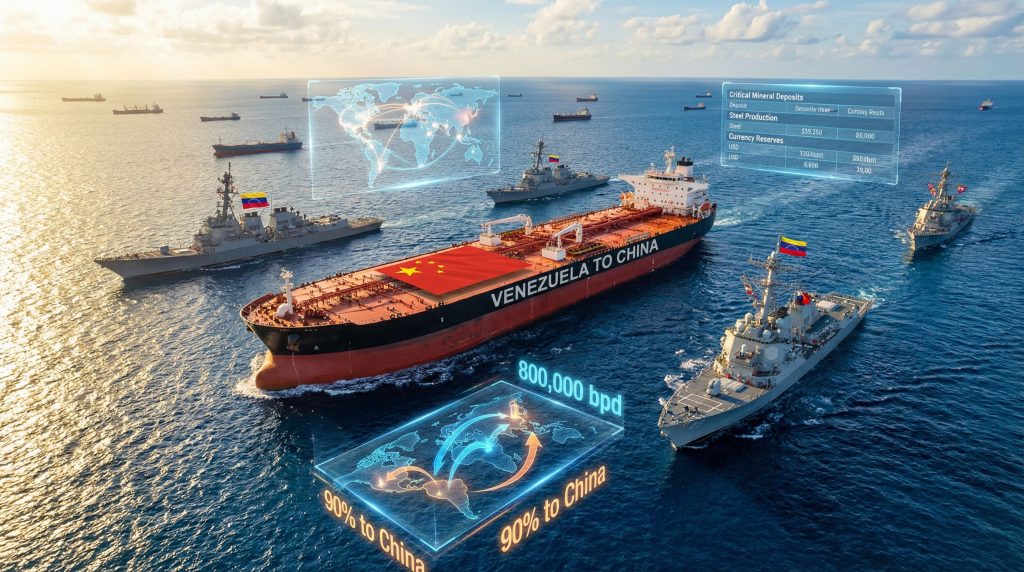
The oil sanctions supply-chain war with China demonstrates how Venezuela becomes a testing ground for complex sanctions regimes that may later be applied on larger scales.
## Critical Resource Dependencies and Strategic Vulnerabilities
Contemporary supply chain warfare extends beyond traditional energy resources to encompass critical minerals energy security and advanced materials essential for modern manufacturing. Understanding these dependencies reveals how disrupting specific commodity flows can cascade through entire industrial systems.
| Resource Type | Global Concentration | Strategic Importance | Disruption Impact |
|---|---|---|---|
| Rare Earth Elements | 60% China-controlled | Advanced electronics | Manufacturing shutdown |
| Lithium Processing | 80% China-controlled | Battery production | EV industry disruption |
| Cobalt Supply | 70% DRC production | Battery chemistry | Energy storage limits |
| Platinum Group | 80% South Africa | Catalytic systems | Automotive impacts |
### Mineral Supply Chain Complexities
Unlike oil, which follows relatively transparent shipping routes, critical mineral supply chains often involve complex processing stages across multiple countries. This opacity creates both opportunities and challenges for supply chain disruption, as materials can be rerouted through alternative processing facilities or stockpiled to absorb short-term shortages.
Chinese dominance in mineral processing creates strategic vulnerabilities for nations dependent on these materials. Furthermore, even when raw materials originate from diverse geographic sources, concentration of refining and processing capabilities in single nations creates chokepoints that can be exploited through various pressure mechanisms.
Traceability weaknesses in mineral supply chains complicate enforcement efforts whilst creating opportunities for sanctions evasion. Unlike oil shipments, which involve large, visible vessels moving between established terminals, mineral flows can be disguised, transshipped, or processed through intermediaries to obscure ultimate destinations.
### Alternative Route Development
The development of alternative supply routes represents a key defensive strategy against supply chain disruption. However, building new processing facilities, establishing shipping relationships, and creating reliable logistics networks requires significant time and capital investment, creating windows of vulnerability during transition periods.
Trans-shipment capabilities through neighbouring countries can provide some protection against direct sanctions, but these arrangements often involve additional costs, delays, and political risks that reduce overall supply chain efficiency and reliability.
"The time required to develop alternative supply chains creates windows of vulnerability that can be exploited through coordinated pressure campaigns, making the timing of sanctions implementation a crucial strategic consideration."
## Naval Expansion and Maritime Security Responses
Major powers are responding to growing supply chain vulnerabilities through significant naval modernisation programmes designed to protect critical shipping routes and project power into distant maritime domains. These capabilities represent a fundamental shift from accepting supply chain risks toward actively defending commercial lifelines.
### Fleet Modernisation and Capability Development
The People's Liberation Army Navy has grown to approximately 370-390 vessels by hull count, representing the world's largest navy numerically according to the U.S. Department of Defense's 2024 assessment of Chinese military developments. However, the U.S. Navy's approximately 330 deployable battle force ships maintain advantages in tonnage concentration and power projection capabilities.
Chinese submarine capabilities include approximately 50-55 diesel-electric submarines and 8-10 nuclear-powered attack submarines based on U.S. Office of Naval Intelligence assessments. This underwater fleet provides both defensive capabilities for coastal approaches and potential offensive options for disrupting adversary shipping in extended ranges.
Aircraft carrier development demonstrates long-term commitment to power projection capabilities. Three operational or near-operational carriers as of 2024 include the Liaoning (commissioned 2012), Shandong (commissioned 2019), and Fujian (launched 2022, currently in working-up phase), representing steady progression in naval aviation capabilities.
### Overseas Base Development and Logistics Networks
Confirmed overseas People's Liberation Army Navy logistics facilities currently include the primary support base in Djibouti (operational since 2017), with additional port access agreements in Pakistan, Sri Lanka, and Cambodia. These facilities provide crucial logistics support for extended naval operations beyond traditional coastal defence perimeters.
Chinese commercial port operations in approximately 50+ ports globally create dual-use infrastructure that supports both commercial shipping and potential naval logistics requirements. This network provides strategic depth for protecting supply chains whilst creating new nodes for potential conflict.
The Djibouti naval base demonstrates institutional capability to maintain sustained overseas naval presence, positioned strategically near major shipping routes including proximity to the Suez Canal (180 km) and providing logistics hub capabilities for extended Indian Ocean operations.
## Alternative Financial Systems and Currency Strategies
The development of alternative payment systems represents a fundamental response to financial sanctions pressure, potentially reshaping global monetary flows and reducing dependence on dollar-dominated systems. These efforts require understanding both technological capabilities and political coordination challenges.
### Renminbi Internationalisation Progress
Chinese efforts to internationalise the renminbi operate through multiple channels including bilateral trade agreements that bypass dollar settlements, central bank digital currency pilot programmes, and strategic accumulation of gold reserves for currency backing purposes.
The Cross-border Interbank Payment System (CIPS) represents China's primary alternative to SWIFT messaging, though it currently handles significantly smaller transaction volumes and lacks the global network coverage necessary for complete independence from existing financial infrastructure.
Currency swap agreements between central banks create bilateral payment mechanisms that reduce dollar dependency for specific trade relationships. However, these arrangements require ongoing political coordination and limit flexibility compared to market-based currency systems.
### Digital Currency and Payment Innovation
Central bank digital currency development could potentially provide sanctions-resistant payment mechanisms, though implementation faces significant technical and political challenges. Digital yuan pilot programmes within China demonstrate technological capabilities whilst revealing limitations in cross-border adoption.
Cryptocurrency adoption for sanctions evasion remains limited by volatility, transaction costs, and regulatory restrictions in major economies. Whilst providing some circumvention capabilities, cryptocurrency markets lack the scale and stability necessary for major commodity transactions.
Barter trade mechanisms offer another alternative, though they involve significant transaction costs and complexity that reduce efficiency compared to currency-based systems. These approaches typically remain limited to specific bilateral relationships rather than multilateral trade networks.
## Maritime Chokepoints and Strategic Geography
Global shipping routes concentrate through a limited number of strategic waterways that create natural intervention points for naval powers. Control or influence over these chokepoints provides disproportionate leverage over international commerce regardless of overall fleet size or capabilities.
### Critical Waterway Dependencies
The Strait of Hormuz handles approximately 21% of global petroleum liquids transit according to the U.S. Energy Information Administration, making it the world's most critical oil chokepoint. Any disruption to this 33-kilometre-wide passage significantly impacts global energy markets and supply security.
The Strait of Malacca serves as the primary shipping route between the Pacific and Indian Oceans, handling approximately 25% of traded goods annually. Chinese military strategists acknowledge that roughly 90% of Chinese crude oil imports transit through this waterway, creating fundamental strategic vulnerability.
The Suez Canal provides crucial connectivity between Asian and European markets, with the 2021 Ever Given grounding demonstrating how single-point failures can disrupt global supply chains. Container shipping dependencies on this route create leverage points for nations controlling canal access.
### Naval Control and Alliance Coordination
U.S. forward-deployed base networks provide sustained presence near critical chokepoints, enabling rapid response to shipping disruptions whilst maintaining continuous surveillance capabilities. This geographic positioning creates structural advantages for interdiction operations.
Alliance coordination through NATO and regional partnerships multiplies enforcement capabilities beyond single-nation resources. Shared intelligence gathering, coordinated patrols, and unified sanctions enforcement create comprehensive coverage across multiple maritime domains.
The combination of geographic positioning, alliance networks, and technological capabilities provides established naval powers with significant advantages in controlling maritime commerce, though these advantages face growing challenges from emerging naval capabilities.
## Economic Warfare Escalation Pathways
The progression from economic pressure to potential military conflict follows predictable escalation patterns that decision-makers must understand to manage risks and avoid unintended consequences. These pathways reveal how commercial disputes can evolve into broader security confrontations.
### Grey-Zone Operations and Graduated Pressure
Grey-zone operations operate below the threshold of direct military confrontation whilst applying sustained pressure through multiple channels simultaneously. These approaches combine legal commercial restrictions, financial pressure, and maritime harassment to create cumulative stress on target systems.
Rules of engagement for commercial vessel protection become crucial as tensions escalate. Naval escorts, inspection protocols, and response procedures for perceived threats require clear guidelines to prevent incidents from triggering broader military confrontation.
Intelligence gathering on competitor supply networks supports both defensive preparations and offensive planning. Understanding adversary dependencies, alternative routes, and critical vulnerabilities enables more effective pressure application whilst revealing potential retaliation targets.
### Technology Transfer Restrictions as Parallel Pressure
Semiconductor export controls expansion demonstrates how technology restrictions complement supply chain pressure by limiting target nations' ability to develop alternative capabilities or modernise existing infrastructure. These restrictions create cumulative pressure across multiple domains simultaneously.
Dual-use technology licensing requirements extend restrictions beyond purely military applications to include commercial technologies with potential security implications. This broadened scope increases pressure whilst complicating target nations' economic development strategies.
Research collaboration limitations reduce technology transfer through academic and commercial partnerships. These restrictions slow innovation and capability development whilst increasing costs for independent technology development programmes.
## What Drives Supply Chain Militarisation Trends?
Contemporary supply chain pressures are driving fundamental changes in global economic organisation that extend far beyond specific bilateral relationships. Understanding these trends reveals how current tensions may reshape international commerce permanently.
### Supply Chain Regionalisation Dynamics
Near-shoring of critical manufacturing capabilities reduces long-distance shipping dependencies whilst creating regional supply networks that may prove more resilient to disruption. However, this transition requires significant capital investment and time to establish alternative production capacity.
Regional trade bloc formation could create alternative economic networks that reduce dependence on potentially hostile nations. These arrangements require political coordination and economic integration that may prove challenging to maintain during periods of tension.
Strategic stockpiling of essential materials provides buffer against supply disruptions but requires significant storage costs and inventory management. Government-mandated reserves create additional demand that influences global commodity markets whilst providing security against short-term shortages.
The tariff impacts on markets and global trade disruption demonstrate how trade policies accelerate these structural changes in the global economy.
### Military-Industrial Integration Evolution
Defence contractor involvement in commercial shipping blurs traditional distinctions between military and civilian logistics networks. This integration could provide enhanced security for critical shipments whilst potentially creating new targets during conflicts.
Cybersecurity requirements for supply chain participants create additional compliance costs and complexity whilst potentially improving overall system resilience. However, these requirements could also create new vulnerabilities if security systems themselves become targets.
Government oversight of foreign investment in strategic sectors reflects growing recognition of supply chain security implications in investment decisions. This trend toward economic nationalism may reduce global capital flows whilst increasing political risks for international business operations.
## How Do Rising Powers Challenge Maritime Order?
The militarisation of supply chains creates new categories of risk that require careful analysis and management by both government and private sector decision-makers. These risks extend beyond traditional business considerations to encompass broader security and strategic implications.
### Escalation Control Challenges
Supply chain warfare creates escalation dynamics that may be difficult to control once initiated. Unlike traditional military conflicts with clear geographic boundaries, economic warfare can spread rapidly across multiple sectors and regions, creating unpredictable consequences.
The integration of military and commercial systems complicates targeting decisions during conflicts. Attacks on civilian infrastructure could be justified as military necessity, whilst purely economic measures could trigger military responses, blurring traditional escalation boundaries.
Alliance coordination becomes crucial for managing escalation risks whilst maintaining effective pressure. Disagreements among allies about appropriate responses or target selection could undermine sanctions effectiveness whilst creating opportunities for adversaries to exploit divisions.
### Private Sector Adaptation Requirements
Companies operating in strategic sectors must develop new risk assessment frameworks that account for geopolitical factors beyond traditional business considerations. This requires expertise in areas typically outside corporate competencies whilst increasing operational costs and complexity.
Supply chain diversification strategies must balance resilience against efficiency, potentially requiring higher inventory costs and multiple supplier relationships. These changes could increase overall system costs whilst providing protection against specific disruption scenarios.
Insurance and risk management approaches must evolve to address new categories of political risk that may not be covered by traditional policies. This could create gaps in protection whilst increasing costs for comprehensive coverage.
## Does Supply Chain Warfare Really Work?
### How effective are maritime sanctions in changing state behaviour?
Historical evidence suggests mixed effectiveness depending on target nation vulnerabilities and alternative options. Iranian oil exports fell from 2.5 million barrels per day in 2017 to approximately 300,000 barrels per day by mid-2019 primarily through insurance withdrawal and port restrictions rather than naval blockade, demonstrating significant impact. However, adaptation strategies and alternative partnerships can reduce long-term effectiveness.
### Can alternative payment systems neutralise financial sanctions?
Current alternative systems lack the scale and network effects necessary to completely replace dollar-dominated financial infrastructure. Whilst bilateral arrangements and digital currencies provide some circumvention capabilities, they involve higher transaction costs and political coordination challenges that limit widespread adoption.
### What role do private companies play in sanctions enforcement?
Private sector compliance often extends beyond legal requirements due to liability concerns and reputational risks. Insurance companies, banks, and shipping firms frequently implement stricter restrictions than formally required to avoid potential penalties, creating market-based enforcement mechanisms that operate independently of government action.
### How do supply chain disruptions affect global economic stability?
Furthermore, the oil sanctions supply-chain war with China can create cascading effects across multiple industries and regions, potentially triggering broader economic disruptions beyond immediate targets. Oil price pressures, shortages of critical materials, and reduced efficiency in global production networks could impact economic growth and stability worldwide, making calibrated approaches essential for limiting unintended consequences. In addition, US–China trade war dynamics demonstrate how bilateral tensions can rapidly spread to affect global supply chains and financial markets.
Disclaimer: This analysis is for educational and informational purposes only and should not be considered as investment advice or recommendations for specific policy actions. Geopolitical developments are inherently unpredictable, and readers should consult qualified professionals for specific investment or policy guidance. The scenarios and projections discussed represent possibilities rather than predictions and may not reflect actual future developments.
Want to Stay Ahead of Market-Moving Discoveries?
Discovery Alert's proprietary Discovery IQ model instantly identifies significant ASX mineral discoveries, transforming complex geological announcements into actionable trading opportunities for investors. Explore how historic discoveries generate substantial returns and begin your 30-day free trial today to position yourself ahead of market movements.