Market Forces Reshaping South African Gold Production Economics
Global precious metals markets are witnessing a fundamental transformation in production economics, driven by sustained price rallies that have pushed gold to unprecedented levels above $4,200 per ounce. This dramatic shift in commodity valuations has revitalised mining jurisdictions previously considered economically marginal, with South Africa opens rare new gold mine after record price rally emerging as a prime beneficiary of these elevated price environments.
The opening of West Wits Mining's Qala Shallows operation represents the first new underground gold mine to commence production in South Africa in over 15 years, marking a potential inflection point for the nation's mining sector. At current gold prices exceeding $4,247 per ounce, projects with production costs below $1,300 per ounce generate gross margins approaching 70%, fundamentally altering the risk-return profile of South African mining investments.
This economic transformation extends beyond individual project viability to encompass broader supply chain dynamics, investment capital allocation patterns, and geopolitical considerations surrounding precious metals production concentration. The sustained historic gold price surge, with gains approaching 60% in 2025 alone, has created conditions where previously uneconomic deposits become highly attractive investment opportunities.
Historical Context Behind South Africa's Mining Sector Decline
South Africa's gold mining industry experienced a dramatic contraction over the past two decades, with production declining by more than 70% from peak levels achieved in the late 1990s and early 2000s. This substantial reduction transformed the nation from a dominant global gold producer to a secondary market participant, reflecting fundamental changes in mining economics and operational challenges.
The structural factors driving this decline centred on the inherent disadvantages of deep underground mining operations characteristic of South African gold deposits. Unlike surface mining operations in other major producing regions, South African mines historically operated at depths exceeding 3,000 metres, creating exponential cost structures for essential infrastructure including ventilation systems, cooling mechanisms, and safety protocols.
Primary Decline Factors:
• Escalating operational costs as mining depths increased
• Labour cost inflation relative to competing jurisdictions
• Energy supply constraints and load-shedding impacts
• Regulatory compliance costs and safety requirements
• Capital flight to more cost-effective mining regions
The deep mining economics that characterised South Africa's historical gold production became increasingly uncompetitive as extraction depths increased and operational complexity escalated. Major mining companies including AngloGold Ashanti, Harmony Gold, and predecessors to Sibanye-Stillwater systematically divested from South African operations or relocated investment capital to alternative jurisdictions with more favourable cost structures.
This multi-decade divestment pattern coincided with the emergence of large-scale surface mining operations in Australia, Nevada, and West Africa, which offered significantly lower production costs and reduced operational risks compared to South Africa's deep underground deposits.
Economic Catalyst Driving Mining Investment Revival
The revival of South African gold mining investment directly correlates with sustained precious metals price appreciation that has fundamentally altered project economics across the sector. Furthermore, this gold market performance has created conditions where projects previously considered marginal become highly profitable operations.
Current Market Dynamics:
| Metric | Value | Impact |
|---|---|---|
| Current Gold Price | $4,247.7/oz | 227% above long-term average |
| Production Cost Threshold | $1,300/oz | 69% gross margin potential |
| Price Appreciation (2025) | +60% | Multiple all-time highs |
| Break-even Improvement | 3.3x margin | Project viability transformation |
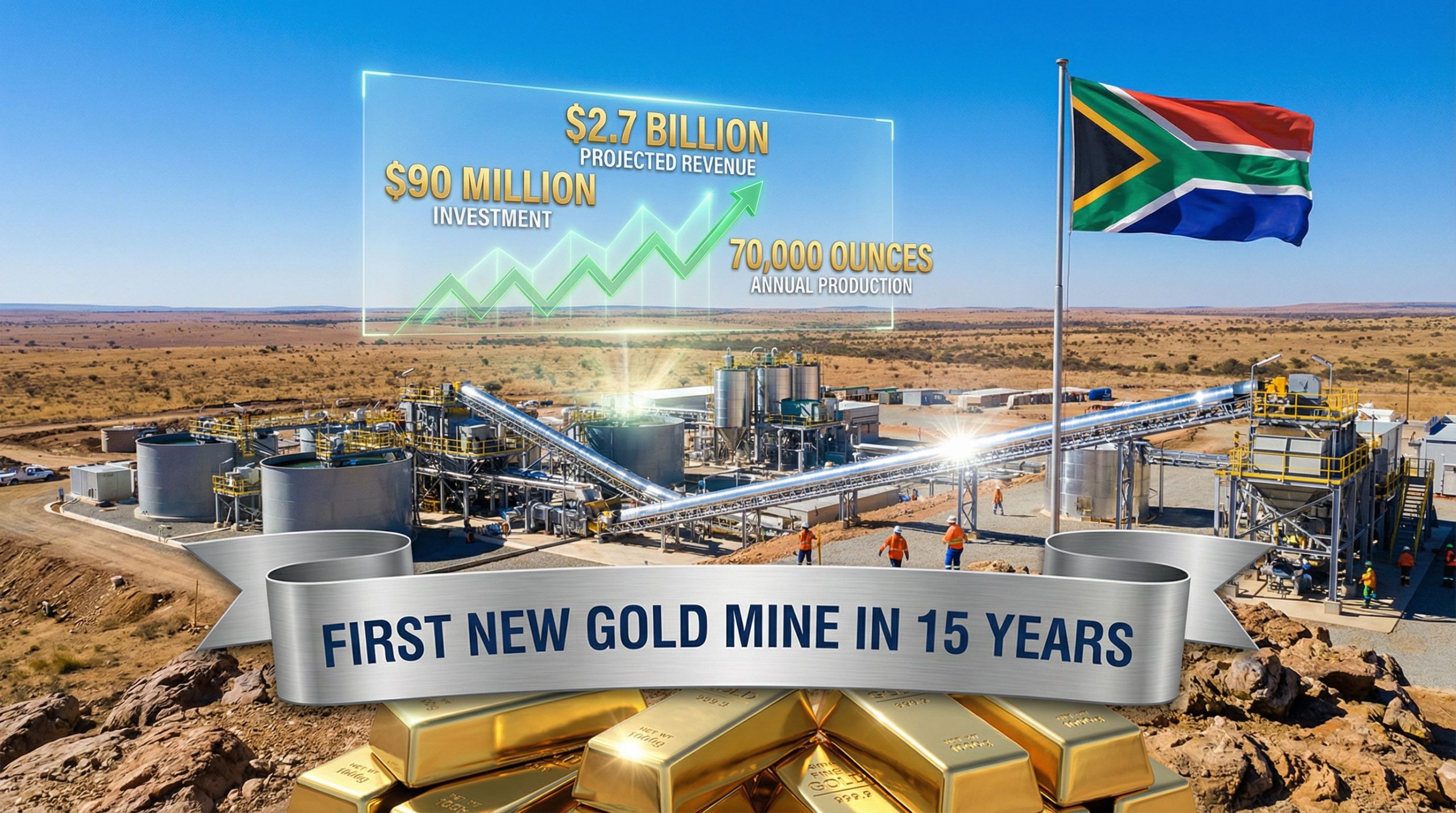
The Qala Shallows project exemplifies this economic transformation, with its $90 million initial investment generating projected lifetime revenues of $2.7 billion at current gold price levels. This represents a theoretical payback period of less than six months based on gross operating cash flows, though actual returns depend critically on sustained elevated gold prices.
West Wits Mining's strategy of targeting shallow underground deposits addresses the historical cost disadvantages of deep South African mining whilst capitalising on established geological knowledge and existing infrastructure networks. In addition, the project's annual production target of 70,000 ounces, expandable to 200,000 ounces, positions it as a meaningful contributor to regional gold output.
Operational Innovations Addressing Historical Challenges
The Qala Shallows operation incorporates technological and operational improvements that directly address the cost and safety challenges that historically plagued South African gold mining. By focusing on shallow underground deposits rather than deep mining operations, the project significantly reduces infrastructure requirements and operational complexity.
Technological Adaptations:
• Modern ventilation and monitoring systems reducing safety risks
• Automated equipment integration improving productivity
• Selective mining techniques optimising ore grade recovery
• Digital monitoring systems enhancing operational efficiency
The project's location on the edge of Johannesburg provides access to established mining infrastructure, skilled labour pools, and processing facilities that reduce capital expenditure requirements compared to greenfield developments. This infrastructure leverage represents a competitive advantage unique to South African operations.
However, processing arrangements with established operators like Sibanye-Stillwater enable West Wits Mining to avoid significant capital investments in processing facilities whilst benefiting from proven operational expertise and established supply chains.
Global Supply Chain Implications and Market Positioning
The revival of South African gold production occurs within a broader context of supply chain diversification concerns and geopolitical considerations affecting precious metals markets. Current global gold production of approximately 3,000 tonnes annually remains concentrated among a limited number of major producing countries, creating potential supply security risks.
Production Context Analysis:
• Qala Shallows initial capacity: 70,000 ounces (0.07% of global production)
• Expansion potential: 200,000 ounces (0.2% of global production)
• South African market position: Recovery from marginal producer status
• Geographic diversification value: Reduced concentration risk
Whilst the absolute production contribution remains modest relative to global supply, the symbolic and strategic importance extends beyond tonnage metrics. South Africa opens rare new gold mine after record price rally could encourage additional investment in the region, potentially creating momentum for broader production increases across multiple operations.
The geopolitical implications include reduced dependence on Asian and Pacific production centres, providing alternative supply sources for international precious metals markets. Furthermore, South Africa's established gold trading infrastructure, including Johannesburg's role as a precious metals trading hub, offers logistical advantages for international market access.
Investment Capital Allocation Patterns and Financing Innovation
The Qala Shallows project demonstrates innovative financing approaches that combine public and private sector participation to mitigate development risks. The involvement of South Africa's Industrial Development Corporation alongside private banking partnerships reflects strategic risk-sharing mechanisms adapted to resource sector investment challenges.
Financing Structure Components:
• State-backed Industrial Development Corporation participation
• Commercial banking involvement through Absa Bank
• Processing agreements reducing operational risk
• Staged development approach minimising capital exposure
This multi-stakeholder financing model addresses traditional constraints on mining project development, including capital intensity, commodity price volatility, and operational risks. The combination of development finance institution backing with commercial lending creates a framework that could be replicated for additional projects.
Consequently, the relatively modest $90 million capital requirement reflects the shallow mining approach and existing infrastructure leverage, contrasting with typical greenfield mining projects requiring hundreds of millions or billions in initial investment.
Macroeconomic Impact Assessment for South Africa
The broader economic implications of mining sector revival extend significantly beyond individual project contributions, particularly given the historical importance of mining to South African economic performance. The sector's potential recovery coincides with record-high gold prices that enhance export earnings and foreign exchange generation.
Economic Contribution Metrics:
• Direct foreign exchange earnings: $297 million annually (at 70,000 oz production)
• Expansion potential: $849 million annually (at 200,000 oz capacity)
• Employment generation: Direct and indirect job creation
• Regional development: High-unemployment area focus
The foreign exchange earnings potential represents significant value for South Africa's current account balance, providing hard currency revenues that support rand stability and import capacity. Mining sector export revenues traditionally serve as a crucial source of foreign exchange for the South African economy.
Employment implications extend beyond direct mining jobs to encompass supply chain activities including equipment manufacturing, maintenance services, transportation, and processing operations. For instance, the multiplier effects of mining investment typically generate 3-5 indirect jobs for each direct mining position.
Regional economic development benefits concentrate in areas surrounding Johannesburg where unemployment rates remain elevated, potentially providing meaningful economic opportunities for local communities through direct employment and business development initiatives.
Risk Assessment and Operational Challenges
Despite favourable market conditions and improved project economics, significant operational and systemic risks could impact the sustainability of South Africa's mining sector revival. These risk factors require careful evaluation by investors and policymakers seeking to capitalise on current market opportunities.
Infrastructure Risk Factors:
• Power grid reliability: Load-shedding cycles affecting operations
• Transportation capacity: Port and rail infrastructure constraints
• Energy costs: Eskom pricing and supply agreement terms
• Water availability: Mining operation supply requirements
South Africa's well-documented electricity supply constraints through Eskom's load-shedding programmes create operational uncertainty for energy-intensive mining operations. Whilst shallow mining requires less energy than deep operations, power supply reliability remains crucial for consistent production.
Market Volatility Considerations:
Gold price sensitivity analysis reveals that project economics deteriorate significantly if prices decline below $2,000 per ounce, though current production costs below $1,300 per ounce provide substantial downside protection at prevailing market levels.
Currency risk represents another critical consideration, as gold revenues are denominated in US dollars whilst significant operational costs occur in South African rand. Exchange rate fluctuations can materially impact project returns, particularly if the rand strengthens substantially against the dollar.
Environmental rehabilitation obligations remain a long-term concern, with South Africa's mining sector facing substantial legacy cleanup responsibilities. Current estimates suggest that 90% of abandoned mines require rehabilitation, creating potential future liability for the sector.
Regional Mining Development Momentum
The Qala Shallows opening coincides with increased investment activity across the broader African gold mining sector, suggesting regional momentum in precious metals development driven by favourable price conditions. Several projects are advancing development timelines to capitalise on current market opportunities.
Regional Development Examples:
• Theta Gold Mines: TGME project receiving $6 million acceleration investment
• West African operations: Technology adoption increasing efficiency
• Cross-border investment: Capital flows responding to price incentives
• Infrastructure development: Support system improvements
The acceleration of mining development across multiple African jurisdictions reflects broader investor confidence in sustained precious metals pricing and improved operational capabilities across the continent. Technology adoption rates in areas such as automated equipment, satellite monitoring, and digital geology are enhancing operational efficiency.
Investment flows into African gold projects have increased substantially over the past 18 months, with both established mining companies and junior developers advancing project timelines in response to favourable market conditions.
Future Market Structure and Investment Implications
The successful operation of South Africa's first new gold mine in 15 years could catalyse broader changes in global gold market structure, potentially encouraging additional investment in previously marginal deposits worldwide. The demonstration effect of profitable operations at current price levels may prompt reassessment of resource inventories across multiple jurisdictions.
Strategic Investment Considerations:
• Portfolio diversification: Geographic risk distribution
• Cost curve positioning: Competitive advantage assessment
• Infrastructure leverage: Existing asset utilisation
• Regulatory stability: Jurisdiction risk evaluation
For institutional investors, South African gold mining exposure offers potential diversification benefits within precious metals portfolios whilst providing exposure to USD-denominated revenues in an emerging market context. The combination of established mining expertise and improved project economics creates potentially attractive risk-adjusted returns based on gold price forecast insights.
The longer-term success of operations like Qala Shallows depends critically on sustained elevated gold prices, continued technological improvements, and infrastructure reliability. Investors must carefully evaluate sensitivity to these key variables when assessing exposure to the sector.
What Does This Mean for Global Gold Markets?
If South African mining operations achieve consistent profitability and operational success, the demonstration effect could encourage similar developments across other historically important mining regions that became uneconomic during lower price periods. This could gradually alter global supply concentration patterns and enhance supply chain resilience.
The integration of modern mining technologies with established geological knowledge and existing infrastructure represents a replicable model for mining sector revitalisation in mature jurisdictions worldwide. Furthermore, this comprehensive gold market analysis suggests these developments could potentially influence investment strategies across the global precious metals sector.
South Africa opens rare new gold mine after record price rally demonstrates how sustained precious metals price appreciation can fundamentally transform project economics in previously unviable mining jurisdictions, creating opportunities for geographic diversification and supply chain resilience improvements across global gold markets.
Looking to Capitalise on Gold Market Opportunities?
Discovery Alert's proprietary Discovery IQ model delivers real-time alerts on significant gold and mineral discoveries across the ASX, instantly identifying actionable opportunities as market conditions evolve. Begin your 30-day free trial today to position yourself ahead of the market and discover why major mineral discoveries can generate substantial returns.