Market Psychology in Resource Sector Capital Allocation
Understanding how institutional capital flows into development-stage mining projects requires examining the behavioral patterns that drive investment decisions during commodity bull markets. The psychology behind resource sector funding reveals complex dynamics where investor sentiment, risk appetite, and strategic positioning converge to create opportunities for both spectacular returns and significant losses.
Furthermore, mining equity markets operate under distinct psychological pressures that differ markedly from traditional equity sectors. Institutional investors must navigate volatile commodity cycles, geological uncertainties, and extended development timelines while managing portfolio allocations that can experience dramatic valuation swings within short periods. This creates a unique investment environment where technical merit alone rarely determines funding success.
The current copper market environment demonstrates these psychological dynamics in action. With global copper supply constraints intensifying and demand projections supporting sustained price appreciation, institutional investors are increasingly willing to accept higher entry valuations and equity dilution risks in exchange for exposure to quality development projects in stable jurisdictions.
Capital Raise Timing and Valuation Impact Analysis
Resource companies face critical decisions regarding when to access capital markets, particularly during periods of elevated share prices and strong commodity fundamentals. The timing of equity raises relative to share price momentum creates measurable impacts on both dilution costs and subsequent shareholder value creation potential.
Recent capital raise activity in the copper-gold sector illustrates these timing dynamics. When FireFly Metals completed its institutional firefly metals capital raise, the company accessed $143 million at $1.70 per share following a period where shares had reached record levels of $1.98. This 14.3% discount to peak pricing represents a strategic balance between accessing sufficient capital and minimising dilution impact on existing shareholders.
Market Timing Framework for Resource Sector Fundraising
The assessment of optimal capital raise timing involves multiple variables that extend beyond simple share price considerations. Companies must evaluate commodity price trajectories, drilling season timing, permit approval schedules, and institutional investor availability windows when structuring equity offerings.
Key Market Timing Considerations:
• Commodity price momentum and seasonal patterns
• Institutional investor risk appetite cycles
• Regulatory approval timing requirements
• Drilling program seasonal constraints
• Peer group capital raise activity levels
For instance, the FireFly Metals firefly metals capital raise demonstrates sophisticated timing coordination. By accessing capital during strong copper market sentiment while maintaining attractive project development timelines, the company positioned itself to deploy funds during optimal drilling conditions while avoiding potential market volatility periods.
Equity Dilution Trade-off Analysis
Capital raise pricing relative to recent trading ranges provides insight into market acceptance of dilution versus growth funding requirements. The institutional appetite for FireFly Metals shares at $1.70 pricing, despite recent highs of $1.98, suggests investor confidence in the company's ability to generate returns that justify the dilution impact.
However, share price performance following the capital raise announcement revealed typical market psychology patterns. The initial 7.9% decline to $1.79 reflected immediate dilution impact recognition, while the sustained institutional interest at the offer price indicated confidence in the company's strategic execution capabilities.
Institutional Demand Drivers for Canadian Copper-Gold Assets
Canadian copper-gold projects attract institutional capital through a combination of geological potential, jurisdictional stability, and infrastructure advantages that differentiate them from development opportunities in higher-risk regions. Understanding these preference drivers provides insight into how institutional investors assess and allocate capital within the global resource sector.
Geographic Risk Premium Assessment
Mining jurisdiction selection represents a critical component of institutional investment decision-making. Canadian provinces offer regulatory frameworks, political stability, and operational infrastructure that command premium valuations relative to projects in emerging market jurisdictions with similar geological characteristics.
"Canada's established mining regulatory environment and political stability create significant de-risking advantages for institutional investors seeking copper-gold exposure without emerging market political risks."
The Newfoundland jurisdiction specifically provides advantages through established mining infrastructure, skilled labour availability, and proximity to North American processing and export facilities. These factors reduce development capital requirements while accelerating potential time-to-production schedules.
Resource Quality and Scale Requirements
Institutional investors typically establish minimum resource scale thresholds that must be met before significant capital allocation occurs. While specific grade cutoffs vary by commodity and market conditions, copper-gold projects generally require substantial tonnage and grade combinations to justify development capital requirements.
Institutional Investment Threshold Indicators:
• Minimum resource scale expectations exceeding 500,000 tonnes copper-equivalent
• Grade parameters supporting economic extraction under conservative commodity price assumptions
• Infrastructure proximity reducing capital intensity requirements
• Management team track records demonstrating successful project development experience
Additionally, the FireFly Metals Green Bay project combines multiple asset types within a single geographic region, providing portfolio diversification benefits while maintaining operational efficiency advantages. This multi-asset approach appeals to institutional investors seeking exposure to both near-term production potential and long-term exploration upside.
Multi-Asset Portfolio Strategy Implementation
Development-stage mining companies increasingly structure their asset portfolios to provide institutional investors with diversified exposure across multiple development stages, risk profiles, and potential production timelines. This strategic approach reduces single-asset risk while creating multiple value creation pathways that can be optimised based on market conditions and capital availability.
Asset Mix Optimisation Benefits
The Green Bay project structure demonstrates sophisticated portfolio planning through its combination of advanced-stage assets with earlier-stage exploration targets. This approach provides institutional investors with both near-term catalysts and longer-term growth potential within a single investment position.
Strategic Asset Portfolio Components:
- Advanced Infrastructure Assets – Existing mining infrastructure providing immediate development advantages
- Regional Exploration Targets – Early-stage prospects offering significant discovery potential
- Processing Facility Access – Operational infrastructure reducing development capital requirements
- Export Infrastructure – Port access enabling efficient product logistics and marketing
This diversified approach enables capital allocation flexibility based on drilling results, market conditions, and development milestone achievement. Companies can prioritise high-return opportunities while maintaining exploration momentum across multiple targets simultaneously.
Development Timeline Coordination Strategy
Multi-asset portfolios require sophisticated project management to coordinate development activities across different asset maturity levels. The FireFly Metals strategy involves deploying nine drill rigs across various targets while progressing mining studies toward a final investment decision by the first half of 2026.
This timeline coordination provides several strategic advantages. First, it maintains continuous news flow and value creation potential across multiple fronts. Second, it enables resource allocation optimisation based on early drilling results. Third, it creates multiple pathways for institutional investor engagement based on individual risk preferences and timeline requirements.
Infrastructure Reactivation Value Creation Framework
Brownfield mining projects with existing infrastructure provide compelling investment opportunities through reduced development risks, accelerated timelines, and proven operational feasibility. The value creation potential from infrastructure reactivation often exceeds greenfield development returns while requiring lower initial capital commitments.
Existing Infrastructure Assessment
The Ming underground mine infrastructure represents substantial embedded value within the FireFly Metals portfolio. The operational decline accessible to 950 metres below surface, combined with an existing 650-metre deep shaft, provides immediate access to known mineralisation zones while eliminating significant infrastructure development costs and timelines.
Infrastructure Value Drivers:
• Operational Infrastructure – Fully functional underground access eliminating construction delays
• Proven Mining Environment – Historical production from 1972-1982 and 2012-2023 demonstrating geological understanding
• Processing Capabilities – Existing facility reducing capital requirements for production startup
• Logistics Infrastructure – Port access enabling efficient product export without additional transport investments
Furthermore, this infrastructure portfolio enables rapid resource expansion through systematic drilling programmes while maintaining low capital requirements for initial production restart capabilities. The combination creates significant optionality for management to optimise development strategies based on exploration results and market conditions.
Historical Operational Context and De-risking Benefits
The Ming mine operational history provides substantial de-risking benefits that appeal to institutional investors seeking reduced geological and operational uncertainty. The project's mining history spanning multiple decades demonstrates proven resource extraction capabilities while providing extensive geological data supporting future development planning.
Mining operations from 1972-1982 established initial resource understanding and extraction methodologies. The restart operations from 2012-2023 provided updated geological modelling and modern mining technique validation. This operational track record significantly reduces the uncertainty typically associated with development-stage mining projects.
Consequently, the recent mothballing in 2023 positions the asset for efficient reactivation as market conditions and resource expansion justify resumed operations. This strategic flexibility provides management with multiple development pathways based on exploration success and commodity price evolution.
Systematic Exploration Value Creation Strategy
Resource expansion through systematic drilling programmes represents the primary value creation mechanism for development-stage mining companies. The effectiveness of exploration drilling programs capital deployment directly impacts resource estimate growth, feasibility study outcomes, and ultimate project economics that drive institutional investor returns.
Nine-Rig Drilling Deployment Strategy
The planned deployment of nine drill rigs across the Green Bay project represents an aggressive exploration strategy designed to rapidly expand resource estimates while testing new discovery potential across regional targets. This scale of drilling activity requires sophisticated target prioritisation and resource allocation to maximise value creation per dollar invested.
The drilling programme targets both extensions to known mineralisation and new regional prospects, creating multiple pathways for resource growth and discovery value creation. This dual approach provides near-term resource expansion catalysts while maintaining longer-term discovery potential that can drive significant valuation appreciation.
Drilling Programme Strategic Framework:
- Known Zone Extensions – Systematic expansion of existing resource areas with established grades and geological understanding
- Regional Prospect Testing – Early-stage target evaluation across the broader project area
- Infill Drilling – Resource estimate confidence improvement supporting feasibility study advancement
- Metallurgical Sample Collection – Processing optimisation and recovery factor determination
Resource Growth Impact Measurement
Exploration success measurement extends beyond simple resource tonnage additions to include grade improvement, confidence level upgrades, and metallurgical recovery optimisation. These factors collectively determine project economics and institutional investor valuation frameworks.
Moreover, the systematic approach enables real-time programme optimisation based on early drilling results. High-priority targets can receive increased drilling density while lower-potential areas can be deprioritised, ensuring efficient capital allocation throughout the programme duration.
Resource growth announcements typically generate significant market responses within the mining sector, particularly during favourable commodity price environments. The timing and scale of resource estimate updates provide key catalysts for institutional investor engagement and valuation appreciation.
Final Investment Decision Preparation Framework
Development-stage mining companies must navigate complex technical, financial, and regulatory requirements to achieve final investment decision readiness. This process involves systematic risk reduction, economic optimisation, and stakeholder alignment that positions projects for major capital investment and construction initiation.
Technical Study Advancement Requirements
The progression toward final investment decision requires completion of comprehensive technical studies that demonstrate project economic viability under conservative assumptions. FireFly Metals has targeted completion of upscaled mining studies by the first half of 2026, providing a specific timeline for FID preparation.
Critical FID Preparation Components:
• Resource Estimate Confidence – Measured and indicated resource categories supporting mining reserve declarations
• Engineering Design Completion – Detailed processing, infrastructure, and mining method optimisation
• Environmental Assessment – Regulatory approval pathway completion and social licence establishment
• Economic Modelling – Cash flow projections under multiple commodity price scenarios and sensitivity analysis
The comprehensive approach ensures all major project risks are addressed before significant development capital deployment. This systematic de-risking appeals to institutional investors while providing management with clear execution milestones and decision frameworks.
Investment Decision Criteria Framework
Institutional investors evaluate FID-ready mining projects against sophisticated criteria that extend beyond simple economic returns to include ESG considerations, operational risk assessment, and portfolio fit analysis. Understanding these evaluation frameworks helps companies optimise their project positioning and presentation.
The FireFly Metals market capitalisation of $1.32 billion prior to the firefly metals capital raise announcement suggests institutional investors have assigned significant value to the project based on current development status and future potential. This valuation provides insight into institutional assessment of the project's FID preparation progress and ultimate development potential.
Commodity Price Cycle Integration Strategy
Mining investment success requires sophisticated understanding of commodity price cycles and their impact on project economics, financing availability, and institutional investor appetite. Companies must position their development timelines and financing strategies to optimise value creation across different market environments.
Copper Market Fundamentals and Investment Implications
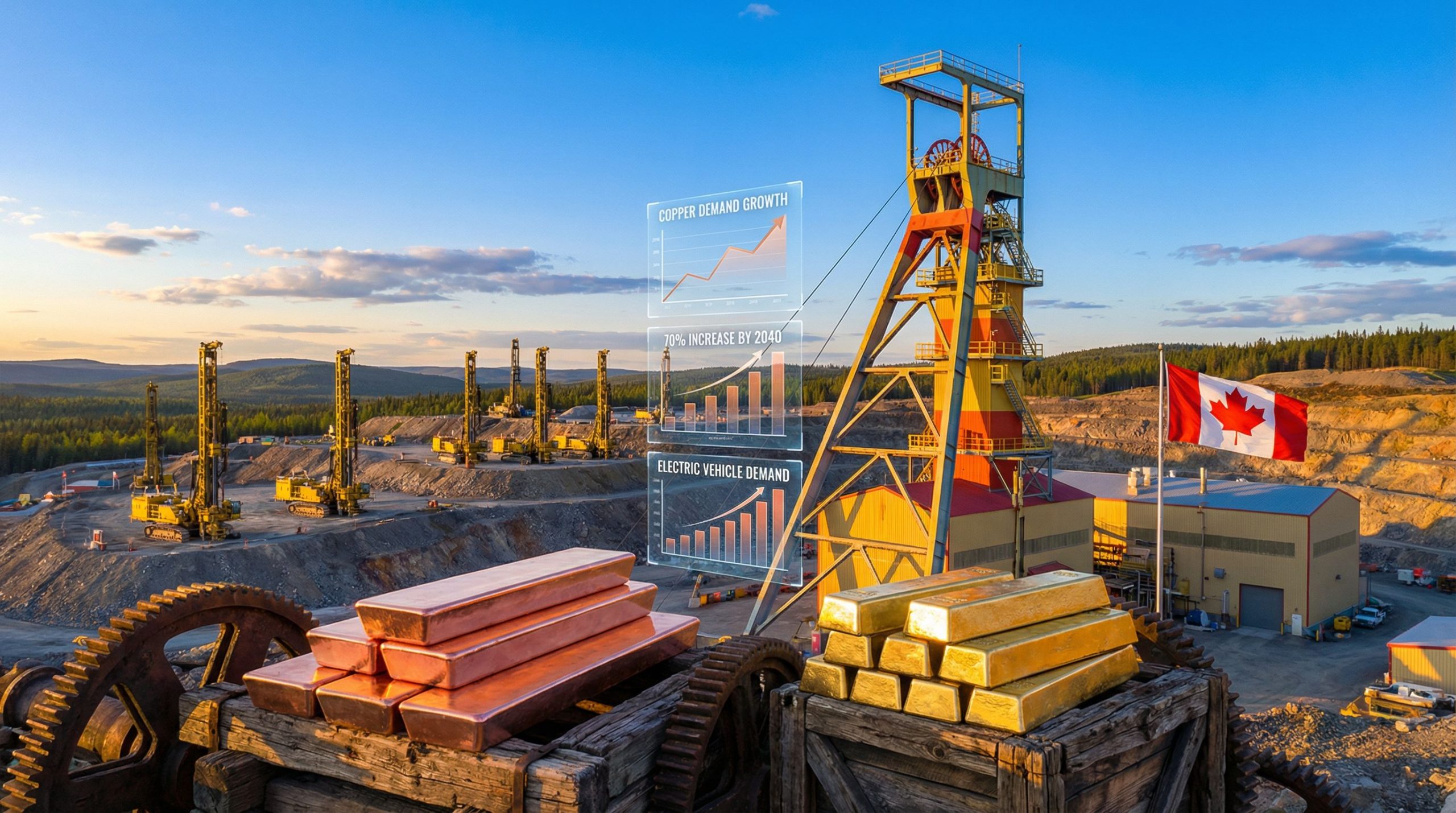
Current copper market dynamics provide a favourable backdrop for development-stage project financing and institutional investor engagement. Supply constraints from existing operations, combined with growing demand from renewable energy infrastructure and electric vehicle adoption, support sustained price appreciation expectations.
The timing of the firefly metals capital raise during strong copper market sentiment demonstrates strategic market positioning. By accessing capital during favourable market conditions, the company secured funding for aggressive exploration while positioning for potential development decisions during continued strong copper fundamentals. This approach reflects broader trends in mining industry evolution toward strategic capital deployment.
Copper Demand Growth Drivers:
• Electric Vehicle Adoption – Increasing copper requirements per vehicle versus traditional internal combustion engines
• Renewable Energy Infrastructure – Wind and solar installation copper intensity requirements
• Grid Modernisation – Electrical infrastructure upgrades supporting renewable energy integration
• Industrial Decarbonisation – Manufacturing process electrification driving copper demand growth
Dual-Commodity Portfolio Benefits
Copper-gold projects provide portfolio diversification benefits that appeal to institutional investors seeking both industrial metal exposure and precious metal hedging characteristics. This combination creates more stable cash flow projections while maintaining exposure to both commodity sectors' growth potential.
In addition, gold as inflation hedge correlation benefits become particularly important during periods of economic uncertainty when industrial metals may face demand pressures while precious metals maintain or increase their value. This diversification reduces overall project risk while providing multiple value creation pathways based on varying market conditions.
The strategic value of dual-commodity exposure extends beyond simple diversification to include operational flexibility in production optimisation based on relative commodity prices and market conditions. This optionality provides additional value that single-commodity projects cannot offer institutional investors.
Capital Deployment Success Measurement Framework
Effective measurement of mining capital deployment requires comprehensive metrics that extend beyond simple financial returns to include operational achievements, risk reduction progress, and strategic positioning advancement. These measurements provide institutional investors with clear frameworks for evaluating management effectiveness and project progression.
Resource Growth and Value Creation Metrics
The success of exploration capital deployment can be measured through multiple value creation indicators that demonstrate effective resource allocation and strategic execution. These metrics provide both management and institutional investors with clear benchmarks for programme effectiveness assessment.
Key Performance Indicators for Capital Deployment:
• Resource Growth Per Dollar Invested – Tonnage and grade additions relative to exploration expenditure
• Drilling Success Rates – Target hit rates across different prospect types and geological settings
• Timeline Achievement – Development milestone completion versus planned schedules
• Cost Management – Actual expenditure versus budgeted amounts across programme components
The nine-rig drilling programme provides substantial opportunity for value creation measurement through systematic resource estimate updates and discovery announcements. The scale of the programme should generate regular news flow while demonstrating exploration effectiveness across multiple target types.
Strategic Positioning and Option Value Creation
Beyond immediate resource growth, successful capital deployment creates strategic options and competitive positioning advantages that provide long-term value creation potential. These benefits often exceed the direct value of resource additions through enhanced development optionality and strategic flexibility.
The FireFly Metals strategy creates multiple strategic options through its comprehensive approach to project development. The combination of aggressive exploration, systematic studies, and infrastructure optimisation provides management with various development pathways that can be optimised based on market conditions and exploration results, particularly as companies adapt to evolving ASX capital raising methodologies.
Strategic Value Creation Elements:
• Development Timeline Flexibility – Multiple pathways for production commencement based on exploration success
• Infrastructure Optimisation – Existing asset utilisation reducing development capital requirements
• Regional Consolidation Potential – Position for additional asset acquisition within established operational area
• Strategic Partnership Opportunities – Advanced project status attracting potential development partners or acquirers
According to recent market analysis, the comprehensive capital deployment strategy positions FireFly Metals for multiple value creation pathways while maintaining strategic flexibility to optimise development approaches based on exploration results and evolving market conditions. This positioning provides institutional investors with exposure to both systematic resource growth and potential step-change value creation through discovery success or strategic partnerships.
Furthermore, as Mining Weekly reported, FireFly's dual-market equity raise demonstrates sophisticated international capital market access, providing the company with enhanced funding flexibility and broader institutional investor exposure across multiple jurisdictions.
This analysis represents educational content regarding mining sector capital allocation strategies and should not be considered investment advice. Readers should conduct independent research and consult qualified financial advisors before making investment decisions in the resources sector.
Want to Stay Ahead of Major ASX Mineral Discoveries?
Discovery Alert's proprietary Discovery IQ model delivers instant notifications when significant mineral discoveries are announced on the ASX, transforming complex mining data into actionable investment insights that give you a crucial market advantage. Experience the power of real-time discovery alerts and explore historic examples of exceptional returns by visiting our dedicated discoveries page, then begin your 30-day free trial to position yourself ahead of the market for the next major breakthrough.