May 9, 2026
The Mediterranean gas sector presents a compelling landscape for major energy investments, particularly as companies navigate current market volatility and seek strategic positioning opportunities. Recent developments demonstrate how institutional players are addressing both immediate operational needs and long-term energy security dynamics through carefully structured investment frameworks. These strategic decisions reflect broader industry trends towards portfolio diversification and risk management in an evolving global energy environment.
Understanding these investment patterns requires examining how major operators balance geopolitical investment strategies with operational excellence initiatives. Furthermore, the integration of advanced technologies and sustainable development practices creates new opportunities for value creation while addressing regulatory and environmental considerations across multiple jurisdictions.
Strategic Investment Framework in Mediterranean Energy Markets
The Mediterranean energy landscape presents unique opportunities for large-scale gas development projects, driven by geographic advantages and established infrastructure networks. Egypt's positioning within this framework offers several compelling factors for international energy companies seeking to expand their operational footprint.
Geographic and Infrastructure Advantages:
- Proximity to major European consumer markets
- Existing pipeline infrastructure connecting to regional distribution networks
- Access to both Mediterranean and Red Sea shipping lanes
- Established liquefied natural gas (LNG) processing facilities
The convergence of these factors creates operational synergies that reduce capital deployment risks while maximising asset utilisation efficiency. For investors evaluating Mediterranean gas opportunities, these infrastructure elements significantly impact project economics and timeline considerations.
Regulatory Environment Considerations:
- Stable concession frameworks supporting long-term investment horizons
- Consistent payment mechanisms reducing counterparty risks
- Streamlined approval processes for established operators
- International arbitration protections for foreign investments
Recent government initiatives have focused on enhancing investor confidence through improved regulatory clarity and operational support mechanisms. Consequently, high-level diplomatic engagement between energy companies and Egyptian leadership has strengthened collaborative frameworks.
When big ASX news breaks, our subscribers know first
BP Investment in Egypt Gas Projects: Portfolio Analysis and Strategic Positioning
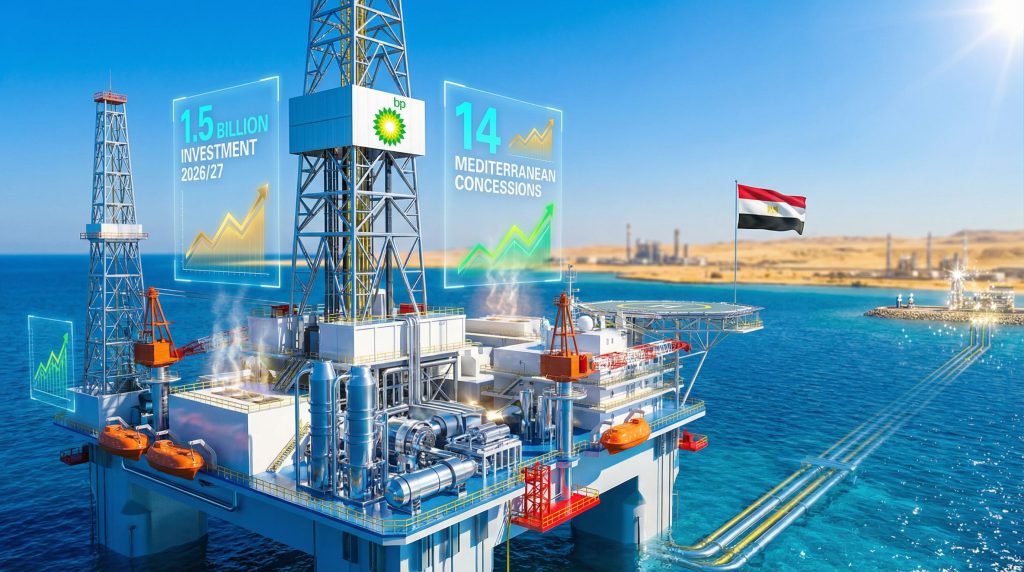
BP's commitment to invest approximately $1.5 billion during the 2026/2027 fiscal year represents a significant expansion of the company's Mediterranean gas operations. This investment targets multiple development categories across an extensive concession portfolio, demonstrating the scale of BP investment in Egypt gas projects.
Current Portfolio Configuration:
- 14 total concession areas in the Mediterranean region
- 12 sites in active development and production phases
- 2 exploration areas offering future growth potential
- Planned expansion into Red Sea exploration activities
The investment allocation encompasses several strategic priorities designed to optimise both immediate production capacity and long-term reserve development. These include exploration drilling programmes, production enhancement initiatives, infrastructure upgrades, and technology integration projects.
| Investment Category | Primary Objectives | Expected Impact |
|---|---|---|
| Exploration Activities | New well development and reserve assessment | Increased proven reserves |
| Production Optimisation | Enhanced recovery from existing fields | Higher output volumes |
| Infrastructure Development | Processing capacity and export capabilities | Improved operational efficiency |
| Technology Implementation | Digital monitoring and automation systems | Reduced operational costs |
William Lin, BP's Executive Vice President for Gas and Low Carbon Energy, emphasised the company's confidence in Egypt's energy sector during meetings with Egyptian Prime Minister Mostafa Madbouly. These discussions, held during the EGYPS 2026 energy conference, highlighted the alignment between BP's strategic objectives and Egypt's energy development priorities.
Investment Psychology and Market Dynamics in Energy Sector Development
The timing of major energy investments often reflects broader market psychology and strategic positioning within evolving energy landscapes. Current Mediterranean gas investments demonstrate several key psychological and market factors influencing decision-making processes, particularly as companies adapt to energy transition challenges.
Market Timing Considerations:
- European energy security concerns following recent geopolitical developments
- Growing Asian LNG demand supporting long-term price stability
- Regional conflict impacts highlighting supply chain diversification needs
- Technology advancement opportunities improving extraction economics
The energy sector's current environment presents both opportunities and challenges for major international operators. Recent regional tensions, including ongoing conflicts affecting traditional supply routes, have increased focus on alternative energy sources and supply chain resilience.
Risk Assessment Framework:
- Geopolitical stability evaluations affecting long-term project viability
- Currency fluctuation exposures impacting investment return calculations
- Regulatory framework evolution potentially altering operational parameters
- Global energy transition impacts on natural gas trends
Industry analysts note that successful energy investments in volatile markets require sophisticated risk management frameworks that balance immediate operational needs with long-term strategic positioning.
These considerations explain why established operators prioritise regions with proven regulatory stability, reliable payment mechanisms, and existing infrastructure networks that reduce development risks while maximising operational flexibility.
How Do Technology Advances Impact Investment Decisions?
Modern gas field development relies heavily on advanced technologies and operational methodologies that optimise resource extraction while minimising environmental impact. Drilling technology advances have significantly influenced BP investment in Egypt gas projects through enhanced efficiency and reduced operational risks.
Advanced Technology Applications:
- Digital reservoir monitoring systems providing real-time production data
- Enhanced drilling technologies reducing time-to-production cycles
- Integrated logistics networks minimising operational cost structures
- Environmental compliance frameworks ensuring regulatory adherence
The Red Sea expansion component of BP's strategy offers particular significance for technology application and market access diversification. This region presents untapped exploration potential while connecting to growing Asian energy demand centres through strategic shipping routes.
Technology Integration Benefits:
- Improved reservoir performance insights through data analytics
- Reduced operational downtime via predictive maintenance systems
- Enhanced safety protocols through automated monitoring
- Optimised production scheduling based on market demand patterns
Egypt's energy sector has demonstrated consistent reliability in payment mechanisms, as acknowledged by BP leadership. This reliability factor significantly influences investment decision-making, as it reduces financial risks associated with large-scale development projects.
Financial Metrics and Investment Return Analysis
Gas development investments require comprehensive financial analysis encompassing multiple scenarios and risk factors. The Mediterranean region offers competitive returns compared to other global gas development opportunities, though specific return projections depend on various market and operational variables.
Investment Evaluation Criteria:
- Net present value calculations incorporating risk-adjusted discount rates
- Internal rate of return thresholds meeting corporate investment standards
- Payback period analysis ensuring capital recovery within acceptable timeframes
- Sensitivity analysis testing investment resilience across price scenarios
The financial attractiveness of Egyptian gas investments stems from several factors, including established infrastructure reducing capital requirements, proven geological formations minimising exploration risks, and reliable operational frameworks supporting consistent cash flow generation.
Cash Flow Optimisation Strategies:
- Phased development approaches spreading capital expenditure over time
- Production ramping strategies aligned with market demand cycles
- Export route diversification maximising pricing optionality
- Operational flexibility enabling rapid response to market changes
Financial modelling for Mediterranean gas projects typically incorporates multiple price scenarios reflecting both regional market dynamics and global LNG pricing trends.
These financial considerations explain the strategic importance of payment reliability and regulatory stability in investment decision-making. In addition, these factors directly impact project economics and risk-adjusted returns for BP investment in Egypt gas projects.
Strategic Partnerships and Government Collaboration Framework
Successful energy development in international markets requires effective collaboration between private companies and host governments. BP's relationship with Egyptian authorities demonstrates several key elements of productive partnership frameworks that support sustainable development objectives.
Government Engagement Elements:
- High-level diplomatic discussions supporting strategic alignment
- Regular payment mechanisms maintaining positive cash flow cycles
- Regulatory support streamlining project approval processes
- Infrastructure sharing opportunities reducing individual capital requirements
The recent meetings between BP executives and Egyptian leadership, including Prime Minister Mostafa Madbouly and Minister of Petroleum and Mineral Resources Karim Badawi, underscore the strategic importance both parties place on continued energy sector development. These discussions have been documented in official government communications highlighting the collaborative approach to energy investment.
Egyptian authorities have demonstrated commitment to supporting international energy investments through various mechanisms. These include consistent dues payments despite regional challenges and regulatory frameworks designed to attract foreign investment.
Partnership Success Factors:
- Transparent regulatory processes reducing approval uncertainties
- Competitive fiscal terms supporting project economics
- Local content requirements creating workforce development opportunities
- Revenue sharing frameworks aligning government and investor interests
These partnership elements create environments conducive to long-term investment commitments while supporting sustainable energy sector development that benefits both international companies and host countries.
What Are the Regional Market Implications?
Large-scale gas investments influence regional market dynamics through multiple channels, including supply capacity additions, infrastructure development, and technology deployment. BP investment in Egypt gas projects contributes to these broader market effects across the Mediterranean region.
Regional Market Implications:
- Increased gas supply capacity potentially influencing regional pricing
- Infrastructure development creating opportunities for third-party access
- Technology deployment establishing operational efficiency benchmarks
- Workforce development building regional technical expertise
The competitive landscape in Mediterranean gas development involves multiple international operators pursuing similar strategic objectives. This competition drives innovation and operational excellence while supporting broader regional energy security goals.
Competitive Response Patterns:
- Accelerated exploration programmes securing high-quality acreage
- Joint venture formations sharing development costs and risks
- Technology partnerships enhancing operational capabilities
- Market diversification strategies targeting complementary regions
The scale of BP's investment commitment signals confidence in long-term Mediterranean gas market prospects. Furthermore, it potentially influences other operators' strategic planning and resource allocation decisions across the region.
Future Market Trends and Strategic Implications
Long-term energy market evolution affects investment strategies and project development priorities. Several trends support continued focus on Mediterranean gas development, while others present potential challenges requiring strategic adaptation for BP investment in Egypt gas projects.
Supporting Market Trends:
- European energy transition maintaining natural gas demand during renewable integration
- Asian economic growth driving LNG import demand expansion
- Carbon bridge fuel positioning supporting gas in energy transition strategies
- Infrastructure network effects creating operational synergies
These trends suggest favourable long-term prospects for well-positioned gas development projects, particularly those with access to multiple export markets and established infrastructure networks.
Potential Market Challenges:
- Renewable energy cost reductions potentially affecting gas demand growth
- Carbon pricing mechanisms influencing project economics
- Technology disruption scenarios changing extraction cost structures
- Geopolitical realignments affecting trade flow patterns
Successful navigation of these trends requires adaptive strategies that maintain operational flexibility. However, companies must also capitalise on current market opportunities while positioning for future energy landscape evolution.
How Do Risk Management Strategies Protect Investments?
Energy sector investments require comprehensive risk management frameworks addressing multiple uncertainty categories. BP's Mediterranean strategy incorporates various protection mechanisms designed to preserve investment value across different scenarios.
Risk Mitigation Categories:
- Price risk management through forward sales contracts and derivatives
- Political risk insurance covering regulatory changes and operational disruptions
- Operational risk controls via technology redundancy and safety protocols
- Financial risk management including currency hedging and debt optimisation
Environmental, social, and governance (ESG) considerations increasingly influence energy investment strategies. Consequently, companies must integrate sustainability metrics with traditional financial analysis for comprehensive evaluation.
ESG Integration Elements:
- Environmental impact assessments ensuring sustainable development practices
- Community engagement programmes supporting social licence maintenance
- Governance framework implementation supporting operational transparency
- Carbon footprint optimisation aligning with corporate climate commitments
These risk management approaches enable energy companies to pursue growth opportunities while maintaining stakeholder confidence and regulatory compliance across multiple jurisdictions.
The next major ASX story will hit our subscribers first
Investment Decision Framework and Strategic Evaluation
Comprehensive investment evaluation requires systematic analysis of multiple factors affecting project viability and strategic fit within corporate portfolios. BP's approach to Egyptian gas development demonstrates several key evaluation components that support informed decision-making.
Strategic Evaluation Framework:
Technical Assessment:
- ✓ Geological formation analysis and reserve certification
- ✓ Infrastructure access and development requirements
- ✓ Technology application feasibility and optimisation potential
- ✓ Environmental compliance and impact management
Financial Analysis:
- ✓ Economic modelling across multiple price scenarios
- ✓ Capital expenditure optimisation and phasing strategies
- ✓ Cash flow projections and return calculations
- ✓ Risk-adjusted valuation and sensitivity analysis
Strategic Alignment:
- ✓ Portfolio diversification and geographic positioning
- ✓ Market access and export route optimisation
- ✓ Competitive positioning and operational synergies
- ✓ Long-term energy transition compatibility
This comprehensive evaluation approach enables informed decision-making while supporting strategic objectives related to growth, diversification, and risk management within evolving energy markets. For instance, the systematic assessment of technical, financial, and strategic factors creates frameworks for sustainable energy development.
The integration of technical, financial, and strategic considerations creates frameworks for sustainable energy development that balance immediate operational objectives with long-term value creation. Moreover, this approach addresses stakeholder interests across multiple dimensions of performance and impact, ensuring comprehensive value delivery.
Disclaimer: This analysis is based on publicly available information and should not be considered as investment advice. Energy sector investments involve significant risks, and past performance does not guarantee future results. Readers should consult qualified financial advisors before making investment decisions.
Looking to Capitalise on Mediterranean Energy Opportunities?
Discovery Alert's proprietary Discovery IQ model delivers real-time alerts on significant energy and mineral discoveries across the ASX, empowering subscribers to identify actionable investment opportunities ahead of the broader market. Explore historic examples of exceptional discovery returns and begin your 14-day free trial today to position yourself ahead of the market.