Understanding Mexico's Steel Industry Transformation Through Strategic Asset Acquisition
Global steel markets face unprecedented consolidation pressures as aging infrastructure meets modern efficiency demands. Mexico's industrial landscape exemplifies this dynamic, where massive production facilities become strategic chess pieces in international competition for market control. The AHMSA asset acquisition represents a pivotal moment in this transformation, as global trade dynamics reshape competitive positioning across North American markets. The convergence of financial restructuring, technological modernization, and geopolitical positioning creates opportunities that extend far beyond simple asset transfers.
The steel sector's capital-intensive nature means that facility acquisitions represent more than equipment purchases. They constitute entire industrial ecosystems, complete with workforce expertise, supply chain relationships, and technological capabilities accumulated over decades. When such facilities become available through bankruptcy proceedings, the strategic calculations involve not just immediate production capacity, but long-term market positioning across multiple industries.
How AHMSA Asset Acquisition Reshapes Mexico's Industrial Capacity
Evaluating Mexico's Strategic Steel Infrastructure Portfolio
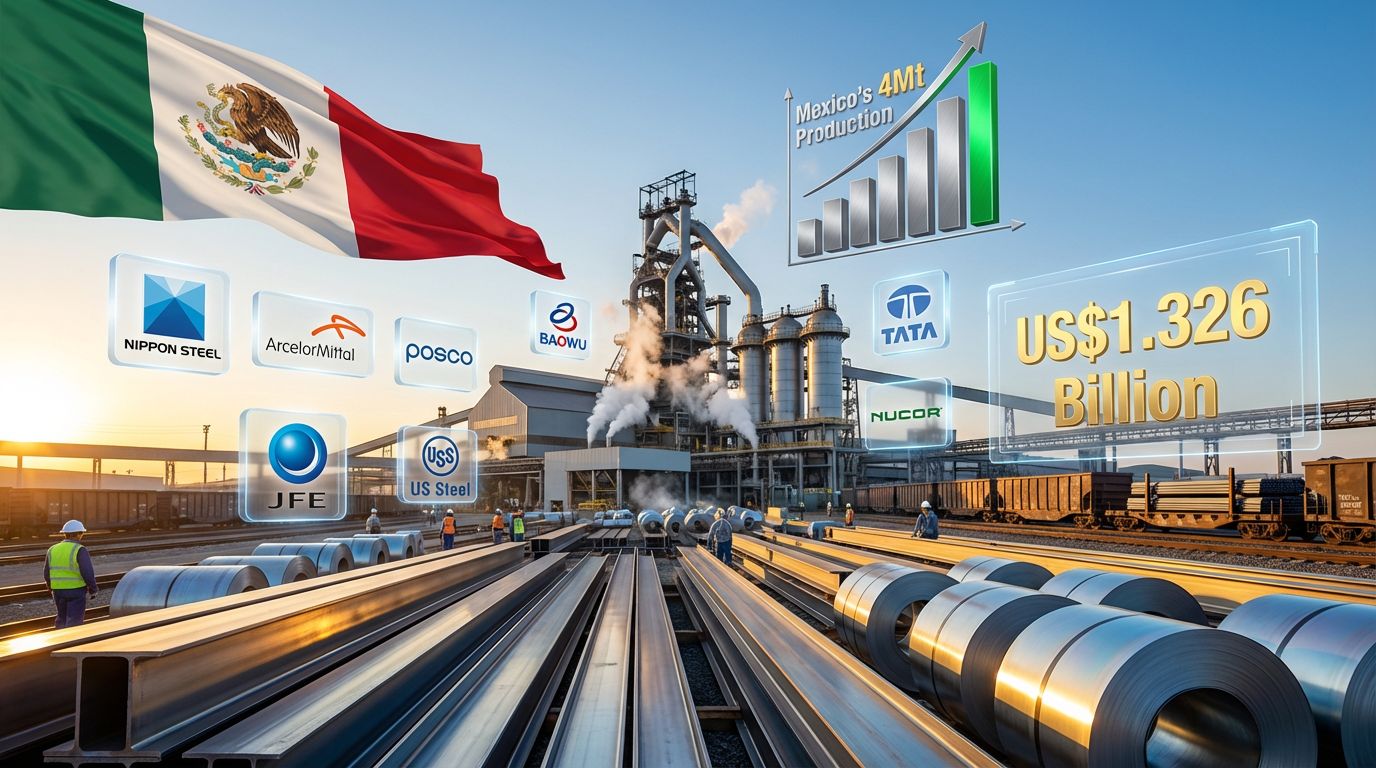
Mexico's steel production landscape underwent dramatic transformation following the operational shutdown of major industrial facilities in late 2023. The 4 million metric tons (Mt) of annual steel production capacity that disappeared from domestic markets created immediate supply chain vulnerabilities across construction, automotive, and infrastructure sectors. This capacity gap represents approximately 15% of Mexico's total steel production capability, forcing increased reliance on imports with corresponding cost pressures.
The infrastructure portfolio now available through bankruptcy proceedings encompasses integrated steelmaking facilities valued at US$1.326 billion. Furthermore, this valuation reflects not merely the physical assets, but the strategic positioning within North America's industrial supply chains. The facilities include blast furnaces, continuous casting equipment, rolling mills, and quality control systems that collectively represent decades of industrial investment and technological development.
Key infrastructure components driving the valuation include:
• Primary steelmaking facilities with proven 4Mt annual capacity
• Rolling and finishing operations serving automotive and construction grades
• Quality control and testing laboratories meeting international standards
• Transportation and logistics infrastructure optimised for regional distribution
• Environmental management systems requiring modernisation investment
International Competition for Mexican Steel Assets
Eight companies have formally expressed interest in acquiring the industrial assets, representing a convergence of international technology leaders and established regional operators. According to Steel Orbis, ArcelorMittal, Villacero, Cargill Financial Services, Nippon Steel, and four additional companies demonstrate the strategic value that sophisticated investors place on Mexico's steel infrastructure.
The bidding consortium reflects diverse strategic approaches to steel industry consolidation. Japanese steelmakers bring advanced technological capabilities developed through decades of efficiency optimisation. In addition, European steel giants offer integration opportunities within global supply chains. Domestic operators understand regional market dynamics and regulatory frameworks, while financial services firms focus on operational turnaround methodologies and long-term value creation.
According to trustee Víctor Manuel Aguilera, all participating companies were selected based on demonstrated financial capacity and formal commitment to comprehensive technical evaluations. This screening process ensures that bidders possess both the capital resources and operational expertise necessary for successful facility restoration and modernisation.
Strategic Importance of Mexico's Steel Production Independence
Production Capacity Analysis Following 2023 Disruptions
The November 30, 2023 production halt eliminated a cornerstone of Mexico's domestic steel supply chain, creating measurable economic impacts across multiple industrial sectors. Import substitution partially addressed the capacity gap, but increased costs for construction materials, automotive components, and infrastructure projects demonstrate the strategic vulnerability of external supply dependence.
Regional economic impacts concentrated in Coahuila state, where 14,000 workers from both steel production and mining operations face employment uncertainty. Monclova and surrounding municipalities experienced immediate job losses, supplier disruptions, and reduced economic activity. The multiplier effects extended throughout the regional economy, affecting transportation, maintenance services, and local businesses dependent on industrial employment.
Construction sector cost increases became apparent within months of the production shutdown, as domestic steel prices aligned with international market rates plus transportation and logistics premiums. Consequently, automotive manufacturers faced supply chain adjustments, while infrastructure projects encountered both cost escalation and delivery timeline extensions.
Geopolitical Considerations in Critical Infrastructure Ownership
The AHMSA asset acquisition presents fundamental questions about industrial sovereignty versus technological modernisation. Foreign ownership could accelerate facility upgrades and introduce advanced production technologies, while domestic control maintains strategic asset oversight and ensures alignment with national industrial policy objectives.
USMCA trade agreement frameworks influence acquisition scenarios through provisions affecting cross-border supply chain integration. Steel production facilities serve automotive, construction, and infrastructure sectors covered by specific trade agreement terms, making ownership structure relevant to long-term competitiveness and regulatory compliance.
However, the tariffs impact on investments could significantly influence operational economics and strategic positioning. Technology transfer opportunities represent significant value creation potential, particularly for advanced steel grades and environmental compliance systems. International bidders bring expertise in carbon reduction technologies, automation systems, and quality control innovations that could enhance Mexico's overall industrial capabilities.
Potential Acquisition Outcomes and Market Scenarios
Japanese Technology Integration Model
Nippon Steel's participation introduces advanced steelmaking technologies proven in international markets. Japanese steel production emphasises efficiency optimisation, quality control, and environmental compliance through systematic process improvements and automation integration. Their acquisition approach would likely prioritise technological modernisation and operational efficiency enhancement.
Environmental compliance modernisation represents a critical component of any restart strategy. Current Mexican environmental regulations require substantial upgrades to emissions control, water treatment, and waste management systems. Japanese steelmaking expertise includes proven solutions for these regulatory requirements, potentially accelerating facility certification and operational restart timelines.
Investment timelines for technological integration typically span 18-24 months for major system upgrades, with additional phases for workforce training and process optimisation. The integration model requires substantial capital commitment but offers competitive advantages in production efficiency and product quality.
Regional Market Consolidation Strategy
ArcelorMittal and Villacero represent established domestic operators with existing Mexican operations and market relationships. Their consolidation approach would emphasise supply chain optimisation, operational synergies, and market share expansion through integrated production and distribution networks.
Vertical integration opportunities include raw materials sourcing, production scheduling coordination, and distribution network optimisation. Existing facilities could provide operational expertise and technical support during facility restart phases, potentially reducing startup timelines and costs.
For instance, competitive positioning against international imports becomes enhanced through domestic production cost advantages and supply chain proximity. Regional operators understand customer requirements, delivery schedules, and quality specifications developed through established market relationships.
Financial Restructuring and Operational Turnaround
Cargill Financial Services represents a financial restructuring approach focused on operational efficiency improvements and long-term value creation. This model prioritises systematic analysis of production processes, cost structure optimisation, and market positioning enhancement through professional management capabilities.
Private equity involvement in industrial asset rehabilitation brings specialised expertise in operational turnaround, financial restructuring, and strategic repositioning. The approach typically emphasises measurable performance improvements, cash flow optimisation, and preparation for eventual strategic or financial exit opportunities.
Timeline projections for financial restructuring approaches often extend 3-5 years for comprehensive facility optimisation, including debt restructuring, operational improvements, and market repositioning initiatives.
Financial Obligations and Restructuring Requirements
Comprehensive Liability Assessment and Settlement Framework
The MX$61 billion in total liabilities creates complex acquisition requirements affecting all bidding scenarios. Liability categories require different settlement approaches and timeline considerations, with some obligations demanding immediate attention while others allow negotiated restructuring arrangements.
| Liability Category | Estimated Amount (MX$ Billions) | Settlement Requirements |
|---|---|---|
| Tax Obligations (SAT) | 18.5 | Immediate settlement plans with federal revenue authorities |
| Social Security (IMSS) | 12.3 | Worker benefit guarantees and contribution updates |
| Utility Debts (CFE/PEMEX) | 8.7 | Operational restart conditions and payment arrangements |
| Financial Creditors | 15.2 | Comprehensive debt restructuring negotiations |
| Supplier Obligations | 6.3 | Supply chain restoration and payment terms |
Federal bankruptcy court oversight through the Federal Institute of Specialists in Bankruptcy Proceedings (Ifecom) ensures transparency and compliance with Mexican bankruptcy law throughout the acquisition process. This supervision framework protects stakeholder interests while facilitating legitimate acquisition opportunities.
Labour Rights Protection and Employment Continuity
Worker protection requirements represent non-negotiable acquisition conditions established by bankruptcy trustees. Approximately 10,000 AHMSA workers and 4,000 MINOSA employees require employment continuity guarantees, unpaid wage settlements, and benefit restoration as mandatory acquisition terms.
Months of unpaid wages and benefits create immediate settlement obligations for successful bidders. Mexican Federal Labour Law establishes priority payment requirements for worker compensation, making these obligations senior to many other creditor claims in bankruptcy proceedings.
Employment continuity guarantees extend beyond immediate wage settlements to include long-term job security, training opportunities, and career development support. These requirements ensure that facility acquisition supports regional economic recovery rather than merely asset stripping or speculative investment.
Modernisation Investment Requirements for Competitive Operations
Environmental Compliance and Sustainability Infrastructure
Modern steel production requires comprehensive environmental management systems addressing carbon emissions, water treatment, air quality control, and waste management. Mexican environmental regulations demand substantial upgrades to achieve compliance with current standards and emerging sustainability requirements.
Carbon emission reduction technologies include advanced furnace designs, energy recovery systems, and process optimisation software. Water treatment modernisation encompasses closed-loop cooling systems, effluent treatment facilities, and groundwater protection measures. These investments typically require US$100-200 million in capital expenditures for integrated steel facilities of this scale.
Environmental compliance timelines often span 2-3 years for comprehensive system implementation, including design, procurement, installation, and certification phases. Regulatory approval processes require detailed environmental impact assessments and ongoing monitoring commitments.
Technology Infrastructure and Digital Transformation
Competitive steel production demands industry 4.0 innovations including process automation, quality control systems, predictive maintenance platforms, and supply chain optimisation software. These technological upgrades enhance production efficiency, reduce operating costs, and improve product quality consistency.
Digital transformation investments typically include:
• Process control automation reducing labour costs and improving consistency
• Predictive maintenance systems minimising equipment downtime
• Quality management software ensuring product specification compliance
• Supply chain optimisation platforms improving inventory and logistics management
• Energy management systems reducing utility costs and environmental impact
Research and development capabilities support advanced steel grade production serving automotive lightweighting, construction durability, and infrastructure resilience applications. These capabilities require specialised equipment, technical expertise, and customer collaboration programmes.
Market Transformation and Competitive Dynamics
Supply Chain Rebalancing Through Domestic Production Restoration
Facility restart would restore approximately 4 million metric tons of annual domestic steel production capacity, reducing Mexico's import dependency and improving supply chain resilience. Regional manufacturing competitiveness improves through reduced transportation costs, shorter delivery times, and currency stability compared to international suppliers.
Construction sector benefits include predictable pricing, reliable delivery schedules, and technical support services. Automotive manufacturers gain supply chain proximity, quality control coordination, and just-in-time delivery capabilities. Infrastructure projects achieve cost stability and domestic content requirements compliance.
Export opportunities emerge through USMCA market access, particularly for specialised steel grades and value-added products. Mexican steel exports to United States and Canadian markets benefit from trade agreement provisions and transportation cost advantages.
Competitive Landscape Evolution and Market Share Dynamics
Successful facility acquisition reshapes Mexico's steel industry competitive structure through increased domestic production capacity and potential technology transfer effects. Market share redistribution affects pricing dynamics, customer relationships, and strategic positioning across multiple steel product categories.
International player entry introduces advanced production technologies, management practices, and customer relationship approaches that influence industry-wide competitive standards. Therefore, domestic operators must respond through their own modernisation investments and operational improvements to maintain market position.
Technology dissemination effects occur as workforce expertise, supplier relationships, and customer requirements evolve in response to enhanced production capabilities and quality standards throughout the industry.
Economic Impact Assessment for Mexico's Industrial Development
Regional Economic Recovery and Employment Generation
Successful facility acquisition and restart generates substantial regional economic multiplier effects extending beyond direct employment restoration. 14,000 direct workers represent the foundation for broader economic activity supporting suppliers, service providers, transportation companies, and local businesses throughout Coahuila's industrial ecosystem.
Economic multiplier analysis suggests that each direct steel industry job supports approximately 3-4 additional regional employment opportunities through supplier relationships, service contracts, and consumer spending. Facility restart could therefore generate 40,000-50,000 total regional employment opportunities when including indirect and induced economic effects.
Infrastructure investment requirements for operational support include transportation network improvements, utility capacity upgrades, and housing development for workforce retention. These investments create additional construction employment and long-term regional development benefits.
National Industrial Policy Implications and Strategic Asset Management
The acquisition outcome influences Mexico's broader industrial development strategy through technology acquisition, competitive positioning, and strategic asset control considerations. Foreign investment brings capital and expertise but raises questions about long-term industrial sovereignty and technological independence.
Technology transfer opportunities extend beyond immediate steel production improvements to encompass research and development capabilities, engineering expertise, and innovation ecosystem development. These benefits support Mexico's manufacturing competitiveness across multiple industrial sectors.
USMCA compliance frameworks ensure that acquisition outcomes align with North American trade integration objectives while maintaining Mexico's strategic autonomy in critical industrial sectors. Successful integration enhances Mexico's position as a competitive manufacturing platform for regional and global markets.
Success Factors for Sustainable Steel Industry Leadership
Financial Capacity and Operational Expertise Integration
Successful AHMSA asset acquisition requires combination of substantial financial resources, steel industry operational expertise, and regional market understanding. The US$1.326 billion asset valuation establishes minimum capital requirements, while MX$61 billion liability assumption demands sophisticated financial restructuring capabilities.
Long-term investment commitment encompasses facility modernisation, workforce development, environmental compliance, and market development initiatives spanning 5-10 years. Successful bidders must demonstrate financial staying power through multiple economic cycles and market conditions.
Debt management expertise becomes critical for negotiating with multiple creditor categories while maintaining operational cash flow during facility restart phases. Stakeholder relationship management requires diplomatic skills for balancing competing interests while advancing operational objectives.
Market Integration and Customer Relationship Development
Steel industry success depends heavily on long-term customer relationships, technical service capabilities, and supply chain reliability. Existing market participants possess established relationships requiring significant investment to develop through alternative channels.
Distribution network access affects market penetration timelines and competitive positioning. Successful operators require comprehensive logistics capabilities including transportation, warehousing, inventory management, and customer service systems optimised for regional market requirements.
Technical support services differentiate steel suppliers through application engineering, quality control collaboration, and product development partnership. These capabilities require specialised expertise and sustained investment in customer relationship management.
Innovation Leadership and Sustainable Production Practices
Future steel industry leadership requires commitment to technological innovation, environmental sustainability, and operational excellence. Carbon neutrality goals demand substantial investment in emissions reduction technologies and renewable energy integration.
Market expansion opportunities include advanced steel grades for automotive lightweighting, construction durability enhancement, and infrastructure resilience applications. These markets require research and development capabilities, customer collaboration programmes, and quality certification systems.
Sustainable production practices encompass environmental compliance, worker safety, community relations, and long-term resource management. Industry leadership requires demonstration of corporate responsibility and stakeholder value creation beyond immediate financial returns.
Furthermore, capital raising strategies become crucial for securing the substantial investment required for modernisation and operational restart. The steel industry's capital-intensive nature demands sophisticated financing approaches that balance risk management with growth potential.
However, industry consolidation trends suggest that successful operators must position themselves strategically within broader market transformation patterns. As reported by BNamericas, the AHMSA asset acquisition timeline creates urgency for bidders to complete technical evaluations, financial arrangements, and strategic planning processes.
The January 2026 auction timeline creates urgency for bidders to complete technical evaluations, financial arrangements, and strategic planning processes. Successful acquisition requires comprehensive preparation addressing operational, financial, regulatory, and market integration challenges while positioning for long-term competitive advantage in Mexico's evolving steel industry landscape.
This analysis contains forward-looking statements and projections based on current market conditions and available information. Actual acquisition outcomes, investment requirements, and economic impacts may vary significantly from these assessments. Readers should conduct independent research and consult qualified professionals before making investment or business decisions related to steel industry opportunities in Mexico.
Ready to Discover the Next Major Industrial Transformation?
Discovery Alert's proprietary Discovery IQ model delivers real-time alerts on significant ASX mineral discoveries, instantly empowering subscribers to identify actionable opportunities ahead of the broader market whilst major industrial sectors undergo consolidation. Begin your 30-day free trial today and secure your market-leading advantage in an evolving global landscape.