Middle Island Resources Ltd
- ASX Code: MDI
- Market Cap: $19,866,435
A Major Polymetallic Target Emerges in Serbia — Middle Island Resources Expands the Bobija Story
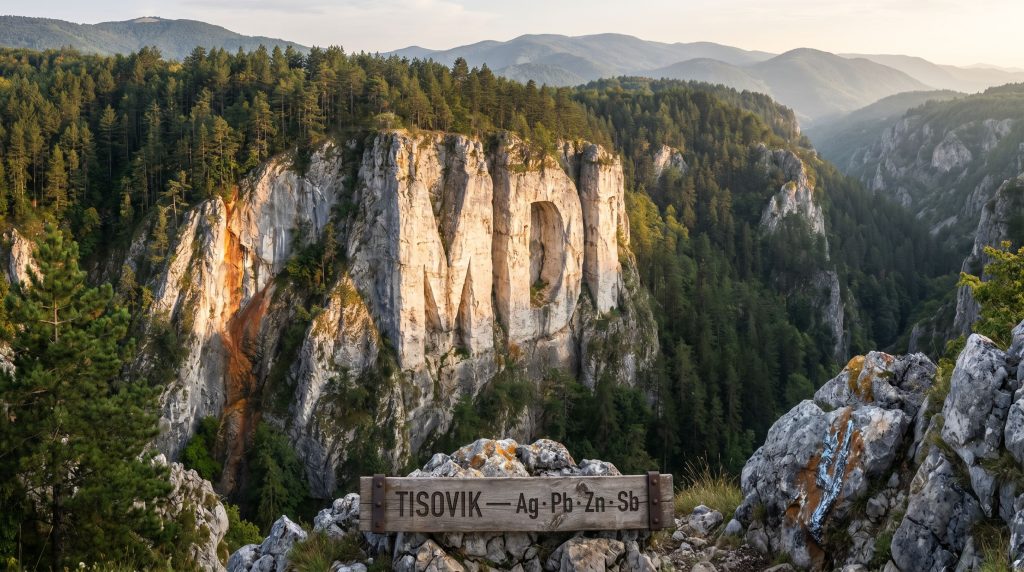
Middle Island Resources (ASX: MDI) has delivered a significant exploration update from its Middle Island Resources Bobija Project Tisovik polymetallic discovery in Serbia, announcing that follow-up soil and rock chip sampling has substantially expanded the mineralised system. The results define multiple high-priority target zones across a ~6km east–west strike extent, with peak soil assay results of 7.1g/t Ag, 4,685ppm Pb, 969ppm Zn, and 1,049ppm Sb.
Rock chip samples returned up to 12.0g/t Ag, 0.54% Pb, and 2.85% Sb, confirming a robust and growing silver-lead-zinc-antimony mineralised system.
This is early-stage exploration, and no Mineral Resource has been established. However, the scale and consistency of the anomalism, combined with geological characteristics pointing toward a carbonate replacement deposit (CRD) style of mineralisation, is generating considerable interest at what remains a largely untested project area.
CEO Peter Spiers commented: "Defining multiple large zones of strong silver-lead-zinc-antimony anomalism over more than 6km of strike is highly encouraging at this early stage of exploration, particularly given the system remains open in multiple directions. Furthermore, the presence of stibnite mineralisation and high-grade antimony is especially exciting given the increasing strategic importance of antimony globally."
When big ASX news breaks, our subscribers know first
What the Results Actually Show
According to the announcement, the latest programme comprised 82 soil samples collected on north–south oriented lines, spaced 400m apart with samples taken every 100m. The design was intentionally reconnaissance-scale — covering large, underexplored ground quickly and efficiently to identify coherent geochemical trends before committing to more intensive programmes.
The results delivered on that objective decisively.
Soil Sampling Highlights
| Target Zone | Key Finding |
|---|---|
| Tisovik | Core of original discovery; multi-element anomalism confirmed and extended |
| Red Rock | Elevated antimony anomalism; visible stibnite in grab samples |
| Kozila | Anomaly extended 300m northward; now covers approximately 2km² (1.6km long × up to 1.5km wide) |
| Combined Strike | Multi-element anomalism defined across ~6km east–west strike |
The announcement reported peak soil results across the programme:
- Silver: 7.1g/t Ag
- Lead: 4,685ppm Pb
- Zinc: 969ppm Zn
- Antimony: 1,049ppm Sb
Critically, the anomalism remains open-ended at the boundary of the current sample grid in multiple directions, particularly toward the north where prospective limestone rocks are interpreted to continue.
Rock Chip Sampling Highlights
Twenty rock chip and grab samples were collected from the Red Rock and Kozila target areas. The results confirmed near-surface mineralisation associated with the expanding soil anomaly footprint.
| Location | Sample Type | Ag (g/t) | Pb (ppm) | Zn (ppm) | Sb (ppm) |
|---|---|---|---|---|---|
| Kozila (K9572) | Outcrop | 12.00 | 5,244 | 129 | 6 |
| Kozila (K9564) | Dump | 1.18 | 4,342 | 580 | 4 |
| Kozila (K9586) | Float | 1.50 | 7 | 26 | 0 |
| Red Rock (K9597) | Float | 1.71 | 89 | 28 | 5,614 |
| Red Rock (K9598) | Dump | 0.54 | 36 | 51 | 648 |
| Red Rock (K9599) | Dump | 0.48 | 3 | 25 | 28,500 |
The Red Rock sample K9599 — returning 28,500ppm Sb (2.85% Sb) — is particularly notable. Field photographs confirmed the presence of coarse, visible radiating stibnite crystals in dump and float material from historic workings, providing direct visual confirmation of a polymetallic sulphide system at surface.
At Kozila, field mapping also uncovered a previously undocumented exploration adit — physical evidence of historic mining activity that had not been recorded in modern exploration databases. Together with the rock chip results and broad soil anomalism, this adds another layer of confidence to the geological narrative.
Understanding Carbonate Replacement Deposits — Why the Deposit Style Matters
What Is a CRD?
A carbonate replacement deposit (CRD) forms when hot, metal-rich hydrothermal fluids move through fractures and faults and chemically replace surrounding carbonate rocks — typically limestone or dolomite — with dense sulphide minerals. The result can be large, irregular bodies of high-grade ore rich in silver, lead, zinc, and associated metals such as antimony.
Why Does This Matter to Investors?
CRDs are among the most economically significant deposit types globally for silver and base metals. Some of the world's major silver-producing mines — including famous examples across Mexico and the United States — are CRD systems. The deposit type is known for hosting high-grade, large-scale ore bodies that can carry economic metal values across broad footprints.
The Middle Island Resources Bobija Project Tisovik polymetallic discovery in Serbia exhibits the classic geochemical fingerprint of a CRD system: a spatially coherent silver-lead-zinc-antimony assemblage hosted in a limestone-rich geological terrain. Furthermore, the Bobija Project sits within a region that already hosts the operating Veliki Majdan silver-lead-zinc mine approximately 20km to the northwest — confirming the district is a proven host for this style of mineralisation.
Key Terms Explained
- Soil anomaly: An area where metal concentrations in soil samples exceed background levels, suggesting mineralisation below or near the surface
- Rock chip / grab sample: A surface rock sample collected to test for visible mineralisation; not as statistically representative as systematic sampling but useful for target validation
- Stibnite (Sb₂S₃): The primary sulphide mineral of antimony; its presence in visible form at surface is a strong indicator of nearby antimony-bearing mineralisation
- ppm: Parts per million — equivalent to milligrams per kilogram; used to measure trace element concentrations
- Strike: The horizontal length or extent of a geological feature, in this case the width of the geochemical anomaly corridor
- Adit: A near-horizontal mine tunnel driven into a hillside; the discovery of an undocumented adit at Kozila confirms historical mining activity at that location
Antimony: The Metal Adding a Strategic Dimension
One aspect of these results that deserves particular attention is the antimony content. Antimony (Sb) has emerged as a critical industrial material due to its role in flame retardants, ammunition, and increasingly in energy storage technology. The concentration of 28,500ppm Sb (2.85% Sb) in the Red Rock dump sample, along with visible stibnite mineralisation, places antimony alongside silver as a potentially meaningful component of the Tisovik system.
MDI's CEO specifically highlighted the increasing strategic importance of antimony globally as a reason for excitement about this assemblage. However, it remains too early to draw conclusions about the economic significance of the antimony content at this stage of exploration. In addition, the presence of high-grade antimony mineralisation adds another dimension to the polymetallic story at Tisovik.
Regional Context: A World-Class Address
The Middle Island Resources Bobija Project Tisovik polymetallic discovery in Serbia does not sit in isolation — it lies within the Western Tethyan Mineral Province, a geological belt that has produced some of the largest copper, gold, and silver discoveries of the modern era.
| Project | Operator | Scale |
|---|---|---|
| Cukaru Peki | Zijin Mining | 22.6Mt Cu and 17.1Moz Au |
| Malka Golaja | Zijin Mining | ~150Mt @ 1.9% Cu and 0.6g/t Au |
| Vares Project | DPM Metals | 20.9Mt @ 1.1g/t Au, 153g/t Ag, 0.4% Cu, 2.8% Pb & 4.3% Zn |
| Coka Rakita | DPM Metals | 7.3Mt @ 6.44g/t for 1.5Moz Au |
| Jadar | Rio Tinto | 139Mt @ 14.7% B₂O₃ & 1.8% Li₂O |
BHP is also active in Serbia under an earn-in agreement with Mundoro Capital Inc. The presence of major global miners in the same province underscores the geological prospectivity of the region.
MDI's 620km² portfolio across 14 licences in Serbia — covering the Bobija, Timok, and Priboj project areas — is positioned within this same favourable setting. Critically, much of the Tisovik area has seen limited modern exploration. The Bobija Project area had its most intensive drilling activity between 1964 and 1988, and modern systematic geochemical sampling has only recently begun under MDI's tenure. For investors, this represents the classic early-mover opportunity in a proven mineral province.
Next Steps: A Systematic Programme Taking Shape
The company has outlined a clear progression of work at the Middle Island Resources Bobija Project Tisovik polymetallic discovery in Serbia, designed to convert reconnaissance-scale anomalism into drill-ready targets.
Immediate Priorities
- Extend soil sampling northward into an approximately 8km² untested area within the Bobija East exploration licence — this is the primary near-term focus
- Infill soil sampling to better define the geometry and continuity of existing anomalies
- Gravity surveys to seek dense sulphide bodies beneath the surface geochemical footprint
- Trenching to expose near-surface mineralisation and collect representative channel samples
- Drill testing of priority targets once adequately defined
In parallel, the Company is awaiting assay results from several other programmes across its Serbian portfolio:
| Project | Target | Programme |
|---|---|---|
| Bobija ML/EL | Bobija Mine Area | Phase 2 RC drilling results |
| Bobija ML/EL | Bobija Mine Area | Phase 1 RC drilling results (barium) |
| Ober EL (Priboj) | Zabrnjica gold target | Soil sampling |
| Priboj EL | Jelaca copper target | Soil sampling |
| Brodica EL (Timok) | Gold targets | Soil sampling |
This pipeline of pending results across multiple project areas means MDI has a series of upcoming news catalysts that could provide further updates on the breadth and depth of its Serbian portfolio.
The Company also noted that its Phase 2 RC drilling programme at the Bobija Mine area has been completed, with assay results still pending. Earlier Phase 1 results from the flagship Bobija Mine area had already returned an encouraging intercept of 52m @ 1.17g/t Au, 26.0g/t Ag, 0.12% Cu, 0.39% Pb & 1.01% Zn (from 9m in BMLRC001), demonstrating the broader gold-silver-base metal potential of the project area.
The next major ASX story will hit our subscribers first
The Investment Case in Focus
Middle Island Resources is building a compelling exploration story around several key pillars:
- Scale: Multi-element anomalism now confirmed across a ~6km strike, with the system open in multiple directions — this is a large target for an early-stage project
- High-grade surface mineralisation: Rock chip results up to 12.0g/t Ag and 2.85% Sb confirm that significant mineralisation is present at or near the surface
- Deposit style potential: The CRD geological model is associated globally with large, high-grade ore bodies — the Tisovik assemblage fits this template
- Discovery upside: Much of the project area remains untested by modern techniques; the discovery of an undocumented adit at Kozila is emblematic of how early-stage this exploration truly is
- District credentials: Proximity to the operating Veliki Majdan mine and location within the Western Tethyan Mineral Province reinforce the regional geological credibility
- Active newsflow: Multiple assay results pending across several programmes, including Phase 2 RC drilling at the Bobija Mine area
Middle Island Resources has rapidly transformed a stream sediment anomaly into a multi-zone polymetallic target system spanning approximately 6km of strike at the Bobija Project. With a CRD-style geological model, high-grade surface mineralisation including visible stibnite, an undocumented historic adit uncovered at Kozila, and a pipeline of assay results pending from both the Tisovik area and the flagship Bobija Mine drilling programmes, MDI is shaping up as an active and well-positioned explorer within one of the world's most endowed mineral provinces. Investors tracking polymetallic discovery stories in emerging mineral provinces should keep a close eye on developments at Bobija.
Want to Stay Ahead of the Next Major Polymetallic Discovery?
Discovery Alert's proprietary Discovery IQ model instantly translates complex ASX mineral announcements — just like MDI's expanding Tisovik system — into clear, actionable insights for both short-term traders and long-term investors. Explore how historic mineral discoveries have generated substantial returns on Discovery Alert's dedicated discoveries page, and begin your 14-day free trial today to ensure you're positioned before the broader market takes notice.