
June 11, 2026
What Drives Minera Meridian's Underground Expansion Strategy at El Peñón?
The Minera Meridian El Peñón expansion project demonstrates a resource optimization framework centered on geological reassessment and infrastructure efficiency. Located 160 kilometers southeast of Antofagasta, the operation has identified opportunities to extend mine life through 2033 based on updated gold and silver reserve calculations in the Chiquilla Chica sector.
Furthermore, companies seeking to implement similar expansion strategies often benefit from comprehensive mining permitting guidance to navigate regulatory frameworks effectively.
Resource Optimization Through Updated Geological Assessments
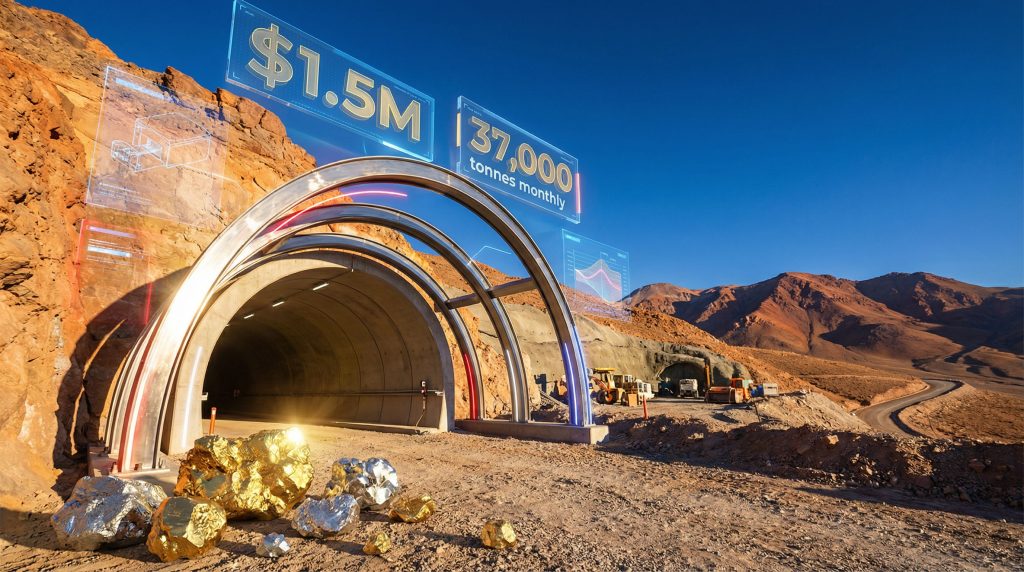
The $1.5 million investment targets a monthly extraction rate of 37,000 tonnes through enhanced underground access without modifying existing processing capacity. This approach reflects confidence in reserve recalculations that justify increased extraction rates through the same beneficiation plant infrastructure.
Key technical parameters include:
- Enhanced extraction capacity: 37,000 tonnes monthly from Chiquilla Chica sector
- Processing integration: No modifications to existing beneficiation plant capacity
- Tailings management: No volume increases to authorized deposit facilities
- Resource base expansion: Integration of five existing low-grade stockpiles
The geological reassessment methodology represents a brownfield optimization strategy where existing infrastructure utilisation intensifies rather than expands. In addition, this approach requires sophisticated understanding of ore body characteristics and metallurgical recovery parameters to justify economic viability of previously sub-economic material.
Modern mining operations increasingly rely on detailed geological exploration insights to maximise resource value through advanced geological modelling techniques.
Operational Continuity Framework Through 2033
The five-year operational extension from 2028 to 2033 demonstrates management's commitment to sustaining regional employment in Chile's Antofagasta region while maximising resource extraction value. The 10-year total project lifecycle encompasses multiple phases of development and extraction across underground workings.
| Project Parameter | Specification | Strategic Implication |
|---|---|---|
| Mine life extension | Until December 2033 | 5-year operational continuity |
| Total project lifecycle | 10 years | Multi-phase development approach |
| Investment requirement | $1.5 million USD | Capital-efficient expansion model |
| Processing modifications | None required | Infrastructure optimisation focus |
Risk mitigation strategies for maintaining production consistency involve waste management facility expansion and auxiliary infrastructure development. The project contemplates expansion of existing botaderos plus construction of one additional waste storage facility, alongside enhancement of four existing waste management installations.
When big ASX news breaks, our subscribers know first
How Does the $1.5 Million Investment Compare to Regional Mining Expansions?
The relatively modest capital requirement for the Chiquilla Chica expansion reflects strategic engineering focused on underground access optimisation rather than processing capacity development. This investment approach contrasts with greenfield mining projects that typically require significant processing infrastructure capital expenditure.
However, the industry continues to evolve rapidly, with new mining innovation trends emphasising capital-efficient solutions that maximise existing infrastructure utilisation.
Capital Efficiency Analysis in Small-Scale Gold Operations
The $1.5 million total investment encompasses multiple infrastructure components including portal construction, waste management expansion, auxiliary installations, and regulatory compliance requirements. This capital intensity appears favourable when distributed across production capacity targeting 37,000 tonnes monthly extraction.
Investment allocation considerations include:
- Portal construction and underground access development
- Waste management facility expansion and enhancement
- Auxiliary infrastructure supporting increased extraction
- Regulatory compliance and permitting requirements
The capital efficiency becomes apparent when considering that processing plant construction typically represents 40-60% of total mine development capital in gold operations. By avoiding processing capacity modifications, the project achieves significant capital preservation while maintaining production expansion objectives.
Strategic Positioning Within Chile's Gold Mining Landscape
Chile's mining investment climate demonstrates robust industry confidence, with mining projects totaling $17.32 billion submitted to the SEIA system in the first quarter of 2026. This broader investment context provides favourable conditions for smaller-scale expansion projects like the Chiquilla Chica development.
The Atacama Desert location presents both advantages and challenges for underground mining expansion. Advantages include stable geological conditions and established mining infrastructure, while challenges involve material transportation costs and workforce logistics in remote operations.
Market timing considerations favour precious metals expansion projects given current commodity price environments and Chile's established regulatory framework for mining operations. Consequently, the project's alignment with existing environmental authorisations reduces regulatory uncertainty compared to greenfield developments.
What Technical Innovations Support the Chiquilla Chica Underground Development?
Underground mining infrastructure development in desert environments requires specialised engineering approaches addressing geological stability, material sourcing, and environmental compliance. The Chiquilla Chica expansion incorporates modern support systems with locally sourced construction materials.
Advanced Underground Mining Infrastructure Requirements
New portal construction specifications reflect geological considerations appropriate to Atacama Desert conditions and local rock formations. The portal design must integrate with existing underground mine workings while providing efficient access for increased extraction operations.
Shotcrete material sourcing optimisation represents a strategic approach to construction cost management. The project utilises aggregate materials from areas already authorised under RCA N°106/2010, minimising transportation costs and supply chain complexity in the remote location.
Technical infrastructure components:
- New underground portal accessing Chiquilla Chica sector
- Shotcrete support systems using locally authorised aggregates
- Integration protocols with existing underground networks
- Auxiliary installations supporting enhanced extraction capacity
Waste Management Expansion Strategy
The comprehensive waste management approach involves expansion of current botadero facilities plus development of additional waste storage capacity. This multi-facility strategy reduces single-point-of-failure risk while accommodating increased waste rock generation from enhanced underground extraction.
Waste facility development scope:
| Facility Type | Development Approach | Compliance Framework |
|---|---|---|
| Current botadero | Capacity expansion | Existing RCA authorisation |
| Additional facility | New construction | SEIA evaluation process |
| Four existing botaderos | Enhancement modifications | Environmental compliance |
| Aggregate sourcing | Increased extraction | RCA N°106/2010 authorisation |
Environmental compliance operates within existing regulatory frameworks, leveraging established environmental approvals while addressing expansion-specific requirements through the SEIA evaluation process.
How Will Low-Grade Material Processing Transform El Peñón's Economics?
Resource revaluation through cut-off grade optimisation represents a sophisticated approach to transforming previously stranded assets into revenue-generating resources. The integration of five existing low-grade stockpiles demonstrates advanced geological modelling and metallurgical understanding.
Furthermore, successful implementation of such strategies requires proper drilling results interpretation to validate geological models and economic projections accurately.
Cut-off Grade Optimisation and Resource Recovery
Cut-off grade determination represents the fundamental economic parameter distinguishing ore from waste material in mining operations. Updated cut-off parameters suggest improvements in one or more factors: commodity prices, processing recovery rates, operating costs, or capital expenditure requirements.
The resource recovery methodology involves:
- Geological reassessment: Updated resource and reserve calculations for Chiquilla Chica
- Metallurgical optimisation: Improved understanding of gold and silver recovery characteristics
- Economic modelling: Revised financial parameters justifying low-grade material processing
- Blending strategies: Material combination approaches for consistent mill feed quality
Low-grade stockpile integration transforms what were historically environmental liabilities into potential revenue sources. This approach requires careful metallurgical planning to ensure processing performance remains optimal when blending high-grade underground ore with lower-grade stockpile material.
Processing Plant Utilisation Without Capacity Expansion
The project achieves increased throughput combining high-grade underground ore with low-grade stockpile material through existing beneficiation plant capacity. This approach implies optimisation of equipment utilisation rates and potential improvements in metallurgical processing efficiency.
Processing optimisation considerations:
- Mill equipment utilisation enhancement without capacity modifications
- Metallurgical recovery optimisation for blended ore feeds
- Production scheduling coordination between underground extraction and stockpile processing
- Tailings facility life extension without volume increases
The tailings facility management approach suggests either improved tailings processing reducing physical volume or strategic scheduling extending facility utilisation without exceeding authorised capacity limits.
What Are the Environmental and Regulatory Implications?
Environmental management for underground mine expansion involves distinct considerations compared to open-pit development, with primary impacts shifting from surface land disturbance to subsurface operational effects and portal area management.
The mining industry increasingly emphasises sustainable mining practices that balance operational requirements with environmental stewardship throughout project lifecycles.
SEIA Evaluation Process for Underground Expansions
The project's submission to Chile's Sistema de Evaluación de Impacto Ambiental reflects formal compliance with environmental assessment requirements for mining expansion projects. According to a detailed environmental impact report, the regulatory pathway leverages existing environmental approvals while addressing expansion-specific requirements.
Regulatory compliance framework:
- SEIA submission: Formal environmental impact assessment process
- Existing authorisations: RCA N°106/2010 for aggregate sourcing continuation
- Environmental modifications: Underground expansion compliance requirements
- Community engagement: Extended mine life stakeholder consultation protocols
The regulatory approach demonstrates continuity with established environmental mitigation measures while recognising expansion-specific environmental management requirements.
Sustainable Mining Practices in Desert Operations
Desert mining operations present unique environmental challenges requiring specialised management approaches for water resources, dust control, and ecosystem protection. The Atacama Desert environment demands careful consideration of scarce water resources and sensitive ecological systems.
Environmental management priorities include:
- Water resource optimisation: Efficient utilisation in water-scarce desert environment
- Dust control systems: Air quality maintenance during expanded operations
- Biodiversity protection: Ecosystem preservation in sensitive desert habitats
- Waste management: Proper handling of increased waste rock generation
The project's environmental framework operates within Chile's established mining regulatory system, which requires comprehensive environmental impact assessment and ongoing compliance monitoring throughout operational phases.
What Market Factors Influence El Peñón's Expansion Timing?
Precious metals market dynamics in 2026 support expansion decisions for established gold and silver operations, particularly projects that can achieve production increases without significant capital expenditure requirements.
Gold and Silver Price Dynamics in 2026 Market Conditions
Current commodity price environments favour underground expansion projects that can achieve enhanced production through infrastructure optimisation. The Chiquilla Chica expansion benefits from market timing that supports investment in previously sub-economic resources.
Market considerations influencing project timing:
- Precious metals price stability supporting cut-off grade optimisation
- Chilean peso exchange rate dynamics affecting operating cost competitiveness
- Global supply chain normalisation reducing equipment and material costs
- Regional mining investment climate encouraging expansion projects
Currency considerations remain important for Chilean mining operations, as production revenues typically generate in US dollars while operating costs occur in Chilean pesos. This natural hedge provides favourable economics for peso-denominated operating expenditures.
Regional Mining Investment Climate Assessment
Chile's mining policy environment supports small-to-medium scale operations through established regulatory frameworks and infrastructure development. The Antofagasta region benefits from mature mining infrastructure including transportation, power, and workforce availability.
Regional advantages supporting expansion timing:
| Factor | Regional Advantage | Project Benefit |
|---|---|---|
| Infrastructure | Established transportation networks | Reduced logistics costs |
| Regulatory | Mature SEIA framework | Streamlined approvals |
| Workforce | Experienced mining professionals | Operational expertise |
| Supply chain | Regional supplier networks | Material sourcing efficiency |
The broader context of $17.32 billion in mining investments submitted to SEIA in early 2026 demonstrates industry confidence in Chile's mining investment climate, creating favourable conditions for project development and regulatory processing.
The next major ASX story will hit our subscribers first
How Does This Expansion Position Minera Meridian Competitively?
The El Peñón expansion strategy demonstrates sophisticated asset portfolio management focused on maximising resource value through operational optimisation rather than capacity expansion. This approach positions the operation favourably within Chile's precious metals mining sector.
Strategic Asset Portfolio Enhancement
Underground expansion capability represents valuable operational flexibility in precious metals mining, allowing companies to respond to commodity price cycles and geological opportunities. The Chiquilla Chica development enhances the asset's long-term value proposition through extended mine life.
Competitive positioning advantages:
- Operational flexibility: Underground extraction capacity enhancement
- Resource optimisation: Low-grade stockpile integration capability
- Infrastructure efficiency: Processing capacity utilisation without expansion
- Regulatory compliance: Established environmental approval framework
The technology transfer opportunities from expansion experience provide valuable capabilities for potential application to other underground development projects within the company's portfolio.
Future Development Potential Beyond 2033
The successful implementation of underground expansion methodology creates potential for additional development phases beyond the current 2033 timeline. Exploration opportunities in surrounding concession areas may benefit from expanded underground access and improved geological understanding.
Long-term development considerations:
- Exploration potential in adjacent underground zones
- Additional low-grade stockpile processing opportunities
- Underground mining technology advancement applications
- Regional synergies with other precious metals operations
Resource sustainability planning involves ongoing geological assessment and exploration activities that could identify additional underground development opportunities extending operational life beyond current projections.
What Lessons Can Other Mining Companies Learn?
The Chiquilla Chica expansion provides valuable insights into cost-effective mine life extension methodologies applicable to other small-scale precious metals operations facing similar operational challenges and opportunities.
The technical documentation available through the comprehensive technical report provides detailed geological and engineering specifications for similar underground development projects.
Best Practices for Small-Scale Mine Life Extensions
Cost-effective expansion methodology demonstrates several transferable approaches:
- Infrastructure optimisation: Maximising existing processing capacity utilisation
- Resource revaluation: Systematic cut-off grade optimisation for stranded assets
- Regulatory efficiency: Leveraging existing environmental approvals for expansion phases
- Capital preservation: Focusing investment on access rather than processing capacity
The regulatory navigation strategy showcases efficient use of Chile's SEIA system for underground expansion approvals while maintaining community stakeholder engagement throughout extended operational timelines.
Risk Management Framework for Underground Developments
Underground mining expansion involves distinct risk profiles requiring specialised management approaches addressing geological uncertainty, operational safety, and financial planning considerations across multi-year development phases.
Risk mitigation strategies include:
| Risk Category | Mitigation Approach | Implementation Method |
|---|---|---|
| Geological uncertainty | Comprehensive resource assessment | Updated geological modelling |
| Operational safety | Modern support systems | Shotcrete and auxiliary infrastructure |
| Environmental compliance | Existing authorisation leverage | SEIA evaluation process |
| Financial planning | Capital-efficient design | Infrastructure optimisation focus |
The project framework provides a replicable model for other mining companies considering similar underground expansion projects within established operations, particularly in water-scarce environments requiring careful resource management.
This analysis is based on publicly available information and should not be considered as investment advice. Mining investments involve significant risks including commodity price volatility, regulatory changes, and operational challenges. Prospective investors should conduct independent research and consult qualified professionals before making investment decisions.
Ready to Discover the Next Major Mining Breakthrough?
Discovery Alert provides instant notifications on significant ASX mineral discoveries using its proprietary Discovery IQ model, transforming complex geological data into actionable investment insights for both seasoned traders and newcomers alike. Explore how major mineral discoveries have generated exceptional returns throughout history, then begin your 14-day free trial to position yourself ahead of the market.