
June 18, 2026
The Hidden Economics Driving Mining's Electric Revolution
The global mining industry sits at a rare inflection point where financial self-interest and environmental obligation are converging toward the same strategic conclusion. Historically, decarbonisation initiatives in extractive industries were framed as cost centres, obligations imposed by regulators or demanded by activist shareholders. That framing is dissolving rapidly. The electrification of mining equipment for ESG goals is now generating demonstrable operational returns that stand entirely independent of compliance motivations, reshaping how capital allocators, engineers, and site operators view the transition.
Understanding why requires looking beyond the headline emissions numbers and examining the structural economics that make diesel dependency increasingly untenable across every dimension of mine operations.
When big ASX news breaks, our subscribers know first
Why Diesel Dependency Has Become a Structural Liability
Mining's carbon footprint is substantial by any measure. The sector contributes an estimated 7 to 8% of total global carbon emissions, and crucially, the majority of those emissions are generated not by smelting or processing operations but by the machines moving material around mine sites every day.
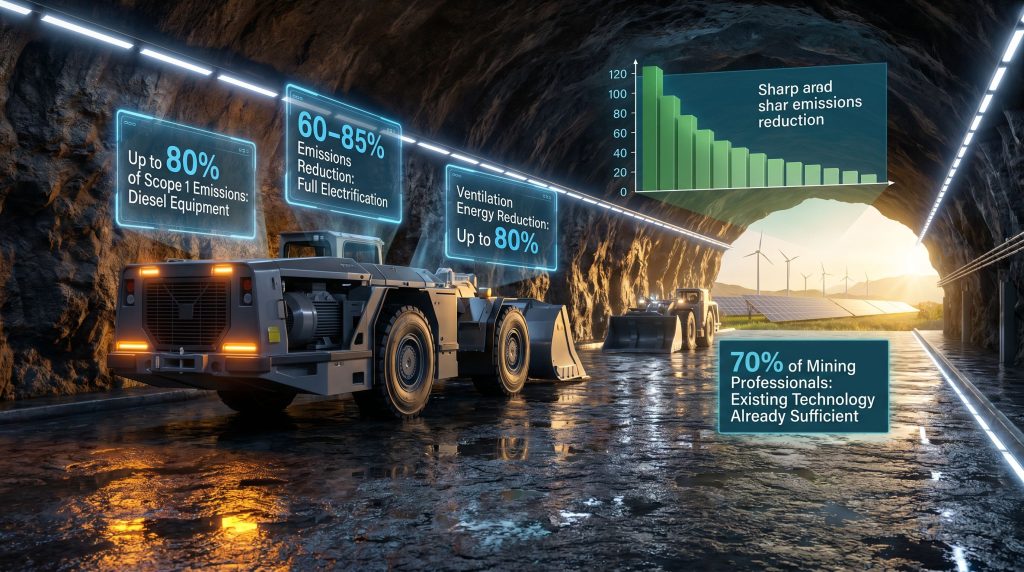
Diesel-powered mobile equipment is responsible for up to 80% of a mine's direct Scope 1 emissions, making fleet electrification the single highest-leverage intervention available to any operator serious about measurable decarbonisation. No other change to mine design, processing methodology, or supply chain management comes close to that level of impact within the operator's direct control.
The timing of this challenge is particularly acute. Global demand for critical minerals — lithium, copper, cobalt, nickel — is accelerating as electric vehicle manufacturing, grid-scale battery storage, and renewable energy in mining infrastructure scale up. Production volumes are rising precisely when emissions reduction obligations are tightening, creating a compounding pressure that operators cannot defer indefinitely.
Three distinct forces are now acting simultaneously on mining operators:
- Institutional investors and ESG rating agencies applying formal scoring penalties to operators without credible decarbonisation roadmaps
- Regulatory frameworks including carbon pricing mechanisms and sustainable procurement mandates reshaping capital allocation decisions
- The erosion of the traditional trade-off between production growth and environmental compliance, as electric equipment demonstrates measurable operational cost advantages alongside its emissions profile
Executive Order 13514 in the United States mandates that 95% of new federal contracts prioritise sustainable and environmentally preferred items, with comparable regulatory momentum building at state and international levels. For mining operations with exposure to government procurement chains or ESG-linked financing, these frameworks translate directly into capital allocation consequences.
What Full Mine Electrification Actually Involves
A common misconception frames mine electrification as a straightforward fleet procurement exercise. Replacing diesel trucks with battery-electric equivalents represents only one component of a genuinely transformative systems-level change that must extend across mobile equipment, fixed plant, energy supply infrastructure, and digital management systems simultaneously.
The equipment categories currently undergoing active electrification span the full operational breadth of a modern mine:
- Underground haul trucks and load-haul-dump (LHD) loaders
- Surface drill rigs and hydraulic excavators
- Auxiliary systems including ventilation fans, pumps, and conveyors
- Light vehicle fleets and personnel transport
The technology pathways available to operators vary considerably in their maturity and practical applicability:
| Technology Type | Primary Application | Current Maturity |
|---|---|---|
| Battery-Electric Vehicles (BEV) | Underground loaders and haul trucks | Commercial deployment |
| Trolley-Assist Systems | Surface haul routes | Proven at scale |
| Hybrid Diesel-Electric | Large surface trucks | Transitional technology |
| Green Hydrogen Hybrids | Heavy long-distance haulage | Pilot and emerging stage |
| AI-Optimised Energy Management | Grid stability and charging scheduling | Rapidly maturing |
Underground Operations: Where the Gains Are Most Concentrated
Underground mines represent the environment where electrification delivers its most concentrated and immediate operational benefits. Diesel engines operating in confined underground environments require extensive ventilation infrastructure to continuously manage exhaust gases, heat load, and diesel particulate matter (DPM) concentrations to within safe occupational health limits.
The energy cost of running that ventilation infrastructure is substantial. Full electrification of an underground fleet can reduce ventilation energy demand by up to 80%, a compounding saving that materially alters the operating cost profile of the mine beyond the direct fuel savings from the equipment conversion itself. This ventilation dividend is frequently underweighted in initial electrification business case modelling, meaning the true financial return is often better than headline projections suggest.
DPM exposure is a well-documented occupational health risk with long-term respiratory consequences for underground workers. According to the U.S. Environmental Protection Agency, diesel exhaust health effects in confined environments are extensively documented, and electrification eliminates this exposure category entirely rather than managing it through ventilation and monitoring controls.
Surface Operations: Different Challenges, Scalable Solutions
Surface mines present different electrification challenges, primarily driven by the scale of equipment involved and the energy density requirements of long haul cycles. Trolley-assist systems on defined haul routes represent a proven bridge technology, reducing fuel consumption across the highest-tonnage equipment categories while battery technology for the largest truck classes continues to advance.
Remote surface operations increasingly benefit from pairing fleet electrification with on-site renewable generation and battery energy storage systems (BESS), enabling genuinely independent operations without diesel fuel logistics chains. Furthermore, electric mining vehicles are demonstrating performance capabilities that are closing the gap with diesel equivalents across an expanding range of duty cycles.
The ESG Case Across All Three Dimensions
Environmental Performance: What the Numbers Show
Fully electrified mining operations powered by renewable energy sources demonstrate emissions reductions of 60 to 85% compared to conventional diesel operations. Research from McKinsey and Company has highlighted that mine electrification programmes could simultaneously double site-level electricity demand, requiring parallel investment in renewable power purchase agreements and on-site generation to realise the full environmental outcome rather than simply shifting emissions from diesel combustion to grid electricity generation.
ABB's eMine framework studies, which integrate electric vehicles, charging infrastructure, and automation systems into a unified mine electrification architecture, indicate that integrated all-electric systems can achieve emissions reductions exceeding 85% at the site level. This represents one of the highest validated decarbonisation outcomes currently documented in the sector.
Electrification paired with grid power derived from fossil fuel sources delivers only partial emissions benefits. The full environmental case requires simultaneous progress on renewable energy procurement, making energy supply strategy inseparable from equipment conversion planning.
Scope 1 reductions from fleet electrification can be compounded by Scope 2 reductions through renewable energy procurement, creating a viable pathway toward net-zero mine operations that satisfies the increasingly granular expectations of climate disclosure frameworks including TCFD and CDP. Consequently, the mining energy transition is now being treated as a unified strategic programme rather than a series of disconnected initiatives.
Social Performance: Safety, Health, and Workforce Conditions
Electric equipment produces significantly less heat, noise, and vibration than internal combustion equivalents in equivalent duty cycles. For equipment operators spending extended shifts in confined cabs or underground environments, these differences translate into measurable reductions in operator fatigue and associated incident risk.
The elimination of diesel exhaust in underground working environments removes a recognised long-term occupational health risk, improving air quality metrics in a way that ventilation system improvements alone cannot fully replicate. Reduced drivetrain mechanical complexity in electric equipment also means fewer breakdown events, lowering the frequency of maintenance interventions that expose workers to high-risk situations.
Governance Performance: Meeting Investor and Reporting Standards
Industry survey data indicates that 91% of mining sector professionals identify electrification as essential to their organisation's decarbonisation strategy, reflecting near-universal governance-level commitment to the transition. Membership of the International Council on Mining and Metals increasingly requires demonstrable progress against net-zero pathways, with electrification milestones forming a core component of member reporting obligations.
Access to ESG-linked debt instruments, green bonds, and sustainability-linked credit facilities is progressively tied to operators demonstrating credible electrification timelines, creating a direct financing cost incentive that operates independently of regulatory mandates. In addition, mining electrification and decarbonisation are increasingly being evaluated together as complementary rather than sequential goals within governance frameworks.
The Financial Architecture of Electrification Investment
The business case for mine electrification rests on three interconnected value streams that compound across the investment horizon:
1. Direct operating cost reduction through energy and maintenance savings
2. Avoided capital expenditure on legacy ventilation and fuel infrastructure that would otherwise require ongoing investment
3. Emerging revenue opportunities from carbon credit markets as pricing mechanisms expand globally
The operating economics are substantial. Energy cost savings of 40 to 70% are achievable when diesel is displaced by grid or renewable electricity, depending on regional energy pricing and the duty cycle intensity of the equipment involved. Maintenance cost reductions of approximately 30% flow from the lower mechanical complexity of electric drivetrains relative to diesel equivalents.
| Cost Category | Diesel Fleet | Electrified Fleet |
|---|---|---|
| Fuel Costs | High and volatile | Low and stable |
| Maintenance Costs | High (complex drivetrains) | Approximately 30% lower |
| Ventilation Infrastructure | High for underground operations | Significantly reduced |
| Upfront Equipment CAPEX | Lower | Higher |
| Carbon Liability Exposure | Growing | Substantially reduced |
| Payback Period (conservative) | Not applicable | 7 to 10 years |
Conservative financial modelling consistently indicates payback periods of 7 to 10 years for large-scale fleet electrification programmes. Critically, operators who build fuel price volatility scenarios, carbon credit revenue potential, and accelerating battery cost curve projections into their modelling arrive at materially more favourable investment theses than those applying static cost assumptions. The variables that compress payback timelines are all moving in the same direction.
Infrastructure: The Non-Negotiable Foundation
Equipment electrification cannot succeed without a parallel and properly sequenced programme of electrical infrastructure modernisation. The physical grid capacity to support fleet charging and operation must be established before or alongside fleet conversion, not treated as an afterthought.
Core infrastructure requirements include:
- Upgraded grid connections and substation capacity to handle the substantially increased electrical load
- On-site battery energy storage systems (BESS) to manage peak demand and provide operational resilience
- Strategically positioned charging infrastructure aligned with established haul routes and shift patterns to prevent operational downtime
- Digital energy management systems capable of optimising charging schedules across an expanded electric fleet without creating grid instability
Hitachi Energy's digital twin technology is being applied specifically to model grid stability scenarios as mine electricity demand increases, a critical planning capability given that full electrification can double total site electricity consumption. This level of planning foresight is what separates electrification programmes that deliver their projected outcomes from those that encounter operational constraints after capital has been committed.
The infrastructure build-out itself offers ESG optimisation opportunities that forward-thinking operators are beginning to capture. Existing transformers can be retrofitted with modern eco-friendly insulating fluids rather than replaced entirely, extending asset life while reducing the embodied carbon and supply chain emissions associated with full component replacement. Remanufactured and refurbished electrical components support circular economy principles within the infrastructure programme itself.
The next major ASX story will hit our subscribers first
A Practical Implementation Framework
Successful electrification does not happen through a single procurement decision. It follows a disciplined three-stage progression:
Stage 1: Assessment and Prioritisation
Conduct a comprehensive audit of current electrical infrastructure capacity against projected electrified fleet demand. Map the existing equipment fleet against electrification readiness, identifying which asset categories deliver the highest emissions reduction per dollar of conversion investment. Establish rigorous Scope 1 and Scope 2 emissions baselines to enable meaningful performance tracking.
Stage 2: Pilot Deployment and Protocol Development
Deploy electric equipment on defined pilot circuits, typically the highest-frequency haul routes or most-utilised underground equipment categories. Develop and refine charging protocols aligned with operational shift patterns. Capture granular performance data across energy consumption, maintenance frequency, and operator experience to validate business case assumptions before full commitment.
Stage 3: Scaled Rollout and Renewable Integration
Extend electrification systematically across the full fleet, prioritising the highest-emission equipment categories first to capture the most impact per capital dollar deployed. Commission renewable energy supply agreements and on-site generation capacity in parallel with fleet expansion. Furthermore, integrate AI-powered mining efficiency tools to optimise grid load distribution across the expanded electric fleet.
Australian mining operations have demonstrated that this phased approach consistently produces measurable results across operational metrics, validating the methodology for operators at various stages of readiness.
Leading Examples and the Technology Ecosystem
Newmont Corporation's Borden Mine in Ontario, Canada stands as one of the most comprehensively documented proof-of-concepts for full underground fleet electrification at commercial scale. The operation has provided validated evidence of measurable reductions in CO2 emissions, ventilation energy demand, and maintenance costs that researchers and operators can reference as a benchmark.
Regional adoption patterns reflect the different regulatory and economic pressures shaping electrification timelines across major mining jurisdictions:
| Region | Electrification Maturity | Primary Drivers |
|---|---|---|
| Canada | Early mover | Underground air quality regulation, carbon pricing |
| Australia | Advancing rapidly | ESG investor pressure, renewable energy availability |
| Europe | Progressive adoption | Stringent emissions regulation, green finance access |
| North America | Accelerating | Federal procurement standards, carbon markets |
| South America | Emerging | Energy cost arbitrage, ESG premiums on copper and lithium |
The Barriers That Remain, and How They Are Being Addressed
The primary constraints on mining electrification have shifted considerably over the past several years. A survey of mining professionals found that 70% believe existing technology is already sufficient to achieve major decarbonisation milestones, a finding that repositions the debate from one about technological readiness to one about capital allocation, organisational change management, and infrastructure sequencing.
Infrastructure Complexity: Upgrading substation capacity and grid connections at remote mine sites requires long lead times, specialist engineering expertise, and capital that competes with production expansion priorities. This is a planning and sequencing challenge rather than a fundamental barrier.
Upfront CAPEX Premium: Electric mining equipment carries a higher initial purchase price than diesel equivalents. ESG-linked financing instruments, green bonds, and sustainability-linked credit facilities are emerging as mechanisms to bridge this gap by recognising the long-term value embedded in electrification programmes.
Largest Equipment Categories: Battery energy density limitations currently constrain full electrification of the largest surface haul trucks in the 400-plus tonne class. Trolley-assist and hybrid systems represent the practical current frontier while battery chemistry advances progressively extend electrification into heavier equipment.
Workforce Capability: The skilled workforce required to operate, maintain, and optimise electric mining fleets is currently in short supply globally. Workforce development and technical training programmes are emerging as a critical enabling investment alongside physical infrastructure. However, according to industry analysis of Australian mining electrification trends, operators who invest early in workforce capability development are achieving faster deployment timelines and better operational outcomes than those who address it retrospectively.
The 2030 Horizon: From Differentiator to Baseline Standard
Battery technology costs are declining along a trajectory that will progressively eliminate the CAPEX premium of electric equipment over diesel alternatives, reshaping the financial comparison fundamentally within this decade. Carbon pricing mechanisms are simultaneously expanding globally, increasing the effective cost of maintaining diesel-dependent operations.
Mine electrification and autonomous equipment programmes are increasingly being developed as integrated strategies rather than parallel initiatives. Electric drivetrains are substantially more compatible with autonomous control systems than diesel equivalents, creating a technology convergence that amplifies the productivity and safety benefits of both programmes beyond what either achieves independently.
The metals required for the global energy transition are produced by the same industry that must decarbonise to supply them responsibly. ESG premiums on responsibly sourced critical minerals are becoming real commercial mechanisms, creating a direct revenue incentive for operators who can demonstrate credible electrification credentials to offtake customers and downstream manufacturers with their own Scope 3 obligations to satisfy.
By 2030, the electrification of mining equipment for ESG goals is projected to shift from a differentiating capability to a baseline operating standard. Operators without credible electrification roadmaps will face compounding disadvantages in accessing capital, securing talent, and negotiating premium offtake agreements with manufacturers facing their own supply chain decarbonisation obligations.
The strategic case is no longer speculative. The financial case is increasingly bankable. The operational case is validated at scale. What remains is execution, and the operators who begin systematic implementation now are accumulating lead times, operational learning, and capital market relationships that will be materially difficult for later movers to replicate.
This article contains forward-looking statements and financial projections based on industry modelling and publicly available research. Actual outcomes may differ materially from projections depending on commodity prices, regulatory changes, technology cost trajectories, and site-specific operational variables. This content does not constitute financial advice. Readers should conduct independent due diligence before making investment or capital allocation decisions.
Want to Invest in the Companies Leading Mining's Electrification Revolution?
Discovery Alert's proprietary Discovery IQ model scans ASX announcements in real time, delivering instant alerts on significant mineral discoveries across the commodities driving the global energy transition — from copper to lithium — so subscribers can identify actionable opportunities ahead of the broader market. Explore historic discoveries and their returns to understand what major finds can mean for investors, then begin your 14-day free trial at Discovery Alert to position yourself at the forefront of the next significant ASX discovery.