
June 1, 2026
Mining Labor Relations Evolution: Strategic Frameworks for Modern Workplace Negotiations
The contemporary mining sector operates within increasingly complex labor relations environments where traditional negotiation models face unprecedented challenges. South African mining operations exemplify these evolving dynamics, where multi-stakeholder negotiations, performance-linked compensation structures, and institutional mediation frameworks reshape how companies manage workforce relationships. Understanding these emerging patterns provides critical insights for mining executives, investors, and industry analysts navigating volatile commodity markets while maintaining operational stability. Furthermore, these developments reflect broader industry evolution trends that are transforming workforce management across the global mining sector.
When big ASX news breaks, our subscribers know first
Understanding the Strategic Context Behind Strike Withdrawals
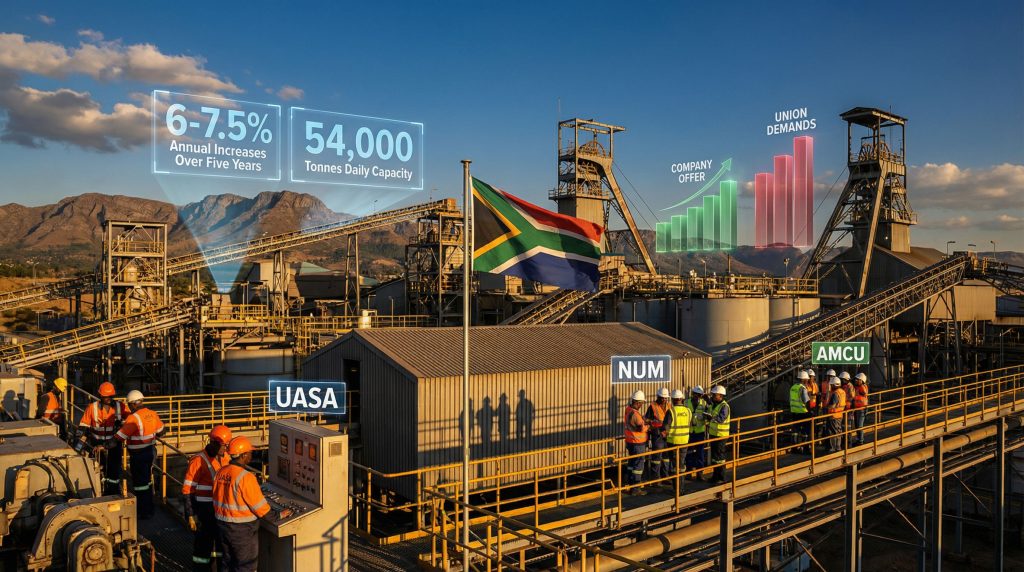
The December 2025 suspension of planned industrial action at DRDGOLD's Ergo operations demonstrates how modern mining labor disputes increasingly involve tactical positioning rather than absolute confrontation. When the National Union of Mineworkers (NUM) and Association of Mineworkers and Construction Union (AMCU) withdrew their 48-hour strike notice on December 18, 2025, they highlighted sophisticated negotiation dynamics that extend beyond traditional wage demands.
Critical Timeline Analysis:
• July 2025: Initial wage negotiations commenced
• December 3, 2025: CCMA picketing rules finalised
• December 12, 2025: UASA accepted company offer
• December 18, 2025: Strike notice withdrawal by NUM/AMCU
The 92% resolution rate (23 of 25 demands resolved) demonstrates effective stakeholder engagement on operational matters, isolating compensation disputes as the primary friction point. This pattern suggests mining companies that invest in comprehensive stakeholder management achieve higher negotiation success rates even when core economic disagreements persist.
DRDGOLD management emphasised that striking action cancelled DRDGOLD Ergo operations represented tactical suspension rather than substantive resolution, with underlying wage disputes remaining unresolved. This distinction carries material implications for operational planning and investor assessment of labor cost volatility.
How Do Modern Mining Companies Navigate Multi-Union Negotiations?
Contemporary mining operations increasingly face fragmented union representation that creates complex negotiation matrices requiring sophisticated stakeholder management strategies. DRDGOLD's experience with three distinct unions demonstrates how companies must balance competing demands while maintaining operational continuity. Moreover, successful navigation of these challenges requires insights from mining leadership insights to develop effective multi-stakeholder engagement approaches.
Union Position Matrix at DRDGOLD Ergo:
| Union | Agreement Status | Position | Strategic Impact |
|---|---|---|---|
| UASA | Signed December 12 | 6-7.5% annual increases | Operational continuity assured |
| NUM | Withdrawn strike notice | 12% demand maintained | Ongoing negotiation required |
| AMCU | Withdrawn strike notice | 12% demand maintained | Future disruption potential |
The selective acceptance strategy—where UASA members secured wage agreements while NUM and AMCU maintained opposition—illustrates how mining companies leverage differential union positioning to manage collective action risks. This approach provides several strategic advantages:
• Reduced Strike Effectiveness: Partial workforce continuation during industrial action
• Demonstration Effects: Accepted agreements showcase company reasonableness
• Cost Management: Controlled wage bill increases through selective settlements
• Operational Stability: Essential functions maintained during disputes
Industry analysis suggests that multi-union environments, while increasing negotiation complexity, provide management greater flexibility in crisis resolution compared to single-union monopolistic bargaining structures.
What Economic Factors Drive Contemporary Mining Wage Disputes?
The economic foundations underlying modern mining wage disputes reflect broader inflationary pressures intersecting with commodity-price volatility and operational sustainability requirements. DRDGOLD's dispute illustrates these competing economic pressures through quantitative analysis of wage demands versus inflation benchmarks. However, companies must carefully evaluate their management red flags when assessing sustainable wage structures.
Inflation vs. Wage Demand Analysis (December 2025):
• Union Demand: 12% annual increases across all categories
• South African CPI: 3.6% (December 2025)
• Real Wage Increase Demanded: 8.4% above inflation
• Company Offer: 6-7.5% guaranteed annually
• Real Wage Increase Offered: 2.4-3.9% above inflation
DRDGOLD characterised union demands as "more than three times inflation" and "significantly above agreements recently concluded across the gold sector." This positioning reflects management's strategic framing of wage negotiations within sector-wide benchmarking rather than isolated company negotiations.
The demand structure represents approximately 8.4% real wage growth compared to the company's offer of 2.4-3.9% real increases, highlighting the substantial economic gap between union expectations and management's assessment of sustainable compensation growth.
Multi-Dimensional Compensation Framework:
• Base Wage Component: 6-7.5% guaranteed annual increases
• Performance Profit-Share: 15% of payroll when milestones achieved
• Additional Incentives: 2% performance-based rewards
• Housing Support: Interest-free schemes and living allowances
This structure demonstrates industry evolution toward variable compensation models that align worker benefits with operational performance rather than fixed salary escalation independent of commodity prices or productivity metrics.
How Do Operational Disruptions Impact Tailings Retreatment Operations?
Tailings retreatment operations exhibit unique vulnerability to production disruptions due to capital-intensive processing requirements and margin-sensitive business models. The anticipated strike at DRDGOLD's Ergo operations would have generated material operational impact through reduced throughput efficiency. Furthermore, implementing an effective investment strategy framework becomes crucial for managing these operational risks.
Production Impact Modelling:
• Standard Daily Capacity: 54,000 tonnes per day
• Strike-Reduced Throughput: 40,000 tonnes per day
• Absolute Production Loss: 14,000 tonnes daily
• Percentage Capacity Reduction: 25.9%
• Total Loss (48-hour strike): Approximately 28,000 tonnes
For tailings retreatment operations, production disruptions create compounding negative effects beyond simple throughput reduction:
Cost Structure Implications:
• Fixed Cost Spreading: Reduced tonnage increases per-unit processing costs
• Capital Utilisation: Equipment underutilisation reduces return on invested capital
• Working Capital Pressure: Production delays extend cash conversion cycles
• Restart Costs: Workforce reintegration and equipment testing requirements
The 26% capacity reduction demonstrates how relatively brief strike periods generate disproportionate operational impact in capital-intensive mining processes where economies of scale determine profitability thresholds.
Investment Note: Tailings retreatment operations typically operate on narrower margins than conventional mining, making production consistency critical for financial performance. Investors should assess strike risk as material factor in operational valuation models.
What Role Does the CCMA Play in Modern Mining Disputes?
The Commission for Conciliation, Mediation and Arbitration functions as South Africa's primary institutional framework for structured labour dispute resolution, providing procedural guidelines that convert open-ended conflicts into managed negotiation processes. This institutional approach aligns with broader industry consolidation trends where structured frameworks become increasingly important.
CCMA Institutional Framework:
• Mediation Phase: Neutral facilitation of direct party negotiations
• Conciliation Phase: Third-party intervention to bridge positional differences
• Arbitration Phase: Binding resolution when voluntary agreement fails
• Procedural Standards: Legal framework defining permissible strike activities
The December 3, 2025 picketing rules finalisation demonstrates CCMA's capacity to establish operational parameters that balance union rights with operational protection. This institutional engagement provides several strategic benefits:
Legal Predictability: Clear guidelines reduce uncertainty about permissible actions during disputes
Neutral Platform: Independent mediation reduces adversarial positioning
Precedent Framework: Established procedures accelerate future dispute resolution
Compliance Structure: Legal backing ensures adherence to negotiated agreements
Mining companies that engage proactively with CCMA processes typically achieve more predictable resolution timelines compared to companies that resist institutional mediation.
The next major ASX story will hit our subscribers first
Why Do Mining Companies Emphasise Multi-Year Wage Agreements?
Long-term wage agreements represent strategic risk management tools that provide operational cost predictability essential for capital-intensive mining investment decisions. DRDGOLD's five-year proposal structure illustrates how mining companies leverage extended agreements to enhance financial planning capabilities.
Multi-Year Strategic Advantages:
• Capital Planning: Predictable labour costs enable accurate project NPV calculations
• Investment Justification: Cost certainty supports long-term capital deployment decisions
• Operational Stability: Reduced frequency of contentious annual negotiations
• Risk Mitigation: Labour cost insulation from commodity price volatility
DRDGOLD's Five-Year Proposal Structure:
| Component | Annual Value | Strategic Purpose |
|---|---|---|
| Base Wage Increases | 6-7.5% annually | Inflation protection |
| Profit-Share Baseline | 15% of payroll | Performance alignment |
| Additional Incentives | 2% of payroll | Productivity enhancement |
| Housing Support | Enhanced schemes | Comprehensive benefits |
Management positioned the multi-year framework as enabling "long-term projects to extend the operational life of Ergo" through investment predictability that justifies capital expenditure on life-extension initiatives.
This approach reflects industry recognition that sustainable mining operations require labour cost structures aligned with asset depreciation cycles rather than annual commodity price fluctuations.
How Do Housing and Living Allowances Factor Into Modern Mining Compensation?
Contemporary mining compensation increasingly incorporates comprehensive benefit packages that address workforce cost-of-living pressures beyond base salary structures. DRDGOLD's offer demonstrates evolution toward holistic compensation models.
Enhanced Benefit Components:
• Living-Out Allowances: Improved support for off-site accommodation
• Interest-Free Housing Schemes: Enhanced access to homeownership assistance
• Performance Incentives: Productivity-linked additional compensation
• Profit-Sharing Continuation: Operational milestone-based distributions
This comprehensive approach recognises that modern mining workforces evaluate total compensation value rather than isolated wage components. The integration of housing support addresses South African mining's historical challenges with workforce accommodation and community development.
Strategic Benefits of Comprehensive Compensation:
• Workforce Retention: Holistic benefits reduce employee turnover
• Community Relations: Housing support enhances local stakeholder relationships
• Cost Efficiency: Structured benefits may provide tax advantages over direct salary increases
• Performance Alignment: Variable components link compensation to operational success
What Does This Case Reveal About Future Mining Labour Relations?
The DRDGOLD Ergo situation illustrates several emerging trends reshaping mining labour relations toward more sophisticated, multi-dimensional negotiation frameworks that balance operational requirements with workforce demands.
Emerging Labour Relations Patterns:
• Multi-Union Complexity: Differentiated engagement strategies required for fragmented representation
• Performance-Linked Compensation: Variable pay structures tied to operational metrics
• Institutional Integration: Proactive engagement with mediation frameworks
• Long-Term Relationship Building: Strategic focus on sustainability over transactional negotiations
The strike withdrawal without full resolution suggests that modern labour disputes increasingly involve tactical positioning and relationship management rather than absolute confrontation leading to definitive outcomes.
Strategic Implications for Mining Companies:
• Stakeholder Management: Investment in sophisticated union relationship capabilities
• Compensation Innovation: Development of performance-aligned benefit structures
• Risk Planning: Enhanced scenario modelling for multi-union negotiation outcomes
• Operational Resilience: Contingency planning for partial workforce disruptions
How Should Investors Interpret Strike Cancellations in Mining Operations?
Strike cancellations present complex signals for investment analysis, requiring differentiation between tactical suspensions and substantive dispute resolution. The DRDGOLD case demonstrates the analytical frameworks investors should apply.
Investment Risk Assessment Framework:
• Short-Term Operational Continuity: Immediate production protection maintained
• Medium-Term Cost Uncertainty: Unresolved wage disputes create ongoing financial exposure
• Long-Term Management Capability: Crisis navigation demonstrates operational competence
• Stakeholder Relationship Quality: Multi-union engagement effectiveness
Investment Disclaimer: The analysis of labour relations outcomes involves significant uncertainty. Strike cancellations may not prevent future industrial action, and wage dispute resolution remains subject to complex stakeholder negotiations that could materially impact operational costs and profitability.
Key Investor Considerations:
• Wage Cost Sensitivity: Impact of eventual settlements on operational margins
• Production Reliability: Assessment of ongoing strike risk during unresolved negotiations
• Management Quality: Evaluation of sophisticated stakeholder relationship capabilities
• Sector Benchmarking: Comparison with industry-wide labour cost trends
The 23-of-25 demand resolution suggests effective operational management, while the outstanding wage disagreement indicates continued financial uncertainty requiring investor monitoring.
What Lessons Does This Provide for Mining Industry Labour Strategy?
The suspension of striking action cancelled DRDGOLD Ergo operations provides comprehensive insights into contemporary mining labour relations strategy, demonstrating the effectiveness of sophisticated stakeholder management combined with institutional engagement through established mediation frameworks.
Strategic Lessons for Mining Industry:
• Multi-Dimensional Negotiation: Success requires simultaneous management of multiple union relationships with differentiated approaches
• Performance Integration: Compensation structures increasingly must align worker benefits with operational sustainability
• Institutional Utilisation: Proactive engagement with mediation frameworks enhances predictable dispute resolution
• Long-Term Perspective: Strategic patience and comprehensive benefit structuring outperform confrontational approaches
The case demonstrates that mining companies capable of navigating complex labour relations through systematic stakeholder engagement, performance-linked compensation innovation, and institutional mediation position themselves advantageously in competitive global markets.
While the immediate operational disruption was avoided, the underlying compensation disagreements highlight the ongoing evolution of mining labour relations toward more complex, multi-party negotiations requiring strategic sophistication and comprehensive benefit structuring to achieve sustainable workforce relationships.
For additional analysis of South African mining labour relations and regulatory developments, industry professionals can reference Mining Weekly's comprehensive coverage of industrial relations trends. Furthermore, DRDGOLD's official investor communications provide detailed insights into regulatory framework evolution within the sector.
Ready to Capitalise on ASX Mining Investment Opportunities?
Discovery Alert provides real-time notifications on significant ASX mineral discoveries using its proprietary Discovery IQ model, instantly transforming complex mining data into actionable investment insights for both short-term traders and long-term investors. Explore how major mineral discoveries have generated exceptional returns by visiting Discovery Alert's discoveries page and begin your 30-day free trial today to secure your competitive advantage in the mining sector.