Great Southern Mining Ltd
- ASX Code: GSN
- Market Cap: $25,142,407
Diamond Drilling Begins at Mt Dillon as Gold Fields-Backed Earn-In Targets Major Intrusive Gold System
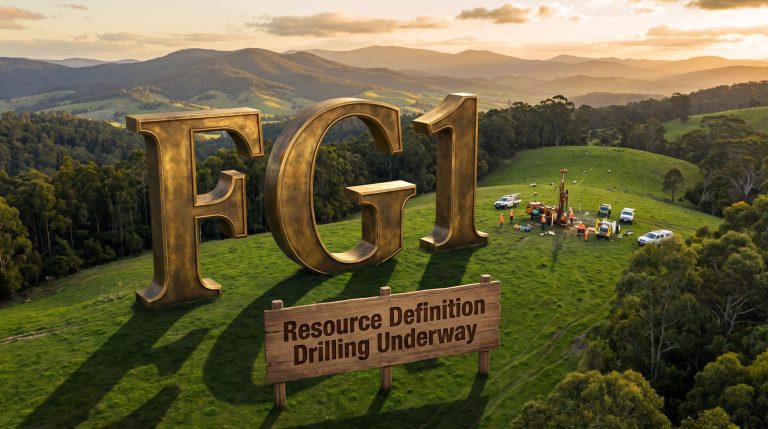
Great Southern Mining Mt Dillon diamond drilling at Edinburgh Park Queensland marks a significant milestone for ASX-listed Great Southern Mining (ASX: GSN), which has announced the commencement of diamond drilling at the Mt Dillon target within its Edinburgh Park Project in northern Queensland. The program represents the first drill test of what the company has identified as its highest-priority target within the project area to date.
The initial program will comprise up to 1,300 metres of diamond drilling across two planned holes, designed to test geophysical and geochemical anomalies interpreted as consistent with a large intrusive-related gold system preserved beneath Mt Dillon's topographic high. Drilling is being managed and funded by G-Ex Resources Ltd, a wholly owned subsidiary of Gold Fields Ltd, under an earn-in arrangement in which Gold Fields can spend up to $15 million to earn a 75% interest in the project.
When big ASX news breaks, our subscribers know first
A Well-Established Gold Address in Northern Queensland
Edinburgh Park spans 1,447 square kilometres approximately 100 kilometres southeast of Townsville, positioning the project within a region long associated with large-scale gold mineralisation. According to the company, nearby deposits in the district include:
| Nearby Deposit | Approximate Resource |
|---|---|
| Ravenswood | ~10 Moz gold |
| Mt Leyshon | +3 Moz gold |
| Mt Carlton | ~2 Moz gold |
The company's exploration targets both high and low sulphidation epithermal gold-silver systems within the area's Permian volcanic geology, as well as porphyry gold-copper-molybdenum and intrusion-related gold mineralisation within the underlying Carboniferous basement rocks.
The Technical Case Behind Mt Dillon
The Mt Dillon target is supported by geophysical and geochemical work carried out over roughly two years, according to the ASX announcement.
Geophysical Signals Point to a Buried System
Induced polarisation (IP) surveys conducted in early 2025 by Planetary Geophysics Pty Ltd identified a suite of anomalies beneath Mt Dillon. Gradient array IP processing revealed a large-scale chargeability anomaly directly below the target, which the company has interpreted as potentially indicating sulphide minerals associated with a preserved intrusive system.
A 2D pole-dipole survey line across the anomaly confirmed a chargeable IP response approximately 200 to 300 metres below surface. Below this chargeable zone sits a resistivity anomaly, which the company has interpreted as potentially reflecting a zone of pervasive hydrothermal alteration within a porphyry system.
Two diamond drill holes have been designed to test the core of this target:
| Hole ID | Planned Depth | Dip | Azimuth |
|---|---|---|---|
| EDDDAD00015 | 575m | -45° | 80° |
| EDDDAD00016 | 700m | -45° | 55° |
Surface Geology Consistent with a Preserved Lithocap
Mt Dillon itself is a prominent topographic feature that the company has interpreted as a silicified lithocap. This is the upper, surface-proximal zone of a hydrothermal system, typically formed where mineral-rich fluids have altered and depleted the host rock over time.
Surface mapping at Mt Dillon has identified several square kilometres of intensely altered felsic volcanic rock, described as phyllic to advanced argillic in character, trending in a north to northeast direction. The lower-lying outlier zone displays strong clay-pyrite-silica alteration, with sulphide content (predominantly pyrite) reported at 3% to 10%.
Furthermore, the company notes that the mapped surface mineral assemblage is consistent with a high temperature (greater than 300°C), low-pH hydrothermal system — a signature typical of high sulphidation epithermal environments. Multi-element geochemical anomalism across bismuth, indium, molybdenum, lead, selenium, antimony, tungsten and tellurium has also been identified, which the company states is consistent with epithermal and/or intrusion-related systems.
Understanding Intrusive-Related Gold Systems
What Is an Intrusive-Related Gold System?
An intrusive-related gold system forms when gold and other metals are carried by hot, mineral-rich fluids released from cooling magmatic intrusions deep within the crust. As these fluids move upward and outward, they can deposit metals along structural pathways and within suitable host rocks.
The uppermost zone of such a system, known as a lithocap, is typically depleted of the most mobile metals and heavily altered by acidic fluids near surface. Deeper portions of the same system, however, can host more significant concentrations of gold, copper and other metals.
Why Is This Relevant to Exploration Investors?
Several large copper-gold deposits globally have been discovered beneath surface lithocaps that initially appeared unremarkable at surface. A preserved lithocap, such as the one interpreted at Mt Dillon, can act as a geological indicator pointing toward a potentially larger system at depth.
Consequently, the company has referenced the following global examples as illustrative of the scale such systems can reach:
| Global Analogue | Operator | Copper | Gold |
|---|---|---|---|
| Quebradona, Colombia | AngloGold Ashanti | 4.26 Mt Cu | 7.0 Moz |
| Valeriano, Chile | ATEX Resources | 7.1 Mt Cu | 9.6 Moz |
| Lepanto/Far Southeast, Philippines | Lepanto Consolidated Mining | +4.5 Mt Cu | +20 Moz |
These examples are not presented as direct comparisons to Edinburgh Park but are cited by the company to illustrate the type of discovery that lithocap-hosted systems have delivered elsewhere when drill tested.
Managing Director Matthew Keane commented: "This is an exciting chapter for the Edinburgh Park Project, with Mt Dillon representing the highest-priority target defined to date. The Mt Dillon target contains a number of compelling attributes including shallow IP anomalism below a preserved lithocap and multi-element anomalism which is consistent with epithermal and/or intrusion-related systems. The scale and prospectivity of the Edinburgh Park Project are expected to generate numerous targets beyond Mt Dillon. Further geochemical and geophysical surveys through 2026/2027 will generate the next wave of drill targets."
Gold Fields Earn-In Structure and Implications for GSN Shareholders
The involvement of Gold Fields Ltd as the funding and operating party is a structurally significant element of this announcement. Under the binding Option and Joint Venture Agreement entered into in October 2023, G-Ex Resources Ltd can spend up to $15 million to earn a 75% interest in Edinburgh Park.
Several implications arise for GSN shareholders under this structure:
- No direct cost exposure: Drilling and exploration expenditure at Edinburgh Park is being funded by Gold Fields, meaning GSN does not bear the financial cost of the current program
- Technical validation: A major gold producer committing exploration capital toward a junior's project may be viewed as an indicator of technical interest in the target, though this should not be interpreted as a guarantee of discovery
- Retained interest: GSN would retain a 25% interest in the project should Gold Fields complete the full earn-in commitment
According to the announcement, the current drilling program is expected to take four to six weeks to complete.
Exploration Activities Planned Beyond the Current Program
Mt Dillon represents the first target tested within a broader exploration campaign planned across Edinburgh Park's 1,447 square kilometre tenure package. In addition to the current program, the company has outlined the following activities as part of its ongoing work program:
- Additional IP surveys to further delineate subsurface anomalies across the wider project area
- Ground gravity surveys intended to complement existing IP data and refine structural interpretations
- Ongoing surface geochemical sampling and geological mapping aimed at generating further drill targets
- Assay results from the current diamond drilling program, to be released once received and interpreted
- Further drill targeting through 2026 and 2027, with the Managing Director noting the project's scale is expected to generate additional targets beyond Mt Dillon
Investment Considerations
The current drilling program is being conducted at no direct cost to Great Southern Mining, with all exploration expenditure carried by a subsidiary of Gold Fields under the terms of the earn-in agreement. This arrangement allows the company to test a technically supported target without requiring additional capital raising from shareholders.
The Mt Dillon target is, furthermore, underpinned by a combination of IP geophysics, surface alteration mapping and multi-element geochemical results, rather than being an early-stage speculative target. The project's location within a northern Queensland gold belt hosting several multi-million-ounce deposits provides additional geological context for the exploration program.
Key Takeaway: Great Southern Mining Mt Dillon diamond drilling at Edinburgh Park Queensland is now fully underway, with the company identifying Mt Dillon as its highest priority within the project. The program is fully funded by a Gold Fields subsidiary under a structured earn-in arrangement worth up to $15 million, with results anticipated once drilling and assay work is complete. Additional geophysical surveys and drill targeting are planned to continue through 2026 and 2027.
The next major ASX story will hit our subscribers first
Glossary of Key Terms
Chargeability anomaly: A geophysical signature detected by IP surveys indicating the presence of electrically chargeable minerals, often sulphides, in the subsurface.
Resistivity anomaly: A geophysical measurement indicating how strongly subsurface material resists electrical current, with low resistivity zones sometimes indicating hydrothermal alteration.
Induced Polarisation (IP) survey: A geophysical technique measuring the capacity of subsurface rocks to retain an electrical charge, used to detect sulphide minerals at depth without drilling.
Lithocap: The uppermost zone of a hydrothermal system, characterised by intense acid alteration and metal depletion, often found above porphyry or epithermal deposits at depth.
Intrusive-Related Gold System (IRGS): A class of gold deposit linked to the intrusion of magmatic bodies into the crust, with metals transported by hydrothermal fluids expelled from cooling intrusions.
Earn-in agreement: A joint venture structure where one party acquires a project interest by funding agreed exploration or development expenditure over time.
Epithermal system: A mineral deposit type formed at shallow depths from relatively low-temperature hydrothermal fluids, often associated with volcanic environments and capable of hosting gold and silver mineralisation.
Porphyry system: A large-tonnage deposit type associated with igneous intrusions, representing a major global source of copper and a significant source of gold and molybdenum.
Want to Know More About Great Southern Mining's Edinburgh Park Project?
Great Southern Mining (ASX: GSN) is advancing what could be a significant intrusive-related gold discovery in northern Queensland, backed by up to $15 million in earn-in funding from a Gold Fields subsidiary — all at no direct cost to shareholders. With diamond drilling now underway at the high-priority Mt Dillon target and further geophysical surveys and drill programmes planned through 2026 and 2027, investors seeking exposure to a technically supported, major-company-backed gold exploration story may want to take a closer look. Visit gsml.com.au to learn more about the company, the Edinburgh Park Project, and what lies ahead.