What Drives Multi-Million Dollar Commodity Transportation Decisions?
Multi-million dollar commodity moves are driven by a complex interplay of logistics cost modeling, competitive rent structures, and strategic inventory positioning. Institutions like Citigroup analyze per-ton transportation expenses against the opportunity cost of missing favourable storage revenue or market access. A typical cost-benefit analysis calculates whether the Citigroup lead transport costs—which, in large-scale moves, should remain below 5-10% of the underlying metal value—can be justified against potential gains from alternative storage or higher yield rent deals elsewhere.
Furthermore, tariffs impact investment decisions in commodity markets, particularly when evaluating cross-border storage options. Risk factors in warehouse location selection include:
- Creditworthiness and consistency of the warehouse operator
- Political and regulatory assurance in the storage jurisdiction
- Proximity to key markets and major consumers
- Logistics hub connectivity for ease of both import and re-export
- Insurance premiums and liability structure
Strategic timing for moving commodity stocks often aligns with periods of warehouse ownership changes, local capacity constraints, or shifting regional demand profiles. In circumstances where operational control of a storage facility changes hands, as it did with Grafton Logistics' acquisition, many institutions reassess arrangements to protect the rent share and asset security.
Singapore's Role as a Regional Metal Storage Hub
Singapore is a global metals logistics centrepiece, in part due to its large number of London Metal Exchange (LME)-approved warehouses. The infrastructure advantage comes from world-class port facilities, robust regulation, and ready access to both Southeast and East Asian manufacturing zones.
Key benefits Singapore offers:
- LME-approved facilities subject to rigorous compliance, including ISO 9001:2015 certification and advanced security protocols
- Direct shipping access to Asian industrial markets
- High-quality storage, handling, and third-party audit standards
However, Singapore faces limitations—its warehouse capacity utilisation often hovers above 90%, pushing up costs and making it difficult for larger metal owners to secure premium space. Intense demand from traders can lead to ongoing competition for favoured storage locations, particularly among lead and zinc market participants.
How Do LME Warehouse Rental Agreements Impact Storage Strategies?
Revenue-Sharing Models in Commodity Storage
A critical driver behind storage choice is not merely the fee structure, but the sharing of rental income between warehouse operators and metal depositors. Under LME norms, metal owners typically receive between 35% and 65% of gross rent earned, incentivising them to keep inventory in storage during periods of oversupply or market stagnation.
For large financial players, optimal strategies involve repeatedly cycling metals through various hubs, targeting facilities and jurisdictions that yield superior rent arrangements. In environments where rent premiums are high and capacity is constrained, the value of these schemes can be especially lucrative, thus factoring heavily into storage location decisions.
Moreover, the US‑China trade war impact has created additional volatility in regional storage demand patterns, affecting rental yields across different Asian hubs.
The Grafton Logistics Acquisition Effect
When commodity trader Trafigura acquired Grafton Logistics, a major warehouse operator, previous rent agreements and operational assumptions were upended. Such ownership consolidation can reset contractual terms and threaten existing rent-sharing models, creating the impetus for an immediate repositioning of assets.
This scenario typically leads to increased scrutiny of operator risk, renegotiation of terms, or outright relocation to alternative facilities perceived as more reliable or profitable. The trend toward market consolidation among warehouse operators means fewer choices for major banks, potentially reducing negotiating power and incentivising moves to regions with more fragmented provider competition.
Breaking Down the $5 Million Transportation Cost Structure
Free-On-Truck (FOT) Fee Analysis
A central component of Citigroup lead transport costs is the Free-On-Truck (FOT) fee, which applies at each segment of the metal's logistical journey. The FOT fee structure is summarised as follows:
| Location | FOT Cost per Ton | Currency | USD Equivalent |
|---|---|---|---|
| Singapore (withdrawal) | S$68.50 | SGD | ~$53 |
| Malaysia (delivery) | 162.50 ringgit | MYR | ~$39 |
| Taiwan (delivery) | T$1,455 | TWD | ~$46 |
Withdrawals from Singapore incur a ~$53/ton charge, while deliveries to Malaysia and Taiwan result in credits of ~$39/ton and ~$46/ton respectively. This offset mechanism is vital, as it allows a netting of outflow and inflow costs, effectively reducing the headline move expense.
Shipping and Handling Cost Breakdown
International transport costs for lead, particularly in bulk quantities, are influenced by several factors. Consequently, effective market volatility hedging becomes essential when managing these cost fluctuations:
- Freight rates, ranging $40-50 per ton from Singapore to Malaysia or Taiwan
- Loading and unloading fees at origin and destination
- Marine insurance, often 0.5-1.5% of the shipment value to cover losses or damage
- Documentation and regulatory compliance, totalling several thousand dollars per shipment
Large, dense shipments of lead generally leverage bulk carriers or container lines, optimising economy of scale and transit efficiency across regional routes.
Total Cost Calculation for 88,000 Tons
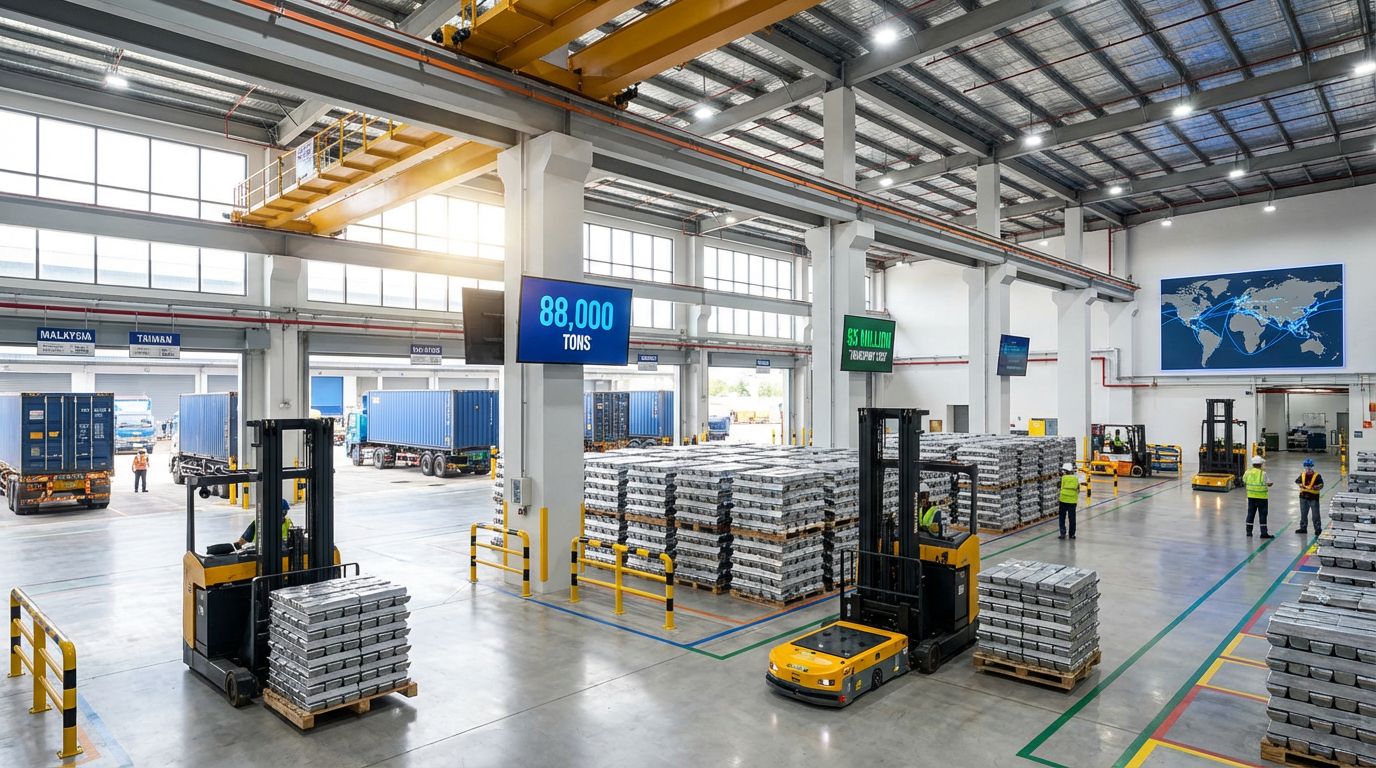
The mathematics of Citigroup lead transport costs, based on moving 88,000 tons, are summarised as:
- FOT net expense can total between $1.2 and $1.4 million after delivery credits
- Shipping and handling: $3.5 to $4.4 million
- Insurance and documentation: $0.6 to $1.5 million+
- Overall, the total cost falls in the $5-7 million range, representing around 2.5-3% of the total metal value at prevailing lead prices
This percentage aligns with institutional norms—moves are typically justified when costs are less than 3-4% of value, ensuring the operation is economically rational.
Why Are Financial Institutions Moving Away from Singapore Storage?
Storage Space Limitations in Key Asian Hubs
Singapore's storage market is often at or near full capacity, particularly for LME-approved inventory. With warehouse utilisation exceeding 90% at times, institutions frequently encounter either prohibitive fees or logistical inflexibility. Besides cost, the scarcity of available space has occasionally led to rationing or the need for pre-committed contracts even for spot storage.
The situation is further complicated by the rising demand for rent-yielding battery metals, leaving big players in a race for prime slots in preferred facilities. Additionally, industry evolution trends are reshaping storage requirements as new technologies emerge.
Alternative Storage Destinations: Malaysia vs Taiwan
With Singapore's premium and constrained, Malaysia and Taiwan emerge as practical alternatives. Their comparative advantages for lead storage include:
- Generally lower FOT and warehouse fees
- Sufficient storage capacity to absorb large inflows
- Reachability to downstream battery, electronic, and automotive manufacturing bases
- Regulatory regimes that facilitate international banking operations and frequently update LME accreditation
Malaysia is favoured for quick regional redeployment, supported by high port throughput. Taiwan, on the other hand, provides slightly higher delivery credits, making it attractive for maximising net receipts on bulk moves while also serving its significant electronics manufacturing sector.
What This Reveals About Global Lead Market Dynamics
Battery Metal Storage Trends
Lead's dominance in automotive and backup energy storage applications makes it particularly attractive for stockpiling by inventories seeking resilience against supply chain shocks or expected demand surges. The ability to nimbly shift metal between regional hubs allows for rapid reallocation in response to both economic incentives and market disruptions.
Strategic stockpiling by major banks and traders has become increasingly important as electrification accelerates, placing new demands on reliable access to lead for battery production. Furthermore, Reuters analysis indicates that such strategic repositioning reflects broader institutional risk management approaches.
LME Warehouse System Evolution
The evolution of the LME warehouse model has reshaped how and where inventory is stored. There is an identifiable trend toward:
- Consolidation among warehouse operators, reducing geographic fragmentation
- Increasing regulatory oversight and standardisation in warehousing and logistics
- Volatility in regional rent dynamics as market power concentrates
This evolution impacts regional pricing and availability of metals, with imbalances between storage concentration and downstream demand occasionally leading to localised surpluses or deficits.
Strategic Implications for Commodity Trading Operations
Risk Management in Physical Metal Holdings
Mitigating logistics and storage risk requires diversification—spreading holdings among multiple regions prevents exposure to single-jurisdiction regulatory or operational changes. Financial institutions also hedge against transportation and rental cost volatility by locking in favourable rates in advance, or by developing flexible contracts with logistics partners to swap, move, or liquidate inventory on short notice.
Operational flexibility gives traders and institutions an edge in capitalising on arbitrage or shielding themselves from systemic shocks, such as port blockades or sudden warehouse closures. In addition, haulage operations safety protocols must be maintained throughout these transitions.
Future Considerations for Large-Scale Metal Storage
Emerging storage hubs in Southeast Asia and broader Asia-Pacific are increasingly integrated with digital warehouse management, offering real-time monitoring, better compliance, and data analytics to optimise inventory flow. Sustainability considerations, such as green shipping and energy-efficient storage, are also gaining prominence as environmental, social, and governance (ESG) criteria influence investment and trading decisions.
Lessons for Commodity Market Participants
Cost-Benefit Framework for Storage Decisions
When evaluating relocation opportunities, commodity specialists typically adopt a quantitative, scenario-based model that incorporates:
- Direct costs (FOT, shipping, insurance, regulatory/deposit fees)
- Rental yield outlooks under different scenarios
- Opportunity costs of lost trading days during transfer
- Sensitivity analysis to commodity price changes
Short-term tactical moves are weighed against long-term storage revenue, ensuring alignment with broader portfolio and liquidity needs.
What Should Investors Monitor in Warehouse Markets?
Participants must keep close watch on several key developments. However, understanding Citigroup lead transport costs requires monitoring broader market indicators:
- LME warehouse rate card updates and quarterly FOT changes
- Ownership consolidation among logistics providers
- Regional capacity changes due to policy or infrastructure investments
Proactive relationship-building with warehouse operators and logistics providers is vital, as is contingency planning for disruptions such as sudden regulatory shifts or market shocks.
Disclaimer: This article discusses past scenarios, technical frameworks, and potential strategies in metal logistics. Readers should note that specific cost figures and market arrangements may fluctuate based on real-world conditions and are subject to change. Forecasts and projections involve uncertainty; always conduct due diligence before making financial decisions in the commodity trading sector.
Looking for the Next Multi-Million Dollar Commodity Discovery?
Discovery Alert's proprietary Discovery IQ model delivers real-time notifications on significant ASX mineral discoveries, instantly transforming complex mining data into actionable trading opportunities. Experience why major discoveries can generate exceptional returns by exploring historic discovery outcomes and begin your 30-day free trial today to position yourself ahead of the market.