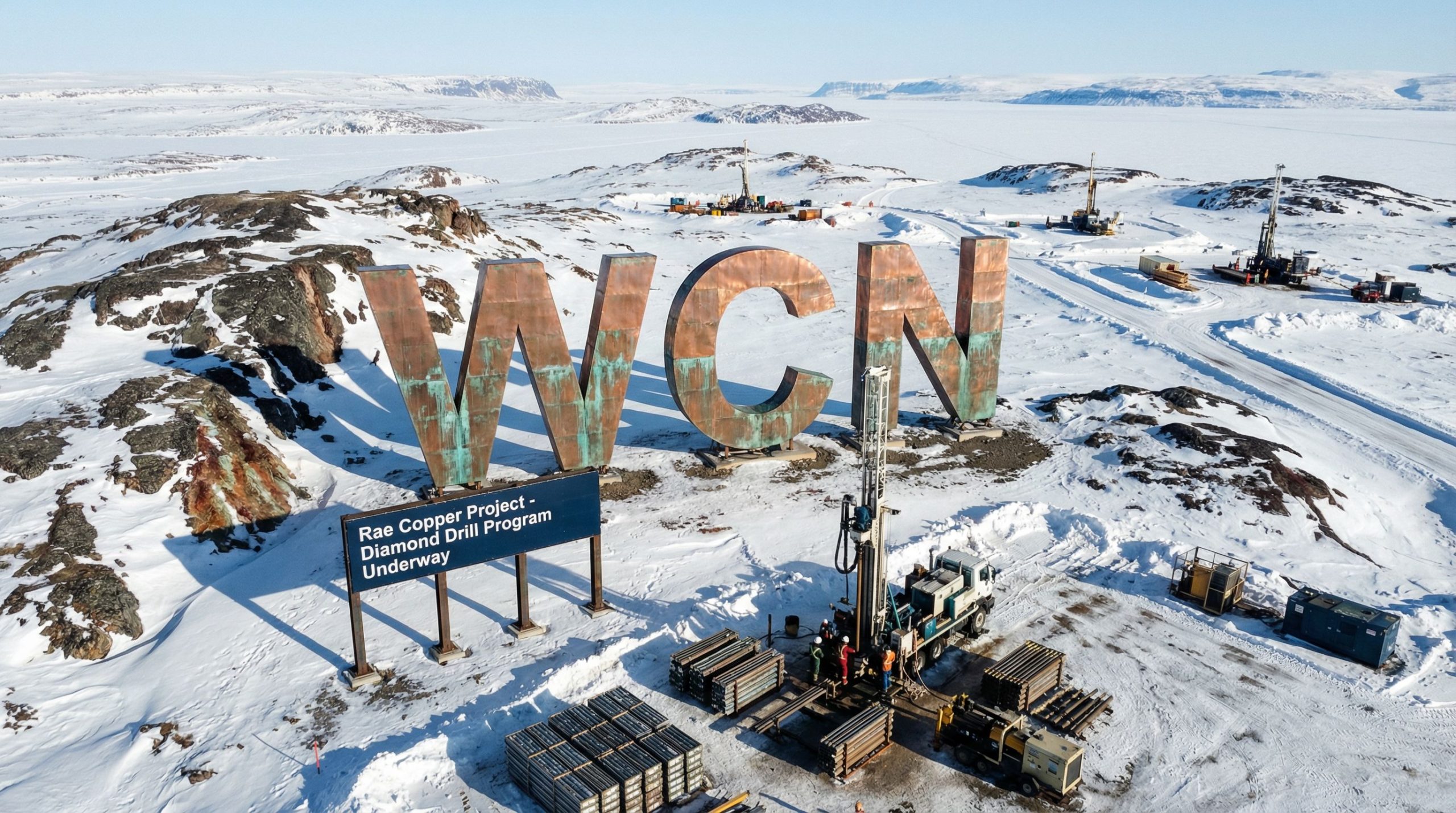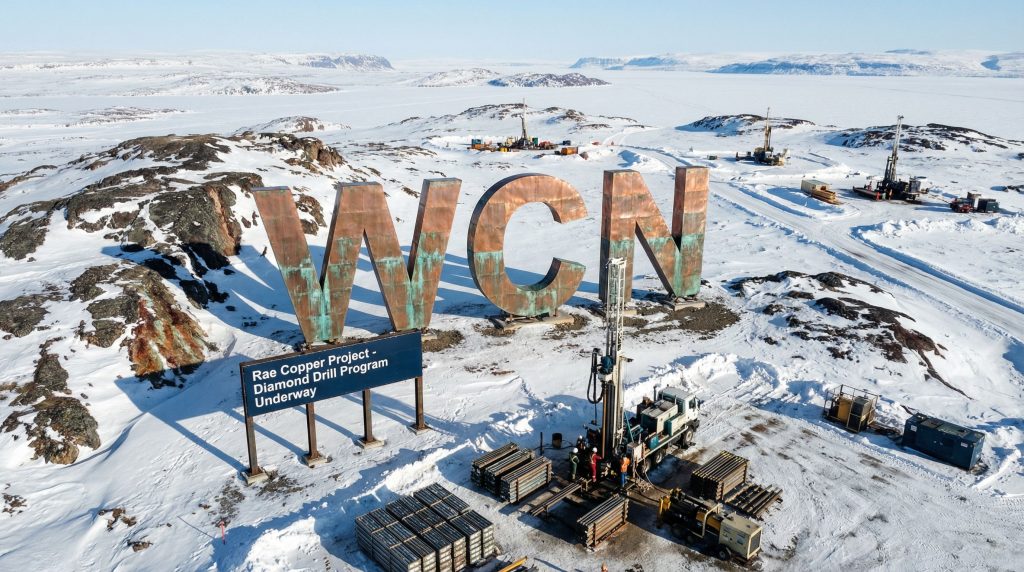
The White Cliff Minerals Canadian drilling campaign represents one of the most significant copper exploration programmes set to unfold in 2026, as the company mobilises resources for an ambitious expansion of its breakthrough sediment-hosted copper discovery. With the first supply flight successfully landing at the remote Rae Copper Project in Nunavut, Canada, drilling operations are poised to commence within weeks, marking a pivotal moment for the company's exploration strategy.
Camp Restart Signals Ambitious Drilling Programme
White Cliff's local partner Aurora Geosciences has successfully delivered drilling consumables and camp supplies to the Rae project site, with camp restart now fully underway. The systematic approach reflects the company's commitment to expanding upon its 2025 breakthrough discovery of high-grade sediment-hosted copper mineralisation.
Key 2026 Drilling Timeline:
- RC drilling at Danvers: Commencing in coming weeks
- Diamond drilling of sedimentary targets: Beginning approximately 4 weeks after RC drilling starts
- Target area: 8km Teshierpi Fault Zone expansion
- Initial focus: Stark-Hulk basin covering 60km² within broader 100km² target area
The phased approach allows White Cliff to systematically test both volcanic-hosted copper at Danvers and the newly identified sediment-hosted copper system. Furthermore, this methodology ensures optimal resource allocation whilst maximising discovery potential across multiple target areas.
When big ASX news breaks, our subscribers know first
High-Grade Discovery Validates Exploration Strategy
The company's confidence stems from 2025 drilling success at Stark, which confirmed high-grade copper mineralisation with 3.5m @ 7.2% Cu within a broader intercept of 12m @ 2.45% Cu from 287m depth. This discovery validated White Cliff's basin-hosted copper exploration model and identified 4.3km of north-south strike along the Herb Dixon Fault.
Managing Director Troy Whittaker commented:
"Initial drilling at Stark confirmed a high-grade sedimentary-hosted copper discovery, highlighted by 3.5m at 7.2% Cu within 12m at 2.45% Cu from 287m, validating the Company's basin-hosted copper exploration model. These results have identified a large, untested conductive anomaly, significantly refining the search space and delivering a high-priority drill target for 2026."
Geological investigation indicates the mineralisation is associated with major basin-scale structures, particularly the Herb Dixon Fault, interpreted as a key conduit for copper-bearing hydrothermal fluids. In addition, this structural control provides valuable insight into potential target areas for future exploration phases.
Understanding Sediment-Hosted Copper Deposits
What are sediment-hosted copper deposits?
Sediment-hosted copper deposits represent one of the world's most significant sources of copper, including famous districts like the Central African Copperbelt and European Kupferschiefer. These deposits form when copper-bearing fluids migrate through sedimentary basins, depositing copper sulfides at favourable geological interfaces.
Key characteristics:
- Formation at redox boundaries between different rock types
- Association with major structural corridors (faults)
- Potential for large, continuous mineralised zones
- Often contain significant silver by-products
Why this matters for investors
Sediment-hosted copper deposits can host substantial tonnages at economic grades, making them highly attractive exploration targets in today's copper supply-constrained market. These systems typically demonstrate excellent continuity and scale potential, offering the prospect of developing significant resources from successful exploration programmes.
The discovery at Stark demonstrates classic sediment-hosted copper characteristics, with pyrite within the sediments replaced by chalcopyrite. Additional chalcopyrite disseminated within the sediments, and crosscutting veinlets. Consequently, later quartz-calcite-chalcopyrite veins crossed both the basement and Rae Group sediments, indicating multiple episodes of copper mineralisation.
Extensive Geophysical Foundation Supports 2026 Programme
White Cliff has built a comprehensive geophysical database to guide its 2026 drilling efforts. However, the company's systematic approach to data collection ensures maximum confidence in target selection and drilling programme design.
Completed Surveys:
- 2,427 line-km MobileMT airborne geophysics (2024)
- 177 line-km drone-based mobile Magneto-Telluric survey (2025)
- Helicopter-borne electromagnetic/magnetic survey (2025)
The integrated geophysical datasets have identified extensive prospective sedimentary horizons across the Rae Basin. Furthermore, these surveys revealed multiple untested targets showing significant strike potential for sedimentary-hosted copper mineralisation.
Critical Discovery: The surveys revealed a large, untested conductive anomaly adjacent to the 2025 discovery area. For instance, this represents a high-priority target that could indicate greater sulphide concentrations within the basin.
Strategic Drilling Approach Targets Scale and Grade
The White Cliff Minerals Canadian drilling campaign employs a systematic approach designed to define the scale, continuity, and grade potential of what appears to be a major copper system:
Phase 1: Regional Expansion
- Wide-spaced drilling grid to test extensions east and north of known mineralisation
- Targeting the untested electromagnetic conductivity signature
- Focus on Stark-Hulk sub-basin systematic evaluation
Phase 2: Follow-up
- Infill drilling of any significant mineralisation
- Regional drilling along NW trending Rae Group unconformity
- Testing multiple high-priority targets identified to date
Target Rationale:
The strategy recognises that sediment-hosted copper exploration typically requires wide-spaced drilling to delineate mineralisation extremities. Subsequently, systematic infill follows to define grade and tonnage potential. The electromagnetic signature located in an untested part of the basin is a priority target, as it is adjacent to an area of drill confirmed mineralisation and may represent a greater concentration of connected sulphide minerals.
| Survey Type | Coverage | Year | Key Findings |
|---|---|---|---|
| MobileMT Airborne | 2,427 line-km | 2024 | Regional conductivity mapping |
| MobileMTd Drone | 177 line-km | 2025 | High-resolution target definition |
| HeliTEM | Multiple lines | 2025 | Untested conductivity anomaly identified |
Strong Asset Foundation Supports Growth Strategy
White Cliff brings significant advantages to its Canadian copper exploration programme. In addition, the company's strong asset base provides multiple pathways for value creation beyond the immediate drilling targets.
Rae Copper Project Scale:
- 93 mineral claims and 1 mineral lease
- 1,228 km² total area coverage
- Historic resource estimate: 4.16 million tons @ 2.96% Cu at Danvers
- Outstanding drill results: Including 175m @ 2.5% Cu & 8.66g/t Ag
Strategic Location Benefits
The Great Bear Lake area is identified as having Canada's highest probability for hosting iron-oxide-copper-gold-uranium-silver style mineralisation. Consequently, this provides significant exploration upside beyond the current focus areas.
Operational Readiness:
- Type B water licence from Nunavut Water Board
- Class A Land Use Permit for drilling operations
- Permission from Kitikmeot Inuit Association
- Established partnership with Aurora Geosciences
Key Technical Details:
The sediment-hosted copper mineralisation discovered at Stark occurs at the base of the Rae Group at a redox boundary with the underlying Husky Creek Formation basalts and red-bed sediments. This geological setting is analogous to world-class sediment-hosted copper districts globally.
Investment Thesis: Positioning for Copper Supply Shortage
White Cliff Minerals presents a compelling investment opportunity as global copper markets face mounting supply constraints. Furthermore, the White Cliff Minerals Canadian drilling campaign is positioned to capitalise on increasing copper demand driven by electrification trends.
Unique Value Proposition
- Proven Discovery: High-grade sediment-hosted copper confirmed at Stark
- Systematic Approach: Comprehensive geophysical foundation guiding drilling
- Scale Potential: Large basin system with multiple untested targets
- Strategic Location: Premier Canadian copper jurisdiction
- Operational Momentum: Successfully mobilised for immediate drilling
Market Context:
With copper demand driven by electrification and renewable energy infrastructure, companies with quality projects in stable jurisdictions command premium valuations. White Cliff's combination of discovery success and systematic expansion strategy positions it advantageously in this environment.
Near-term Catalysts:
- Q1 2026: RC drilling results from Danvers expansion
- Q2 2026: Diamond drilling results from priority sedimentary targets
- Ongoing: Systematic testing of 60km² initial target area
The company's ability to execute drilling programmes in challenging remote locations demonstrates operational excellence. Moreover, the technical expertise shown through its comprehensive geophysical approach provides confidence in programme delivery and results quality.
The next major ASX story will hit our subscribers first
Why Investors Should Follow White Cliff Minerals
The company's methodical approach to copper exploration, backed by strong geological foundations and comprehensive geophysical datasets, sets it apart in the junior exploration space. The successful 2025 discovery at Stark represents proof-of-concept for a potentially major sediment-hosted copper system.
Key Differentiators:
- Technical Excellence: Systematic, geophysically-guided exploration
- Discovery Track Record: High-grade copper confirmed in initial drilling
- Scale Potential: Large basin system with multiple targets
- Jurisdictional Advantage: Stable Canadian mining environment
- Operational Capability: Proven ability to execute remote drilling programmes
The successful mobilisation to the Rae project marks the beginning of what could be a defining year for White Cliff Minerals. As the White Cliff Minerals Canadian drilling campaign systematically tests one of Canada's most prospective copper exploration opportunities, investors can expect regular newsflow throughout the programme.
With drilling set to commence within weeks and a clear strategy for testing both volcanic-hosted and sediment-hosted copper targets, the company works to expand its high-grade discovery. Furthermore, White Cliff aims to define the broader potential of the Rae Basin copper system through this comprehensive approach.
Work undertaken by the company's consultants over the Australian summer period has identified extensive prospective sedimentary horizons across the Rae Basin. However, the initial target at the Stark-Hulk basin represents just the beginning of a much larger exploration opportunity.
The systematic approach to testing extensions east and north of known mineralisation provides multiple pathways for discovery success. In addition, regional drilling along the NW trending Rae Group unconformity offers further potential for significant finds in the coming drilling season. Consequently, the White Cliff Minerals Canadian drilling campaign represents a compelling opportunity for investors seeking exposure to quality copper exploration in a premier jurisdiction.
Could White Cliff's 2026 Drilling Campaign Redefine Canada's Copper Landscape?
With drilling operations set to commence within weeks at the Rae Copper Project and a systematic approach targeting multiple high-priority sedimentary-hosted copper targets across 60km², White Cliff Minerals is positioning itself at the forefront of Canadian copper exploration. The company's proven discovery track record, comprehensive geophysical foundation, and operational excellence in challenging remote locations present a compelling investment proposition as global copper markets face mounting supply constraints. To explore how White Cliff's methodical expansion of its breakthrough copper discovery could impact your investment portfolio, and to access detailed project information, technical data, and corporate updates, visit the White Cliff Minerals website for comprehensive investor resources and the latest developments from this transformative drilling campaign.