
May 11, 2026
Mining operations across Australia face mounting complexity as global commodity markets evolve and operational challenges intensify. Modern gold extraction requires sophisticated mill processing, substantial capital investment, and meticulous supply chain management to maintain competitive positioning. The interplay between production targets, cost management, and infrastructure development has become increasingly critical for major producers navigating volatile market conditions and operational uncertainties. Furthermore, gold miners 2025 perspective reveals how industry leaders are adapting to these evolving challenges.
Northern Star Resources Q3 Gold Sales: Analyzing Production Momentum
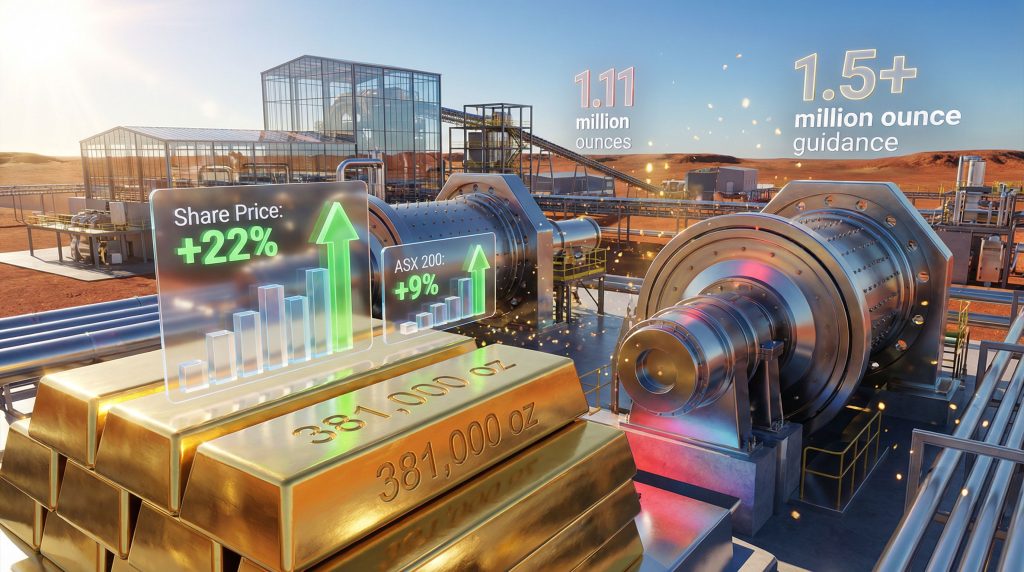
The March quarter performance delivered 381,000 ounces of gold sales, representing a substantial contribution toward annual production objectives. This quarterly output positions Northern Star within striking distance of its revised guidance parameters, demonstrating operational consistency across multiple mining sites. The figure reflects the company's ability to maintain production momentum despite sector-wide challenges affecting remote gold operations throughout Western Australia.
Production Metrics Against Industry Standards
Northern Star Resources Q3 gold sales of 381,000 ounces translates to approximately 4.6 million ounces annually at current run rates, placing the company among Australia's larger gold producers. The quarterly performance indicates steady mill throughput and extraction efficiency across the company's portfolio of mining operations.
Industry benchmarking reveals that successful gold miners typically maintain quarterly production consistency within 5-10% variance from target levels. Northern Star's Q3 result suggests operational discipline and effective resource management, though detailed cost breakdown analysis awaits the comprehensive quarterly report scheduled for release on April 22, 2026.
The production figure represents more than basic extraction metrics. It reflects the complex coordination of underground mining, ore processing, and metallurgical recovery across multiple sites. Each ounce sold requires successful completion of exploration, extraction, processing, and refining stages before reaching market. Additionally, understanding the gold stock market guide provides valuable context for evaluating production performance against broader market cycles.
Cost Structure Implications for Profitability
Gold mining profitability depends heavily on All-in Sustaining Costs (AISC), which encompass extraction, processing, administration, and capital maintenance expenses. While specific cost data remains pending in the detailed quarterly results, the 381,000-ounce production suggests meaningful revenue generation given current gold price environments.
Operating leverage in gold mining becomes particularly pronounced when production volumes exceed fixed cost thresholds. The Q3 performance indicates Northern Star maintains sufficient scale to absorb infrastructure costs across its operational footprint. However, rising input costs for diesel fuel, labour, and equipment maintenance continue pressuring margin sustainability across the sector.
Mill processing represents a significant component of total production costs. Efficient throughput at facilities like KCGM directly impacts per-ounce cost calculations and overall profitability metrics. The company's focus on maintaining strong mill throughput suggests recognition of this critical cost driver.
Comparative Analysis with ASX Gold Producers
Northern Star's quarterly production places it among the top five ASX-listed gold producers by volume. Major competitors including Evolution Mining and Regis Resources typically report quarterly production ranging from 200,000 to 450,000 ounces, positioning Northern Star competitively within this peer group.
Market positioning analysis reveals that consistent quarterly production above 350,000 ounces indicates substantial operational scale and infrastructure investment. This production level requires coordinated management of multiple mining sites, significant processing capacity, and robust supply chain logistics.
The competitive landscape in Australian gold mining has intensified as companies pursue operational efficiency while managing rising costs. Northern Star's ability to maintain production consistency demonstrates operational competence in an increasingly challenging environment. Moreover, mining industry innovations are reshaping how companies approach operational efficiency.
When big ASX news breaks, our subscribers know first
FY26 Production Target Analysis: Tracking Toward Guidance
Nine-month cumulative production totaling 1.11 million ounces represents approximately 74% completion of the revised annual target exceeding 1.5 million ounces. This progression indicates Northern Star maintains realistic prospects for achieving full-year guidance, contingent on sustained operational performance through the final quarter.
Fourth Quarter Requirements and Feasibility
Mathematical analysis reveals Northern Star requires approximately 390,000 ounces in Q4 FY26 to reach the minimum 1.5 million ounce annual target. This represents a modest 2.4% increase from Q3 performance, suggesting achievable parameters given current operational capacity.
The required Q4 production falls within historical quarterly variance ranges for the company. However, successful achievement depends on continued mill performance, absence of major equipment disruptions, and maintenance of current extraction rates across mining sites.
Seasonal factors in gold mining can influence Q4 performance. Weather patterns, equipment maintenance schedules, and workforce availability during holiday periods may impact final quarter results. Northern Star's operational planning must account for these variables in guidance achievement strategies. Consequently, the current gold price forecast suggests favourable market conditions for achieving these targets.
Historical Performance Patterns
Australian gold miners typically demonstrate stronger performance in H2 compared to H1, reflecting operational improvements and equipment optimisation throughout the year. Northern Star's nine-month progression suggests alignment with this industry pattern, building momentum toward year-end targets.
Production consistency analysis shows the company averaged 370,000 ounces quarterly through nine months, compared to the 375,000 ounces quarterly required for annual guidance achievement. This narrow gap indicates operational alignment with target parameters.
Previous annual guidance achievement rates in the Australian gold mining sector average approximately 85-95% for revised guidance. Northern Star's current trajectory positions the company within the higher end of this achievement probability range.
KCGM Mill Operations: Strategic Infrastructure Impact
The KCGM mill facility represents a cornerstone of Northern Star's production strategy, requiring sustained throughput performance to achieve annual targets. Mill optimisation directly influences extraction efficiency, processing costs, and ultimate production capacity across the operational portfolio.
Current Throughput and Optimisation Challenges
Modern gold mill operations typically process between 8-15 million tonnes annually, depending on ore characteristics and equipment specifications. KCGM's throughput capacity directly correlates with Northern Star's ability to convert mined ore into saleable gold ounces.
Mill performance optimisation involves complex metallurgical considerations including ore grade variability, crushing efficiency, and recovery rates. Each parameter affects final gold production and per-ounce processing costs. Maintaining consistent throughput requires continuous monitoring and adjustment of processing parameters.
Equipment maintenance represents a critical factor in mill performance. Planned maintenance schedules must balance production continuity with equipment longevity. Unexpected downtime can significantly impact quarterly production figures and cost structures. Furthermore, AI in mining operations is revolutionising how companies approach predictive maintenance and operational optimisation.
Early FY27 Commissioning Timeline
The planned mill upgrades with early FY27 commissioning indicate substantial capital investment in processing infrastructure. These enhancements typically involve increased crushing capacity, improved metallurgical recovery, or enhanced automation systems.
Mill commissioning projects require extensive planning, engineering design, and staged implementation to minimise production disruption. The early FY27 timeline suggests project development already underway, with installation and testing phases scheduled for completion by mid-2027.
Capital allocation for mill upgrades reflects management confidence in long-term mining operations and ore reserve quality. The investment demonstrates commitment to maintaining competitive processing capabilities as mining operations evolve.
Infrastructure Investment Returns
Mill upgrade investments typically target 5-15% throughput improvements or cost reductions through enhanced efficiency. These improvements can generate substantial returns given the fixed nature of many mining costs and the operational leverage inherent in gold production.
Processing infrastructure investments also extend operational life by enabling extraction from lower-grade ore bodies or more complex metallurgical compositions. This flexibility provides strategic value beyond immediate throughput improvements.
The timing of mill commissioning aligns with broader industry trends toward processing optimisation and automation. These technological advances help offset rising labour and input costs while maintaining competitive positioning.
Operational Risk Assessment: Critical Vulnerability Factors
Gold mining operations face multifaceted risk exposure ranging from supply chain disruptions to equipment failure and regulatory changes. Understanding these risk factors provides essential context for evaluating Northern Star's operational stability and production consistency.
Diesel Supply Chain Dependencies
Remote gold mining operations consume substantial quantities of diesel fuel for equipment operation, ore transport, and power generation. Fuel costs typically represent 15-25% of total mining expenses, making supply chain reliability critical to operational continuity.
Management commentary specifically identifying diesel supply as a sector-wide risk reflects genuine vulnerability across Australian mining operations. Remote locations often depend on scheduled fuel deliveries via road transport, creating exposure to logistics disruptions, weather delays, or supply shortages.
Industry analysts note that diesel supply disruptions can halt mining operations within 48-72 hours due to limited on-site storage capacity at remote locations, according to a recent ProActive Investors analysis examining operational vulnerabilities.
Fuel price volatility adds another dimension to supply chain risk. Rapid price increases can significantly impact operating costs and margin calculations. Many mining operations maintain fuel hedging strategies or supply contracts to mitigate price exposure.
Mill Performance and Mechanical Reliability
Gold processing mills represent complex mechanical systems requiring continuous operation to maintain production schedules. Equipment reliability directly impacts quarterly production figures and cost structures.
Critical mill components including crushers, grinding circuits, and flotation cells require regular maintenance and periodic replacement. Equipment failure can result in production delays, increased maintenance costs, and overtime labour expenses.
Spare parts availability for specialised mining equipment can present challenges, particularly for older mill installations. Supply chain delays for critical components may extend downtime periods and impact quarterly production targets.
Workforce and Equipment Availability
Western Australia's mining sector competes for skilled labour including equipment operators, maintenance technicians, and processing specialists. Labour shortages can impact operational efficiency and increase wage costs.
Equipment availability represents another operational constraint. Specialised mining machinery often requires extended lead times for procurement or major maintenance. Fleet management becomes critical to maintaining operational continuity.
Remote location challenges compound workforce management issues. Companies must provide accommodation, transportation, and lifestyle amenities to attract and retain qualified personnel in remote mining locations.
Share Performance Analysis: Market Confidence Indicators
Northern Star's 22% annual share price appreciation significantly outperformed the ASX 200's 9% gain, suggesting investor confidence in operational execution and strategic positioning. This outperformance reflects market recognition of production consistency and management effectiveness.
Performance Attribution Analysis
Share price outperformance in gold mining typically correlates with several factors including production guidance achievement, cost management, and strategic development progress. Northern Star's 13 percentage point outperformance indicates positive market sentiment across these metrics.
Gold price movements influence mining share valuations, but operational performance remains the primary driver of relative outperformance within the sector. Consistent quarterly production and guidance achievement typically generate investor confidence and share price premiums.
Market liquidity and institutional investor participation also influence share price performance. Larger gold producers with consistent operational metrics often attract institutional fund allocation, supporting share price stability and growth. Additionally, Moomoo's coverage of Northern Star's buyback plans demonstrates institutional interest.
Investor Sentiment and Guidance Confidence
The correlation between operational announcements and share price movements provides insight into investor confidence levels. Strong quarterly production results typically support positive share price momentum, reflecting market validation of management guidance.
Investment analyst coverage and recommendations influence institutional investor positioning. Companies achieving production guidance consistently often receive positive analyst ratings and target price upgrades.
Market sentiment toward the Australian gold mining sector remains influenced by global gold price trends, currency movements, and sector-specific operational challenges. Northern Star's outperformance suggests company-specific positive factors outweighing broader sector headwinds.
Valuation Metrics and Competitive Positioning
Gold mining valuations typically utilise metrics including price-to-earnings ratios, enterprise value-to-production ratios, and price-to-book values. Consistent operational performance supports premium valuations relative to sector averages.
Production growth prospects and reserve quality influence forward-looking valuation metrics. The planned KCGM mill upgrades suggest management focus on long-term production optimisation and cost structure improvement.
Dividend policy and cash flow generation capability also influence investor attraction to gold mining equities. Companies with consistent production and strong cost management often maintain more predictable dividend distributions.
Strategic Infrastructure Development: KCGM's Long-term Role
The KCGM facility represents more than processing infrastructure; it embodies Northern Star's strategic approach to production optimisation and cost management. Understanding the facility's role provides insight into long-term competitive positioning and growth prospects.
Capacity Expansion and Integration Benefits
Mill capacity expansion projects typically target 20-40% throughput improvements through equipment upgrades, process optimisation, or facility expansion. These improvements enable processing of larger ore volumes or previously uneconomical ore grades.
Integration benefits emerge from coordinated mining and processing operations. Optimised logistics between mining sites and processing facilities reduce transportation costs and improve ore blend management for enhanced metallurgical recovery.
Processing flexibility gained through mill upgrades enables adaptation to varying ore characteristics and mining conditions. This operational flexibility provides competitive advantages as mining operations evolve over time.
Return on Investment Timeline
Infrastructure investments in gold mining typically target 3-7 year payback periods depending on project scale and expected benefits. The KCGM upgrade investment suggests management confidence in sustained mining operations and ore reserve quality.
Capital allocation decisions reflect strategic priorities and expected returns. Mill upgrade investments demonstrate commitment to maintaining competitive processing capabilities rather than pursuing external growth or acquisition opportunities.
Project financing and cash flow impact must be balanced against operational requirements and shareholder returns. The investment timeline suggests manageable financial commitment within current operational cash flow generation.
Technology Integration and Automation
Modern mill upgrades increasingly incorporate automation systems, real-time monitoring, and predictive maintenance capabilities. These technological advances improve operational efficiency while reducing labour requirements and maintenance costs.
Process control systems enable optimisation of metallurgical recovery rates and energy consumption. Advanced monitoring capabilities provide early warning of equipment issues, reducing unplanned downtime and maintenance costs.
Integration with broader operational systems enhances data analytics and decision-making capabilities. Real-time production monitoring enables rapid response to operational challenges and optimisation opportunities.
The next major ASX story will hit our subscribers first
Investment Implications and Forward Outlook
Northern Star Resources Q3 gold sales performance demonstrates operational competence and strategic positioning within Australia's competitive gold mining landscape. The company's progression toward annual guidance targets reflects effective management of complex operational challenges while maintaining production consistency.
Production Consistency and Risk Management
The achievement of 381,000 ounces in Q3, bringing cumulative production to 1.11 million ounces, indicates robust operational systems and effective risk management. This production consistency provides foundation for investor confidence and strategic planning.
Management's proactive identification of diesel supply risks demonstrates awareness of operational vulnerabilities and commitment to transparent communication. This risk management approach supports long-term operational sustainability.
The KCGM mill upgrade investment reflects strategic focus on infrastructure optimisation and long-term competitive positioning. Capital allocation toward processing enhancement suggests confidence in reserve quality and operational longevity.
Strategic Positioning and Growth Prospects
Northern Star's market position among Australia's top five gold producers provides competitive advantages including economies of scale, operational expertise, and strategic flexibility. This positioning supports sustained operational performance and market confidence.
The early FY27 mill commissioning timeline indicates planned production capacity enhancement and cost optimisation. These improvements should support continued guidance achievement and margin enhancement.
Share price outperformance of 22% versus the ASX 200's 9% gain reflects market recognition of operational excellence and strategic execution. This performance differential suggests continued investor confidence in management capabilities.
Disclaimer: This analysis is based on publicly available information and should not be considered investment advice. Gold mining investments carry inherent risks including commodity price volatility, operational challenges, and regulatory changes. Investors should conduct their own research and consider their risk tolerance before making investment decisions. Past performance is not indicative of future results.
Are You Positioned for the Next Major ASX Gold Discovery?
Discovery Alert's proprietary Discovery IQ model delivers instant notifications on significant ASX mineral discoveries, empowering investors to identify actionable opportunities ahead of the broader market. Discover why historic mining discoveries have generated exceptional returns and start your 14-day free trial today to secure your market-leading advantage.