Understanding Nuclear Fuel Cycle Infrastructure in the Modern Era
Nuclear fuel production represents one of the most technically sophisticated industrial processes in the global energy sector, requiring decades of technological development and billions of dollars in specialised infrastructure investments. The separation of uranium isotopes through gas centrifuge technology forms the backbone of nuclear power generation worldwide, yet few understand the intricate engineering and geopolitical dynamics that govern this critical supply chain.
The physics of isotope separation operates on minute mass differences between uranium-235 and uranium-238 molecules, requiring precision engineering that pushes the boundaries of materials science and manufacturing capabilities. Modern gas centrifuges spin at over 1,000 revolutions per second within vacuum chambers, creating forces that exploit the 0.8% mass differential between fissile and non-fissile uranium isotopes to achieve the concentration levels necessary for reactor fuel production.
Russia's Strategic Position in Global Nuclear Fuel Markets
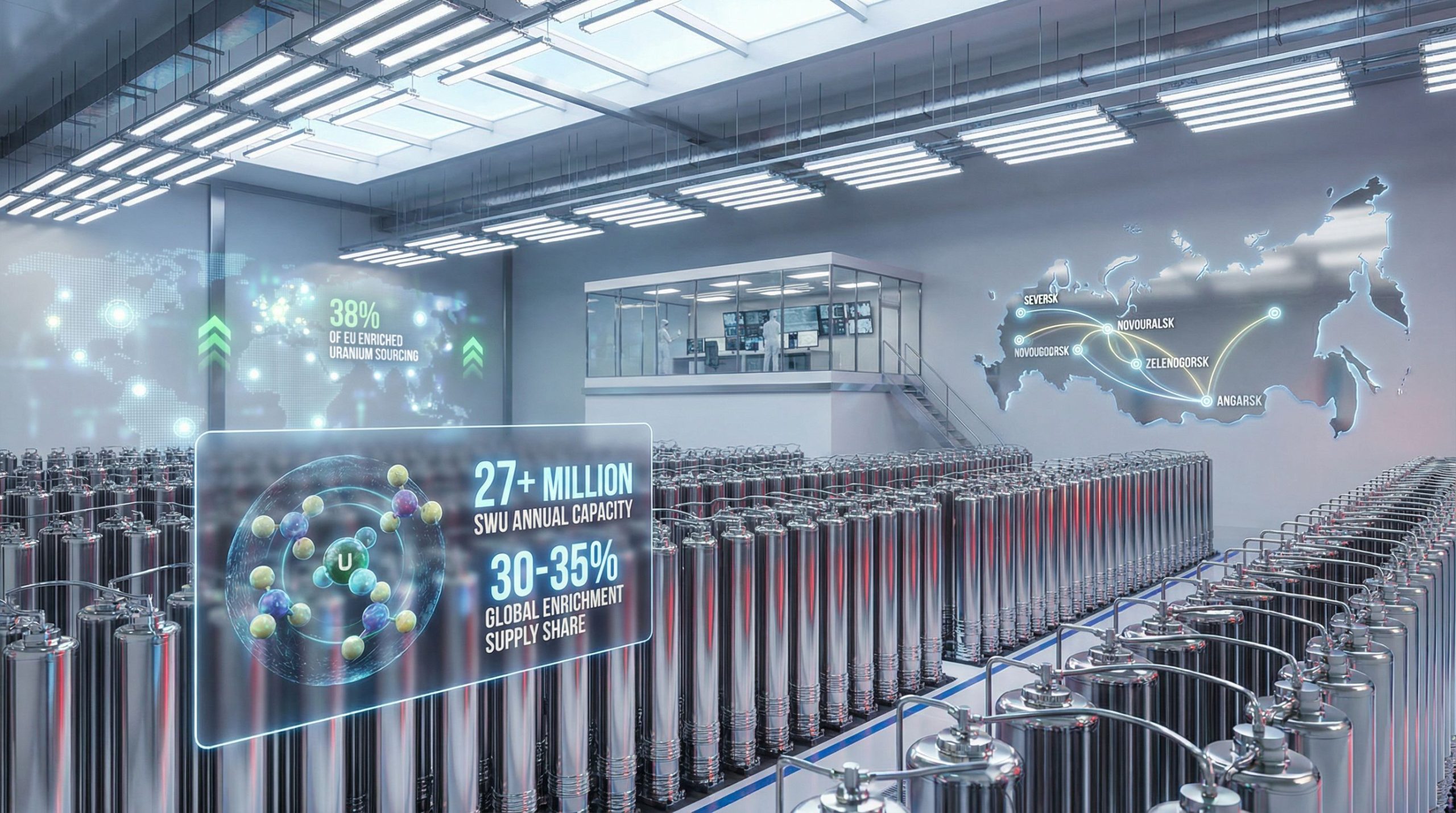
Russia's nuclear fuel infrastructure represents decades of strategic investment in isotope separation technology, with four major enrichment facilities operating under Rosatom's fuel division TVEL. This network has undergone systematic modernisation since 2018, with advanced 9+ generation gas centrifuges replacing older equipment to enhance operational efficiency and extend facility lifespans.
The upgrading of Russian uranium enrichment plant infrastructure follows a carefully orchestrated timeline designed to maintain continuous production while implementing technological improvements. Furthermore, uranium market volatility has increased pressure on facilities to optimise operations. Three of four facilities have already initiated or completed modernisation programs, with the most recent upgrade beginning at the Isotope Separation Plant in Seversk during December 2025.
Centrifuge Technology Evolution and Performance Metrics
Gas centrifuge generations represent significant leaps in separation efficiency, operational reliability, and maintenance requirements. The transition from earlier models to 9+ generation systems provides substantial improvements in uranium-235 concentration capabilities whilst reducing downtime and extending operational lifecycles to decades-long operation periods.
Modern centrifuges process uranium hexafluoride gas within precisely engineered rotors that maintain extreme rotational velocities under vacuum conditions. The separation mechanism relies on centrifugal force to concentrate heavier uranium-238 molecules toward the outer cylinder walls whilst lighter uranium-235 molecules accumulate toward the centre, enabling progressive enrichment through cascaded processing stages.
Key Technical Specifications:
- Natural uranium composition: 0.7% U-235, 99.3% U-238
- Standard reactor fuel enrichment: 3.5-5% U-235
- Advanced reactor requirements: Higher enrichment levels
- Operational speed: 1,000+ revolutions per second
- Operating medium: Uranium hexafluoride (UF₆) gas
Facility Modernisation Timeline and Strategic Implementation
Russia's enrichment facility network demonstrates coordinated infrastructure development across geographically distributed sites, ensuring redundancy and production security whilst enabling systematic technology upgrades without disrupting supply commitments. In addition, concerns about the Russian uranium import ban have added urgency to modernisation efforts.
| Facility | Location | Upgrade Timeline | Technology Generation | Current Status |
|---|---|---|---|---|
| Urals Electrochemical Combine | Novouralsk | 2018-Present | 9+ Generation | Operational |
| Electrochemical Plant | Zelenogorsk | 2018-Present | 9+ Generation | Operational |
| Isotope Separation Plant | Seversk | 2025-2027 | 9+ Generation | In Progress |
| Angarsk Electrolysis Chemical Plant | Irkutsk Region | Planned | 9+ Generation | Awaiting Implementation |
The Isotope Separation Plant at Seversk possesses unique reprocessed uranium re-enrichment capabilities, distinguishing it from standard enrichment facilities through its ability to process recycled uranium from reactor operations. This specialised functionality supports fuel cycle optimisation and strategic material management for both domestic and international nuclear programs.
Investment Strategy and Technological Leadership
According to TVEL leadership, the modernisation program represents foundational investments for meeting ambitious production targets across operating nuclear power plants and facilities under construction globally. The simultaneous operation of record-high production schedules whilst implementing large-scale modernisation projects demonstrates significant capital allocation toward maintaining technological leadership.
Consequently, the development of 10th-generation gas centrifuges, with pilot industrial operations planned at select facilities, indicates continued research and development investments beyond current modernisation efforts. This forward-looking approach suggests long-term strategic positioning for advanced reactor fuel requirements and evolving market demands.
Technical Deep Dive: Uranium Enrichment Process Mechanics
Uranium enrichment operates through precisely controlled physical processes that separate isotopes without chemical alteration, relying entirely on mass-based separation principles within high-speed rotating systems. However, uranium tariff turmoil has complicated international supply arrangements.
Isotope Separation Physics
The enrichment process begins with natural uranium conversion to uranium hexafluoride, a gaseous compound that enables isotope separation through centrifugal force applications. Within each centrifuge, the slight mass difference between U-235 and U-238 isotopes becomes amplified through extreme rotational forces, creating concentration gradients that enable progressive enrichment.
For instance, modern facilities must compete with U.S. uranium production tech advances that threaten traditional market positions. Rosatom has upgraded uranium enrichment facilities to maintain competitive advantages in global markets.
Process Flow Characteristics:
- Input Material: Natural uranium (0.7% U-235)
- Conversion: Uranium hexafluoride gas formation
- Separation: High-speed centrifugal processing
- Output Levels: 3.5-5% U-235 for standard reactors
- Advanced Applications: Higher enrichment for specialised designs
Advanced Reactor Fuel Requirements
Small modular reactors and advanced reactor designs require higher enrichment levels than conventional nuclear power plants, creating demand for enhanced separation capabilities and specialised production processes. These next-generation technologies necessitate enrichment infrastructure capable of producing fuel compositions beyond standard low-enriched uranium specifications.
Furthermore, the development of High-Assay Low-Enriched Uranium (HALEU) production capabilities represents a critical capability gap that modernised enrichment facilities must address to support advanced reactor deployment timelines and fuel cycle requirements.
Market Dynamics and Supply Chain Considerations
Global nuclear fuel supply chains depend on a limited number of enrichment providers, creating strategic dependencies that influence energy security planning and nuclear power development timelines worldwide. The concentration of enrichment capacity among select nations generates both opportunities and vulnerabilities for nuclear power operators.
Nevertheless, U.S. uranium market disruption has created new challenges for traditional suppliers. The World Nuclear Association provides comprehensive information about global uranium enrichment processes and market structures.
Production Capacity and Market Structure
Modern enrichment facilities operate as complex industrial systems requiring substantial capital investments, specialised technical expertise, and long-term operational commitments. The barriers to entry for new enrichment capacity include regulatory requirements, technology access limitations, and significant financial resources for facility construction and commissioning.
Critical Success Factors:
- Advanced centrifuge technology access
- Regulatory approval and oversight compliance
- Skilled technical workforce development
- Long-term customer contract security
- Capital investment availability for modernisation
Operational Excellence and Competitive Positioning
The emphasis on simultaneous high-volume production and infrastructure modernisation reflects the competitive pressures within global enrichment markets. Facilities must balance current customer commitments with long-term technological advancement to maintain market position and operational efficiency.
Extended operational lifespans for advanced centrifuges provide significant economic advantages through reduced replacement frequencies and lower maintenance requirements, enabling more stable production costs and improved profit margins over equipment lifecycles.
Future Technology Development and Strategic Planning
The progression from 9+ generation to 10th-generation centrifuge technology represents continued innovation in isotope separation efficiency and operational reliability. Pilot industrial operations for next-generation equipment indicate sustained research and development commitments toward maintaining technological leadership.
Long-Term Infrastructure Planning
Facility modernisation timelines extending through 2027 and beyond demonstrate long-term strategic planning that anticipates evolving market requirements and technological capabilities. The systematic approach to facility upgrades ensures production continuity whilst implementing performance improvements across the entire enrichment network.
Strategic Planning Elements:
- Technology roadmap development for successive centrifuge generations
- Facility upgrade sequencing to maintain production capacity
- Market demand forecasting for domestic and international customers
- Regulatory compliance across multiple jurisdictions
- Supply chain security for critical materials and components
The coordination of multiple facility upgrades whilst maintaining operational output requires sophisticated project management and technical expertise, reflecting the complexity of modern nuclear fuel production operations.
Investment Implications and Market Evolution
Capital-intensive infrastructure modernisation programs generate long-term competitive advantages through improved operational efficiency, reduced maintenance costs, and enhanced production capabilities. The substantial investments in advanced centrifuge technology represent strategic positioning for evolving market conditions and customer requirements.
Economic Fundamentals of Enrichment Operations
Enrichment facility economics depend on equipment utilisation rates, operational efficiency levels, and long-term customer contract stability. Advanced centrifuge technology provides improved unit economics through higher throughput capabilities and extended operational lifespans, generating favourable returns on modernisation investments.
The ability to operate facilities for decades using advanced centrifuge technology creates significant economic value through reduced capital expenditure cycles and improved production consistency over extended timeframes.
Financial Performance Drivers:
- Equipment reliability and operational uptime
- Energy efficiency improvements from advanced technology
- Maintenance cost reductions through enhanced designs
- Production capacity optimisation without facility expansion
- Long-term contract revenue stability
Conclusion: Infrastructure Modernisation and Strategic Positioning
The systematic upgrading of Russian uranium enrichment plant infrastructure demonstrates the critical importance of continuous technological advancement in maintaining competitive position within global nuclear fuel markets. Advanced centrifuge technology provides operational advantages that extend facility lifecycles whilst improving production efficiency and cost structures.
Modern enrichment operations require sophisticated technical expertise, substantial capital investments, and long-term strategic planning to balance current production requirements with future technology development. The complexity of isotope separation processes and the precision required for nuclear fuel production create significant barriers to entry whilst rewarding sustained investment in technological advancement.
The evolution toward 10th-generation centrifuge technology and the systematic modernisation of existing facilities position Russia's enrichment infrastructure for decades of continued operation, supporting both domestic nuclear programs and international fuel supply commitments across an expanding global nuclear power sector.
Looking to Capitalise on Nuclear Fuel Market Developments?
Discovery Alert's proprietary Discovery IQ model delivers real-time alerts on significant uranium and nuclear fuel discoveries across the ASX, instantly identifying actionable opportunities as the nuclear sector continues its global expansion. Start your 30-day free trial today to position yourself ahead of market movements in Australia's emerging nuclear supply chain opportunities.