May 7, 2026

Understanding Nuclear Fuel Market Dynamics in an Era of Global Uncertainty
Global commodity markets operate under layers of complexity that extend far beyond simple supply and demand mechanics. Within this intricate web, uranium market uncertainty has emerged as a defining characteristic of nuclear fuel trading, shaped by geopolitical tensions, supply chain vulnerabilities, and evolving energy policies. The nuclear fuel cycle represents one of the most strategically sensitive commodity markets, where pricing mechanisms reflect not just immediate market forces, but long-term security considerations that governments and utilities cannot afford to overlook.
Recent trading patterns reveal a market grappling with contradictory signals. Despite escalating conflicts in key regions and mounting concerns about uranium market volatility, uranium prices have remained relatively stable through early 2026, suggesting that traditional risk premiums may not be functioning as expected in nuclear fuel markets.
When big ASX news breaks, our subscribers know first
The Architecture of Nuclear Fuel Supply Chain Vulnerabilities
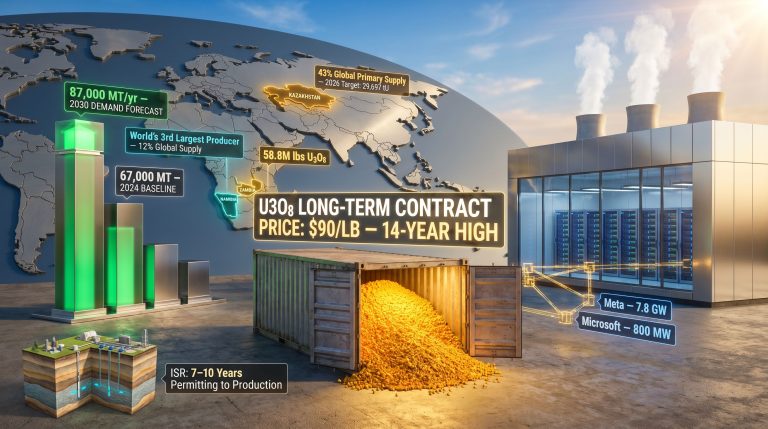
The global uranium supply chain operates through a highly concentrated network of production centres, creating inherent vulnerabilities that distinguish it from other commodity markets. Kazakhstan controls approximately 40% of global uranium production, making the entire nuclear fuel cycle dependent on a single nation's operational continuity and political stability.
Furthermore, uranium production techniques continue to evolve as producers seek more efficient extraction methods. However, these technological advances cannot fully address the fundamental geographic concentration risks that characterise the industry.
Geographic Concentration Risks and Production Challenges
Primary uranium production centres face distinct operational pressures:
• Kazakhstan's Kazatomprom facilities: Subject to international sanctions frameworks and export restrictions
• Canadian mining operations: Constrained by environmental compliance costs and indigenous consultation processes
• Australian uranium deposits: Limited by federal and state regulatory approvals and community acceptance
• African production potential: Hampered by infrastructure limitations and political instability
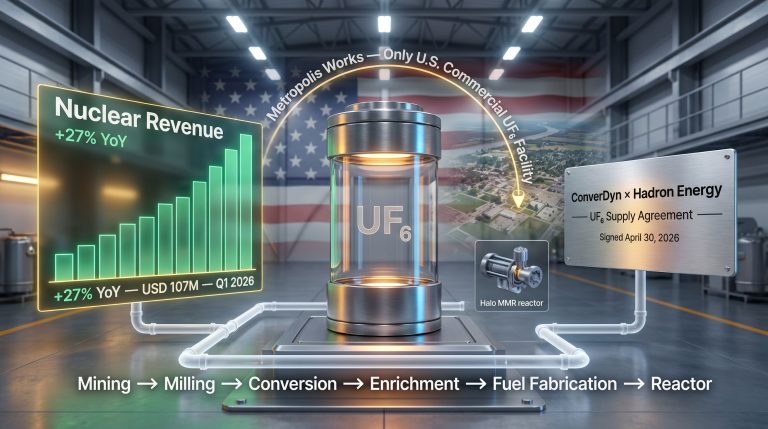
The concentration of uranium enrichment capabilities presents even greater strategic concerns. Russia controls a significant portion of global enrichment capacity, creating dependencies that extend beyond raw material supply into the technical processing required for reactor fuel fabrication. Consequently, US uranium market disruptions have become a critical concern for energy security planners.
Secondary Supply Sources and Inventory Management
Nuclear utilities maintain strategic inventory positions that can buffer short-term supply disruptions, but these stockpiles operate under different economic logic than typical commodity storage. Fuel assemblies must be ordered years in advance, and reactor operators cannot easily substitute alternative suppliers due to technical specifications and regulatory approvals.
Government stockpiles add another layer of complexity, as strategic reserves can be released during supply emergencies, but such decisions involve national security considerations rather than pure market mechanisms. Moreover, nuclear waste disposal safety considerations affect long-term fuel cycle planning.
Price Discovery Mechanisms and Market Structure Inefficiencies
Uranium market uncertainty stems partly from fundamental misalignments between spot market pricing and long-term contract mechanisms that govern the majority of nuclear fuel transactions. This dual-market structure creates persistent inefficiencies that amplify volatility during periods of geopolitical stress.
Spot Market Versus Long-Term Contract Dynamics
| Market Segment | Price Formation | Volume Share | Volatility Profile |
|---|---|---|---|
| Spot transactions | Current supply/demand | 15-20% | High volatility, rapid adjustment |
| Long-term contracts | Multi-year negotiations | 80-85% | Price stability, delayed adjustment |
| Secondary trading | Portfolio optimisation | Variable | Medium volatility |
| Government sales | Strategic considerations | Irregular | Market disruption potential |
The disconnect between these pricing mechanisms means that spot market volatility may not accurately reflect the underlying supply-demand fundamentals affecting the broader nuclear fuel market. Utilities typically secure 70-90% of their uranium requirements through long-term contracts negotiated years in advance, limiting spot market liquidity and amplifying price swings.
Financial Market Influences and ETF Flow Impacts
Physical uranium exchange-traded funds have introduced a new dynamic to nuclear fuel markets by removing material from available supply whilst creating investment vehicles for financial market participants. The Global X Uranium ETF and similar vehicles now hold substantial uranium inventories, effectively reducing spot market liquidity.
ETF impact mechanisms include:
• Physical uranium storage: Removing material from available supply chains
• Investment flow correlation: Linking uranium prices to broader financial market sentiment
• Liquidity constraints: Reducing available material for spot market transactions
• Price amplification: Magnifying both upward and downward price movements
Recent ETF performance data indicates diminishing momentum, with one-month returns showing negative territory despite strong year-to-date gains. This pattern suggests that financial market participants may be reassessing uranium investment strategies amid ongoing geopolitical uncertainty.
Nuclear Renaissance Investment Thesis Under Pressure
Long-term uranium demand projections rely heavily on assumptions about global nuclear capacity expansion, small modular reactor deployment, and energy transition security policies. However, uranium market uncertainty reflects growing scepticism about the timeline and scale of nuclear renaissance scenarios.
Reactor Construction Pipeline Analysis
Global nuclear capacity expansion faces significant headwinds that challenge optimistic demand projections. According to Sprott's uranium outlook, these challenges are becoming increasingly evident as the industry grapples with complex regulatory environments.
Construction timeline challenges:
• Regulatory approval delays: Multi-year licensing processes in major markets
• Capital cost escalation: Construction budgets exceeding initial projections
• Technical complexity: Advanced reactor designs requiring extended testing periods
• Grid integration requirements: Infrastructure upgrades for new nuclear capacity
Small Modular Reactor Deployment Uncertainties
SMR technology represents a potential catalyst for uranium demand growth, but commercial deployment timelines remain highly uncertain. Regulatory frameworks for SMR approval are still evolving, and manufacturing scale economies have yet to be demonstrated.
Industry projections suggest that annual uranium requirements could reach 250-300 million pounds by the mid-2030s, whilst current global production capacity remains below 150 million pounds annually. However, these projections depend on nuclear capacity expansion scenarios that may prove overly optimistic.
Geopolitical Risk Assessment and Market Response Patterns
The muted uranium price response to recent geopolitical developments reveals important insights about how nuclear fuel markets process risk information. Unlike oil and gas markets, which typically exhibit immediate price volatility during conflict periods, uranium markets appear to operate under different risk assessment frameworks.
Furthermore, the World Nuclear Association's market analysis provides additional context for understanding these unique market dynamics.
Conflict Impact on Nuclear Fuel Supply Chains
Current Middle Eastern conflicts have not directly disrupted uranium production or transportation routes, which may explain the limited market reaction. However, escalation scenarios could affect uranium markets through several indirect channels:
Potential disruption mechanisms:
• Transportation route security: Shipping lane closures affecting uranium concentrate movements
• Financial system sanctions: Banking restrictions complicating international transactions
• Energy market correlation: Oil price spikes affecting mining operation costs
• Investment capital allocation: Risk-off sentiment reducing mining project financing
Strategic Stockpile Policy Implications
Government strategic stockpile policies increasingly influence uranium market dynamics as nations prioritise energy security considerations. These policies can dampen price volatility by providing alternative supply sources during crisis periods, but they also create uncertainty about future government intervention in markets.
Investment Strategy Framework for Uranium Market Uncertainty
Developing robust investment approaches for uranium market uncertainty requires understanding the unique characteristics that distinguish nuclear fuel from other commodity investments. Traditional commodity investment strategies may not adequately address the regulatory, technical, and geopolitical factors affecting uranium markets.
Portfolio Construction Considerations
Diversification across multiple dimensions:
• Geographic spread: Exposure to uranium resources in different jurisdictions
• Development stages: Balancing producing mines, development projects, and exploration assets
• Market cap distribution: Combining large-cap producers with smaller development companies
• Value chain integration: Including uranium mining, conversion, enrichment, and fuel fabrication
Risk Management Approaches
| Risk Category | Assessment Criteria | Mitigation Strategies |
|---|---|---|
| Jurisdiction risk | Political stability, regulatory framework | Geographic diversification |
| Operational risk | Mining cost structure, resource quality | Technical due diligence |
| Market risk | Price volatility, demand uncertainty | Position sizing, hedging |
| Liquidity risk | Share trading volumes, market depth | Allocation limits, exit strategies |
The next major ASX story will hit our subscribers first
Technical Analysis of Current Market Positioning
Recent trading patterns in ASX-listed uranium companies provide insights into how Australian investors are processing uranium market uncertainty. Significant intraday volatility across major uranium stocks suggests that market participants lack conviction about near-term direction.
Australian Uranium Sector Performance Indicators
Notable price movements in key uranium stocks:
• Deep Yellow (ASX:DYL): Experiencing leadership changes and strategic uncertainty
• SILEX Systems (ASX:SLX): Technology validation challenges affecting valuation
• Boss Energy (ASX:BOE): Operational execution concerns weighing on investor confidence
• Paladin Energy (ASX:PDN): Production ramp-up progress under market scrutiny
The broad-based weakness across uranium stocks indicates that sector-specific concerns may be combining with general uranium market uncertainty to create challenging investment conditions.
Market Sentiment Indicators and Momentum Analysis
Momentum indicators suggest that uranium investment enthusiasm has moderated from earlier highs. The rotation toward coal stocks during oil price increases reflects investor preference for immediate energy security plays over longer-term nuclear fuel investments.
This shift highlights how uranium market uncertainty affects investment capital allocation, with investors favouring assets that provide more immediate exposure to energy price movements.
Future Scenario Planning and Market Evolution Pathways
Uranium market uncertainty necessitates scenario-based planning approaches that consider multiple potential outcomes for nuclear fuel demand, supply chain development, and geopolitical stability. Investment strategies must account for wide ranging possibilities rather than single-point forecasts.
High-Impact Scenario Considerations
Potential market catalysts:
• Supply disruption events: Major producer operational issues or geopolitical intervention
• Demand acceleration: Faster nuclear capacity additions or SMR commercial deployment
• Technology breakthroughs: Advanced reactor designs requiring different fuel specifications
• Policy shifts: Government mandates or incentives affecting nuclear adoption rates
Investment Positioning for Multiple Outcomes
Successful navigation of uranium market uncertainty requires investment approaches that can benefit from various scenario outcomes whilst limiting downside exposure during extended periods of market weakness.
Strategic positioning considerations:
• Optionality preservation: Maintaining exposure to potential upside whilst managing risk
• Timing flexibility: Avoiding forced selling during volatile periods
• Information advantage: Developing superior insights into supply-demand fundamentals
• Catalyst identification: Recognising market-moving events before broad market recognition
Investment Disclaimer: This analysis is for informational purposes only and should not be considered investment advice. Uranium markets involve significant risks, including commodity price volatility, regulatory uncertainty, and geopolitical factors. Readers should conduct thorough due diligence and consult with qualified financial advisors before making investment decisions. Past performance does not guarantee future results, and all investments carry the risk of loss.
Want to Capitalise on Uranium Market Opportunities?
Discovery Alert's proprietary Discovery IQ model delivers real-time alerts on significant ASX mineral discoveries, instantly empowering subscribers to identify actionable uranium and mining opportunities ahead of the broader market. Begin your 14-day free trial today and secure your market-leading advantage in navigating commodity market uncertainty.