Strategic Workforce Development Through Nuclear Fuel Supply Chain Innovation
The nuclear industry stands at a critical juncture where technological advancement must align with human capital development to ensure sustainable growth. Recent initiatives by international organisations reflect a deeper understanding that innovation in nuclear fuel supply chains requires more than technical solutions—it demands strategic cultivation of young talent capable of reimagining established processes from uranium exploration through spent fuel recycling. Furthermore, the uranium market volatility continues to emphasise the need for resilient supply chain strategies.
Industry observers note that workforce demographics present both challenges and opportunities for nuclear fuel cycle optimisation. Traditional approaches to supply chain management increasingly require integration with digital technologies, predictive analytics, and automation systems that demand specialised expertise spanning multiple disciplines. Moreover, the recent Russian uranium import ban has highlighted critical vulnerabilities in current supply chains.
What Does the IAEA Nuclear Fuel Supply Chain Competition Reveal About Industry Priorities?
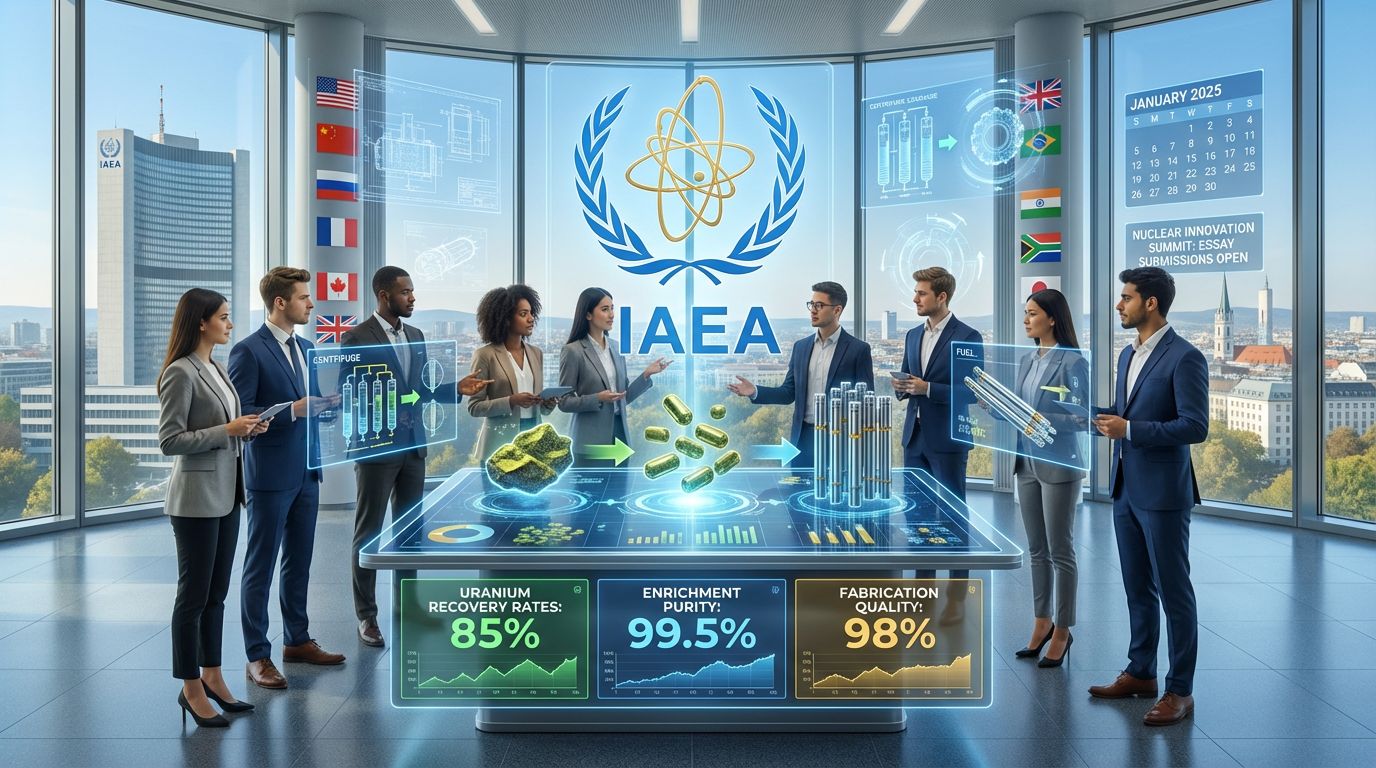
The International Atomic Energy Agency's recent announcement of a nuclear fuel supply chain competition for professionals under 35 years of age signals strategic organisational priorities extending beyond immediate operational needs. This initiative, announced through the American Nuclear Society's Nuclear Newswire on December 1, 2025, encompasses the complete nuclear fuel cycle from upstream uranium exploration through back-end spent fuel recycling processes.
Strategic Focus Areas Driving International Competition Design
The competition's comprehensive scope reveals industry recognition that fuel supply chain optimisation requires integrated thinking across traditionally siloed operational domains. Essay submissions must address innovations spanning uranium exploration, enrichment optimisation, and spent fuel recycling, indicating organisational emphasis on systemic rather than component-level improvements.
This holistic approach reflects growing awareness that supply chain vulnerabilities often emerge at interface points between different fuel cycle stages. Geographic concentration risks, particularly in uranium production where Kazakhstan accounts for approximately 40% of global supply, demonstrate the importance of integrated risk management strategies.
The January 10, 2025 submission deadline creates urgency that aligns with broader industry innovation trends for infrastructure development and capacity expansion decisions. Organisations increasingly recognise that delayed workforce development initiatives compound supply chain vulnerabilities during periods of nuclear energy expansion.
Prize Structure and Professional Development Investment Metrics
While specific prize details remain undisclosed in public announcements, the Vienna-based networking opportunities represent significant strategic value for emerging nuclear professionals. Access to IAEA headquarters provides participants with exposure to international regulatory frameworks, policy development processes, and multilateral cooperation mechanisms that shape global nuclear fuel markets.
Travel grant allocations for competition winners facilitate cross-border knowledge transfer essential for addressing supply chain challenges that transcend national boundaries. These investments in professional mobility create networks spanning different regulatory environments, technological approaches, and market structures.
The recognition framework extends beyond individual career advancement to encompass broader industry talent retention strategies. Competition participation creates visible career pathways for young professionals while establishing performance benchmarks for innovation in nuclear fuel cycle optimisation.
How Do Young Professional Competitions Shape Nuclear Industry Innovation Pipelines?
Age-demographic targeting below 35 years reflects strategic workforce planning that acknowledges generational differences in technological adoption and problem-solving approaches. This cohort brings digital-native perspectives to traditionally analogue-intensive nuclear operations whilst possessing sufficient professional experience to understand operational constraints.
Age Demographics and Innovation Capacity in Nuclear Sectors
The under-35 demographic represents a critical inflection point in nuclear industry careers where professionals possess both technical competency and cognitive flexibility necessary for paradigm-shifting innovations. Research in organisational psychology suggests this age group demonstrates optimal balance between domain expertise and creative problem-solving capacity.
Educational background trends among this demographic increasingly emphasise interdisciplinary training combining nuclear engineering with data science, materials science, and supply chain management. This convergence creates innovation potential at the intersection of traditional nuclear expertise and emerging technological capabilities including data-driven operations.
Generational differences in nuclear fuel cycle optimisation approaches manifest in increased willingness to challenge established procedures, embrace automation technologies, and integrate sustainability considerations into operational decision-making. These perspectives prove essential as the industry transitions toward more complex fuel cycle configurations.
Essay Submission Requirements and Strategic Assessment Criteria
English-language submission requirements reflect the international nature of nuclear fuel supply chains whilst potentially limiting participation from emerging nuclear markets where English proficiency varies. This linguistic constraint shapes the innovation pipeline by emphasising contributions from globally connected professionals rather than locally focused experts.
The essay format itself signals preference for conceptual innovation over technical implementation details. This approach encourages broad-thinking solutions that can be adapted across different organisational contexts rather than narrowly applicable technical fixes.
Evaluation frameworks for nuclear fuel supply chain innovations must balance technical feasibility with economic viability, regulatory compliance, and international cooperation requirements. These multi-criteria assessments reflect the complex stakeholder environment surrounding nuclear fuel cycle operations.
What Are the Critical Innovation Gaps in Modern Nuclear Fuel Supply Chains?
Contemporary nuclear fuel supply chains face efficiency challenges across multiple operational stages, each requiring distinct technological solutions whilst maintaining integration with upstream and downstream processes. Innovation gaps emerge from both technical limitations and organisational barriers to technology adoption.
Production and Transportation Efficiency Challenges
| Supply Chain Stage | Primary Challenges | Innovation Requirements |
|---|---|---|
| Uranium Mining | Environmental compliance costs | Advanced extraction with reduced ecological impact |
| Conversion | Process energy intensity | Efficiency improvements in UF6 production |
| Enrichment | Capacity constraints in Western markets | Next-generation centrifuge technologies |
| Fuel Fabrication | Quality assurance automation | Integrated manufacturing systems |
| Transportation | Regulatory complexity | Digital documentation and tracking systems |
Mining operations increasingly face pressure to demonstrate environmental stewardship whilst maintaining production levels necessary for growing nuclear capacity worldwide. In-situ recovery techniques offer reduced surface disruption but require sophisticated hydrogeological modelling and groundwater protection protocols.
Enrichment capacity limitations in Western markets create strategic vulnerabilities as nuclear energy expansion accelerates. Current Western enrichment capacity utilisation approaches maximum levels, creating bottlenecks that innovation must address through either efficiency improvements or capacity expansion.
Transportation logistics face increasing complexity as spent fuel accumulates at reactor sites whilst permanent disposal solutions remain under development. Smart logistics optimisation requires integration of real-time tracking, predictive maintenance, and dynamic routing capabilities.
Security and Sustainability Integration Requirements
Non-proliferation compliance frameworks impose additional complexity layers on supply chain optimisation initiatives. Innovation must simultaneously improve efficiency whilst maintaining or enhancing safeguards and security measures throughout the fuel cycle.
Environmental impact reduction strategies increasingly influence fuel cycle design decisions as climate change concerns elevate sustainability requirements. Life-cycle assessment methodologies must be integrated into supply chain optimisation to quantify environmental benefits of various innovation approaches related to energy transition security.
Cybersecurity protocols for digital supply chain management systems require specialised expertise combining information security with nuclear facility protection requirements. These dual-use security concerns create additional barriers to technology adoption that innovation must address.
How Does This Competition Align with IAEA's 2025 Strategic Framework?
The competition timing coincides with broader IAEA initiatives supporting nuclear energy expansion whilst maintaining safety and security standards. This alignment suggests organisational recognition that sustainable growth requires parallel investment in technological innovation and human capital development.
Sustainable Growth and Job Creation Mandate Analysis
Nuclear technology leverage for economic development initiatives requires skilled professionals capable of adapting international best practices to local conditions. The competition creates mechanisms for identifying and developing such capabilities among emerging professionals worldwide.
Safety and security standard maintenance during expansion phases demands innovation that improves operational efficiency without compromising protective measures. This dual requirement shapes the types of solutions most likely to receive recognition and support through competition frameworks.
Professional development investment calculations increasingly emphasise long-term returns through improved organisational capabilities rather than short-term cost reduction. Competition programmes create measurable frameworks for evaluating these investments across international organisations.
Global Nuclear Energy Development Support Mechanisms
International cooperation frameworks for fuel supply security require professionals who understand both technical requirements and diplomatic processes necessary for multilateral agreements. Competition participation provides exposure to these dual requirements through IAEA engagement opportunities.
Technology transfer protocols between developed and emerging markets benefit from professional networks established through international competition programmes. These relationships facilitate knowledge sharing whilst respecting intellectual property constraints and competitive considerations.
Capacity building programmes for nuclear infrastructure development increasingly rely on peer-to-peer learning mechanisms among young professionals rather than traditional hierarchical training approaches. Competition formats create natural frameworks for such knowledge exchange.
What Competitive Advantages Emerge from Nuclear Fuel Supply Chain Innovation?
Organisations investing in fuel supply chain innovation position themselves strategically for market conditions characterised by increasing demand, supply concentration risks, and evolving regulatory requirements. These competitive advantages manifest across multiple operational and strategic dimensions.
Market Position Strengthening Through Technical Excellence
Supply chain resilience metrics gain importance as geopolitical tensions affect traditional sourcing patterns. The 2022 disruption of Russian nuclear fuel supplies demonstrated vulnerability in Western supply chains, creating competitive advantages for organisations with diversified supplier networks and flexible operational capabilities.
Cost optimisation potential across uranium-to-electricity conversion processes creates sustainable competitive advantages as fuel costs represent significant portions of nuclear generation economics. Organisations achieving even modest efficiency improvements across multiple fuel cycle stages compound these benefits over facility lifetimes.
Quality assurance improvements reduce regulatory compliance costs whilst enhancing operational reliability. Advanced quality management systems integrated with supply chain optimisation create differentiation opportunities in competitive nuclear fuel markets.
Strategic Networking and Knowledge Transfer Opportunities
Vienna-based expert consultation access through IAEA programmes provides participants with insights into emerging regulatory trends, technology developments, and international cooperation initiatives. These information advantages enable more effective strategic planning and risk management.
Cross-border collaboration potential for supply chain optimisation increases as nuclear energy expansion creates opportunities for international partnerships. Competition participants develop professional networks facilitating such collaborations whilst understanding cultural and regulatory differences affecting implementation.
Industry mentorship programmes connected to competition frameworks create structured career advancement pathways whilst transferring institutional knowledge from experienced professionals to emerging leaders. These relationships prove essential for maintaining organisational capabilities during workforce transitions.
How Should Organisations Prepare for Nuclear Fuel Supply Chain Evolution?
Strategic preparation for supply chain evolution requires integrated approaches combining workforce development, technology adoption, and organisational change management. Organisations must balance investment in emerging capabilities with maintenance of existing operational excellence.
Workforce Development Investment Strategies
Young professional recruitment and retention frameworks must acknowledge changing career expectations and technological literacy requirements. Traditional nuclear industry employment models require adaptation to attract professionals with interdisciplinary backgrounds and global perspectives.
Technical training programme design for fuel cycle specialisation should emphasise systems thinking and integration capabilities rather than narrow functional expertise. Professionals increasingly need understanding of multiple fuel cycle stages and their interdependencies.
Innovation culture development within traditional nuclear organisations requires leadership commitment to experimentation and controlled risk-taking. Competition programmes provide frameworks for encouraging innovative thinking whilst maintaining operational discipline necessary for nuclear safety.
Technology Integration and Process Optimisation Roadmaps
Digital transformation opportunities in fuel supply management span enterprise resource planning systems, predictive analytics platforms, and automated quality control systems. Implementation roadmaps must consider cybersecurity requirements and integration with existing operational systems.
Predictive analytics implementation for supply chain forecasting requires data quality improvements and advanced analytics capabilities. Organisations must invest in both technological infrastructure and analytical expertise to realise potential benefits.
Automation potential across uranium processing and fuel fabrication creates opportunities for cost reduction and quality improvement whilst requiring workforce retraining and organisational restructuring. Implementation strategies must balance efficiency gains with employment considerations.
What Long-Term Implications Does This Competition Signal for Nuclear Industry Growth?
The establishment of international competitions focused on fuel supply chain innovation indicates industry maturation toward more sophisticated approach to growth management. These initiatives suggest recognition that sustainable expansion requires parallel development of technological capabilities and human capital.
Global Supply Chain Security and Diversification Trends
Geographic risk distribution strategies for uranium sourcing reflect lessons learnt from recent geopolitical disruptions affecting energy security. Organisations increasingly prioritise supplier diversification and supply chain transparency over cost minimisation alone.
Strategic reserve management policies develop as governments recognise nuclear fuel supply security implications for energy independence. These initiatives create market opportunities for organisations capable of managing complex inventory and logistics requirements.
International partnership development for fuel cycle cooperation enables sharing of technological innovations whilst distributing development costs across multiple stakeholders. Competition programmes create professional networks facilitating such partnerships whilst building mutual understanding of different operational approaches.
Next-Generation Professional Development and Industry Evolution
Career pathway diversification within nuclear fuel specialisations reflects industry recognition that traditional career models may not attract or retain professionals with capabilities necessary for innovation. Competition programmes create visible alternatives to conventional advancement patterns.
Innovation ecosystem development around fuel supply optimisation requires connections between established organisations and emerging technology companies. Professional networks created through competition programmes facilitate these relationships whilst maintaining appropriate security and intellectual property protections.
Technology commercialisation opportunities for competition participants create incentives for continued innovation whilst providing career advancement possibilities beyond traditional organisational hierarchies. These pathways prove essential for retaining entrepreneurial talent within the nuclear industry.
The IAEA launches nuclear fuel supply chain competition represents more than a professional development initiative. It signals industry recognition that future success depends on cultivating innovative thinking among emerging professionals whilst maintaining operational excellence in safety-critical operations. Organisations that embrace this balance position themselves for leadership in an evolving nuclear energy landscape.
Ready to Identify the Next Major Uranium Discovery?
With nuclear fuel supply chains evolving rapidly and uranium market volatility creating new investment opportunities, Discovery Alert's proprietary Discovery IQ model delivers real-time alerts on significant ASX uranium and mineral discoveries, instantly empowering subscribers to identify actionable opportunities ahead of the broader market. Understand why historic discoveries can generate substantial returns by exploring Discovery Alert's dedicated discoveries page and begin your 30-day free trial today to position yourself ahead of the market.