OD6 Metals Ltd
- ASX Code: OD6
- Market Cap: $47,947,687
OD6 Metals Big Jim Fluorspar Rediscovery at Quinn Project Nevada
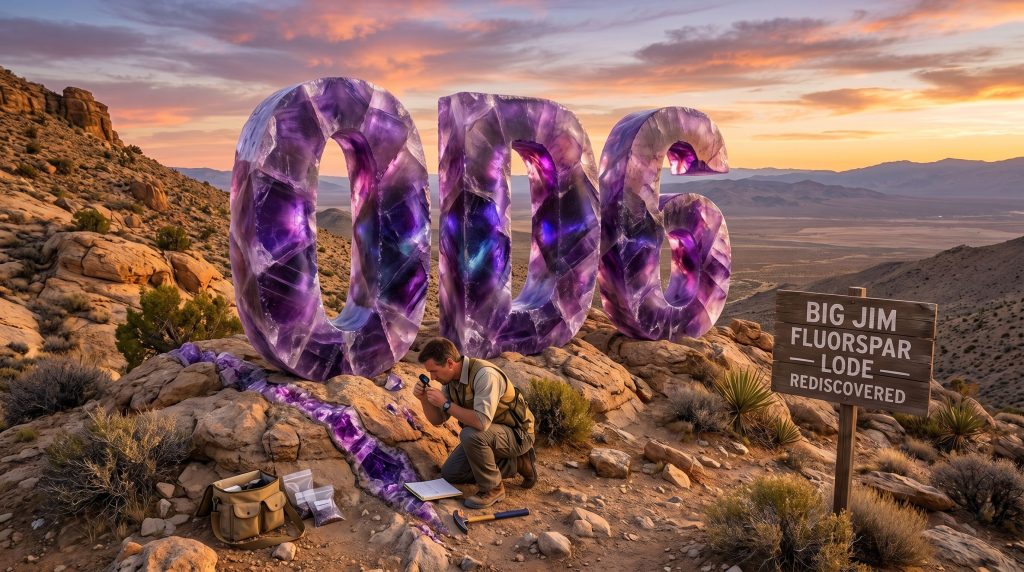
OD6 Metals Limited (ASX: OD6) has announced the rediscovery of the historically documented Big Jim Fluorspar Lode at its Quinn Fluorspar Project in Nevada, USA — and the results are turning heads. With visual estimates of the main lode reaching 85–95% CaF2 and historic assays as high as 98.6% CaF2, the OD6 Metals Big Jim fluorspar rediscovery at Quinn Project Nevada is shaping up as the highest-grade fluorspar target identified at the project to date.
This compelling find adds a third discovery to the growing district-scale system alongside the existing Mammoth and Horseshoe deposits — a significant milestone for the company's ambitions as a US-based high-grade fluorspar developer.
Managing Director Commentary
"Through some clever geological detective work, and historic descriptions dating back to the 1940s, the Nevada team was able to narrow the search area for the Big Jim Fluorspar Lode. We are very excited to announce that this has now been located and presents a third extensive fluorspar system, with Horseshoe and Mammoth, on the Quinn Project to target for the drill out. The visual estimates of size and grade are consistent with historic reports and Big Jim perhaps is our highest-grade target to date. This discovery validates our ambition to be a US-based high-grade fluorspar developer coinciding with increasing strategic demand for US domestic supply."
— Brett Hazelden, Managing Director, OD6 Metals
When big ASX news breaks, our subscribers know first
What Has Been Found at Big Jim?
Big Jim is not a new concept. It was first discovered and mined intermittently by Frank and Joe "Big Jim" Perkins from 1934, with formal documentation recorded in a 1947 US Geological Survey-referenced report by Goulet & Jones.
What OD6's Nevada field team has achieved is the physical relocation of this historically documented high-grade lode using targeted geological reconnaissance, cross-referencing 1940s survey maps and descriptions against present-day surface observations.
The results of that field visit confirm several important characteristics:
- Massive purple fluorspar vein exposed at surface, consistent with the historically reported main lode, with a visual estimate of 85–95% CaF2 across an estimated ~2 metres in width
- Footwall breccia with visual estimates of 40–60% CaF2, with the lower contact not yet exposed — meaning it could be wider than currently observed
- Historic workings mapped over more than 220 metres with high-grade fluorspar reported throughout and at both ends of the system
- The system remains open to the North and South, indicating significant potential for lateral extension
- A shallow westerly dip geometry creates a direct drilling target for the high-grade fluorspar system extending underneath the surface cap rock
Furthermore, the field team identified the Rocket lode upslope — exposed in a small pit over approximately 1 metre width — and a third lode reportedly located approximately 20 metres beneath the Rocket lode based on historic documentation, though this has not yet been confirmed in the field.
Rock samples and metallurgical testwork samples have been collected and dispatched to the ALS Global laboratory in Reno, Nevada, with assay results pending.
Historic Grade Profile: How Good Is Big Jim?
The following table compiles the historic assay results from the Big Jim workings, as reported by Goulet & Jones (1947) and cross-referenced against the company's 2026 field observations:
| Sample | Source | Width | Grade CaF2 (%) | Description |
|---|---|---|---|---|
| Eisenhauer 3 | Goulet & Jones, 1947 | 0.3m | 74.86% | 1 ft sample on hanging wall sediments of vein |
| Eisenhauer 4 | Goulet & Jones, 1947 | 1.8m | 90.84% | 6 ft sample across vein on right side of Big Cut |
| Eisenhauer 5 | Goulet & Jones, 1947 | 1.5m | 94.41% | 5 ft sample across vein |
| Mine Sample | Goulet & Jones, 1947 | Not reported | 98.4% | Mine sample at north end of workings |
| Mine Sample | Goulet & Jones, 1947 | Not reported | 96% | Mine sample at south end of workings on main vein |
| Mine Sample | Goulet & Jones, 1947 | Not reported | 60% | Mine sample in "gangue" breccia at south end |
| Visual Estimate | OD6 Company, 2026 | ~2m | 85–95% | Surface exposure of massive fluorspar vein |
| Visual Estimate | OD6 Company, 2026 | ~2m | 40–60% | Surface exposure of breccia (lower contact not observed) |
Note: Visual estimates are not a substitute for laboratory results. Assay samples have been dispatched and results are pending. Historic assay results are compiled by the Competent Person to the best of their knowledge.
The grade consistency between 1940s documentation and 2026 field observations represents a notable technical validation. However, investors should note that laboratory confirmation of current samples is required before historic results can be formally relied upon.
Understanding Fluorspar: Why These Grades Matter
What Is CaF2?
CaF2 stands for calcium fluoride — the chemical compound that constitutes fluorspar (also known as fluorite). When geologists and miners refer to fluorspar "grade," they are expressing the percentage of CaF2 contained within the rock. The higher the percentage, the purer and more commercially valuable the material.
Grade Thresholds and Commercial Viability
Unlike some commodities where even low-grade bulk mineralisation can be economic, fluorspar has relatively clear commercial thresholds that directly influence project viability:
| Grade Threshold | Commercial Context |
|---|---|
| >8% CaF2 | Lower bound cited by some companies as potentially economic |
| >20% CaF2 | Generally regarded as minimum for economic projects today |
| >40% CaF2 | High-grade; the threshold OD6 has used to describe the Quinn Project broadly |
| >85% CaF2 | Extremely high-grade; approaching direct-use or minimal-processing quality |
| 94–98.6% CaF2 | Exceptional; near-pure fluorspar — among the highest grades documented |
What makes the OD6 Metals Big Jim fluorspar rediscovery at Quinn Project Nevada particularly notable is that even the historically described "gangue" grades at up to 60% CaF2 — well above what modern industry would consider a viable resource grade. This reflects how dramatically economic thresholds have shifted over the past eight decades.
Industrial Applications Driving Demand
Fluorspar serves as a critical industrial mineral across multiple advanced applications:
| Application | Role of Fluorspar |
|---|---|
| Hydrofluoric acid production | Primary feedstock |
| AI semiconductor chip etching | Fluorine chemistry in chip fabrication |
| Advanced battery technologies | Fluorine compounds in electrolytes |
| Nuclear fuel processing | Uranium hexafluoride production |
| Aerospace and defence | Specialist fluoropolymers and coatings |
Quinn Fluorspar Project: A Growing District-Scale System
Big Jim does not exist in isolation. OD6 secured an exclusive option to acquire the Quinn Fluorspar Project on 4 March 2026, located approximately 220km north of Las Vegas, Nevada. The project now encompasses three identified high-grade fluorspar systems:
| Discovery | Style | Area / Scale | Grade Highlights |
|---|---|---|---|
| Mammoth | Replacement / breccia | ~9,000m² mapped | >40% CaF2 |
| Horseshoe | Replacement / breccia | ~3,000m² mapped | >40% CaF2 |
| Big Jim | Vein + footwall breccia | >220m of workings, open N & S | Up to 98.6% CaF2 (historic) |
Big Jim sits approximately 1km north-northeast of the Horseshoe deposit, demonstrating that high-grade fluorspar systems are distributed across a meaningful geographic footprint at Quinn.
In addition, geological mapping indicates multiple additional fluorspar occurrences in the broader project area, with reported historic rock chip results up to 94% CaF2. The geology hosting these discoveries — Palaeozoic limestones and dolomites altered by hydrothermal activity from Cenozoic volcanism — is consistent across the project, providing a logical framework for district-scale continuity.
What Comes Next: The Road to Drilling
The rediscovery of Big Jim represents a field validation milestone. However, the path forward is clearly defined. OD6 has outlined a structured due diligence and exploration programme ahead of maiden drilling at Quinn:
- Receipt and interpretation of laboratory assay results from samples dispatched to ALS Global in Reno, Nevada
- Digitisation of scanned historic paper logs and cross-sections into a three-dimensional geological model
- Expansion of systematic channel and rock chip sampling across the Big Jim area and broader project
- Validation and replication of historic high-grade results through independent sampling
- Detailed geological and structural mapping of the Big Jim lode and surrounding area
- Completion of soil geochemistry programmes across the wider project
- Identification and prioritisation of drill targets across Mammoth, Horseshoe, and Big Jim
- Initiation of permitting for maiden drilling through the US Forest Service
- Progression of metallurgical testwork including optical sorting, crushing, grinding, and flotation testing
The shallow westerly dip of the Big Jim lode is a practically important structural attribute — it creates a geometry well-suited to relatively shallow, cost-effective drill testing of the high-grade vein system as it extends beneath the jasperoid cap rock at surface.
The Investment Case: US Fluorspar at the Right Time
The US Fluorspar Supply Gap
The United States currently imports 100% of all fluorspar consumed domestically. According to the USGS, 68% of all global fluorspar supply is sourced from China. Fluorspar is classified as a Critical Mineral by the USGS, underpinning its use across a range of advanced industrial applications essential to US strategic industries.
Nevada as a Mining Jurisdiction
The Quinn Project is located in Nevada — ranked second in the 2025 Fraser Institute's Mining Attractiveness Index, widely regarded as one of the most mining-friendly jurisdictions in the world. The project is situated approximately 300km by road from the US Strategic Minerals Reserve at Hawthorne, Nevada.
Grade as a Competitive Differentiator
At the grades being observed at Big Jim — with visual estimates up to 85–95% CaF2 for the main lode and historic assays reaching 98.6% CaF2 — the potential for a low-cost, high-margin fluorspar operation is significant if confirmed by laboratory assay. At these grade levels, processing requirements are substantially reduced compared to lower-grade bulk-tonnage fluorspar projects.
Why OD6 Metals Deserves a Place on Your Watchlist
OD6 Metals is not a single-project story. The company is advancing three distinct critical mineral opportunities simultaneously:
| Project | Commodity | Location | Stage |
|---|---|---|---|
| Quinn Fluorspar | Fluorspar (CaF2) | Nevada, USA | Active exploration, pre-drill |
| Splinter Rock | Rare Earth Elements | Western Australia | MRE defined (682Mt total resource) |
| Gulf Creek | Copper-Zinc (VMS) | New South Wales | Post maiden drill, target definition |
The Splinter Rock Rare Earths project already carries a defined Mineral Resource Estimate of 119Mt @ 1,632ppm TREO (Indicated) and 563Mt @ 1,275ppm TREO (Inferred), with an innovative heap leach and nano-filtration process flowsheet demonstrating approximately 75% Nd & Pr recovery.
This provides a measure of portfolio depth as the Quinn Project progresses through its early exploration phases. For Quinn itself, the near-term catalyst sequence is clear: laboratory assay results from Big Jim samples will be the next material data point, followed by systematic sampling, geological modelling, and the initiation of drill permitting.
The OD6 Metals Big Jim fluorspar rediscovery at Quinn Project Nevada represents more than just another exploration update — it validates the company's strategy of targeting high-grade critical minerals in tier-one jurisdictions. With historic assays reaching 98.6% CaF2, a system open along strike in both directions, and laboratory results from 2026 field samples pending, the company is advancing rapidly toward what could be a material drill-out programme in one of the world's most attractive mining jurisdictions.
OD6 Metals has confirmed a third high-grade fluorspar system at its Quinn Project in Nevada, with the Big Jim lode presenting the highest-grade target identified at the project to date. Against a backdrop of 100% US fluorspar import dependency, investors should keep a close eye on Quinn's development in the months ahead.
The next major ASX story will hit our subscribers first
Glossary of Key Terms
- CaF2 (Calcium Fluoride): The chemical compound that constitutes fluorspar; expressed as a percentage to indicate grade or purity.
- Fluorspar / Fluorite: The mineral form of calcium fluoride; a critical industrial mineral used in hydrofluoric acid production, semiconductor manufacturing, batteries, and nuclear fuels.
- Jasperoid: A silica-rich rock formed when silica-bearing fluids replace limestone; at Big Jim, this forms the surface cap rock above the vein system.
- Breccia: Rock composed of angular rock fragments cemented together; at Big Jim, the footwall breccia has its matrix infilled with fluorspar, making it a mineralised zone in its own right.
- Gangue: A historic mining term referring to commercially valueless rock within a mineralised zone; the Big Jim "gangue" material grades at up to 60% CaF2 — well above modern economic thresholds.
- Replacement Deposit: A style of mineralisation where fluids dissolve host rock (in this case limestone) and replace it with a mineral such as fluorspar.
- Hydrothermal: Referring to mineralisation formed from hot water fluids; the typical geological setting for fluorspar deposits in Nevada.
- NSR (Net Smelter Return Royalty): A royalty payable to a third party based on a percentage of revenues from production; OD6's Quinn acquisition terms include a 2% NSR on future production.
- USGS: United States Geological Survey; the US federal science agency responsible for natural resource assessments including the US Critical Minerals list.
- MRE (Mineral Resource Estimate): A formal estimate of the quantity and grade of mineralisation within a defined volume of rock, reported under industry codes such as JORC.
Want to Track the Next High-Grade Critical Mineral Discovery Before the Market Does?
Discovery Alert's proprietary Discovery IQ model scans ASX announcements in real time, instantly alerting subscribers to significant mineral discoveries — including high-grade critical mineral opportunities like fluorspar — so you can act before the broader market catches on. Explore Discovery Alert's dedicated discoveries page to see how major mineral finds have historically generated substantial returns, and begin your 14-day free trial today to position yourself ahead of the next significant announcement.