The global mining industry enters 2026 facing an unprecedented convergence of technological disruption, regulatory transformation, and market volatility that demands strategic recalibration across all operational dimensions. The PDAC 2026 convention emerges as a critical platform where industry leaders will navigate simultaneous pressures from energy transition acceleration, capital allocation constraints, and evolving stakeholder expectations. This systemic transformation creates both extraordinary challenges and compelling opportunities for industry participants who can adapt their strategic frameworks effectively.
Mining executives increasingly recognise that conventional approaches to exploration, development, and operational management require fundamental restructuring to remain competitive. Furthermore, the integration of artificial intelligence, autonomous systems, and predictive analytics represents more than technological upgrades; these innovations constitute essential infrastructure for sustainable competitive advantage in an increasingly complex operating environment.
Critical Market Dynamics Reshaping Mining Operations
Global mining operations currently confront multiple converging pressures that create both systemic risks and strategic opportunities. Interest rate environments that remain elevated compared to 2020-2021 levels continue constraining exploration financing, particularly for junior mining companies seeking development capital. Central bank monetary policies across major mining jurisdictions have fundamentally altered the cost of capital calculations that drive project feasibility assessments.
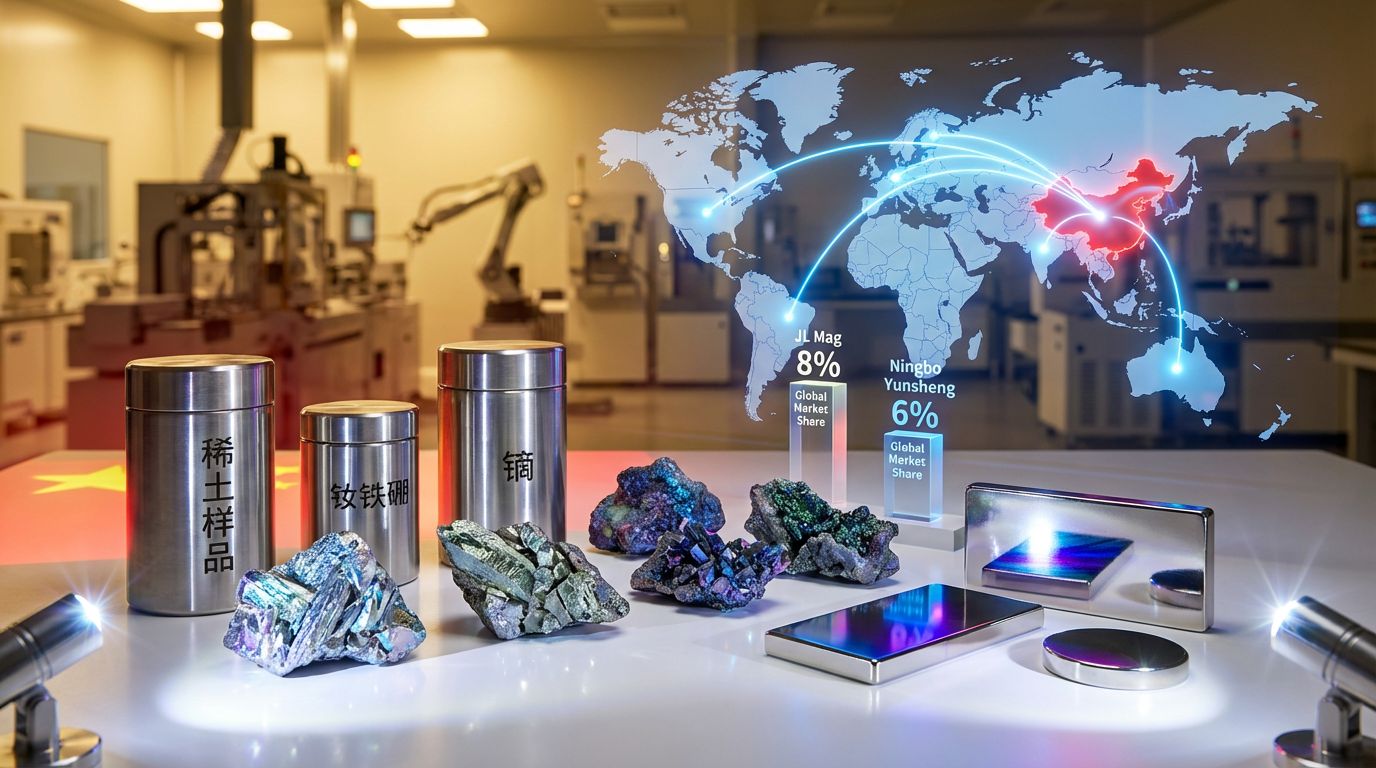
Geopolitical supply chain vulnerabilities have become structural rather than cyclical concerns for mining operators. China's dominance in rare earth element processing, representing approximately 85-90% of global refined rare earth production according to the U.S. Geological Survey, exemplifies the concentration risks that mining companies can no longer ignore. The rare earth supply chain presents strategic dependencies that require diversification strategies. Similarly, lithium supply concentration across Argentina, Australia, and Chile creates additional challenges for operational resilience.
Environmental, Social, and Governance compliance costs now represent 15-25% of total project development expenditures for major mining operations, fundamentally altering project economics evaluation frameworks. These costs vary significantly across jurisdictions:
- OECD jurisdictions: ESG compliance adds 18-25% to project development costs
- Emerging market jurisdictions: ESG compliance adds 12-18% to project development costs
- Frontier market jurisdictions: ESG compliance adds 8-15% to project development costs
The Canadian dollar volatility experienced between 2020-2025 created 15-20% exchange rate fluctuations that significantly impacted cross-border mining project financing arrangements. These currency dynamics force mining companies to develop sophisticated hedging strategies that protect against exchange rate exposure while maintaining operational flexibility.
Supply-Demand Imbalances Creating Strategic Urgency
Critical mineral supply constraints represent the most significant strategic challenge facing the mining industry through 2030. The International Energy Agency projects lithium demand growth of 200-250% between 2024-2030 under baseline energy transition scenarios, while supply capacity expansion remains constrained by permitting delays, water availability limitations, and technical processing challenges.
Lithium market dynamics demonstrate the complexity of supply-demand balancing. Nevada's Thacker Pass project, delayed over five years due to environmental and permitting challenges, illustrates how regulatory processes can constrain supply expansion even when demand signals remain strong. Current supply gap estimates range from 40-60% under baseline scenarios, with potential expansion to 65% under accelerated electric vehicle adoption pathways.
Nickel supply-demand projections indicate 150-200% consumption growth through 2030, driven primarily by electric vehicle battery demand. However, increasing adoption of sodium-ion and lithium iron phosphate battery technologies could reduce nickel demand growth by 15-25%, creating uncertainty for long-term investment planning. The International Nickel Study Group estimates supply gaps of 30-50% depending on price assumptions and technological substitution rates.
Copper market fundamentals reflect renewable energy infrastructure requirements and electrification trends that drive 90-130% demand growth projections through 2030. Current supply gaps of 10-20% could expand to 35% under accelerated decarbonisation scenarios, constrained by mine production limitations and ESG regulatory requirements. The International Copper Study Group emphasises that permitting delays and environmental compliance requirements significantly impact supply expansion timelines.
Rare earth element supply-demand analysis reveals 200-300% demand growth for light rare earths through 2030, though heavy rare earth demand growth remains more moderate at 150-180%. The primary constraint involves processing capacity concentration rather than absolute resource availability, with China controlling 85-90% of refined rare earth production according to U.S. Geological Survey data.
Furthermore, the critical minerals energy transition presents challenges that extend beyond traditional supply-demand analysis to encompass geopolitical considerations and strategic resource security.
The mining industry faces a fundamental challenge: demand acceleration outpacing supply capacity expansion due to regulatory complexity, technical constraints, and capital allocation inefficiencies.
Technology Integration Transforming Operational Frameworks
The PDAC 2026 convention programming emphasises technology convergence zones that demonstrate integrated solutions rather than isolated equipment displays. This represents a strategic shift toward comprehensive operational transformation rather than incremental technology adoption.
Artificial intelligence applications in mineral exploration now process multisource geological data including gravity, magnetic, radiometric, and hyperspectral imagery for lithology classification with 40-50% improvement in drill-target success rates compared to traditional methods. The Society for Mining, Metallurgy & Exploration documents timeline compression from 12-18 months to 7-10 months for initial exploration phases through AI transforming mining operations.
Autonomous mining equipment deployment remains limited to less than 10% of global mining fleet penetration according to McKinsey & Company analysis. However, operations implementing autonomous systems report significant performance improvements:
- Equipment utilisation: 10-15% improvement in operational efficiency
- Safety performance: 20-35% reduction in operator-related incidents
- Operational continuity: 24/7 operation capability with reduced human intervention requirements
Rio Tinto's Pilbara operations demonstrate autonomous haul truck fleet capabilities with over 60 vehicles operating continuously, providing real-world validation of autonomous technology integration. BHP's iron ore operations similarly showcase large-scale autonomous implementation with measurable productivity gains.
Predictive maintenance systems utilising Internet of Things sensors and machine learning algorithms deliver quantifiable operational improvements:
- Equipment downtime reduction: 20-30% improvement in maintenance scheduling efficiency
- Asset lifecycle extension: 5-10% improvement in equipment useful life through optimised maintenance
- Operational cost savings: 8-12% reduction in maintenance expenditures
Boliden's integrated IoT sensor deployment reduced mill downtime by 25% through predictive maintenance optimisation, demonstrating the practical value of comprehensive technology integration.
Investment Requirements and Return Profiles
Technology implementation demands significant capital commitments with multi-year return horizons:
- AI exploration platform implementation: $3-8 million capital cost with 2-3 year return on investment periods
- Autonomous equipment retrofit: $500,000-2 million per vehicle with 3-5 year payback periods
- Full IoT sensor deployment: $5-15 million for mid-size operations with 2-4 year ROI timelines
Workforce transformation accompanies technology adoption, requiring 15-25% retraining investment while creating net employment shifts of 10-15% reduction in manual roles offset by 5-8% growth in technical and data analyst positions.
Investment Capital Allocation Strategy Evolution
The PDAC 2026 convention restructures traditional investment presentation formats toward scenario-based modelling sessions that address portfolio construction challenges rather than individual project promotion. This shift reflects institutional investor requirements for integrated risk-return analysis across commodity portfolios and geographic jurisdictions.
Modern investment frameworks incorporate ESG compliance costs as fundamental project economics components rather than additional considerations. Risk-adjusted return calculations now include:
- Environmental compliance costs: 8-12% of operational expenditures
- Social licence procurement: 3-8% of project development costs varying by jurisdiction
- Governance reporting infrastructure: 2-4% of ongoing operational costs
Geographic risk distribution strategies become essential as mining companies navigate jurisdiction-specific regulatory environments and political stability considerations. Portfolio diversification approaches now emphasise:
- Commodity type diversification: Balancing exposure across energy transition metals, industrial minerals, and precious metals
- Geographic jurisdiction balancing: Distributing operations across stable regulatory environments while maintaining growth exposure
- Development stage portfolio management: Optimising mix of producing assets, development projects, and exploration properties
- Technology adoption timeline alignment: Coordinating capital deployment with operational capability development
Exit strategy planning incorporates regulatory environment changes and market cycle positioning to maximise value realisation timing. Successful mining investment strategies increasingly require multi-year planning horizons that account for permitting timelines, construction periods, and market development cycles.
Strategic Scenarios Defining Industry Direction
Mining industry strategic planning requires scenario analysis that addresses multiple potential development pathways with significantly different risk-return profiles and operational requirements. Consequently, the mining industry evolution trends influence strategic decision-making across all operational dimensions.
Accelerated Energy Transition Implementation
Probability Assessment: 65%
Global decarbonisation acceleration beyond current policy projections could create critical mineral demand that exceeds supply capacity by 80% within three years. This scenario assumes government policy coordination, private sector investment acceleration, and technology adoption rates that surpass baseline projections.
Strategic implications under this scenario include:
- Junior exploration companies become acquisition targets for major producers seeking resource base expansion
- Geopolitically stable mining jurisdictions command premium valuations due to supply security considerations
- Integrated supply chain partnerships become competitive necessities rather than optional strategic enhancements
- Technology adoption acceleration required to meet production scaling requirements within compressed timelines
Mining companies positioned for rapid scaling through technology integration and established regulatory relationships capture disproportionate value creation opportunities. Resource quality and processing capability become more valuable than absolute resource size under supply-constrained conditions.
Regulatory Harmonisation Across Mining Jurisdictions
Probability Assessment: 40%
International coordination on mining environmental and social standards could streamline project development processes while increasing baseline compliance costs across all jurisdictions. This scenario assumes multilateral cooperation on regulatory frameworks and standardised assessment methodologies.
Investment response strategies include:
- Early-stage regulatory compliance becomes competitive advantage through reduced permitting risk and timeline uncertainty
- Technology solutions providers experience accelerated demand from mining operators seeking compliance efficiency
- Cross-border mining partnerships gain strategic value through regulatory expertise sharing and risk distribution
Harmonised regulatory environments could reduce development timeline uncertainty while increasing minimum compliance thresholds that favour larger, better-capitalised mining operators over smaller exploration companies.
Technology-Driven Cost Structure Transformation
Probability Assessment: 75%
Automation and artificial intelligence integration could reduce operational costs by 35% while improving safety performance metrics across the mining industry. This scenario assumes successful technology deployment, workforce transition management, and capital availability for equipment modernisation.
Market positioning opportunities emerge through:
- Traditional mining companies facing disruption pressure from technology-forward competitors
- Technology-integrated operators capturing market share through cost advantage and operational efficiency
- Hybrid business models combining mining operations with technology services provision to generate additional revenue streams
Companies that successfully integrate comprehensive technology platforms create sustainable competitive advantages through operational cost reduction, safety performance improvement, and production optimisation capabilities that become increasingly difficult for competitors to replicate.
Educational Programming and Professional Development
The PDAC 2026 convention addresses critical industry knowledge gaps through restructured educational programming that emphasises multi-framework analysis rather than single-perspective presentations. This approach acknowledges the complexity of modern mining decision-making that requires integrated technical, financial, regulatory, and market considerations.
Multi-framework analysis workshops combine:
- Technical feasibility assessments incorporating geological, metallurgical, and engineering considerations
- Financial modelling scenarios addressing various commodity price assumptions, development timelines, and capital cost estimates
- Regulatory compliance frameworks covering environmental permitting, social licence requirements, and governance standards
- Market timing optimisation evaluating commodity cycles, demand projections, and competitive positioning
Case study methodology examines both successful and failed mining ventures through comprehensive analytical frameworks that provide practical learning opportunities. Featured analysis includes:
- Lithium project development in politically unstable regions, examining risk mitigation strategies and stakeholder management approaches
- Copper mine expansion during commodity price volatility, analysing timing decisions and financing structure optimisation
- Rare earth processing facility international partnerships, evaluating technology transfer and market access considerations
- ESG compliance integration in traditional mining operations, demonstrating practical implementation approaches and cost management strategies
Industry Skills Gap Management
The mining industry faces critical talent shortages in emerging technical areas that require targeted professional development programming. Priority skill development areas include:
- Digital mining technologies: Integration and management of AI, IoT, and automation systems requiring both technical understanding and operational application capabilities
- ESG reporting and compliance: Specialised knowledge covering environmental monitoring, social impact assessment, and governance framework implementation
- International project development: Cross-cultural competencies for managing mining operations across diverse regulatory and social environments
- Financial modelling and risk assessment: Advanced methodologies incorporating commodity price volatility, regulatory uncertainty, and technology adoption timelines
Professional development pathway optimisation addresses both current operational requirements and future industry transformation needs. This includes technical training, leadership development, and strategic planning capabilities that enable mining professionals to navigate increasing industry complexity effectively.
Strategic Networking and Collaboration Frameworks
The PDAC 2026 convention emphasises structured collaboration mechanisms that maximise strategic value creation through purposeful networking rather than traditional social interaction approaches. Geographic focus sessions organise discussions by jurisdiction rather than commodity type, enabling participants to address region-specific challenges and opportunities comprehensively.
Regional mining development priorities include:
- Africa: Infrastructure development requirements, political risk mitigation strategies, and community engagement optimisation for sustainable operations
- South America: Regulatory stability enhancement, environmental compliance innovation, and indigenous partnership development models
- Asia-Pacific: Technology integration acceleration, supply chain optimisation, and processing capacity expansion planning
- North America: ESG compliance leadership, indigenous reconciliation processes, and regulatory efficiency improvement initiatives
Technology transfer acceleration programs connect technology developers with mining operators through structured innovation adoption workshops. Key technology categories include:
- Autonomous mining equipment implementation strategies covering technical integration, workforce transition, and operational optimisation
- Environmental monitoring systems real-time data integration for regulatory compliance and operational decision-making
- Financial technology solutions for mining project financing, including blockchain applications and alternative funding mechanisms
- Supply chain optimisation platforms for commodity trading, logistics coordination, and market risk management
In addition, advances in battery recycling breakthrough technologies present collaboration opportunities between mining operators and technology providers.
Investment Syndication and Capital Formation
Structured investor meetings focus on portfolio construction rather than individual project presentations, addressing institutional investor requirements for diversified exposure across commodity types, geographic regions, and development stages.
Investment thesis development covers:
- Commodity diversification strategies across market cycles, balancing exposure to energy transition metals, industrial minerals, and traditional commodities
- Geographic risk distribution optimisation techniques for political stability, regulatory predictability, and operational efficiency
- Technology adoption timeline investment planning that aligns capital deployment with operational capability development
- ESG integration as value creation driver rather than compliance cost, identifying opportunities for sustainable competitive advantage
Capital formation strategy sessions address changing investment requirements including ESG criteria integration, technology adoption evaluation, and long-term supply-demand balancing considerations that influence portfolio allocation decisions.
Toronto's Strategic Location Advantages
Toronto's selection as the PDAC 2026 convention location provides unique advantages through financial ecosystem integration and infrastructure efficiency that maximise attendee value creation opportunities.
Capital market access optimisation leverages Toronto's position as a global mining finance centre, providing immediate access to institutional capital during the convention period. The Toronto Stock Exchange and TSX Venture Exchange facilitate real-time market interaction, enabling transaction discussions and due diligence processes within the convention timeframe.
Strategic location benefits include:
- Proximity to major exchanges enabling real-time market interaction and transaction facilitation
- International banking presence supporting cross-border financing arrangements and currency hedging requirements
- Legal and regulatory expertise concentration in mining law, environmental compliance, and international project development
- Professional services integration for due diligence acceleration, technical assessment, and financial analysis support
Global market overlap optimisation allows real-time interaction with Asian, European, and North American markets during convention hours, facilitating international partnership discussions and investment decision coordination across multiple time zones.
Infrastructure and Operational Efficiency
The Metro Toronto Convention Centre's modular design flexibility accommodates the PDAC 2026 convention's restructured format requirements while providing technology integration capabilities for digital presentations and real-time collaboration tools.
Operational advantages include:
- Technology integration infrastructure supporting advanced presentation formats, virtual participation options, and real-time collaboration tools
- Simultaneous translation services for international delegations enabling effective communication across language barriers
- High-capacity networking areas designed for structured interactions rather than traditional social networking approaches
- Transportation connectivity minimising delegate travel time while maximising productive interaction opportunities
Toronto's established mining industry infrastructure provides logistical support services that enhance convention efficiency while reducing operational complexity for international attendees. Furthermore, delegates can access comprehensive information through PDAC's official convention portal for detailed scheduling and registration requirements.
Maximising Convention Value Through Strategic Preparation
Industry participants seeking maximum value from PDAC 2026 convention attendance require comprehensive pre-convention strategic planning that defines clear objectives and establishes measurable success criteria.
Objective definition framework ensures focused engagement through:
- Investment capital requirements and funding timeline definition with specific target amounts, investor types, and transaction structure preferences
- Technology adoption priorities and implementation planning covering evaluation criteria, integration timelines, and performance measurement approaches
- Partnership development targets and collaboration frameworks identifying strategic alliance opportunities, joint venture possibilities, and supply chain optimisation relationships
- Market intelligence gathering objectives and competitive analysis covering commodity price trends, regulatory developments, and technology advancement monitoring
Due diligence preparation optimisation requires advanced research completion on target companies, technologies, and investment opportunities before convention attendance to maximise productive interaction time.
Information gathering priorities include:
- Financial performance analysis of potential partners covering operational metrics, capital structure evaluation, and growth trajectory assessment
- Technology readiness assessment for adoption consideration including implementation costs, integration requirements, and return on investment projections
- Regulatory compliance status verification for international projects covering permitting progress, environmental assessments, and social licence validation
- Management team evaluation for partnership compatibility including track record analysis, strategic vision alignment, and operational capability assessment
Post-Convention Implementation Strategy
Structured follow-up protocols ensure convention connections translate into measurable business outcomes through systematic relationship maintenance and opportunity development processes.
Implementation timeline management:
- Week 1: Initial follow-up communications and meeting scheduling with priority contacts and partnership opportunities
- Month 1: Detailed proposal development and due diligence initiation for qualified investment and collaboration opportunities
- Quarter 1: Partnership agreements and investment decisions finalisation with legal documentation and operational planning
- Year 1: Performance monitoring and relationship optimisation to maximise value creation from convention-initiated relationships
Effective post-convention strategy requires dedicated resource allocation and systematic tracking of opportunity development progress to ensure maximum return on convention investment through sustained engagement and professional relationship development. Additionally, participants can leverage PDAC's comprehensive resource network for ongoing professional development and industry intelligence throughout the year.
The PDAC 2026 convention represents a critical inflection point for the global mining industry as companies navigate unprecedented technological transformation, regulatory evolution, and market complexity. Success requires strategic preparation, focused engagement, and systematic follow-up that translates networking opportunities into measurable business outcomes that drive sustainable competitive advantage in an increasingly dynamic operating environment.
Want to Stay Ahead of the Next Major Discovery?
Discovery Alert's proprietary Discovery IQ model delivers instant notifications on significant ASX mineral discoveries, empowering investors to identify actionable opportunities before they hit the broader market. With the mining industry undergoing unprecedented transformation as highlighted at PDAC 2026, positioning yourself to capture major discovery opportunities has never been more critical for maintaining a competitive edge in today's volatile market environment.