
August 14, 2026
Understanding the Pikka Project's Strategic Position in Alaska's Energy Infrastructure
Alaska's North Slope petroleum province represents one of North America's most significant hydrocarbon basins, having produced over 18 billion barrels of oil since production commenced at Prudhoe Bay in 1977. Within this established energy corridor, the Pikka Project in Alaska emerges as a critical development that could sustain Alaska's fiscal framework for decades to come, particularly given current oil price trends and their impact on state revenues.
Geographic and Geological Foundation
The Pikka Project sits strategically within Alaska's North Slope, positioned approximately 50 miles west of Deadhorse and just 6 miles south of Nuiqsut. This location places the development within the National Petroleum Reserve-Alaska (NPR-A) boundaries on state and Alaska Native corporation lands, offering advantageous proximity to established infrastructure networks.
The geological foundation centres on the Nanushuk formation, a Cretaceous-age sedimentary unit deposited approximately 90-100 million years ago. These turbidite sandstones were laid down in deep-water marine environments before subsequent tectonic uplift. The formation exhibits varying reservoir characteristics, with porosity ranging from 15% to 25% and permeability spanning 10 to 500 millidarcies in productive zones.
The Alpine C formation represents an additional stratigraphic target within the development area, enabling operators to pursue multi-zone completion strategies from individual wellbores. This geological diversity allows for optimised recovery across multiple pay intervals, maximising the economic potential of each drilling location.
Reserve Estimates and Resource Classification
| Resource Category | Volume (Million Barrels) | Classification |
|---|---|---|
| 2P Reserves | 397 | Proven + Probable |
| Recoverable Resources | ~700 | Total Estimated |
| Phase 1 Target | ~292 | 10-Year Production |
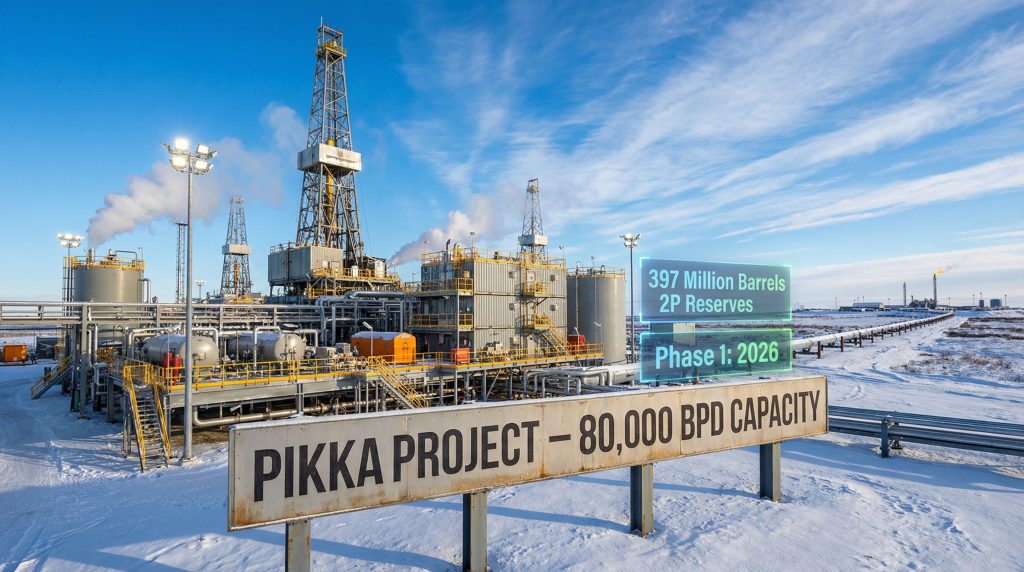
Santos reports that the Pikka Phase 1 development contains 2P reserves of approximately 397 million barrels, while the broader Pikka-Horseshoe-Stirrup complex holds an estimated 700 million barrels of recoverable oil resources. These figures position the project among the most substantial undeveloped resources on Alaska's North Slope, comparable in scale to several historic developments that have sustained the region's production for decades.
Environmental historian Philip Wight from the University of Alaska Fairbanks emphasises that Alaska's fiscal sustainability depends heavily on continued oil production. Furthermore, he notes that the state requires oil revenue to maintain its budget rather than the nation requiring Alaska's oil supply for energy security, highlighting potential trade war implications for energy policy.
When big ASX news breaks, our subscribers know first
How Does Pikka's Development Strategy Minimise Environmental Impact?
Modern Arctic oil development has evolved significantly toward consolidated infrastructure approaches that reduce surface footprints while maintaining operational efficiency. The Pikka Project in Alaska exemplifies this evolution through innovative engineering and strategic infrastructure integration.
Single-Pad Drilling Technology Implementation
The project's environmental strategy centres on a consolidated drilling pad measuring approximately 55 acres that will accommodate up to 45 wells. This represents a dramatic reduction compared to historical North Slope approaches that utilised multiple smaller pads connected by extensive road networks.
Extended-reach horizontal drilling (ERD) capabilities enable access to reservoirs from distances exceeding 5 miles laterally from a single pad location. This technology requires specialised drilling rigs capable of managing high torque and drag forces, with measured depths potentially exceeding 20,000 feet and horizontal laterals extending 3-5 miles from the drilling pad.
The ERD wells feature build sections where wellbore angles transition from vertical to horizontal over horizontal distances of 1,000-2,000 feet. Horizontal sections target specific zones within the Nanushuk formation using geosteering techniques that allow real-time wellbore trajectory adjustments based on formation evaluation data.
Infrastructure Integration and Efficiency Measures
Strategic infrastructure integration distinguishes the Pikka Project from earlier North Slope developments. The project connects to existing pipeline networks through a 35-mile pipeline linking production to the Trans-Alaska Pipeline System (TAPS) via established Kuparuk processing facilities.
Key infrastructure specifications include:
- Processing facility capacity: 120,000 barrels per day total fluid handling
- Seawater treatment plant: 100,000 barrels per day capacity for water injection
- Road network: 25 miles of new gravel roads
- Total surface footprint: Approximately 176 acres
The project's design philosophy centres on maximising resource extraction while minimising new infrastructure development through strategic integration with existing North Slope operations.
This approach contrasts sharply with historical developments like Kuparuk River, which utilised dozens of smaller drill sites connected by hundreds of miles of road networks. The consolidated approach reduces impacts to caribou migration corridors, subsistence hunting areas, and wetland ecosystems while improving operational efficiency.
What Are the Technical Specifications of Pikka's Production Systems?
The Pikka Project's technical architecture reflects decades of Arctic engineering evolution, incorporating advanced drilling technologies and processing systems designed for harsh environmental conditions.
Phase 1 Production Architecture
The development targets peak production of 80,000 barrels per day, with Santos projecting the field will reach plateau production within 2-3 years of first oil in 2026. At plateau rates, the project would generate approximately 29.2 million barrels annually.
The central processing facility incorporates:
- Oil-water separation equipment for produced fluid handling
- Gas compression systems for associated gas management
- Produced water treatment capabilities supporting injection operations
- Electrified field operations reducing direct emissions
The operations centre will accommodate approximately 500 workers during peak production, featuring residential quarters, dining facilities, medical services, and maintenance capabilities to support year-round operations in Arctic conditions.
Production Timeline and Capacity Scaling
Production Milestones:
- 2021-2023: Front-end engineering, regulatory permitting, and investment decision
- 2023-2025: Infrastructure construction including pad preparation and facility fabrication
- 2024-2026: Development drilling programme with multiple simultaneous rigs
- 2026: First oil production commencement
- 2027-2028: Ramp-up to plateau production of 80,000 bpd
- 2028-2036: Plateau production phase with gradual natural decline
Drilling and Completion Technologies
Wells in the Nanushuk formation require specialised completion designs incorporating multistage hydraulic fracturing in selected zones to achieve commercial production rates. Completion approaches typically employ cemented liner systems with plug-and-perf or sliding sleeve technologies to isolate and stimulate multiple zones along horizontal wellbores.
Hydraulic fracturing operations in Arctic environments present unique logistical challenges, including temperature management, water and proppant transportation, and flowback fluid handling. The development utilises seawater for both fracturing operations and subsequent reservoir pressure maintenance, reducing freshwater consumption while supporting enhanced recovery.
The water injection system incorporates high-pressure pumps capable of injection pressures exceeding 5,000 psi, subsea water intake infrastructure, and an extensive network of injection wells. Water injection ratios typically begin near 1:1 but increase over field life as reservoir pressure depletes.
How Do Santos and Repsol's Operational Roles Define Project Execution?
The Pikka Project in Alaska operates through a joint venture structure that combines Santos's operational expertise with Repsol's technical capabilities and financial strength, creating a partnership well-suited to Arctic development challenges.
Operator Responsibilities and Expertise
Santos holds a 51% working interest and serves as field operator, bringing experience from Australia's Cooper Basin and offshore Western Australia operations. The company's technical background in extended-reach drilling and harsh environment project management translates effectively to North Slope conditions.
As operator, Santos manages:
- Day-to-day field development and production operations
- Drilling programme supervision and contractor coordination
- Regulatory compliance and stakeholder engagement
- Safety and environmental performance oversight
Santos reports that its Alaska workforce consists of 98% Alaska residents, demonstrating the company's commitment to local hiring and community engagement. This approach supports both regulatory requirements and community relations essential for long-term operational success.
Joint Venture Technical Collaboration
Repsol's 49% working interest contributes financial capacity and technical expertise from global operations, including experience in Alaska's Cook Inlet, offshore Norway, and other challenging environments. The Spanish company's offshore development experience particularly supports subsea water intake systems and coastal infrastructure requirements.
The partnership operates under a joint operating agreement (JOA) defining decision-making processes, capital commitment procedures, and technical committee governance. Major decisions including development plans and capital budgets require approval from both partners, ensuring aligned strategic objectives.
The total capital investment for Pikka Phase 1 requires approximately $2.6 billion, funded according to ownership percentages. This substantial commitment reflects both the project's scale and the partners' confidence in long-term economics despite potential tariff-induced oil stagnation.
What Economic Impact Does Pikka Generate for Alaska's Industrial Sector?
The Pikka Project represents one of Alaska's most significant private investments in recent years, generating substantial employment opportunities and tax revenue for state and local governments.
Construction Phase Employment Generation
Job Creation Breakdown:
- Construction Phase: 2,600+ positions during peak activity
- Operational Phase: 500 permanent roles for field operations
- Local Hiring Priority: 75% Alaska-based spending commitment
- Santos Alaska Workforce: 98% state residents employed
Construction activities span multiple years and require diverse skill sets including heavy construction, electrical systems, process equipment installation, and pipeline construction. The project prioritises Alaska-based contractors and suppliers, supporting established North Slope service companies while developing new capabilities.
Revenue Generation for State and Local Governments
Alaska's oil taxation system generates revenue through multiple mechanisms including production taxes, corporate income taxes, and royalty payments. The state's oil tax structure, known as the Production Tax, applies rates based on production volumes and oil prices, providing fiscal benefits that scale with project performance.
The North Slope Borough, which encompasses the project area, receives property tax revenue from oil field infrastructure and facilities. These payments support local government services, infrastructure maintenance, and community programmes benefiting residents of Nuiqsut and other nearby villages.
Royalty payments flow to both the state of Alaska and Alaska Native corporations that own subsurface rights within the development area. These payments provide direct financial benefits to thousands of Alaska Native shareholders and support corporation dividend programmes and community investments.
How Does Pikka's Carbon Management Strategy Address Climate Concerns?
The project incorporates carbon management initiatives designed to achieve emissions performance in the global first quartile for oil production operations, reflecting evolving industry standards and regulatory expectations.
Emissions Intensity Benchmarking
Santos has committed to achieving net-zero operational emissions from the Pikka Project through a combination of operational efficiency measures and carbon offset partnerships. The company targets emissions intensity performance in the global first quartile for upstream oil operations, measured on a Scope 1 and Scope 2 basis.
Operational emission reduction strategies include:
- Electrified field operations where technically feasible
- High-efficiency equipment selection for processing facilities
- Leak detection and repair programmes for fugitive emissions
- Flare minimisation through gas handling optimisation
Alaska Native Corporation Environmental Partnerships
The project incorporates carbon offset initiatives developed in partnership with Alaska Native corporations, including forestry management projects that sequester atmospheric carbon through enhanced forest management practices. These partnerships integrate traditional ecological knowledge with modern carbon accounting methodologies.
Community-based offset initiatives provide economic benefits to local communities while supporting environmental objectives. These programmes demonstrate how resource development projects can contribute to broader sustainability goals through innovative partnership structures.
The next major ASX story will hit our subscribers first
What Challenges Could Affect Pikka's Long-Term Production Success?
Arctic oil development faces unique operational and market challenges that require careful risk management and adaptive operational strategies.
Arctic Operating Environment Considerations
Seasonal construction windows limit surface activities to winter months when tundra freezes provide adequate support for heavy equipment. This constraint requires extensive logistical planning and equipment mobilisation during narrow operational windows, potentially affecting project schedules and costs.
Permafrost stability represents a critical engineering challenge requiring specialised foundation designs and thermal management systems. Maintaining permafrost integrity prevents surface subsidence and ensures long-term infrastructure stability in warming Arctic conditions.
Wildlife protection protocols govern operational timing and activities to minimise impacts on caribou migration, polar bear denning, and bird nesting activities. The Teshekpuk caribou herd utilises areas near the development for calving and insect relief, requiring careful coordination of industrial activities with natural cycles.
Market and Regulatory Risk Factors
Oil price volatility directly impacts project economics, with sustained low prices potentially affecting development timing and ultimate recovery optimisation. The project's long-term nature requires economic resilience across multiple commodity price cycles, particularly given OPEC production impact on global markets.
Regulatory evolution at federal and state levels could influence operational requirements, environmental standards, and taxation frameworks. Changes in federal policies affecting Arctic development or carbon regulations could impact project economics and operational flexibility.
Transportation infrastructure dependency creates potential bottlenecks if TAPS throughput falls below minimum operational thresholds. The pipeline currently operates at approximately 25% of design capacity, making new production volumes like Pikka essential for continued system viability.
How Does Pikka Compare to Other Major North Slope Developments?
The North Slope petroleum province hosts multiple development projects spanning different geological targets, technological approaches, and scales of investment.
Scale Comparison with Existing Operations
| Project | Peak Production (bpd) | Development Cost | Timeline |
|---|---|---|---|
| Pikka Phase 1 | 80,000 | $2.6B | 2026 |
| Willow Project | 180,000 | $8B+ | 2029+ |
| Kuparuk River | 300,000+ | Historical | 1980s |
| Alpine Field | 100,000 | $1.3B | 2000 |
The Pikka Project represents a mid-scale development within the North Slope context, larger than recent satellite projects but smaller than major historical developments like Prudhoe Bay or Kuparuk River. This scale allows for significant production impact while maintaining manageable technical and financial risk profiles.
Technology and Efficiency Innovations
Modern North Slope developments like Pikka benefit from technological advances unavailable during earlier developments. Extended-reach drilling capabilities allow reservoir access from consolidated locations, while advanced completion techniques enable commercial production from previously uneconomic formations.
The project's cost-per-barrel development metrics reflect improved drilling efficiency and facility standardisation compared to earlier North Slope projects. Infrastructure sharing with existing facilities reduces capital requirements while improving overall system economics.
ConocoPhillips pioneered consolidated pad development with its Alpine field beginning in 2000, demonstrating extended-reach drilling economics that influence current projects. Subsequent Alpine satellites including Fiord, Nanuq, and Qannik refined this approach with wells reaching lateral extensions exceeding 4 miles.
What Does Pikka's Success Mean for Alaska's Energy Future?
The Pikka Project's development timeline and production profile will significantly influence Alaska's fiscal stability and energy sector evolution over the next several decades.
State Fiscal Model Implications
Alaska's state government depends heavily on oil revenue to fund operations and provide Permanent Fund dividends to residents. The state's unique fiscal structure, with no state income tax and minimal other revenue sources, creates dependence on petroleum sector performance for budget sustainability.
Declining North Slope production has created fiscal challenges requiring either new production sources or fundamental changes to Alaska's revenue model. Projects like Pikka provide essential production replacement, supporting continued state operations without requiring significant tax structure modifications.
Long-term economic sustainability considerations include diversification strategies and reduced petroleum dependence, but current fiscal realities require continued oil development to maintain existing government services and economic stability. Consequently, developing effective investment strategies becomes crucial for managing Alaska's resource-dependent economy.
Arctic Development Precedent Setting
The Pikka Project in Alaska establishes technological and environmental standards that will influence future North Slope developments. Successful implementation of consolidated drilling approaches and carbon management initiatives provides templates for subsequent projects.
Technology transfer opportunities from Pikka's development could benefit other Alaska resource projects and broader Arctic energy development. Engineering solutions and operational practices proven in Alaska's harsh conditions often find applications in other challenging environments globally.
Community engagement models developed for the project, including Alaska Native corporation partnerships and local hiring commitments, demonstrate approaches that balance resource development with community interests. These frameworks could influence future project development across Alaska's rural regions.
Disclaimer: This analysis is based on publicly available information and industry reports. Production forecasts, cost estimates, and timeline projections are subject to change based on operational performance, market conditions, and regulatory developments. Readers should consider multiple sources when evaluating energy investments or policy decisions.
Ready to Invest in the Next Major Energy Discovery?
Discovery Alert instantly identifies significant ASX mineral and energy discoveries using its proprietary Discovery IQ model, turning complex resource data into actionable insights for investors tracking sectors like oil, gas, and critical minerals. Understand why major resource discoveries can lead to substantial market returns by exploring Discovery Alert's dedicated discoveries page, showcasing historic examples of exceptional outcomes, and begin your 30-day free trial today to position yourself ahead of the market.