
June 3, 2026
What Are Primary Sources in Academic Research?
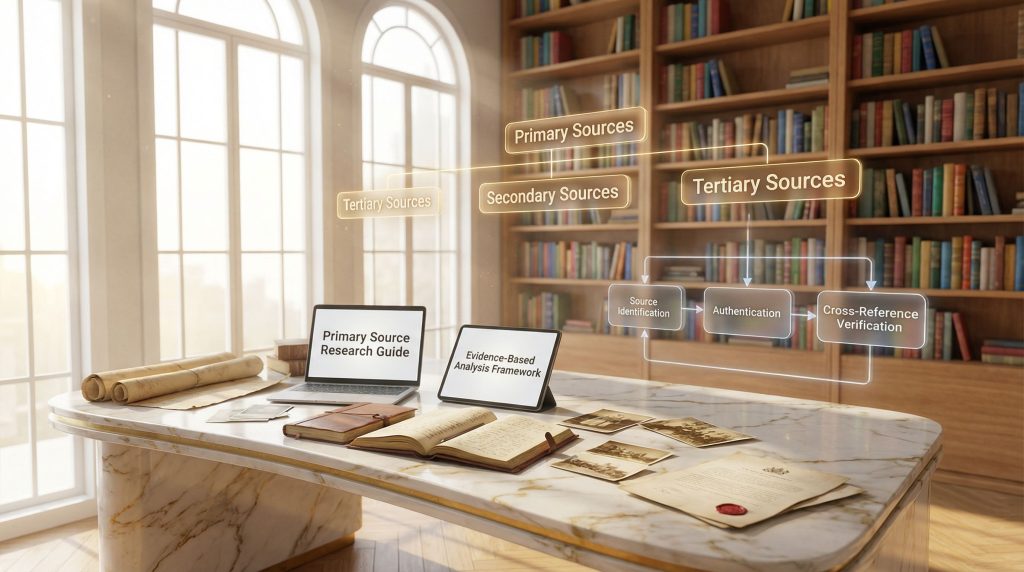
Primary sources serve as the foundational pillars of academic research, providing firsthand accounts and original documentation that scholars rely upon to build compelling arguments. Understanding how to identify, evaluate, and utilise these sources effectively can transform your research from superficial analysis to profound scholarly inquiry. Furthermore, mastering primary source research enables students and professionals to contribute original insights to their respective fields.
When big ASX news breaks, our subscribers know first
Understanding the Nature of Primary Sources
Primary sources represent original documents, artifacts, or records created during the time period being studied. These materials offer unfiltered access to historical events, scientific discoveries, and cultural phenomena without the interpretation layer that secondary sources provide.
Examples of primary sources include government documents, personal diaries, photographs, scientific research papers, and eyewitness testimonials. However, the classification can vary depending on your research context and academic discipline.
How Do Primary Sources Differ from Secondary Sources?
The distinction between primary and secondary sources forms the backbone of effective research methodology. Primary sources originate from the time period or event under investigation, whilst secondary sources analyse, interpret, or comment upon primary materials.
Consider a historical research project about World War II. A soldier's diary from 1943 represents a primary source, whereas a historian's 2020 analysis of that diary constitutes a secondary source. This distinction becomes crucial when establishing the credibility and relevance of your research materials.
Moreover, some sources can function as both primary and secondary depending on your research focus. A 1960s newspaper editorial about the Vietnam War serves as a primary source for studying public opinion during that era, but functions as a secondary source when researching the actual military events.
Where Can You Find Reliable Primary Sources?
Academic databases provide the most comprehensive access to verified primary materials. University libraries typically subscribe to specialised databases containing digitised manuscripts, government records, and scholarly publications.
Digital archives have revolutionised primary source accessibility. The National Archives, British Library, and Smithsonian Institution maintain extensive online collections that researchers can access remotely. These platforms often include search strategy tools to help identify relevant materials efficiently.
Local historical societies and museums frequently house unique primary sources unavailable elsewhere. These institutions often welcome researchers and may provide access to rare documents, photographs, and artifacts that could prove invaluable to your investigation.
Government agencies maintain public records that serve as excellent primary sources for policy research, legal studies, and historical analysis. Freedom of Information Act requests can unlock additional materials not readily available through standard channels.
Developing Effective Search Strategies
Successful primary source research requires systematic keyword identification techniques that help locate relevant materials across vast archives. Start by brainstorming synonyms, historical terms, and variant spellings related to your topic.
Boolean operators enhance search precision when navigating academic databases. Combining terms with "AND," "OR," and "NOT" operators helps narrow results to the most relevant materials whilst avoiding information overload.
Time period limiters prove particularly valuable when searching for primary sources. Most databases allow users to restrict results to specific date ranges, ensuring materials originate from the appropriate historical context.
Furthermore, exploring related subject headings can reveal additional sources you might otherwise overlook. Academic databases typically suggest alternative search terms based on your initial queries.
Critical Evaluation Techniques
Source authenticity represents the first consideration when evaluating primary materials. Verify the document's origin, authorship, and creation date through cross-referencing with established historical records.
Bias assessment requires careful consideration of the source creator's perspective, motivations, and potential agenda. Personal documents often reflect individual viewpoints that may not represent broader societal attitudes or factual accuracy.
Contemporary context analysis helps researchers understand how historical circumstances might have influenced source creation. Political climate, social norms, and technological limitations all impact primary source reliability and interpretation.
Additionally, corroboration through multiple primary sources strengthens research validity. When several independent sources support similar conclusions, confidence in your findings increases significantly.
The next major ASX story will hit our subscribers first
Practical Applications Across Disciplines
Historical research relies heavily on primary sources to reconstruct past events and understand historical causation. Letters, official records, and contemporary accounts provide historians with direct evidence about past societies and cultures.
Scientific research demands primary sources in the form of original experimental data, peer-reviewed studies, and laboratory reports. These materials enable researchers to verify findings, replicate experiments, and build upon existing knowledge.
Legal scholarship requires access to court cases, legislative records, and statutory materials. These primary sources form the foundation for legal arguments and policy analysis.
In addition, literary studies utilise original manuscripts, first editions, and author correspondence to understand creative processes and historical context surrounding literary works.
Common Challenges and Solutions
Access limitations frequently frustrate researchers seeking specific primary materials. Many archives require physical visits or impose restrictions on certain collections due to preservation concerns.
Digital preservation issues can render some electronic primary sources inaccessible over time. File format obsolescence and broken links compromise long-term research sustainability.
Copyright restrictions often limit researchers' ability to reproduce or distribute primary source materials, particularly for recent documents still under intellectual property protection.
However, collaborative research networks and interlibrary loan services help overcome many access barriers. Professional associations and academic conferences also facilitate source sharing among researchers with common interests.
Best Practices for Documentation
Proper citation ensures academic integrity whilst enabling other researchers to locate and verify your sources. Different academic disciplines require specific citation formats, so familiarise yourself with the appropriate style guide.
Detailed note-taking during primary source research prevents future confusion and saves time during the writing process. Record complete bibliographic information, relevant quotes, and your analytical observations for each source consulted.
Digital photography or scanning creates backup copies of fragile primary materials whilst respecting archive preservation policies. Always obtain permission before reproducing copyrighted materials.
Furthermore, maintaining organised research logs helps track which sources you've consulted and identifies gaps requiring additional investigation.
Maximising Research Impact
Primary source research transforms academic work from synthesis to original contribution. By accessing firsthand accounts and original documentation, researchers can challenge existing interpretations, uncover new evidence, and advance scholarly understanding.
Effective primary source utilisation requires systematic planning, critical evaluation, and meticulous documentation. These skills develop through practice and experience, ultimately enabling researchers to produce compelling, evidence-based arguments that contribute meaningfully to their academic disciplines.
Consequently, mastering primary source research techniques represents an essential skill for academic success and professional development across multiple fields of study.
Looking to Strengthen Your Research with Primary Sources?
Discovery Alert's proprietary Discovery IQ model delivers real-time insights on significant ASX mineral discoveries, helping researchers and investors identify actionable opportunities within the exploration sector. Just as primary sources provide unfiltered access to historical events, Discovery Alert provides immediate access to breakthrough discoveries that could transform your understanding of Australia's mining landscape.