Redcastle Resources Ltd
- ASX Code: RC1
- Market Cap: $16,206,691
Redcastle Resources Completes Queen Alexandra Grade-Control Drilling, Bringing RR-QA Development Area One Step Closer to Mine-Ready Status
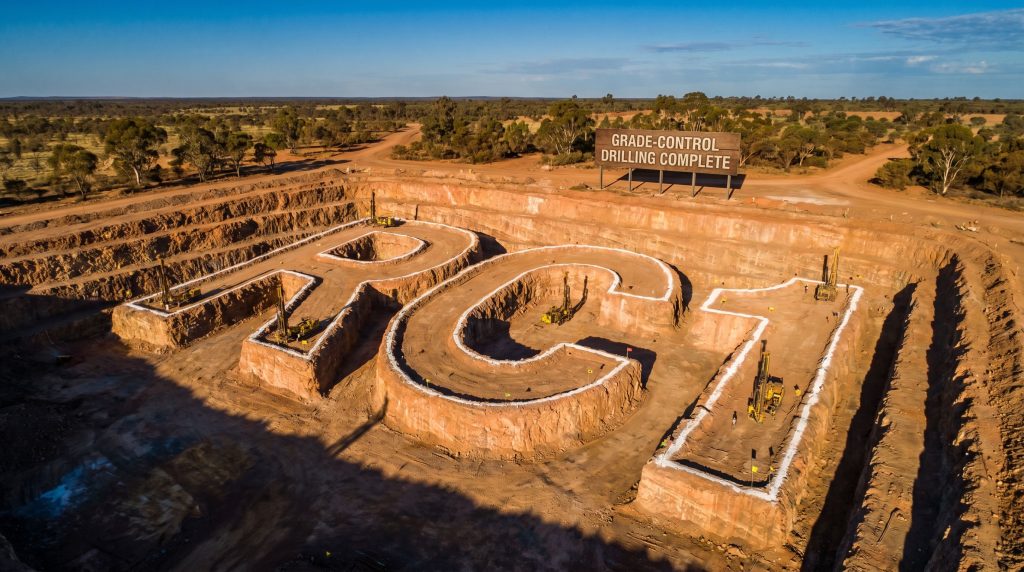
Redcastle Resources Limited (ASX: RC1) has announced the completion of its Queen Alexandra (QA) grade-control reverse circulation (RC) drilling programme, delivering 8,810 metres of drilling across the QA development area at its Redcastle Gold Project in Western Australia's Eastern Goldfields. The Redcastle Resources Queen Alexandra grade-control drilling completion at Redcastle Gold Project exceeded the previously announced target of 8,000m+, and when combined with the already completed and validated Redcastle Reef (RR) grade-control dataset, brings the Redcastle-BML Joint Venture's (RB JV) total grade-control RC drilling across the RR-QA development area to 22,349 metres.
This milestone represents a meaningful advance in Redcastle's mine-readiness workstream — converting geological confidence into practical, actionable inputs for ore-waste delineation, selective mining, and near-term mine scheduling.
When big ASX news breaks, our subscribers know first
The Numbers That Matter: RR-QA Grade-Control Drilling at a Glance
| Programme | Holes / Metres | Status |
|---|---|---|
| Redcastle Reef (RR) Grade-Control RC | 327 holes / 13,539m | Completed & Validated |
| Queen Alexandra (QA) Grade-Control RC | 8,810m | Completed (assays pending) |
| RR-QA Combined Total | 22,349m | Combined dataset in hand |
The completion of the QA programme means the RB JV now holds grade-control RC drilling datasets across both of its principal near-term development deposits — a significant step in preparing the project for mining operations.
What Is Grade-Control Drilling and Why Does It Matter?
Grade-control drilling is a close-spaced drilling technique used in the later stages of mine development — distinct from the broader-spaced exploration or resource definition drilling that precedes it. Where exploration drilling defines whether a deposit exists and how large it might be, grade-control drilling answers a more precise question: exactly where does the ore end and the waste begin?
The denser drilling grid generated by a grade-control programme allows geologists and mine planners to:
- Define ore-waste boundaries at a resolution suitable for selective mining
- Build high-confidence grade-control models for block-by-block ore characterisation
- Minimise dilution — the unintentional mixing of low-grade waste rock with higher-grade ore during mining
- Produce reliable scheduling inputs to optimise the sequence in which ore is extracted
For investors, the significance is straightforward: grade-control drilling is a prerequisite for efficient and profitable open-pit mining. Without it, a project cannot move from a geological resource estimate to a workable mine plan.
The completion of QA grade-control drilling, layered on top of the validated RR dataset, means the RB JV has now assembled the foundational drilling density needed to move both deposits closer to executable mine planning.
Technical Terms Explained
RC Drilling (Reverse Circulation): A drilling method using a rotating drill bit with air pressure to bring rock chips to the surface for sampling. Cost-effective and widely used for grade-control work.
Ore-Waste Delineation: The process of defining the boundaries between economically mineable ore and surrounding low-grade or barren rock.
Dilution: The reduction in average ore grade caused by the inclusion of waste rock during the mining process. Lower dilution = higher recovered grade = better economics.
QA/QC (Quality Assurance/Quality Control): A systematic process to verify that assay data is accurate and reliable before it is used in geological or mine planning models.
A Staged, Disciplined Approach to Mine Readiness
What stands out in Redcastle's operational approach is the logical, sequential build-up of mine-readiness data across the RR-QA development area. Furthermore, the QA grade-control programme did not arrive in isolation — it sits within a structured programme of work that has been systematically advancing over recent months.
The broader workstream context, referencing previously reported milestones, includes:
- Mineral Resource Estimate lift — RC1 lifted its Mineral Resource Estimate to 42,000 ounces (June 2025)
- Positive Scoping Study for QA — delivered in August 2025, providing economic context for the QA deposit
- Redcastle Reef grade-control drilling — commenced November 2025, with high-grade intercepts reported through to March 2026, and the dataset now completed and validated
- QA infill drilling — results reported April 2026, strengthening the QA geological model
- RR-QA diamond drilling — five-hole programme completed and reported May 2026, providing deeper structural understanding
- Key Regulatory Approval secured — reported May 2026
- QA grade-control RC drilling — now completed, with 8,810m drilled, exceeding the planned programme
This sequenced progression reflects a project team working methodically through the technical and regulatory requirements to bring the RR-QA development area to a mine-ready condition.
What the QA Grade-Control Data Is Designed to Deliver
The completed QA grade-control dataset is expected to support several critical mine planning functions, each of which contributes directly to the technical and economic viability of a future mining operation:
- Ore-waste boundary definition — establishing the precise limits of mineable material at the resolution required for pit design
- Grade-control modelling and local geological interpretation — refining the QA geological model with higher-confidence spatial data
- Selective mining and dilution-control planning — enabling mine operators to extract ore more precisely, reducing waste movement and improving recovered grade
- Mine scheduling and pit execution inputs — feeding the data needed to sequence ore extraction and optimise cash flow timing
- Integration with RR — combining QA outputs with the validated RR grade-control dataset to support a unified RR-QA development plan
Chairman Commentary
"Completion of the Queen Alexandra grade-control programme is another practical step in the staged advancement of the RR-QA development area. With 8,810m now drilled at QA, and the completed and validated 13,539m RR grade-control dataset already in hand, the RB JV has now completed 22,349m of grade-control RC drilling across the two principal near-term development deposits. This work is about converting geological confidence into practical mine planning inputs." — Dr Ray Shaw, Chairman
Next Steps: What Investors Should Watch For
With the QA grade-control drilling physically completed, the focus now shifts to assay results and their integration into mine planning models. Consequently, the following workstreams are expected to progress:
| Next Step | Detail |
|---|---|
| QA assay receipt & QA/QC review | Results pending; to be reported where material following validation |
| QA grade-control model update | Integration of assay results into QA geological and grade-control model |
| RR dataset integration | Continued incorporation of validated RR grade-control data into mine planning |
| Ore-waste and dilution refinement | Updating ore-waste interpretation and dilution-control assumptions across RR-QA |
| Broader mine-readiness workstreams | Continued progression of operational, technical, statutory and commercial readiness |
The pending QA assay results represent the next near-term catalyst for investors to monitor. While no new Exploration Results, Mineral Resources, or Ore Reserves are reported in this announcement, the receipt and validation of QA assays will determine whether material results require reporting and will directly feed into updated grade-control and mine planning models.
The Investment Case: Why This Milestone Matters
Redcastle Resources sits at an inflection point that is relatively uncommon among small-cap Australian gold explorers — the transition from geological definition to operational mine readiness. Several factors underpin the investment thesis at this stage of the company's development.
1. Two Grade-Control Datasets Now in Hand
With both the RR and QA grade-control programmes completed, the RB JV holds the close-spaced drilling information needed across both principal near-term development deposits. This is not a speculative data gap — it is a practical foundation for mine planning.
2. A Demonstrated Programme Delivery Track Record
The QA grade-control programme exceeded its planned metreage target (8,810m vs. 8,000m+ planned). Combined with the completed RR dataset and the broader sequence of technical milestones delivered over the past 12 months, this demonstrates that the team is executing against its stated development plan.
3. A Positive Scoping Study Already Completed for QA
A positive QA Scoping Study was delivered in August 2025, providing an early economic framework for the deposit. In addition, the grade-control data now being assembled is intended to refine and strengthen those inputs.
4. Key Regulatory Approval Already Secured
As reported in May 2026, a key regulatory approval has been obtained — removing one significant hurdle that often delays junior mining project advancement.
5. A Growing Eastern Goldfields Tenement Portfolio
Upon completion of the Kilkenny Belt farm-in, RC1's Eastern Goldfields portfolio will encompass approximately 12,875 hectares (128.75 km²) across 66 Prospecting Licences, four Mining Leases, three Exploration Licences, and 12 Mining Lease Applications — providing a meaningful exploration and development footprint beyond the near-term RR-QA focus area.
6. Multiple Exploration Targets Beyond RR-QA
Targets including Morgan's Castle East, Sligo, Coronation, South Queen, Battery Lode, and the TBone Belt provide additional upside optionality beyond the company's primary development corridor.
The next major ASX story will hit our subscribers first
Why Investors Should Keep RC1 on Their Radar
Redcastle Resources is executing a clear, staged transition from explorer to gold producer — a journey the company itself flagged directly in its May 2026 announcement titled "Redcastle Set to Transition from Explorer to Gold Producer." The Redcastle Resources Queen Alexandra grade-control drilling completion at Redcastle Gold Project is not a headline event in isolation, but it is a demonstrably important operational milestone in a logical sequence of steps that is methodically closing the gap between geological understanding and mine execution.
For investors focused on near-term gold production catalysts within the Australian junior resources sector, the combination of a completed 22,349-metre grade-control dataset across two deposits, a validated scoping study, a secured regulatory approval, and pending assay results from QA creates a meaningful pipeline of near-term news flow and technical de-risking events.
The company's Eastern Goldfields location provides additional strategic value. This region hosts some of Australia's most productive gold mines and established mining infrastructure, potentially reducing capital requirements and operational complexity for a future development scenario.
Investment Thesis Summary
Redcastle Resources (ASX: RC1) has now completed grade-control RC drilling across both of its principal near-term development deposits, accumulating 22,349 metres of close-spaced drilling data across the RR-QA development area. With pending QA assay results representing the next near-term catalyst, and a series of mine-readiness workstreams actively advancing, RC1 is a junior gold developer executing systematically toward production readiness in Western Australia's proven Eastern Goldfields — and one that warrants close attention from investors tracking the junior-to-producer transition space.
Ready to Track RC1's Journey From Explorer to Gold Producer?
Redcastle Resources (ASX: RC1) has now assembled 22,349 metres of grade-control RC drilling data across its two principal near-term development deposits at the Redcastle Gold Project — with QA assay results representing the next near-term catalyst and a clear sequence of mine-readiness milestones actively progressing. For investors seeking exposure to a junior gold developer executing systematically toward production readiness in Western Australia's Eastern Goldfields, RC1 warrants close attention. Visit redcastle.net.au to learn more about the company, its projects, and the investment case.