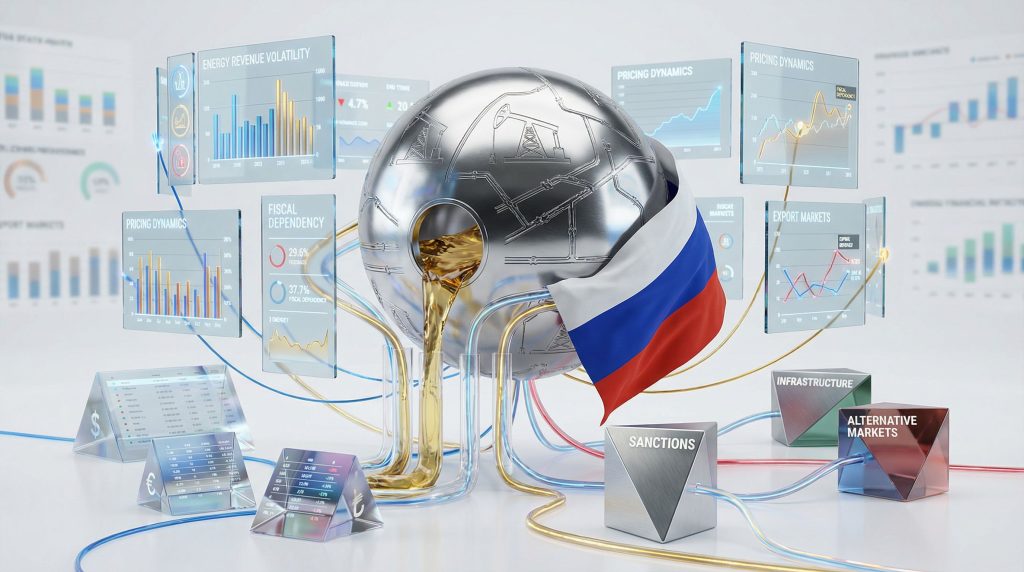
The Paradox of Resource Abundance in Modern Geopolitics
Resource-dependent economies face a fundamental structural challenge that transcends conventional economic theory. The concentration of government revenues within a single commodity sector creates systemic vulnerabilities that compound during market downturns, transforming apparent strengths into critical weaknesses. This phenomenon becomes particularly acute when geopolitical tensions intersect with commodity price volatility, creating cascading effects throughout national fiscal frameworks. Russia's energy vulnerability exemplifies how strategic assets can become strategic liabilities under sustained external pressure.
The concept of abundant natural resources serving as economic foundation contains inherent contradictions that manifest during periods of external pressure. Nations that derive substantial portions of their fiscal revenues from energy exports develop institutional dependencies that prove difficult to unwind when market conditions deteriorate. This structural vulnerability operates independently of the actual volume of resources available.
Understanding the "Resource Curse" Through Contemporary Examples
Economic analysis demonstrates that countries generating more than 25-30% of government revenue from resource exports experience significantly greater fiscal volatility compared to diversified economies. The World Bank's comprehensive analysis reveals that such nations face growth volatility rates 1.5-2 times higher than their non-resource-dependent counterparts over multi-decade periods.
The mechanism functions through budget rigidity, where governments structure expenditures across defence, social programs, and infrastructure based on average revenue expectations during commodity booms. When revenues contract, spending commitments cannot be rapidly adjusted, forcing difficult choices between reserve depletion, increased borrowing, spending reductions, or alternative revenue generation.
Recent developments illustrate this dynamic dramatically. Russia's oil and gas revenues fell 35% year-over-year in November 2025, dropping from approximately 800 billion rubles annually to 520 billion rubles. This represents roughly $6.6 billion monthly, with cumulative revenues for January-November 2025 estimated at approximately $102 billion, down 22% from the prior year.
When Strategic Assets Become Strategic Liabilities
The transformation occurs when resource abundance creates institutional lock-in effects. Energy revenues that constitute approximately 25% of Russia's federal budget fund multiple simultaneous commitments including defence expenditure, social welfare programs, regional transfers, infrastructure maintenance, and sovereign wealth fund accumulation. This mirrors challenges seen in Canada energy transition policies where established energy infrastructure requires careful management during economic shifts.
Historical precedents demonstrate the severity of this challenge. Venezuela experienced oil revenue collapse from approximately $100 billion annually in 2011 to roughly $3 billion by 2019, while maintaining budget structures built around $60-80 billion annual expectations. Nigeria faced similar disruption when oil prices fell from $100+ to $40 per barrel between 2014-2020, forcing budget cuts averaging 30-40% annually.
What Structural Factors Drive Energy Revenue Volatility?
Energy revenue volatility stems from the intersection of global price dynamics, market access constraints, and currency conversion effects. These factors operate both independently and in multiplicative combinations that amplify negative impacts during unfavourable market conditions.
Global Commodity Price Dynamics and Market Integration
Oil price volatility, measured by annual standard deviation of monthly returns, averaged 28-35% during the 2015-2025 period, compared to 12-15% for broader equity markets. This inherent instability reflects the complex interplay of supply-demand fundamentals, geopolitical risk premiums, and financial market speculation.
Energy Revenue Volatility Factors:
| Factor | Impact Coefficient | Description |
|---|---|---|
| Global Price Volatility | 28-35% annual | Standard deviation of monthly returns |
| Currency Exchange Effects | 15-25% amplification | Stronger domestic currency reduces conversion |
| Market Access Restrictions | 20-35% discount | Sanctions-induced price penalties |
| Infrastructure Resilience | 5-15% cost premium | Transportation and logistics constraints |
The Urals crude discount to Brent widened to 23% in November 2025, representing the steepest level in over twelve months. Some Russian crude loadings were reported in the mid-$30s per barrel range, matching 2022 price collapse lows and demonstrating how market access restrictions compound pricing pressures.
The Role of Market Access in Revenue Stability
Sanctions fundamentally alter price discovery mechanisms by restricting access to transparent, competitive markets. Russian crude increasingly relies on bilateral negotiations with limited buyers rather than benchmark pricing established through regulated exchanges. This creates information asymmetries that favour purchasers, who can negotiate discounts based on perceived seller desperation rather than objective quality metrics.
Export route dependencies add significant costs and delays. Russian oil requires longer shipping routes via Suez or Cape routes versus direct Mediterranean access available to Middle Eastern producers. This transportation differential adds 15-20 days transit time, creating carrying costs of approximately $0.80-1.20 per barrel on $50-60 oil.
The expansion of shadow tanker fleets, from approximately 50 vessels in 2021 to over 300 by 2024, demonstrates adaptation efforts but at significant cost premiums. These vessels operate without traditional Western insurance coverage, adding $1-2 per barrel to effective delivery costs through insurance, crew, and maintenance premiums.
How Do Sanctions Transform Energy Market Dynamics?
Sanctions create structural market reconfigurations that extend beyond temporary disruptions. The impact manifests through permanent changes to pricing power, logistics networks, and buyer-seller relationships that persist even after potential resolution of underlying conflicts. Furthermore, the IEA's analysis of Russia's war impact on Ukraine demonstrates the broader energy security implications.
Economic Isolation and Price Discovery Mechanisms
Traditional benchmark pricing relies on transparent, regulated exchanges with standardised contracts and multilateral participation. Sanctions force isolated producers into bilateral negotiations with reduced competitive pressure, systematically reducing price realisation.
The timeline of sanctions impact reveals escalating constraints. Initial EU sanctions in 2014 affected approximately 7-8 million barrels per day through investment restrictions and technology embargoes. Escalated sanctions from February 2022 onward forced redirection of 2-3 million barrels per day from Western to non-Western markets within 6-12 months.
Alternative Market Development and Discount Pricing
The fundamental restructuring of energy trade relationships under sanctions pressure creates permanent shifts in global market dynamics, with isolated producers accepting systematically lower prices to maintain export volumes despite similar product quality metrics.
Asian refineries accepting Russian crude at discounts face switching costs from established Middle Eastern suppliers, requiring capital investment for different crude blends. However, Asian absorption capacity for Russian crude remains limited, forcing marginal barrels to accept 25-35% discounts versus benchmark pricing.
Iranian sanctions precedent demonstrates the persistence of these effects. Following 2018 sanctions re-imposition, Iranian crude traded at 15-25% discounts to Brent despite comparable quality metrics. The discount structure persisted because buyers faced legal and compliance risks, forcing acceptance of below-market pricing to maintain any export capability.
The Economics of Circumvention and Compliance Costs
Payment system circumvention through cryptocurrency, barter arrangements, and non-SWIFT banking creates working capital delays and transaction costs. These alternative mechanisms typically involve 2-5% transaction fees plus extended settlement periods that create opportunity costs for delayed revenue recognition.
Shadow fleet operations require specialised insurance arrangements, crew management, and maintenance protocols that add operational complexity. Vessels operating outside traditional maritime insurance frameworks face higher casualty risks and limited port access, further constraining revenue optimisation. Additionally, research on energy sanctions effects reveals how these constraints impact state capacity.
What Are the Fiscal Implications of Declining Energy Revenues?
Declining energy revenues create immediate fiscal stress that compounds over time as governments exhaust available adjustment mechanisms. The severity depends on the degree of revenue concentration and the flexibility of spending commitments.
Budget Structure Analysis in Petro-States
Fiscal Dependency Metrics:
| Country | Energy Revenue % | Break-even Price | Reserve Timeline | Flexibility Index |
|---|---|---|---|---|
| Russia | 25% | $60-65/barrel | 6-7 years | Limited |
| Saudi Arabia | 60-70% | $70-80/barrel | 15-20 years | Moderate |
| Venezuela | 85-90% | $40-50/barrel | Depleted | Minimal |
| Nigeria | 50-60% | $55-65/barrel | 3-5 years | Limited |
Russia's estimated $28.5 billion annual revenue shortfall based on the 22% decline forces immediate fiscal adjustments. The Russian National Welfare Fund, estimated at $186 billion as of late 2024, could sustain current deficit levels for approximately 6-7 years, assuming no additional revenue deterioration.
Military Expenditure vs. Economic Sustainability Trade-offs
Government spending remains locked into wartime levels, with defence expenditure increasing from historical 12-15% of budget to an estimated 18-22% during the 2022-2025 period. This spending rigidity reduces fiscal flexibility precisely when Russia's energy vulnerability demands greater adaptability. Similar trade-offs emerge globally, as seen in discussions around Saudi Arabia exploration impact on regional economics.
The four available fiscal adjustment options each carry significant costs:
Reserve depletion provides immediate relief but creates psychological and geopolitical signals of weakening position. Once depleted, governments face immediate confrontation with more painful alternatives.
Domestic borrowing expansion faces constraints from elevated interest rates. Russian Central Bank rates above 19% make debt expensive while creating crowding-out effects that absorb credit from private investment.
Spending reductions prove politically difficult given wartime commitments. Regional transfer cuts destabilise federal structures, defence cuts weaken military capabilities, and social spending reductions generate domestic discontent.
Revenue enhancement through non-energy sources faces compliance challenges in sanctions-constrained environments. Tax increases encounter evasion risks, while privatisation requires buyer pools excluded by sanctions.
Sovereign Wealth Fund Dynamics Under Fiscal Stress
Sovereign wealth funds designed for intergenerational savings become emergency fiscal tools during revenue crises. However, depletion rates accelerate when multiple budget pressures converge simultaneously. Fund management must balance immediate fiscal needs against long-term sustainability, often under political pressure that favours short-term relief.
Historical precedent from Saudi Arabia's 2015-2016 experience demonstrates the progression. Facing approximately $140 billion in revenue shortfalls, Saudi Arabia pursued simultaneous reserve depletion ($40+ billion from SAMA), domestic borrowing ($8-10 billion), spending cuts (20-30% capital expenditure reduction), and delayed private sector payments. Recovery required until 2017-2018 when oil prices rebounded to $60-70 per barrel.
How Do Infrastructure Vulnerabilities Amplify Economic Risk?
Energy infrastructure represents critical economic chokepoints where targeted disruptions create disproportionate revenue impacts. The vulnerability extends beyond immediate production losses to long-term capacity constraints and investment deterrence effects.
Critical Infrastructure as Economic Chokepoints
Pipeline networks, processing facilities, and export terminals concentrate revenue flows through limited physical assets. Single-point failures can disrupt revenue streams worth billions annually, while repair costs compound economic losses through extended downtime periods.
Modern energy infrastructure operates as integrated systems where disruption at any point affects overall throughput capacity. Export terminals, pipeline junctions, and processing plants represent concentrated value that becomes increasingly vulnerable as geopolitical tensions escalate.
Repair Costs vs. Revenue Loss Calculations
Infrastructure Attack Economic Impact Analysis:
- Immediate Production Loss: Calculate daily revenue impact based on disrupted capacity
- Repair Timeline Assessment: Estimate restoration period based on damage severity and parts availability
- Cumulative Revenue Loss: Multiply daily impact by restoration timeline
- Investment Deterrence Effect: Assess long-term capacity impact from delayed maintenance and expansion
- Insurance Premium Increases: Factor elevated coverage costs for future operations
A typical major pipeline disruption affecting 1 million barrels per day capacity creates immediate revenue loss of approximately $35-40 million daily at current price levels. Repair timelines ranging from weeks to months compound losses exponentially, while replacement parts availability under sanctions extends restoration periods significantly.
Investment Deterrence and Technological Stagnation
Infrastructure vulnerabilities create long-term capacity constraints by deterring new investment and limiting maintenance activities. International energy companies withdraw technical expertise and capital, while domestic capabilities face technology transfer restrictions that limit efficiency improvements.
The compound effect reduces production capacity over multi-year periods as existing infrastructure degrades without adequate maintenance and replacement. Russian oil production faced particular constraints from limited access to advanced drilling technology and enhanced recovery techniques previously provided by Western service companies.
What Role Does Currency Policy Play in Energy Revenue Management?
Currency dynamics create additional complexity for energy-dependent economies by affecting the conversion rate between export earnings and domestic budget requirements. These effects operate independently of commodity prices and can amplify or offset market-driven revenue changes.
Exchange Rate Dynamics in Resource-Dependent Economies
Resource exporters face unique currency pressures from large foreign exchange inflows during commodity booms and outflows during downturns. Central banks must balance exchange rate stability against competitiveness and fiscal revenue optimisation.
A stronger ruble reduces budget revenue conversion efficiency, as each dollar earned from exports generates fewer rubles for domestic spending. This creates the paradoxical situation where currency strength reduces fiscal capacity, forcing difficult trade-offs between exchange rate policy and budget sustainability.
The Double-Edged Sword of Currency Strength
Currency Impact Analysis:
| Scenario | Revenue Effect | Import Cost Impact | Net Fiscal Impact |
|---|---|---|---|
| Strong Ruble | Reduced conversion | Lower import costs | Negative for budget |
| Weak Ruble | Enhanced conversion | Higher import costs | Positive for budget |
| Stable Exchange | Predictable conversion | Moderate import costs | Budget neutral |
Currency policy decisions affect multiple economic variables simultaneously. Ruble strength reduces energy revenue conversion but lowers import costs for essential goods and technology. Conversely, ruble weakness enhances revenue conversion but increases costs for imported equipment, consumer goods, and debt service on foreign currency obligations.
The November 2025 revenue decline reflected this multiplicative effect: falling dollar-denominated prices combined with stronger ruble conversion rates to create compound revenue reduction. Each factor independently reduced revenues, but their combination amplified the total impact beyond simple addition.
How Do Global Energy Transitions Affect Traditional Exporters?
Long-term energy demand projections create additional uncertainty for resource-dependent economies as global markets shift toward alternative energy sources. Traditional exporters face potential demand peak scenarios that fundamentally alter revenue projections and asset values. Consequently, developing a critical minerals strategy becomes essential for economic transition planning.
Demand Peak Scenarios and Long-term Revenue Projections
Multiple forecasting scenarios suggest global oil demand may peak within the next decade as electric vehicle adoption accelerates and renewable energy deployment expands. This creates strategic planning challenges for governments dependent on hydrocarbon revenues over multi-decade timeframes.
Peak demand scenarios force difficult choices between maximising short-term revenues through increased production versus maintaining longer-term pricing power through supply restraint. The optimal strategy depends on reserve depletion rates, production costs, and alternative economic development capabilities.
Stranded Asset Risks in the Energy Sector
High-cost production assets face particular vulnerability in demand-constrained scenarios. Resources requiring significant capital investment for development may become economically unviable before reserve depletion, creating stranded asset losses for both governments and international investors.
Arctic offshore projects, unconventional oil developments, and remote pipeline infrastructure represent potential stranded assets if demand peaks occur sooner than anticipated. The regulatory and technological constraints imposed by sanctions accelerate this risk by limiting access to cost-reduction technologies.
Market Share Competition in a Contracting Market
Demand peak scenarios intensify competition among exporters for remaining market share. Low-cost producers gain advantage while high-cost or politically constrained suppliers face progressive marginalisation from global markets.
This competition dynamic favours exporters with diversified customer bases, efficient production capabilities, and flexible logistics networks. Sanctions-constrained producers face systematic disadvantage in competing for scarce market share as global demand potentially contracts.
What Economic Diversification Strategies Can Mitigate Energy Dependency?
Economic diversification requires systematic development of non-energy revenue sources and industrial capabilities. However, successful diversification faces significant barriers in sanctions-constrained environments where technology transfer, capital access, and market integration opportunities become limited.
Industrial Policy Options for Resource-Rich Economies
Diversification strategies typically focus on value-added processing, manufacturing development, and service sector expansion. However, each approach requires specific prerequisites including technology access, skilled labour, capital investment, and market access that may be constrained by sanctions.
Value-added processing of natural resources represents the most direct diversification path, utilising existing resource endowments while capturing additional revenue through downstream activities. Petrochemical processing, refined product manufacturing, and specialty chemical production can generate higher per-barrel revenues than crude oil exports.
Value-Added Processing vs. Raw Material Exports
Processing industries require significant capital investment, technical expertise, and reliable market access for finished products. Sanctions restrictions on technology transfer and equipment imports create barriers to developing these capabilities, while export market access limitations reduce the profitability of value-added production.
Successful diversification examples demonstrate the importance of institutional development, education investment, and gradual transition strategies. Norway's sovereign wealth fund accumulation and gradual economic diversification provides a model, though implementation under sanctions pressure faces additional complications.
The Innovation Deficit in Sanctions-Constrained Environments
Technology restrictions limit access to advanced production methods, digital technologies, and research collaboration that support economic diversification. This creates an innovation deficit that compounds over time, reducing competitiveness in global markets for both traditional and alternative products.
Domestic innovation capabilities require substantial investment in education, research infrastructure, and industrial development. However, such investments compete directly with immediate fiscal pressures for defence spending, social programs, and basic government services.
How Do Geopolitical Tensions Reshape Global Energy Economics?
Geopolitical fragmentation creates parallel energy market structures with different pricing mechanisms, payment systems, and regulatory frameworks. This fragmentation reduces market efficiency while creating opportunities for some participants and constraints for others. Moreover, US–China trade war impacts demonstrate how bilateral tensions can further complicate global energy economics.
Supply Chain Fragmentation and Regional Market Formation
Global energy markets increasingly segment into regional trading blocs with limited integration. Western markets emphasise sanctions compliance and alternative supplier development, while non-Western markets absorb displaced volumes at discount pricing structures.
This fragmentation creates pricing inefficiencies where similar products trade at different prices in separated markets. Arbitrage opportunities exist but face regulatory, logistical, and financial constraints that limit market integration possibilities.
The Economics of Energy Security vs. Energy Efficiency
Energy security considerations increasingly override pure economic efficiency in procurement decisions. Buyers pay premium prices for supplies from politically stable sources while accepting higher costs to avoid dependency on potentially unreliable suppliers.
This shift creates permanent market structure changes where geopolitical risk premiums become embedded in pricing mechanisms. Traditional lowest-cost sourcing strategies give way to diversified supply portfolios that prioritise reliability over cost optimisation. Additionally, tariffs impact on investments compounds these economic distortions.
Price Premium Analysis for "Secure" vs. "Risky" Supply Sources
Market analysis reveals systematic price premiums for energy supplies from sources considered politically stable and sanctions-compliant. Norwegian gas commands premiums over Russian alternatives, while Middle Eastern crude from politically stable producers trades above benchmark pricing.
These premiums reflect insurance value against supply disruption risks and compliance costs associated with potentially sanctioned suppliers. The premium structure creates permanent competitive disadvantage for suppliers under geopolitical pressure, regardless of production costs or product quality.
What Are the Long-term Implications for Global Energy Markets?
Structural changes in global energy markets create lasting effects that persist beyond resolution of immediate geopolitical tensions. Investment flows, capacity development, and trading relationships reflect these permanent shifts in market dynamics.
Market Concentration and Pricing Power Redistribution
Sanctions-driven market fragmentation redistributes pricing power among remaining suppliers with unrestricted market access. Middle Eastern producers, U.S. shale operators, and other non-sanctioned suppliers gain enhanced leverage in price negotiations with buyers seeking supply security.
This concentration effect strengthens OPEC+ coordination possibilities as member countries face reduced competition from sanctioned suppliers. Enhanced pricing power creates opportunities for supply management strategies that support price levels above marginal production costs.
Investment Flow Redirection and Capacity Development
Global Energy Investment Shifts:
| Region | Traditional Investment | Current Investment | Technology Access | Market Access |
|---|---|---|---|---|
| North America | $150-200B annually | $200-250B annually | Full access | Unrestricted |
| Middle East | $100-150B annually | $120-180B annually | Western technology | Global markets |
| Sanctioned Regions | $80-120B annually | $40-60B annually | Restricted access | Limited markets |
| Alternative Suppliers | $50-80B annually | $100-150B annually | Growing access | Expanding markets |
Investment redirection accelerates capacity development in non-sanctioned regions while constraining expansion in affected areas. This creates medium-term supply capacity shifts that alter global production capabilities independent of current political tensions.
Western technology companies and financial institutions redirect investment toward politically stable regions with unrestricted market access, creating technology and capital concentration effects that compound over multi-year investment cycles.
The New Geography of Energy Influence
Geopolitical energy influence redistributes toward suppliers with combination of resource endowments, political stability, and market access capabilities. Traditional energy powerhouses under sanctions pressure lose global influence while alternative suppliers gain strategic importance.
This redistribution creates new alliance structures and diplomatic relationships based on energy security considerations. Consumer nations diversify supply relationships while producer nations adapt to changed market access patterns and revenue optimisation strategies.
Frequently Asked Questions About Energy Dependency Vulnerabilities
How quickly can energy-dependent economies diversify their revenue base?
Economic diversification requires systematic development over 10-15 year timeframes minimum. Successful examples like Norway and the UAE demonstrate that meaningful diversification requires sustained institutional development, education investment, and gradual transition strategies. Sanctions constraints extend these timelines by limiting technology access and market integration opportunities.
What percentage of government revenue from energy indicates dangerous dependency?
Economic analysis suggests that energy revenues exceeding 25-30% of total government revenue create significant vulnerability to commodity price volatility. Beyond 50% dependency, governments face severe fiscal constraints during market downturns, while dependency above 70% approaches crisis-prone territory where alternative adjustment mechanisms become severely limited.
Can alternative export markets fully compensate for lost traditional buyers?
Alternative markets rarely provide full compensation due to reduced competitive pressure, transportation cost increases, and payment system complications. Russian experience demonstrates that Asian markets absorb displaced volumes but at discount pricing structures, while alternative payment mechanisms create additional transaction costs and working capital delays.
How do infrastructure attacks affect long-term production capacity?
Infrastructure disruptions create cascading effects beyond immediate production losses. Repair timelines extend under sanctions constraints due to limited equipment availability, while investment deterrence reduces long-term maintenance and expansion activities. The compound effect reduces sustainable production capacity over multi-year periods as existing infrastructure degrades without adequate replacement.
Strategic Implications for Investors and Policymakers
Russia's energy vulnerability demonstrates broader principles applicable to resource-dependent economies globally. The convergence of commodity price volatility, sanctions pressure, and currency dynamics creates systematic risks that extend beyond immediate geopolitical tensions.
Risk Assessment Frameworks for Energy-Dependent Economies
Investment analysis must incorporate multifactor risk assessment that examines revenue concentration, fiscal flexibility, reserve adequacy, and diversification capabilities. Traditional commodity price analysis proves insufficient when geopolitical factors permanently alter market access and pricing mechanisms.
Key risk indicators include: energy revenue dependency ratios above 30%, reserve depletion timelines under 10 years, limited alternative market access, infrastructure vulnerability to disruption, and currency conversion volatility exceeding commodity price volatility.
Portfolio Diversification Strategies in Volatile Commodity Markets
Geopolitical risk assessment requires understanding that market access restrictions create permanent structural changes to revenue potential, not temporary disruptions that resolve through diplomatic settlement.
Portfolio strategies must account for the permanence of market structure changes created by sanctions and geopolitical tensions. Traditional commodity investment approaches based on supply-demand fundamentals require adjustment for regulatory constraints, infrastructure vulnerabilities, and payment system complications.
Diversification across geographic regions, political jurisdictions, and commodity types provides protection against concentrated geopolitical risks. However, correlation effects increase during crisis periods when multiple markets face simultaneous stress.
Policy Tools for Managing Energy Revenue Volatility
Effective policy frameworks require combination of fiscal rules, reserve management strategies, and diversification incentives implemented during favourable market conditions. Counter-cyclical fiscal policies, sovereign wealth fund accumulation, and economic diversification programs provide buffers against revenue volatility.
However, implementation under sanctions pressure faces additional constraints where traditional policy tools like international borrowing, technology imports, and foreign direct investment become limited. Alternative approaches may require regional cooperation agreements, domestic capacity building, and gradual transition strategies adapted to constrained circumstances.
The evolution of Russia's energy vulnerability demonstrates how resource abundance can transform into strategic weakness when market access becomes constrained and alternative revenue sources remain underdeveloped. These dynamics extend beyond immediate geopolitical tensions to create lasting changes in global energy economics and investment patterns.
Looking to Capitalise on Critical Mineral Discoveries?
Discovery Alert's proprietary Discovery IQ model delivers instant notifications on significant ASX mineral discoveries, empowering investors to identify actionable opportunities ahead of broader market movements. With major mining discoveries historically generating exceptional returns as demonstrated on our discoveries page, understanding these patterns becomes crucial for positioning yourself strategically in volatile resource markets.