How Resource Diversification Strategies Are Transforming Mining Territories
Across global mining landscapes, the pursuit of commodity diversification has emerged as a strategic imperative for resource-dependent economies seeking resilience against market volatility. While major industrial minerals dominate headlines and export revenues, specialised sectors like gemstone extraction represent crucial elements in comprehensive resource strategies. These niche markets offer unique value propositions through artisanal operations that support regional communities while contributing to national mining portfolios.
The strategic importance of diversified mining operations extends beyond immediate economic returns. Small-scale specialised mining creates employment opportunities in remote areas where alternative economic activities remain limited. Furthermore, these sectors often require lower capital investment thresholds, enabling broader participation in resource development activities compared to large-scale industrial operations.
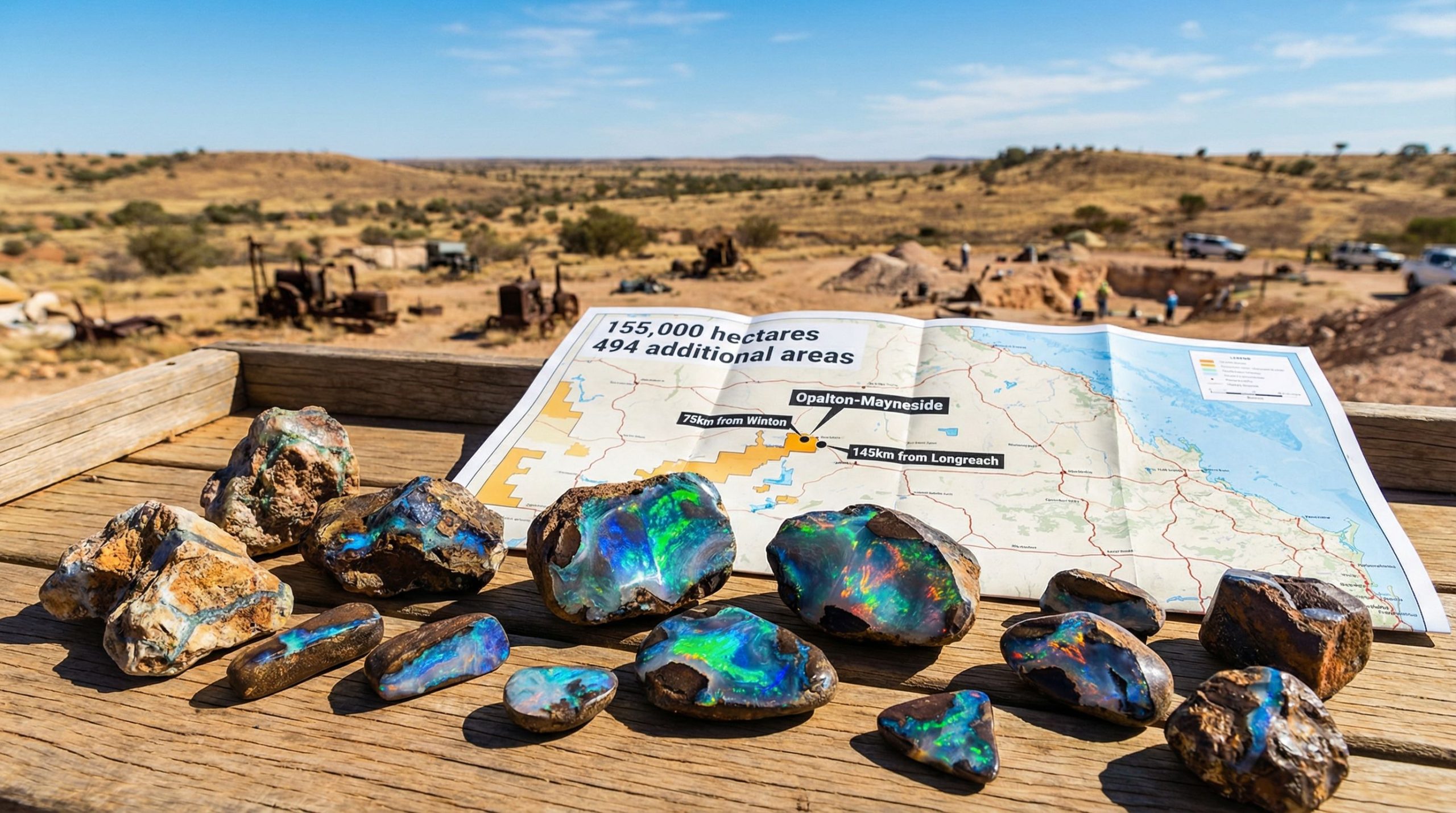
Queensland's recent announcement to expand opal mining territories exemplifies this strategic approach. The state government's decision to add 155,000 hectares and 494 new sub-blocks to the Opalton Mayneside restricted area demonstrates institutional commitment to supporting specialised mining sectors alongside major commodity operations. This Queensland boosts opal frontier initiative reflects modern [mineral exploration techniques](https://discoveryalert.com.au/mineral exploration-importance-2025-gold-copper/) that balance traditional artisanal methods with contemporary geological assessment.
What Strategic Advantages Define Australia's Position in Global Opal Markets?
Geological Supremacy in Precious Stone Formation
Australia maintains an overwhelming dominance in global opal production, accounting for approximately 95% of the world's precious opal output. This geological advantage stems from unique formation processes that occurred across specific Australian regions over millions of years, creating conditions conducive to exceptional opal development.
The global precious opal market reached a valuation of approximately USD 2.9 billion in 2023, with Australian stones commanding premium pricing in international luxury markets. This market position reflects both geological scarcity and established reputation for quality among global collectors and jewellery manufacturers.
Boulder opal production represents a distinctive segment within this market, characterised by natural backing formations that eliminate processing requirements common in other opal varieties. Queensland's geological formations create these naturally backed stones through silica-rich groundwater infiltration into ironstone boulders over geological timeframes.
Economic Impact Assessment Framework
| Economic Indicator | Direct Impact | Regional Multiplier | Timeline |
|---|---|---|---|
| Mining Equipment Sales | $30-100K per operation | Local supplier networks | Immediate |
| Tourism Integration | Mine tours, visitor centres | Accommodation, dining | 6-12 months |
| Service Sector Growth | Fuel, supplies, maintenance | Professional services | 3-6 months |
| Export Market Access | International gemstone trade | Transport, logistics | 12-24 months |
Regional Economic Diversification Benefits
- Employment Creation: Small-scale mining operations provide livelihood opportunities in remote areas with limited alternative economic activities
- Tourism Synergies: Active mining operations enhance heritage tourism by providing authentic working mine experiences
- Supply Chain Development: Mining activities stimulate local business networks including equipment suppliers, hospitality services, and transportation providers
- Knowledge Preservation: Artisanal mining maintains traditional skills and geological knowledge within regional communities
How Does the Opalton Mayneside Expansion Address Regional Development Needs?
Geographic Scale and Strategic Location
The expansion encompasses significant territorial increases to Restricted Area 257, positioned 75 kilometres from Winton and 145 kilometres from Longreach. This strategic location provides access to existing infrastructure while opening previously unavailable geological formations for exploration.
Queensland Minister for Natural Resources and Mines Dale Last emphasised the expansion's alignment with comprehensive resource sector support, noting that the Opalton Mayneside fields represent the heart of Queensland's opal mining industry. The government's commitment extends beyond major resource developments to encompass small-scale operators requiring exploration opportunities.
Assistant Minister Sean Dillon highlighted the cultural significance of opal mining within Western Queensland's regional identity, describing it as integral to the area's DNA. This perspective positions the expansion as preserving cultural heritage while creating economic opportunities.
Geological Assessment and Resource Potential
The Geological Survey of Queensland conducted comprehensive assessments demonstrating substantial opal discovery potential within the expansion area. This evaluation incorporated advanced mining permitting insights that streamline regulatory compliance while maintaining environmental protection standards.
- Historical Production Analysis: Review of adjacent mining block performance to project discovery likelihood
- Host Rock Examination: Analysis of geological formations favourable to opal deposition
- Weathering Pattern Assessment: Evaluation of groundwater characteristics supporting opal formation
- Structural Geology Mapping: Identification of fracture systems where opal infiltration occurs
The resource assessment by the Geological Survey of Queensland shows the expansion area has great potential for opal discovery and gives confidence this proposal will bring real benefits to the industry, community and small-scale miners on the ground.
Infrastructure and Operational Considerations
Transportation Networks:
- Existing road infrastructure connects the expansion area to regional service centres
- Equipment transport capabilities support small-scale machinery requirements
- Emergency service accessibility ensures operational safety protocols
Service Accessibility:
- Winton provides core services including fuel retail, accommodation, and basic equipment supply
- Longreach serves as a regional hub for specialised services and advanced equipment needs
- Communication infrastructure supports operational coordination and emergency response
What Economic Frameworks Support Small-Scale Mining Viability?
Investment Requirements and Market Positioning
Boulder opal extraction requires significantly lower capital investment compared to industrial mining operations. Initial equipment setup typically ranges from $5,000-$15,000 for basic hand tools, with small excavation equipment investments reaching $30,000-$100,000 for established operations.
Market pricing for quality boulder opals varies substantially based on colour characteristics, pattern complexity, and stone size. Premium specimens command prices ranging from $100-$1,500+ per carat in international markets, though pricing volatility reflects luxury goods demand fluctuations. These market dynamics often benefit from comprehensive junior mining strategies that emphasise sustainable development approaches.
Tenure Security and Investment Confidence
The sub-block allocation system provides defined claim boundaries that address tenure uncertainty challenges historically faced by small-scale miners. This regulatory framework offers clear alignment with established mining claims framework principles that support operational certainty.
- Legal Clarity: Established boundaries reduce boundary disputes common in open-access mining areas
- Investment Security: Long-term tenure arrangements support equipment investment decisions
- Regulatory Compliance: Government oversight ensures environmental protection and prevents unauthorised mining activities
- Market Access: Legitimate tenure supports direct marketing and export opportunities
Local government leaders emphasise the expansion's value in providing operational certainty. Winton Shire Mayor Cathy White noted that the expansion provides much-needed certainty for the opal industry, while Barcoo Shire Mayor Sally O'Neil highlighted broader economic lift expectations.
Extraction Methodology and Technical Requirements
Boulder opal extraction demands careful excavation techniques to preserve valuable opal-bearing portions within ironstone formations. Operational methodology includes:
- Site Assessment: Geological evaluation to identify opal-bearing boulder locations
- Careful Excavation: Hand-tool and small machinery use to avoid damaging delicate deposits
- Boulder Extraction: Removal of intact ironstone boulders containing opal formations
- Processing Preparation: Cutting and polishing to reveal opal content and quality
- Site Rehabilitation: Backfilling and revegetation of excavated areas
How Do Tourism-Mining Integration Models Generate Regional Value?
Heritage Tourism Development Opportunities
The expansion creates enhanced opportunities for tourism-mining integration, building on established models like the Australian Opal Centre in Winton. These facilities demonstrate successful integration of active mining operations with educational tourism, providing multiple revenue streams for operators.
Working mine tours allow visitors to observe authentic mining processes while purchasing directly from miners, creating immediate market access for producers. This integration model supports regional tourism identity while maintaining operational mining activities, particularly benefiting from strategic planning initiatives that focus on sustainable long-term industry development.
Cultural Heritage Preservation
Opal mining represents significant cultural heritage within Western Queensland communities, dating to early 1900s discovery periods. The expansion supports heritage preservation by maintaining active mining knowledge and traditional techniques within regional communities.
Educational components through visitor centres provide public understanding of opal geology, formation processes, and mining history. These facilities serve dual functions as tourism attractions and community education centres, strengthening regional identity around mining heritage.
Economic Multiplier Effects
Tourism-mining integration generates indirect economic benefits through:
- Accommodation Demand: Visitor requirements support regional hospitality infrastructure
- Retail Opportunities: Direct gemstone sales create immediate revenue for miners
- Food Service Growth: Tourism activity supports restaurant and catering businesses
- Transport Services: Tour operations and visitor transport create additional employment
- Professional Services: Increased business activity requires accounting, legal, and administrative support
What Role Does This Expansion Play in Australia's Broader Mining Strategy?
Commodity Diversification and Economic Resilience
While Australia's mining sector remains dominated by iron ore, coal, LNG, and gold exports, specialised sectors like opal mining contribute to economic resilience through market diversification. These niche operations provide stability during commodity price volatility periods affecting major export minerals.
Government policy emphasises supporting the full spectrum of mining operators rather than concentrating resources exclusively on large-scale industrial projects. This approach recognises that small-scale operations contribute to regional economic stability and provide employment in areas with limited alternative opportunities. Furthermore, this Queensland boosts opal frontier initiative aligns with broader mining industry innovation trends that emphasise sustainable development practices.
Regulatory Innovation Framework
The Restricted Area designation represents regulatory innovation designed specifically for gemstone mining allocation to small-scale operators. This framework distinguishes between Tier 1 industrial operations and artisanal mining through differentiated approval processes and tenure arrangements.
Environmental management requirements include:
- Impact Assessment: Evaluation of extraction activities on local ecosystems
- Indigenous Consultation: Heritage assessment and community engagement protocols
- Rehabilitation Standards: Site restoration requirements following mining completion
- Monitoring Systems: Ongoing environmental compliance and protection measures
International Market Positioning
Australia's reputation in premium gemstone markets reflects both geological advantages and established quality standards. The expansion supports international market positioning by:
- Quality Assurance: Regulated mining ensures consistent product standards
- Supply Reliability: Expanded production areas support market demand
- Export Facilitation: Government support for marketing and trade promotion
- Value Addition: Processing and finishing capabilities enhance export value
What Challenges Could Impact Expansion Success?
Environmental and Sustainability Considerations
Western Queensland's semi-arid climate conditions present water resource management challenges for mining operations. Annual rainfall typically ranges from 250-400mm, requiring careful groundwater use planning to ensure sustainable extraction practices.
Land use compatibility between mining operations and pastoral activities requires coordinated management approaches. The expansion area predominantly consists of pastoral land used for cattle and sheep grazing, creating potential conflicts requiring resolution through integrated planning. However, projects like Queensland's renewable energy initiatives demonstrate successful integration of resource development with environmental considerations.
Scenario Analysis Framework
Best Case Outcome: Thriving artisanal sector supporting 500+ active operators
- High-quality opal discoveries drive sustained mining activity
- Tourism integration generates significant additional revenue
- Regional infrastructure development supports expanded operations
Moderate Growth Scenario: Steady development with 200-300 active miners
- Consistent but moderate opal discoveries maintain viable operations
- Tourism complement provides supplementary income
- Infrastructure remains adequate for current activity levels
Challenging Case: Limited uptake due to market or operational constraints
- Lower-than-expected opal quality reduces mining viability
- Market price volatility affects profitability
- Infrastructure limitations constrain operational expansion
Risk Management Considerations
Market Volatility: Gemstone pricing sensitivity to luxury goods demand requires diversified revenue strategies
Operational Costs: Remote location logistics and equipment transport costs impact profitability margins
Environmental Compliance: Rehabilitation requirements and environmental monitoring create ongoing operational obligations
Competition: Synthetic opal alternatives and international competition affect market positioning
How Can Stakeholders Maximise Development Outcomes?
Government Support Mechanisms
Effective expansion implementation requires coordinated government support through multiple channels:
- Funding Programmes: Equipment purchase assistance and training programme support
- Marketing Assistance: Promotional support for Queensland opal products in international markets
- Infrastructure Investment: Transportation and communication infrastructure development priorities
- Regulatory Streamlining: Efficient permit processing and compliance support systems
Industry Collaboration Opportunities
Cooperative approaches among miners can enhance operational efficiency and market access:
- Shared Equipment: Cooperative purchasing and maintenance of expensive machinery
- Processing Facilities: Joint processing operations to reduce individual investment requirements
- Marketing Initiatives: Collaborative promotion and sales efforts in domestic and international markets
- Knowledge Networks: Skills sharing and best practice development among operators
Community Engagement Strategies
Successful expansion requires strong community relationships and local support:
- Indigenous Partnerships: Collaborative models respecting traditional ownership and cultural heritage
- Local Employment: Training and employment programmes for regional residents
- Skills Development: Education programmes maintaining traditional mining knowledge
- Cultural Integration: Heritage preservation initiatives supporting regional identity
What Long-Term Implications Emerge from This Strategic Expansion?
Replication Potential for Artisanal Mining Sectors
The Queensland boosts opal frontier expansion model provides frameworks potentially applicable to other specialised mining sectors across Australia. Key transferable elements include:
- Tenure Systems: Sub-block allocation approaches for small-scale operations
- Assessment Protocols: Geological evaluation methodologies for expansion decisions
- Environmental Integration: Sustainable development models balancing extraction with conservation
- Community Engagement: Stakeholder consultation and benefit-sharing approaches
Economic Development Integration
The expansion demonstrates integration opportunities between mining activities and broader regional development strategies:
- Tourism Synergies: Mining heritage as tourism destination development
- Cultural Preservation: Traditional skills and knowledge maintenance
- Infrastructure Leverage: Shared infrastructure benefiting multiple economic activities
- Employment Diversification: Multiple income sources within regional economies
Innovation in Mining Governance
The Queensland boosts opal frontier approach represents adaptive governance models addressing contemporary mining sector challenges:
- Scale-Appropriate Regulation: Differentiated frameworks for various operation types
- Technology Integration: Modern assessment techniques supporting traditional mining
- Stakeholder Integration: Multi-party consultation ensuring broad community benefit
- Sustainability Focus: Long-term viability through environmental stewardship
The expansion's success will likely influence policy development across other Australian states and internationally, providing evidence for specialised mining sector support strategies. Monitoring and evaluation frameworks tracking economic, environmental, and social outcomes will inform future policy decisions regarding artisanal mining support.
Disclaimer: This analysis involves projections and assessments based on available information. Actual outcomes may vary depending on market conditions, geological discoveries, regulatory changes, and other factors beyond current forecasting capabilities. Investors and stakeholders should conduct independent due diligence before making decisions based on this analysis.
Want to Discover the Next Major Mining Opportunity?
Discovery Alert's proprietary Discovery IQ model delivers instant notifications on significant ASX mineral discoveries, transforming complex geological announcements into actionable investment insights for traders and investors alike. Whether you're tracking diversified mining territories like Queensland's expanding opal fields or seeking exposure to major commodity discoveries, begin your 30-day free trial today to secure your market-leading advantage in identifying breakthrough opportunities before the broader market responds.