Revolutionary Engineering: How Advanced Thermal Management Systems Transform Industrial Operations
Industrial cooling technology represents a critical yet often overlooked component in modern manufacturing and processing operations. The thermal management systems that regulate temperature in complex industrial environments directly impact productivity, operational efficiency, and environmental compliance across multiple sectors. Understanding these sophisticated engineering solutions requires examining both the fundamental principles of heat transfer and the innovative design approaches that maximize cooling effectiveness whilst minimising resource consumption.
The evolution of industrial cooling systems reflects broader industry evolution trends toward automation, sustainability, and space optimisation in manufacturing facilities. Traditional approaches to thermal management often struggle with the competing demands of cooling capacity, physical footprint constraints, and maintenance requirements that can disrupt continuous operations. Modern facilities require cooling solutions that deliver reliable performance whilst adapting to increasingly complex operational parameters and environmental regulations.
What Makes the Metso OKTOP Cooling Tower a Game-Changer in Industrial Cooling?
The third-generation Metso OKTOP Cooling Tower represents a significant advancement in industrial thermal management technology, addressing fundamental challenges that have historically limited cooling system performance in demanding applications. This system demonstrates how engineering innovation can overcome traditional limitations through integrated design approaches that optimise multiple performance parameters simultaneously.
Revolutionary Space Efficiency in Cooling Technology
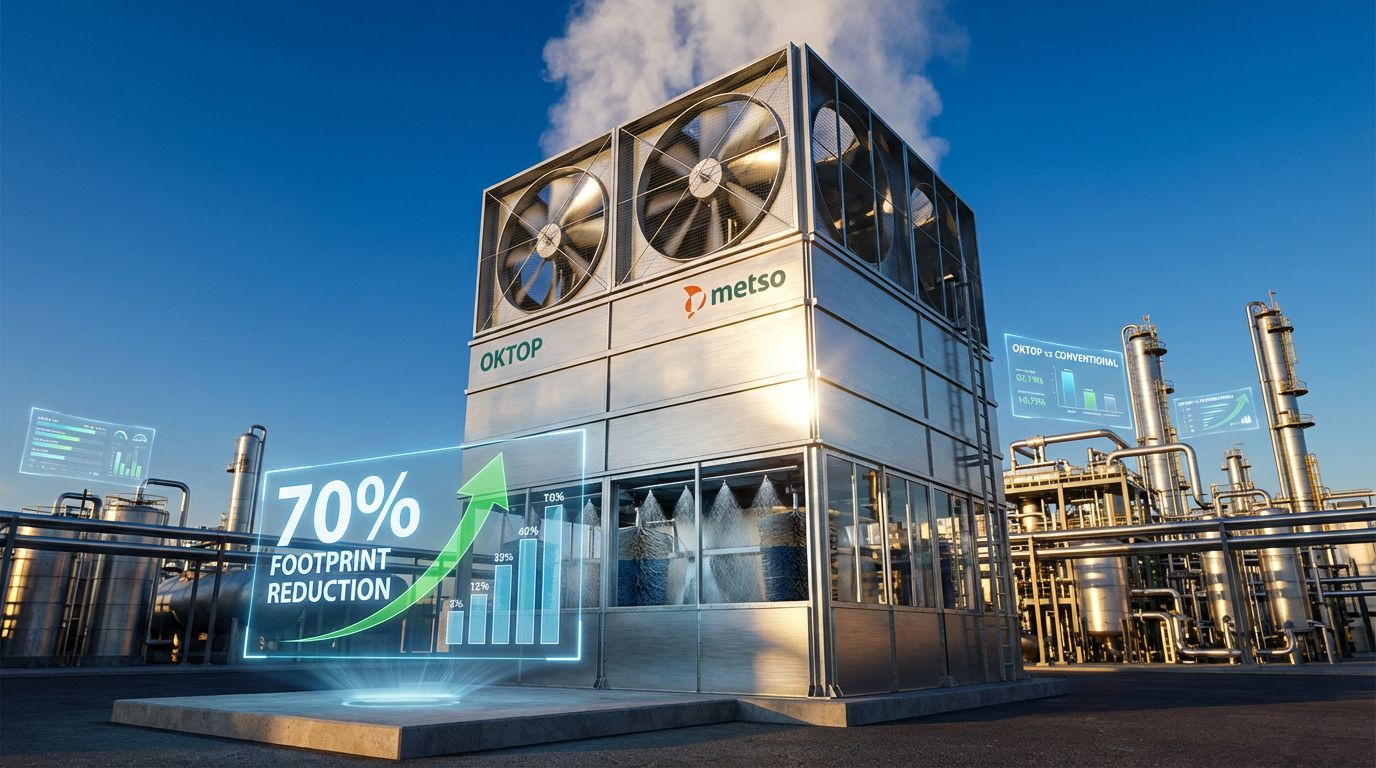
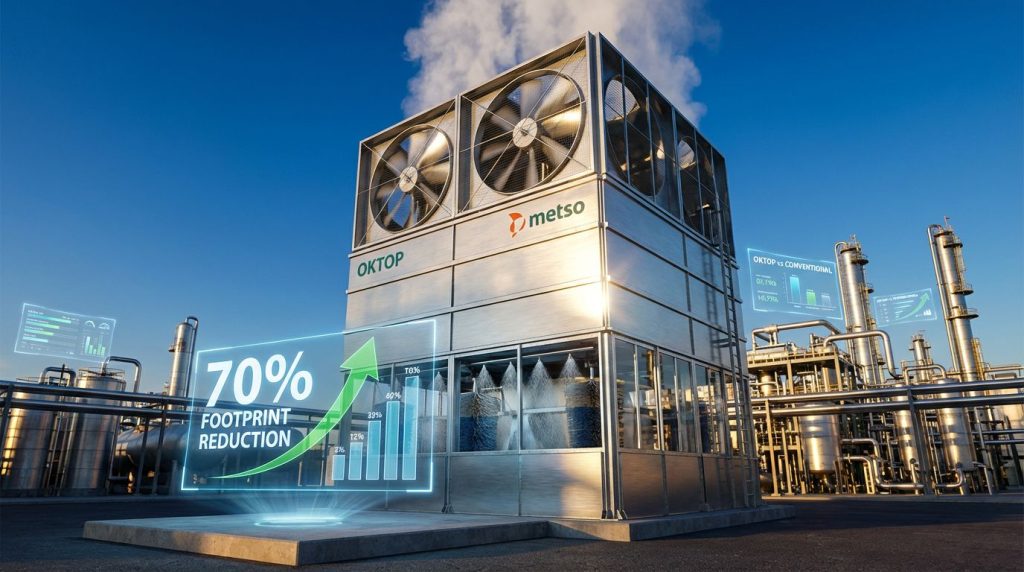
Space optimisation in industrial cooling systems has become increasingly critical as manufacturing facilities face growing pressure to maximise production capacity within existing infrastructure. The Metso OKTOP Cooling Tower achieves up to 70% footprint reduction compared to conventional cooling systems, representing a substantial improvement in space utilisation efficiency that enables deployment in previously unsuitable locations.
This dramatic space reduction stems from advanced heat exchange engineering that concentrates cooling capacity into a more compact design envelope. Furthermore, for retrofit applications, this footprint optimisation translates into reduced structural modifications, simplified installation procedures, and lower overall project costs. The compact design particularly benefits facilities operating under strict space constraints or seeking to expand production capacity without facility expansion.
Key space efficiency advantages include:
• Reduced foundation requirements lowering construction costs
• Simplified utility routing in constrained environments
• Enhanced flexibility for future facility modifications
• Minimised impact on existing operations during installation
Self-Cleaning Technology: The Industry's First Automated Solution
The integration of self-cleaning functionality addresses one of the most persistent challenges in cooling tower operation: maintaining optimal heat transfer efficiency whilst minimising manual maintenance interventions. This automated cleaning system extends operational intervals significantly beyond traditional manual cleaning schedules, reducing both maintenance costs and operational disruptions.
In addition, the self-cleaning mechanism operates continuously during normal tower operation, preventing the accumulation of deposits that typically degrade cooling performance over time. This approach eliminates the periodic shutdowns required for manual cleaning procedures, maintaining consistent cooling capacity throughout extended operational cycles.
Operational benefits of automated cleaning include:
• Extended maintenance intervals reducing labour costs
• Consistent cooling performance throughout operational cycles
• Reduced risk of unplanned downtime from cleaning requirements
• Lower long-term operational expenses compared to manual systems
How Does OKTOP Cooling Tower Technology Optimise Industrial Performance?
Performance optimisation in modern cooling systems extends beyond simple heat removal to encompass energy efficiency, environmental compliance, and operational reliability. The OKTOP system integrates multiple advanced technologies to deliver comprehensive performance improvements across these critical operational parameters, particularly supporting decarbonisation benefits for industrial facilities.
Advanced Heat Exchange Engineering
The thermal efficiency improvements achieved through advanced heat exchange design focus on maximising heat transfer whilst minimising energy consumption and space requirements. The system prevents recirculation of warm discharge gases, a common problem in conventional cooling towers that reduces cooling effectiveness and increases energy consumption.
However, anti-recirculation design features ensure optimal cooling efficiency by preventing heated exhaust air from re-entering the cooling air intake. This design approach maintains consistent temperature differentials across the heat exchange surfaces, maximising cooling capacity whilst minimising fan power requirements.
Performance optimisation features include:
• Improved thermal efficiency through enhanced airflow management
• Reduced energy consumption via optimised fan operation
• Consistent cooling performance across varying ambient conditions
• Enhanced heat transfer coefficient through advanced surface design
Emissions Control and Environmental Impact
Environmental compliance represents an increasingly important consideration in industrial cooling system selection and operation. The OKTOP system achieves market-leading low emissions performance, supporting facility compliance with evolving environmental regulations whilst reducing overall environmental impact.
For instance, the emissions control advantages stem from optimised combustion characteristics and advanced emission control technologies integrated into the system design. This comprehensive approach to environmental performance supports corporate sustainability initiatives whilst ensuring regulatory compliance across multiple jurisdictions.
Environmental performance benefits include:
• Reduced atmospheric emissions supporting air quality compliance
• Enhanced sustainability profile for corporate environmental reporting
• Lower environmental operating costs through improved efficiency
• Simplified permitting processes for new installations
Which Industries Benefit Most from OKTOP Cooling Tower Implementation?
Industrial cooling requirements vary significantly across different sectors, with specific industries facing unique thermal management challenges that demand specialised solutions. The OKTOP system addresses particular operational requirements common in metals processing and refining applications where traditional cooling approaches often prove inadequate, aligning with data-driven operations approaches in modern industrial facilities.
Metals Refining and Hydrometallurgical Applications
Metals refining operations present some of the most demanding thermal management challenges in industrial processing. These facilities require reliable cooling for slurry processing, electrolyte temperature control, and various metallurgical processes that operate at elevated temperatures with corrosive materials.
Consequently, hydrometallurgical processing involves chemical treatment of ores and concentrates at controlled temperatures, requiring precise thermal management to maintain optimal reaction conditions. The cooling demands in these applications include:
| Process Application | Cooling Requirements | Critical Factors |
|---|---|---|
| Slurry Processing | High-volume, continuous cooling | Particle handling, corrosion resistance |
| Electrolyte Management | Precise temperature control | Chemical compatibility, reliability |
| Leaching Operations | Elevated temperature handling | Acid resistance, thermal shock tolerance |
| Solution Purification | Multi-stage cooling | Process integration, contamination prevention |
The specialised requirements of metals refining include handling corrosive chemicals, managing particulate-laden fluids, and maintaining consistent performance under demanding operating conditions. Traditional cooling systems often struggle with these combined challenges, leading to frequent maintenance requirements and operational disruptions.
Brownfield Installation Advantages
Existing facility upgrades present unique installation challenges that require cooling solutions designed specifically for retrofit applications. Brownfield installations must integrate new equipment into operational facilities whilst minimising disruption to ongoing production processes.
The compact design and rapid installation capabilities of the OKTOP system address key brownfield installation concerns including:
• Reduced installation timeline minimising production disruptions
• Simplified integration with existing infrastructure
• Lower structural modification requirements
• Enhanced compatibility with legacy control systems
What Are the Key Technical Specifications and Performance Metrics?
Technical performance evaluation requires comprehensive analysis of multiple operational parameters that collectively determine system effectiveness in specific applications. The OKTOP system delivers measurable improvements across critical performance metrics whilst maintaining operational reliability under demanding conditions, supporting the implementation of renewable energy solutions in industrial facilities.
Cooling Capacity and Efficiency Parameters
Performance measurement in industrial cooling systems encompasses thermal capacity, energy efficiency, maintenance requirements, and operational reliability. These interconnected parameters determine overall system effectiveness and total cost of ownership over the equipment lifecycle.
| Performance Category | OKTOP Third Generation | Traditional Systems | Performance Impact |
|---|---|---|---|
| Space Utilisation | 70% footprint reduction | Baseline requirement | Enables constrained-site installations |
| Maintenance Frequency | Self-cleaning intervals | Manual cleaning cycles | Reduced operational interruptions |
| Installation Complexity | Streamlined deployment | Standard procedures | Accelerated project timelines |
| Environmental Compliance | Market-leading emissions | Variable performance | Enhanced regulatory compliance |
The performance advantages stem from integrated design approaches that optimise multiple parameters simultaneously rather than focusing on individual performance characteristics in isolation. This systems-level optimisation delivers superior overall performance compared to conventional approaches.
Design Features and Engineering Innovations
Advanced engineering features incorporate proprietary technologies that address fundamental limitations in traditional cooling tower design. These innovations include enhanced heat transfer surfaces, optimised airflow management, and automated operational control systems showcased at events like the innovation expo.
Key design innovations include:
• Proprietary heat exchange technology maximising thermal efficiency
• Modular construction enabling scalable capacity configurations
• Advanced materials providing enhanced corrosion resistance
• Integrated control systems optimising operational parameters
How Does OKTOP Compare to Alternative Cooling Solutions?
Competitive analysis in industrial cooling technology requires evaluation of multiple performance factors including initial capital costs, operational expenses, maintenance requirements, and long-term reliability. The OKTOP system delivers advantages across several critical comparison criteria that impact total cost of ownership.
Traditional Cooling Tower Limitations
Conventional cooling tower designs face inherent limitations that restrict performance in demanding industrial applications. These limitations include excessive space requirements, frequent maintenance needs, and performance degradation over operational lifecycles that increase total ownership costs.
Traditional system challenges include:
• Large footprint requirements limiting installation options
• Regular manual cleaning disrupting operations
• Performance degradation reducing cooling effectiveness over time
• Higher long-term maintenance costs impacting profitability
Competitive Advantage Analysis
The comprehensive performance advantages delivered by the OKTOP system create measurable value propositions across multiple operational parameters. These advantages translate into reduced operational costs, improved reliability, and enhanced facility productivity over equipment lifecycles.
"The combination of space efficiency, automated maintenance, and superior thermal performance creates a compelling value proposition for facilities facing space constraints, operational cost pressures, or reliability requirements that exceed traditional system capabilities."
Cost-benefit advantages include:
• Lower total installation costs through reduced space requirements
• Decreased operational expenses via automated maintenance
• Improved production reliability through consistent cooling performance
• Enhanced facility flexibility supporting future expansion requirements
What Installation and Maintenance Considerations Apply?
Successful cooling system implementation requires careful attention to installation planning, operational integration, and ongoing maintenance protocols. The OKTOP system incorporates design features that simplify these critical implementation aspects whilst ensuring optimal long-term performance.
Pre-Installation Planning Requirements
Comprehensive installation planning ensures optimal system performance whilst minimising implementation costs and timeline delays. Critical planning considerations include site assessment, infrastructure compatibility, and utility integration requirements.
Essential planning elements include:
• Site evaluation for optimal equipment placement and access
• Infrastructure assessment for utility connection requirements
• Integration planning with existing cooling water systems
• Timeline coordination to minimise operational disruptions
Operational Maintenance Protocols
The self-cleaning functionality significantly reduces traditional maintenance requirements whilst maintaining optimal cooling performance throughout extended operational cycles. Maintenance protocols focus on monitoring system performance and conducting preventive maintenance procedures that ensure long-term reliability.
Streamlined maintenance approaches include:
• Automated cleaning system monitoring and optimisation
• Preventive maintenance scheduling based on operational hours
• Performance monitoring systems providing early warning indicators
• Simplified maintenance procedures reducing labour requirements
What Future Developments Can We Expect in Industrial Cooling Technology?
Industrial cooling technology continues evolving in response to changing operational requirements, environmental regulations, and automation capabilities. Future developments will likely focus on enhanced automation, improved sustainability, and greater integration with digital monitoring systems.
Industry Trends Driving Innovation
Several converging trends shape the future direction of industrial cooling technology development. These trends include sustainability requirements, space optimisation needs, and automation integration that collectively drive technological advancement.
Key development drivers include:
• Increasing environmental regulations requiring lower emissions
• Space constraints in modern facility design demanding compact solutions
• Automation integration enabling predictive maintenance capabilities
• Energy efficiency requirements reducing operational costs
OKTOP Technology Roadmap
Future technology development will likely expand applications beyond metals refining to include additional industrial sectors with similar thermal management challenges. Enhanced automation and digital integration capabilities may provide advanced cooling tower technologies and optimisation features.
Potential advancement areas include:
• Expanded application range covering additional industrial sectors
• Enhanced automation capabilities through digital system integration
• Advanced monitoring systems enabling predictive maintenance
• Improved sustainability features supporting corporate environmental goals
Frequently Asked Questions About OKTOP Cooling Towers
Understanding the practical aspects of OKTOP cooling tower implementation helps facilities evaluate the technology's suitability for specific applications and operational requirements.
Installation and Compatibility Questions
What site conditions are required for OKTOP installation?
The compact design enables installation in constrained spaces where traditional cooling towers cannot fit. Site requirements include adequate foundation support, utility access, and clearance for maintenance activities. The reduced footprint allows installation in previously unsuitable locations within existing facilities.
How does the system integrate with existing cooling infrastructure?
The OKTOP system incorporates standard connection interfaces that facilitate integration with existing cooling water systems and control infrastructure. Modular design approaches enable phased installation and capacity expansion as operational requirements evolve.
What are the typical installation timelines for different facility sizes?
Installation timelines vary based on facility complexity and integration requirements, but the streamlined design enables faster deployment compared to traditional systems. Reduced structural modification requirements contribute to accelerated project schedules.
Performance and Maintenance Queries
How does the self-cleaning mechanism function in practice?
The automated cleaning system operates continuously during normal tower operation, preventing deposit accumulation that typically degrades performance. This eliminates periodic shutdown requirements for manual cleaning procedures whilst maintaining consistent cooling capacity.
What performance monitoring capabilities are included?
Integrated monitoring systems track key performance parameters including cooling capacity, energy consumption, and maintenance requirements. These systems provide operational data supporting optimisation efforts and preventive maintenance planning.
What warranty and service support options are available?
Comprehensive service support includes installation assistance, operational training, and ongoing maintenance support. Extended warranty options provide additional protection for critical applications where cooling reliability is essential.
Making the Business Case for OKTOP Cooling Tower Investment
Investment evaluation for advanced cooling technology requires comprehensive analysis of initial costs, operational savings, and long-term reliability benefits. The Metso OKTOP Cooling Tower delivers measurable value across multiple financial and operational metrics.
Total Cost of Ownership Analysis
Comprehensive cost evaluation encompasses initial capital investment, installation costs, operational expenses, and maintenance requirements over the equipment lifecycle. The OKTOP system's advantages in each category contribute to favourable total cost of ownership compared to traditional alternatives.
Financial advantages include:
• Lower installation costs through reduced space and structural requirements
• Decreased operational expenses via automated maintenance capabilities
• Improved energy efficiency reducing utility costs
• Enhanced reliability minimising unplanned maintenance expenses
Risk Mitigation and Reliability Benefits
Operational risk reduction represents a significant value proposition for facilities where cooling system reliability directly impacts production capacity. The OKTOP system's design features minimise common failure modes whilst ensuring consistent performance under demanding operating conditions.
Risk mitigation advantages include:
• Reduced downtime through improved reliability and automated maintenance
• Enhanced process stability supporting consistent production quality
• Lower operational risk through proven technology and comprehensive support
• Improved facility flexibility enabling future operational modifications
Disclaimer: Performance claims and technical specifications should be verified through direct consultation with equipment manufacturers and independent testing organisations. Actual results may vary based on specific application requirements and operating conditions.
Considering Advanced Industrial Cooling Solutions for Your Operations?
Discovery Alert's proprietary Discovery IQ model delivers real-time alerts on significant ASX mineral discoveries, instantly empowering subscribers to identify actionable opportunities in industrial technology companies and thermal management innovators ahead of the broader market. Begin your 30-day free trial today at Discovery Alert and secure your market-leading advantage in discovering the next breakthrough industrial technology investments.