Ballymore Resources Ltd
Ballymore Resources Expands Target Pipeline at Ruddygore as Gravity Survey Identifies Multiple High-Priority Anomalies
Ballymore Resources (ASX: BMR) has reported that an expanded high-resolution ground gravity survey at its Ruddygore Project near Chillagoe in North Queensland has identified multiple high-priority targets, materially improving the exploration picture across the 556km² landholding. According to the ASX release, the survey not only supports Ballymore's existing Torpy's silver-lead-zinc discovery, but also outlines several additional targets across the broader project area.
The update matters for investors because it shifts Ruddygore from a project defined mainly by one discovery toward a broader pipeline of drill targets. In the announcement, Ballymore said the programme grew from an initial 618-station regional survey to a final 1,948-station campaign after early results justified immediate expansion while field crews remained on site.
"These preliminary gravity results have exceeded our expectations and reinforce our view that Ruddygore has the potential to host multiple significant mineral systems beyond our high-grade Torpy's discovery," said David A-Izzeddin, Managing Director of Ballymore Resources. "While Torpy's continues to deliver encouraging results, the gravity survey suggests it represents part of a much larger mineralised corridor."
When big ASX news breaks, our subscribers know first
From Planned Survey to Expanded Project-Wide Target Generation
In the announcement, Ballymore said the gravity survey commenced in May 2026 and was initially designed to identify dense massive sulphide and skarn systems across a regional 500-metre-spaced grid. The original scope targeted prospects including Torpy's, MAN03, Eleventh and Armada East.
Preliminary results were strong enough for the company to expand the survey before crews left the field. Detailed additional coverage was added at Torpy's-Little Torpy's, Armada East and Maniopota, lifting the total survey to 1,948 gravity stations.
That expansion is relevant because exploration companies typically increase field programmes only when incoming data suggests the additional spend may improve targeting quality. In this case, Ballymore has indicated that the early gravity response was sufficiently compelling to justify a more detailed pass across several prospects.
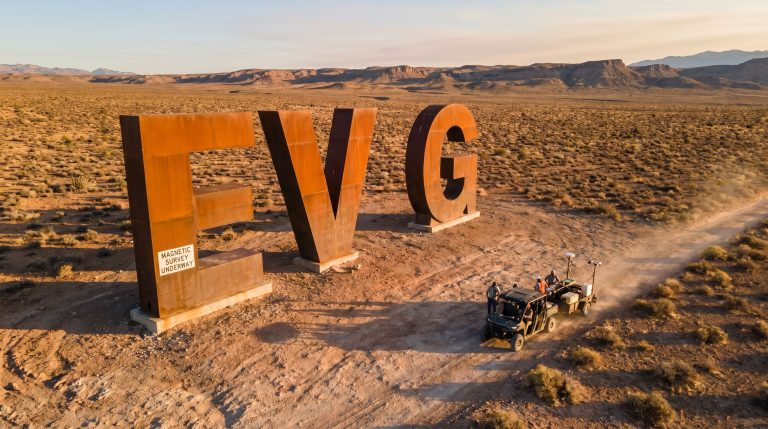
The survey was completed by Daishsat Geodetic Surveyors using Leica GX1230 Real-Time-Kinematic GNSS, which the company said delivered set-out accuracy better than 5 centimetres where terrain allowed. That level of location accuracy is important in geophysics because it improves confidence when matching anomalies with mapped structures, historical workings and geochemical signatures.
Six Priority Target Areas Now Stand Out at Ruddygore
According to the ASX update, several notable anomalies have been defined across the project, with support from other exploration datasets such as magnetics, electromagnetic surveys and soil geochemistry. This overlap matters because gravity data on its own can indicate a dense rock body, but not necessarily an orebody.
| Target | Reported Anomaly Dimensions | Supporting Evidence Cited by Ballymore |
|---|---|---|
| Torpy's | Multiple discrete anomalies | High-grade 2025 drill intersections and elevated lead-zinc soil geochemistry |
| Little Torpy's | Strong discrete anomaly | North of historic workings and drill hole BTPRC007, coincident lead-zinc soil anomaly |
| MAN03 | 750m x 300m | Electromagnetic target, magnetic features, mapped skarn alteration and hydrothermal breccias |
| Armada East | 400m x 300m | Skarn alteration, historical copper-gold workings, polymetallic soil anomalies and magnetic signature |
| Eleventh | 400m x 200m | Mapped breccias, skarn alteration, historic workings and complex magnetic anomaly |
| Maniopota | Strongest zone 500m x 100m | Extensive skarn alteration, 6km copper-lead-zinc ± silver-gold soil anomaly and EM conductors |
At Torpy's, Ballymore said several discrete gravity anomalies were identified, including one that directly coincides with high-grade 2025 drill intersections reported previously in holes BTPRC002, BTPRC004 and BTPRC005. Furthermore, the company said these anomalies also align with elevated lead and zinc soil geochemistry, which provides an independent line of support for the mineralised system.
Little Torpy's has also emerged as a follow-up target. Ballymore reported that a strong discrete gravity anomaly occurs immediately north of historic workings and drill hole BTPRC007, coinciding with a significant lead-zinc soil anomaly.
At MAN03, the gravity anomaly is larger in footprint at around 750 metres by 300 metres. Ballymore said it coincides with magnetic features, mapped skarn alteration, hydrothermal breccias and an existing electromagnetic target, increasing confidence that the anomaly is geologically meaningful.
Armada East and Eleventh also show multiple supporting signals. In the report, Armada East was linked to extensive skarn alteration, historic copper-gold workings and polymetallic geochemistry. Meanwhile, Eleventh was described as having characteristics considered prospective for a Red Dome-style system containing gold, silver and base metals.
Maniopota may be one of the more interesting regional targets from a scale perspective. Ballymore said the gravity response coincides with extensive skarn alteration and a previously identified 6-kilometre-long copper-lead-zinc ± silver-gold soil anomaly associated with EM conductors in the Palmerville Fault Corridor.
Why Gravity Surveys Matter in Mineral Exploration
How Does the Method Work?
For investors less familiar with exploration geophysics, gravity surveys are designed to measure subtle changes in the Earth's gravitational field caused by differences in rock density below surface. Dense rock bodies create a slightly stronger signal than lighter rocks around them.
At Ruddygore, this method is particularly relevant because Ballymore is targeting massive sulphide and skarn mineral systems. These deposit types often contain minerals such as galena (lead sulphide), sphalerite (zinc sulphide), chalcopyrite (copper sulphide) and pyrrhotite (iron sulphide), which are denser than many surrounding sedimentary rocks.
That density contrast can allow buried mineral systems to stand out in gravity data, even where there is limited surface exposure. However, a gravity anomaly does not confirm economic mineralisation, but it can improve drill targeting when combined with other datasets.
Key Exploration Terms Explained
- Gravity anomaly: A part of the survey area where rock density appears different from surrounding rocks.
- Skarn: A type of altered rock formed where hot mineral-rich fluids react with limestone or similar carbonate rocks. Skarns can host copper, gold, lead, zinc and silver.
- Massive sulphide: A concentration of sulphide minerals that can contain lead, zinc, copper, silver or gold.
- EM conductor: A zone identified by electromagnetic surveying as electrically conductive, often consistent with sulphide mineralisation.
- Bouguer anomaly: A gravity reading corrected for elevation and terrain to better show density differences below surface.
The combination of methods is what gives the current Ruddygore results greater value. If a gravity anomaly lines up with an EM conductor, a magnetic feature, surface alteration, historic workings and metal-rich soils, the probability of drilling into a mineralised body may improve compared with using only one dataset.
Torpy's Remains the Anchor Discovery
Although the broader target pipeline has expanded considerably, Torpy's remains the project's most advanced discovery. In the announcement, Ballymore reiterated that the current drilling programme is building on high-grade 2025 results and is continuing to test extensions to the mineralised system.
The standout previous drill result remains BTPRC005, which Ballymore reported as follows:
| Hole | Intersection | From |
|---|---|---|
| BTPRC005 | 23m @ 215.6 g/t Ag, 8.55% Pb, 1.99% Zn | 130m |
| including 10m @ 483.2 g/t Ag, 19.35% Pb, 2.82% Zn & 16.5 g/t In | 131m | |
| including 7m @ 650.7 g/t Ag, 25.37% Pb, 3.01% Zn & 14.2 g/t In | 132m |
These grades are relevant because they indicate a high-grade silver-lead-zinc system, with indium also present in the reported intercept. Indium is a specialty metal used in electronics and advanced industrial applications, although any economic significance at Ruddygore would require further work.
Ballymore said mineralisation at Torpy's occurs at the intersection of major fault structures, which the company believes has created high-grade shoots that remain largely untested. In addition, the company stated that recent drilling has intersected significant massive to semi-massive sulphide mineralisation while also identifying additional mineralised structures beyond the historic mine area.
For investors, the gravity result at Torpy's is important because it provides a separate geophysical line of support for the drilled mineralisation. It also suggests nearby areas may host additional high-grade zones.
Funding Support and the 2026 Activity Pipeline
The ASX release stated that the Ruddygore gravity survey, together with a geophysics survey at Ballymore's Dittmer Project, is being supported by $383,000 through the Queensland Government Collaborative Exploration Initiative (CEI). According to the company, this support helps accelerate exploration activity while reducing the direct cost burden to shareholders.
The planned work programme outlined in the update includes a number of near-term milestones:
| Timing | Planned Activity |
|---|---|
| June 2026 | Complete Torpy's RC drilling programme |
| July 2026 | Receive and model final Ruddygore gravity data |
| July 2026 | Commence Dittmer CEI-funded MT survey |
| Q3 2026 | Complete upgraded Level 4 access at Dittmer |
| Q3 2026 | Commence Stage 6 drill programme from southern exploration drive at Dittmer |
| Q3 2026 | Dittmer bulk sample recovery |
| Q4 2026 | Maiden Mineral Resource Estimate for Dittmer, pending Stage 6 completion |
At Ruddygore, the most relevant short-term catalysts appear to be:
- Assay results from the current Torpy's drilling campaign
- Final gravity data processing and 3D modelling
- Ranking of drill-ready targets across the project
- Possible follow-up drilling at Little Torpy's, MAN03, Armada East, Eleventh and Maniopota
The next major ASX story will hit our subscribers first
What the Ruddygore Update Means for Investors
The Ruddygore Project sits within the historic Chillagoe Mining District, where previous mining has produced copper, gold, silver, lead and zinc over more than a century. Ballymore's update points to a project area that remains underexplored by modern standards, particularly in terms of integrated geophysics.
According to the company, Ruddygore is prospective for multiple deposit styles, including:
- Porphyry copper-gold
- Skarn-hosted copper-gold-lead-zinc
- Sediment-hosted massive sulphide lead-zinc-silver
- Intrusive-related gold systems
That geological diversity adds optionality, although it also means the company still has substantial exploration work ahead to determine which targets have the best chance of becoming material discoveries. The current announcement does not establish a mineral resource at Ruddygore, but it does indicate that Ballymore now has a larger and more prioritised target inventory than before the survey began.
For the market, the immediate value lies in improved targeting efficiency. Final processing and integration of the gravity survey with existing electromagnetic, magnetic and geochemical datasets may help Ballymore allocate drilling capital more effectively across the project.
What Is the Near-Term Focus?
The near-term focus is consequently clear. Torpy's remains the anchor discovery with pending assays, while the new gravity anomalies at Little Torpy's, MAN03, Armada East, Eleventh and Maniopota provide the next layer of exploration potential.
If upcoming modelling supports those anomalies as drill-ready targets, Ruddygore could continue to develop as a broader district-scale exploration story rather than a single-prospect narrative. Ballymore's Ruddygore update suggests the project now contains a broader portfolio of geophysically supported targets beyond Torpy's.
With 1,948 gravity stations completed, multiple anomalies identified and final modelling pending, the next phase of drilling and data integration is likely to be the main driver of investor attention in the months ahead.
Ready to Capitalise on the Next Major ASX Mineral Discovery?
Discovery Alert's proprietary Discovery IQ model scans ASX announcements in real time, instantly identifying significant mineral discoveries like high-grade silver-lead-zinc systems and delivering actionable insights to subscribers before the broader market reacts — explore historic discoveries that have generated exceptional returns to understand what early positioning can mean for investors. Begin your 14-day free trial at Discovery Alert today and ensure you are positioned ahead of the next major find.