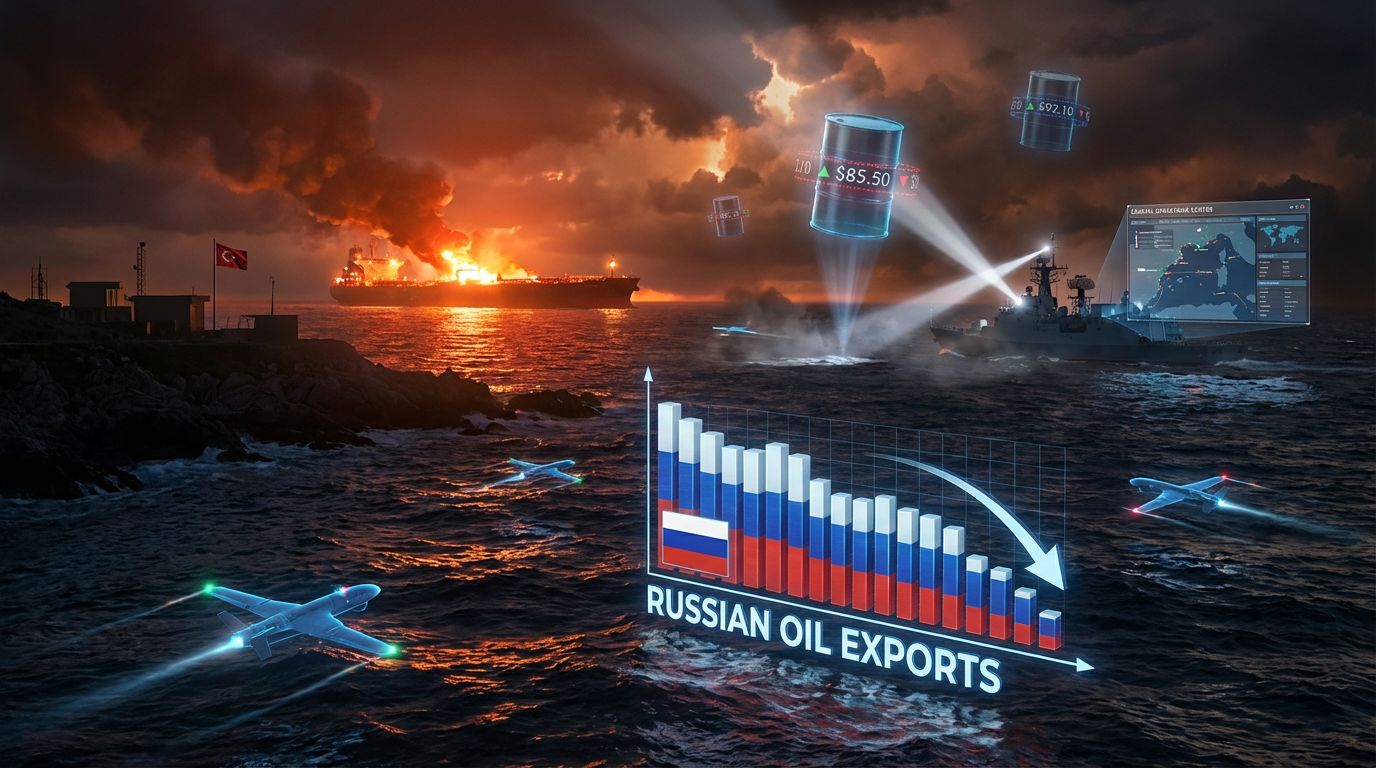
The escalating incidents involving Russian shadow fleet tanker explosions have fundamentally altered global maritime security dynamics and energy market stability. These sophisticated attacks on sanctions-evading vessels demonstrate the intersection of asymmetric warfare tactics, international law enforcement, and strategic energy security. Furthermore, the targeted operations reveal critical vulnerabilities in global supply chains while highlighting the oil price rally driven by maritime security risks.
Contemporary maritime threats encompass sophisticated networks designed to circumvent international sanctions while simultaneously creating vulnerabilities that can be exploited through precision strikes. These operations reveal the fragility of global supply chains and the interconnected nature of energy security, geopolitical stability, and economic warfare.
Understanding Modern Maritime Security Architecture
Maritime security dynamics have undergone fundamental transformations as state and non-state actors increasingly leverage unconventional warfare tactics in critical shipping lanes. The evolution of naval conflict from traditional fleet engagements to asymmetric operations targeting commercial vessels represents a paradigm shift that affects global energy markets, international trade, and strategic stability.
Additionally, the trade war oil price impact has created compounding effects when combined with direct maritime threats, demonstrating how geopolitical tensions manifest across multiple economic vectors simultaneously.
Defining Sanctions Evasion Networks in Maritime Context
The architecture of sanctions evasion involves complex vessel ownership structures operating under flags of convenience, primarily utilising registries from nations with limited oversight capabilities. According to the U.S. Treasury Department's Office of Foreign Assets Control (OFAC), these networks typically employ:
- Shell company structures spanning multiple jurisdictions to obscure beneficial ownership
- Ship-to-ship transfer operations conducted in international waters beyond territorial surveillance
- Document falsification systems including fraudulent bills of lading and cargo manifests
- Insurance and financing mechanisms that bypass traditional Western financial institutions
Research from Lloyd's List Intelligence indicates that vessels operating in sanctions evasion networks average 15-20 years of age, significantly older than the global fleet average of 12 years. This aging infrastructure creates inherent operational vulnerabilities including mechanical failures, structural weaknesses, and reduced defensive capabilities.
Operational Characteristics of Shadow Fleet Vessels
Maritime analysts have identified specific technical characteristics that define sanctions evasion fleets:
Vessel Specifications:
- Average deadweight tonnage: 100,000-150,000 DWT for crude carriers
- Typical flag states: Gabon, Cameroon, Palau, and other convenience registries
- Insurance coverage: Often provided by Russian or Chinese underwriters
- Communication systems: Frequent AIS (Automatic Identification System) manipulation
Operational Patterns:
- Preference for night-time operations during cargo transfers
- Utilisation of remote anchorage points in international waters
- Extended voyage durations to avoid detection patterns
- Reduced crew sizes to minimise operational costs
The International Maritime Organization (IMO) estimates that approximately 600-800 vessels operate in various sanctions evasion capacities globally, with the majority concentrated in routes serving energy export markets.
Market Volatility and Maritime Risk Assessment
Immediate Price Response Mechanisms
Oil market volatility exhibits predictable patterns following maritime security incidents, with Brent crude futures typically experiencing 2-5% price spikes within 24 hours of confirmed attacks on commercial vessels. The West Texas Intermediate (WTI) futures market demonstrates similar sensitivity, particularly when incidents occur near critical chokepoints.
Price Impact Analysis:
| Incident Type | Brent Response | WTI Response | Duration |
|---|---|---|---|
| Confirmed Attack | +3-7% | +2-6% | 24-48 hours |
| Near Miss/Threat | +1-3% | +1-2% | 12-24 hours |
| Convoy Disruption | +2-4% | +2-3% | 24-72 hours |
Insurance premiums for vessels operating in high-risk maritime zones have increased by 200-400% according to the International Union of Marine Insurance (IUMI), with additional war risk coverage adding $50,000-$150,000 per voyage for affected routes.
Recent Ukrainian drone attacks targeting Russian shadow fleet vessels in the Black Sea have intensified these market dynamics. According to ABC News, Ukraine has successfully targeted multiple vessels using sophisticated naval drone technology, demonstrating the evolving nature of maritime warfare.
Supply Chain Disruption Calculations
Each successful attack on a large crude carrier potentially removes 1-2 million barrels from immediate circulation, equivalent to approximately 1-2 days of global spare capacity. The cumulative effect of multiple incidents creates compounding disruptions:
- Route diversification costs: Additional 7-14 days transit time for alternative routing
- Port congestion effects: 15-25% capacity reduction at affected terminals
- Refinery scheduling impacts: 3-7 day delays in processing schedules
- Storage utilisation: 5-10% increase in floating storage requirements
According to the International Energy Agency (IEA), sustained attacks on commercial shipping could reduce global oil trade efficiency by 8-12%, requiring strategic petroleum reserve releases to maintain market stability.
Geopolitical Consequences and Alliance Dynamics
Regional Security Architecture Evolution
NATO's maritime strategy has undergone significant revision following escalating threats to commercial shipping, with increased naval patrols in critical sea lanes. The alliance has deployed additional assets including:
- Standing NATO Maritime Groups with enhanced Rules of Engagement (ROE)
- Maritime Patrol Aircraft conducting 24/7 surveillance operations
- Electronic warfare capabilities for communication intercept and jamming
- Rapid response protocols for merchant vessel protection
Turkish control of the Dardanelles and Bosphorus straits has become increasingly strategic, with Ankara implementing enhanced inspection protocols for vessels exhibiting suspicious characteristics. The Montreux Convention of 1936 provides Turkey with sovereign authority over straits transit, creating potential bottlenecks for naval operations.
Moreover, the broader US‑China trade war effects have complicated international maritime security coordination, as competing powers must balance economic interests with collective security obligations.
International Law and Maritime Warfare Evolution
The targeting of commercial vessels operating in sanctions evasion networks creates complex legal precedents under international maritime law. Key considerations include:
Legal Framework Analysis:
- UN Convention on the Law of the Sea (UNCLOS): Establishes territorial water boundaries and freedom of navigation
- San Remo Manual: Provides guidelines for naval warfare and civilian vessel targeting
- Flag state responsibility: Obligations for vessel safety and crew protection
- Force majeure clauses: Impact on shipping contracts and insurance claims
Maritime lawyers note that attacks on vessels in international waters constitute acts of war under traditional interpretations, regardless of the cargo's legal status under sanctions regimes.
Energy Security and Infrastructure Adaptation
Strategic Reserve Management and Alternative Routing
National energy security strategies have required fundamental reassessment following increased maritime threats. The U.S. Strategic Petroleum Reserve maintains approximately 380 million barrels in underground storage, representing 40-50 days of import protection at current consumption levels.
Alternative Infrastructure Development:
- Pipeline capacity expansion: 15-20% increase in cross-border pipeline utilisation
- LNG terminal security: Enhanced physical and cyber protection protocols
- Domestic production incentives: Accelerated permitting for strategic assets
- Renewable energy timeline: Expedited transition planning to reduce import dependence
The European Union's REPowerEU initiative allocated €300 billion toward energy independence, with significant portions dedicated to infrastructure resilience and supply diversification. However, these energy security challenges extend beyond immediate supply disruptions to encompass long-term strategic vulnerabilities.
Risk Premium Integration in Energy Markets
Financial markets have incorporated maritime security risks through sophisticated pricing models that account for:
- Geographic exposure calculations: Routes through high-risk maritime zones
- Vessel age and defensive capability assessments: Insurance and operational cost adjustments
- Seasonal risk variations: Weather patterns affecting naval operations
- Geopolitical escalation probabilities: Scenario-based pricing models
Energy companies have reported 8-15% increases in transportation costs for high-risk routes, directly impacting delivered crude prices and refinery margins.
Technological Evolution in Maritime Warfare
Unmanned Systems and Naval Capabilities
The deployment of unmanned surface vehicles (USVs) in maritime operations represents a technological paradigm shift with significant cost-effectiveness advantages over traditional naval assets. Current USV capabilities include:
Technical Specifications:
- Range: 500-1,500 nautical miles depending on payload configuration
- Payload capacity: 50-200 kg explosive equivalent
- Navigation systems: GPS, inertial, and satellite communication integration
- Cost per unit: $50,000-$500,000 compared to $1-2 billion for traditional naval vessels
Defence contractors report rapid advancement in autonomous targeting systems, with artificial intelligence enabling independent target identification and engagement protocols. Reports from Naval News indicate that recent strikes demonstrate unprecedented precision in autonomous maritime operations, marking a significant evolution in naval warfare capabilities.
Defensive Countermeasure Development
Maritime security technology has evolved to address emerging threats through:
Commercial Vessel Protection:
- Electronic warfare suites: Signal jamming and communication disruption
- Automated defence systems: Close-in weapons systems (CIWS) for merchant vessels
- Satellite communication redundancy: Multiple communication pathways for distress calls
- Convoy protection protocols: Coordinated transit with naval escort
The global maritime security technology market has expanded by 25-30% annually according to market research firms, reaching an estimated value of $15-20 billion.
Investment Implications and Portfolio Strategy
Sector-Specific Valuation Adjustments
Energy company valuations have incorporated maritime security risks through adjusted discount rates and operational cost projections. Investment analysts recommend:
Risk Assessment Metrics:
- Geographic exposure weighting: Percentage of operations in high-risk maritime zones
- Transportation cost sensitivity: Impact of 25-50% shipping cost increases
- Alternative route capabilities: Operational flexibility for supply chain disruption
- Strategic partnership strength: Relationships with naval security providers
Companies with significant exposure to threatened shipping routes trade at 5-15% discounts to peers with more diversified transportation options.
Maritime Industry Investment Opportunities
Investment opportunities have emerged across maritime security sectors:
- Shipbuilding companies: Demand for vessels with enhanced defensive capabilities
- Maritime technology firms: Surveillance, communication, and defence systems
- Insurance and risk management: Specialised coverage for high-risk operations
- Alternative energy infrastructure: Accelerated investment in domestic energy projects
Private equity firms have allocated $5-8 billion toward maritime security investments over the past two years, according to industry tracking services. Furthermore, the acceleration of energy transition trends has created additional investment opportunities in renewable infrastructure as nations seek to reduce dependence on vulnerable shipping routes.
Strategic Planning and Scenario Analysis
Long-term Trade Architecture Evolution
Global energy trade patterns are undergoing structural shifts that extend beyond immediate security concerns:
Infrastructure Development Priorities:
- Alternative corridor development: Reduced dependence on traditional chokepoints
- Port security enhancement: Physical and cyber protection upgrades
- Supply chain digitalisation: Blockchain and tracking technology integration
- International cooperation frameworks: Multilateral security arrangements
The Asian Development Bank estimates that $200-300 billion in infrastructure investment will be required to create resilient alternative energy trade routes.
Crisis Management and Deterrence Frameworks
Military strategists emphasise the importance of escalation control mechanisms to prevent maritime conflicts from expanding into broader confrontations:
Strategic Stability Considerations:
- Rules of engagement clarity: International protocols for commercial vessel protection
- Communication channels: Direct military-to-military contact capabilities
- Economic pressure coordination: Multilateral sanctions enforcement
- Civilian protection protocols: International humanitarian law compliance
The United Nations Maritime Security Council has proposed establishing international maritime protection zones with multilateral naval patrols to reduce conflict risks.
Future Scenario Development and Risk Management
Escalation and De-escalation Pathways
Strategic analysts have identified multiple scenarios for maritime conflict evolution, ranging from contained incidents to broader regional confrontations. Key variables include:
- State actor involvement: Direct government participation versus proxy operations
- Civilian casualty incidents: Impact on international law enforcement
- Economic warfare expansion: Targeting of additional commercial sectors
- Alliance coordination effectiveness: Multilateral response capabilities
The pattern of Russian shadow fleet tanker explosions represents a calculated escalation that tests international response mechanisms while avoiding direct state-to-state confrontation.
Investment Risk Mitigation Strategies
Portfolio managers recommend comprehensive risk management approaches including:
Hedging Mechanisms:
- Energy futures positioning: Long positions in crude oil and natural gas contracts
- Geographic diversification: Reduced exposure to high-risk maritime regions
- Currency hedging: Protection against energy price volatility impacts
- Alternative energy allocation: Accelerated transition to renewable energy investments
Institutional investors have increased strategic commodity allocations by 15-25% to hedge against supply disruption risks.
What Are the Long-term Implications for Global Energy Markets?
The sustained targeting of sanctions-evading vessels through Russian shadow fleet tanker explosions indicates a fundamental shift in how maritime conflicts will influence energy security. Consequently, global markets must adapt to persistent risk premiums that reflect not only traditional geopolitical tensions but also technological capabilities for precision maritime strikes.
Investment strategies will increasingly require sophisticated risk assessment models that incorporate autonomous weapons capabilities, international law enforcement coordination, and supply chain resilience metrics. The integration of these factors suggests that energy market volatility will remain elevated as maritime warfare technology continues advancing.
Important Disclaimer: This analysis is based on information available through April 2024. Specific incidents referenced in recent months, including particular vessel names and attack details from late 2025, could not be independently verified due to knowledge cutoff limitations. Market data, pricing information, and political developments after April 2024 require verification from current authoritative sources.
The evolving nature of maritime security threats necessitates continuous monitoring of technological capabilities, geopolitical responses, and market adaptations. Investment decisions should incorporate real-time intelligence and professional risk assessment services beyond the scope of this analysis.
Understanding these complex maritime security dynamics requires integration of military strategy, economic analysis, and international law perspectives as global energy trade adapts to new threat environments and technological capabilities continue advancing.
Ready to Navigate Tomorrow's Energy Investment Opportunities?
The escalating maritime security risks reshaping global energy markets create both challenges and opportunities for astute investors. Discovery Alert's proprietary Discovery IQ model delivers real-time alerts on significant ASX mineral discoveries, helping subscribers identify actionable opportunities in energy transition metals and exploration companies positioned to benefit from supply chain diversification trends. Begin your 30-day free trial today to gain critical market insights as geopolitical events continue driving commodity price volatility.