The Policy Forces Reshaping Global Seabed Mining Governance
International deep-sea mining governance stands at a crossroads as regulatory frameworks evolve to address competing demands for critical mineral security and ocean conservation. The complex interplay between national sovereignty, environmental stewardship, and economic interests creates a multilayered policy landscape where precautionary principles increasingly challenge extraction ambitions. Growing deep‐sea mining concerns reflect broader tensions within international environmental law.
Regulatory dynamics in this sector reflect broader tensions within international environmental law, where the absence of comprehensive precedents leaves room for divergent national approaches. Furthermore, these policy variations create cascading effects throughout global supply chains, particularly as demand for battery-critical minerals continues accelerating alongside renewable energy transitions.
Understanding Norway's Strategic Policy Reversal in Arctic Waters
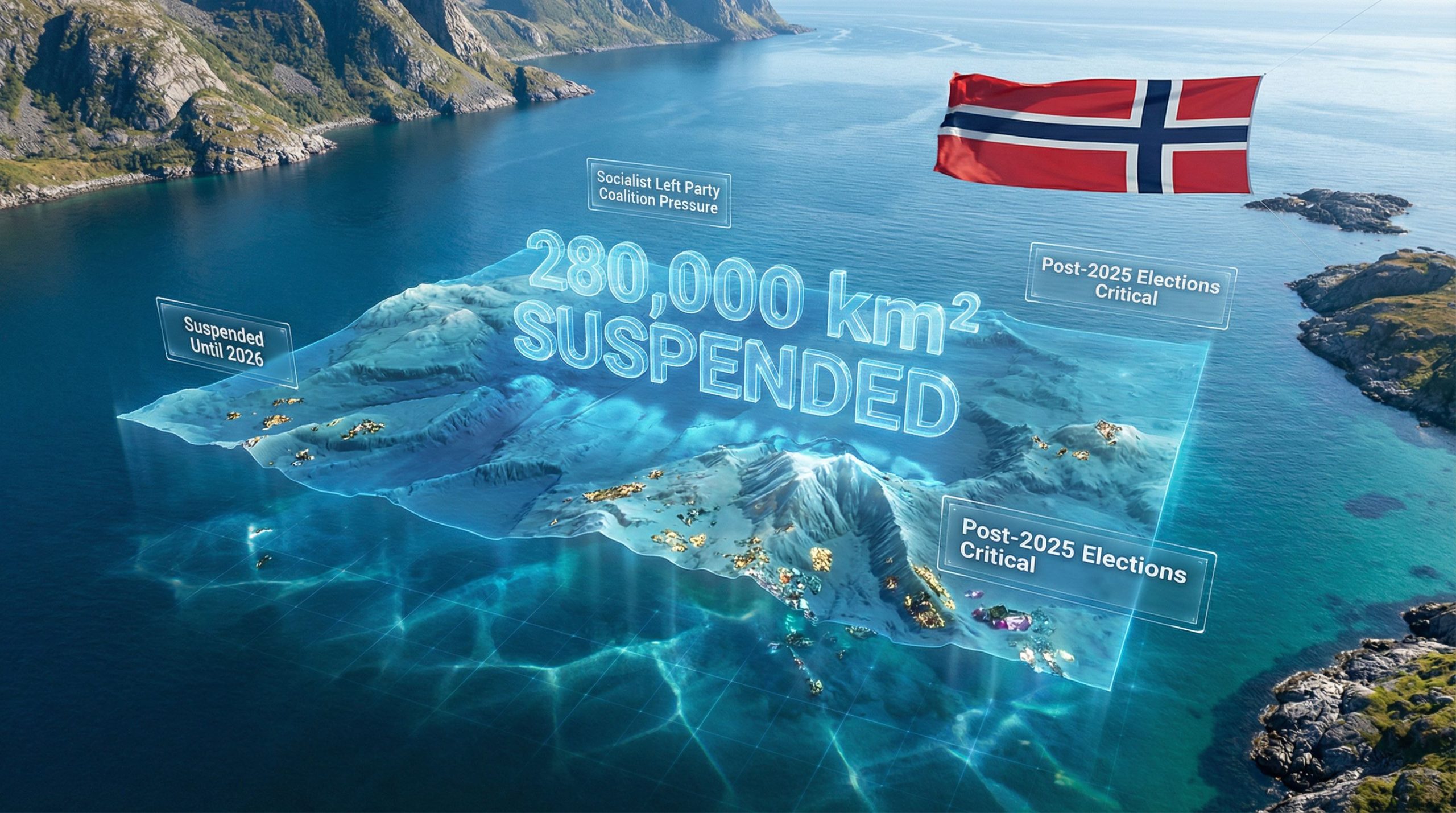
Norway abandons deep sea mining plans through a carefully orchestrated political manoeuvre that highlights the volatile nature of resource extraction policies in democratic systems. The Norwegian government's decision to suspend licensing rounds for approximately 280,000 square kilometres of Arctic seabed represents one of the most significant policy reversals in recent deep-sea mining history.
The suspension emerged from coalition politics within Norway's parliamentary system, where the Socialist Left Party (SV) leveraged its position as a critical budget ally to force the government's hand. This political manoeuvring demonstrates how smaller parties can wield disproportionate influence over major resource decisions when governments depend on narrow majorities for fiscal approval.
Key Policy Metrics Table:
| Aspect | Details |
|---|---|
| Suspended Area | 280,000 km² of Norwegian Sea and Greenland Sea |
| Timeline | Licensing freeze until post-2025 elections |
| Targeted Minerals | Copper, zinc, cobalt, rare earth elements |
| Political Catalyst | Socialist Left Party budget coalition pressure |
| Economic Impact | Billions in potential revenue delayed |
The targeted seabed areas contain substantial deposits of battery-critical minerals, including copper concentrations that could significantly impact European supply chains. For instance, geological surveys have identified polymetallic nodule fields and seafloor massive sulfide deposits across the suspended zones, representing some of the most accessible deep-sea mineral resources in Arctic waters.
Coalition Dynamics and Democratic Resource Governance
The suspension mechanism reveals how democratic processes can rapidly alter resource extraction trajectories, even when significant economic interests are at stake. The Socialist Left Party's success in forcing this policy change illustrates the effectiveness of targeted political pressure within coalition governments.
Environmental advocacy groups coordinated closely with the SV to build public pressure for the suspension, demonstrating how civil society organisations can influence resource policy through strategic political alliances. Additionally, this coordination included fishing industry representatives concerned about potential ecosystem impacts and scientific communities advocating for precautionary approaches.
International Regulatory Implications and Precedent Setting
Norway abandons deep sea mining plans in a decision that reverberates through international ocean governance frameworks, particularly as the International Seabed Authority (ISA) continues developing regulations for mining in international waters beyond national jurisdiction. This decision directly impacts the broader critical minerals strategy discussions across Europe.
The Norwegian suspension strengthens the position of nations advocating for comprehensive environmental safeguards before commercial deep-sea mining begins. Moreover, this precautionary stance aligns with growing international momentum for evidence-based policy development in marine resource management, as outlined by Arctic policy experts.
Global Deep-Sea Mining Policy Comparison:
| Jurisdiction | Current Status | Policy Approach | Key Minerals |
|---|---|---|---|
| Norway | Suspended (2024-2026) | Precautionary pause | Cu, Zn, Co, REEs |
| New Zealand | Permanent prohibition (2021) | Complete ban | Polymetallic nodules |
| International Waters | Regulatory development ongoing | ISA framework pending | Mn, Ni, Cu, Co |
| Japan | Active exploration programs | Controlled development | REEs, Mn nodules |
| Canada | Assessment phase | Cautious evaluation | Various deep-sea deposits |
Environmental Impact Assessment Evolution
The suspension provides additional time for environmental baseline studies and impact assessment methodologies to mature. However, scientific understanding of deep-sea ecosystems remains incomplete, with critical knowledge gaps regarding:
• Biodiversity patterns in abyssal and bathyal zones
• Ecosystem service functions performed by deep-sea habitats
• Recovery timelines following industrial disturbance
• Cumulative impact interactions with climate change effects
Over 900 marine scientists have publicly called for deep-sea mining moratoria, creating substantial pressure for evidence-based policy development. Consequently, this scientific consensus influences regulatory approaches across multiple jurisdictions and strengthens arguments for precautionary frameworks.
Economic Ramifications of Delayed Mineral Access
The policy reversal creates significant economic implications for European critical mineral supply chains, particularly as the continent seeks to reduce dependence on non-European sources for battery manufacturing and renewable energy infrastructure. Furthermore, this aligns with growing critical minerals demand that requires new supply sources.
Economic modelling suggests the suspended Norwegian seabed areas could yield substantial revenues, with copper and cobalt reserves potentially valued in the billions of dollars. However, regulatory uncertainty now clouds investment planning for companies that had positioned themselves for Arctic deep-sea operations.
Economic Impact Analysis:
• Revenue Projections: Multi-billion dollar mineral extraction potential
• Investment Timeline: Commercial operations pushed beyond 2030
• Supply Chain Effects: Increased European dependence on alternative sources
• Fiscal Impact: Delayed government royalty and tax revenues
• Industry Response: Resource redirection toward alternative projects
Industry Adaptation Strategies
Mining companies and technology developers are reassessing their Arctic strategies following the Norwegian suspension. In addition, some firms are redirecting resources toward:
• Terrestrial mining projects with clearer regulatory pathways
• International waters exploration where ISA frameworks may offer greater certainty
• Alternative deep-sea jurisdictions with more favourable policy environments
• Technology development for future deployment when regulations stabilise
The suspension has also accelerated interest in recycling technologies and urban mining approaches as companies seek alternative sources for critical minerals outside traditional extraction methods. Consequently, these mining technology innovations are becoming increasingly important for industry adaptation.
Environmental Safeguards and Scientific Understanding
Norway abandons deep sea mining plans partly due to growing recognition of environmental risks associated with deep-sea extraction. The suspension reflects evolving scientific understanding of deep-sea ecosystems and their extraordinary vulnerability to industrial activities.
Critical Environmental Considerations:
| Risk Category | Specific Concerns |
|---|---|
| Biodiversity Loss | Endemic species vulnerability, habitat destruction |
| Ecosystem Services | Unknown functions in carbon cycling, nutrient processing |
| Recovery Dynamics | Extremely slow regeneration rates in deep-sea environments |
| Cumulative Effects | Interactions with ocean acidification, warming |
| Sediment Plumes | Far-field impacts on water column ecosystems |
Deep-Sea Ecosystem Characteristics
Research reveals that deep-sea environments operate under fundamentally different ecological principles compared to terrestrial and shallow marine systems:
• Extreme longevity in deep-sea organisms, with some species living centuries
• Ultra-slow metabolic rates due to cold temperatures and high pressure
• High endemic species concentration with limited distribution ranges
• Complex food web dependencies based on marine snow and chemosynthesis
• Minimal resilience to physical disturbance compared to other ecosystems
The precautionary principle gains strength from this ecological reality, as traditional environmental impact assessment approaches may be inadequate for deep-sea systems. Furthermore, recovery could require centuries rather than decades in these unique environments.
Arctic Resource Governance and Regional Dynamics
The Norwegian suspension influences broader Arctic resource governance patterns, where competing visions of sustainable development clash with strategic mineral security concerns. For instance, Arctic Council member states are developing increasingly divergent approaches to seabed resources, reflecting the broader mining industry evolution taking place globally.
Arctic Nation Policy Divergence:
• Conservation-focused approaches emphasising ecosystem protection
• Strategic resource security prioritising critical mineral access
• Balanced development models attempting to reconcile competing interests
• Precautionary frameworks requiring extensive environmental assessment
Geopolitical Implications
The suspension occurs within a broader context of Arctic geopolitical competition, where resource access intersects with national security considerations. However, Norway's decision potentially affects:
• NATO alliance mineral security strategies
• European Union critical raw materials supply diversification
• Russia-China Arctic cooperation in alternative resource areas
• United States Arctic policy regarding deep-sea resources
Climate change continues reshaping Arctic resource accessibility, making previously inaccessible seabed areas potentially viable for future extraction as ice coverage patterns change. Consequently, these developments add complexity to long-term resource planning across the region.
Post-2025 Political Scenarios and Policy Trajectories
Norway abandons deep sea mining plans temporarily, with the suspension's future depending heavily on electoral outcomes and subsequent government formation. Different political coalitions would likely pursue contrasting approaches to seabed resource development.
Potential Policy Scenarios:
| Political Outcome | Likely Policy Direction |
|---|---|
| Conservative Coalition | Possible policy reversal, accelerated licensing |
| Centre-Left Continuation | Maintained precautionary approach |
| Green-Influenced Government | Potential permanent prohibition consideration |
| Minority Government | Continued susceptibility to small party influence |
Stakeholder Mobilisation Patterns
The successful suspension campaign demonstrates effective stakeholder coordination across multiple sectors. Furthermore, environmental organisations have worked alongside various groups to influence policy outcomes:
• Environmental organisations providing scientific expertise and advocacy
• Fishing industry representatives concerned about ecosystem impacts
• Scientific communities offering research-based policy recommendations
• Political parties leveraging democratic processes for influence
This coalition model may serve as a template for similar campaigns in other jurisdictions considering deep-sea mining policies. Consequently, the Norwegian example provides valuable lessons for international environmental advocacy efforts.
Global Ocean Governance Evolution
The Norwegian decision contributes to evolving international ocean governance frameworks, particularly regarding the application of precautionary principles in marine resource management. This policy shift occurs as international negotiations continue within multiple governance bodies, with environmental groups celebrating the suspension as a significant victory.
International Seabed Authority Implications
Norway's suspension may influence ISA deliberations on several critical issues:
• Environmental protection standards for international waters mining
• Benefit-sharing mechanisms for developing nations
• Technology transfer requirements within regulatory frameworks
• Monitoring and compliance protocols for deep-sea operations
The ISA faces pressure to develop comprehensive regulations before commercial mining begins. Furthermore, the Norwegian example demonstrates how national-level policy changes can affect international regulatory momentum.
Emerging Legal Precedents
The suspension contributes to developing legal precedents around state responsibility for marine environmental protection. However, key legal principles being tested include:
• Precautionary principle application in deep-sea resource management
• Environmental impact assessment requirements for seabed mining
• Public participation mechanisms in marine resource decisions
• Intergenerational equity considerations for ocean resources
Technology and Industry Response Patterns
Norway abandons deep sea mining plans at a time when extraction technologies are rapidly advancing, creating tensions between technological capability and regulatory acceptance. The suspension affects technology development trajectories across multiple areas.
Technology Development Impacts:
• Extraction system design modifications for different regulatory environments
• Environmental monitoring technologies enhanced for compliance requirements
• Remote operation capabilities developed for harsh deep-sea conditions
• Sediment management systems designed to minimise ecological impact
Investment Flow Redirection
The regulatory uncertainty drives investment toward alternative approaches:
• Recycling technology advancement for critical mineral recovery
• Terrestrial mining efficiency improvements and expansion
• Substitute material development reducing critical mineral dependence
• Supply chain diversification strategies across multiple jurisdictions
Future Implications for Marine Resource Governance
The Norwegian suspension represents a significant moment in the evolution of global marine resource governance, demonstrating how democratic processes can influence major resource extraction decisions despite substantial economic incentives.
This policy reversal provides valuable insights for other nations considering deep-sea mining frameworks. Moreover, it illustrates the complex interplay between environmental concerns, economic interests, and political dynamics in natural resource governance.
The suspension's temporary nature ensures continued policy uncertainty, with future directions dependent on electoral outcomes and evolving scientific understanding of deep-sea ecosystem impacts. Furthermore, this uncertainty reflects broader challenges in balancing immediate economic benefits against long-term environmental risks in marine resource management.
Key Takeaways for Policy Development:
• Democratic processes can effectively challenge resource extraction policies
• Scientific uncertainty strengthens arguments for precautionary approaches
• Coalition building across diverse stakeholders enhances policy influence
• International coordination affects national-level resource decisions
• Temporary suspensions provide opportunities for policy reassessment
As global demand for critical minerals continues growing alongside renewable energy transitions, the Norwegian example demonstrates that environmental and democratic considerations can successfully compete with economic incentives in shaping resource extraction policies. Consequently, the long-term implications of this decision will likely extend far beyond Norway's territorial waters, influencing international approaches to deep-sea mining governance and marine environmental protection.
Ready to Capitalise on Critical Minerals Market Opportunities?
Norway's deep-sea mining suspension underscores the volatile policy landscape affecting critical minerals supply chains, creating new opportunities for savvy investors in terrestrial mining companies. Discovery Alert's proprietary Discovery IQ model delivers instant notifications when significant ASX mineral discoveries are announced, helping subscribers identify actionable investment opportunities in copper, cobalt, and rare earth element companies ahead of broader market recognition. Begin your 30-day free trial today to position yourself strategically as global supply chain dynamics continue evolving.