
May 11, 2026
When Mining Oversight Fractures: The Regulatory Architecture Behind the Sigma Lithium Dispute
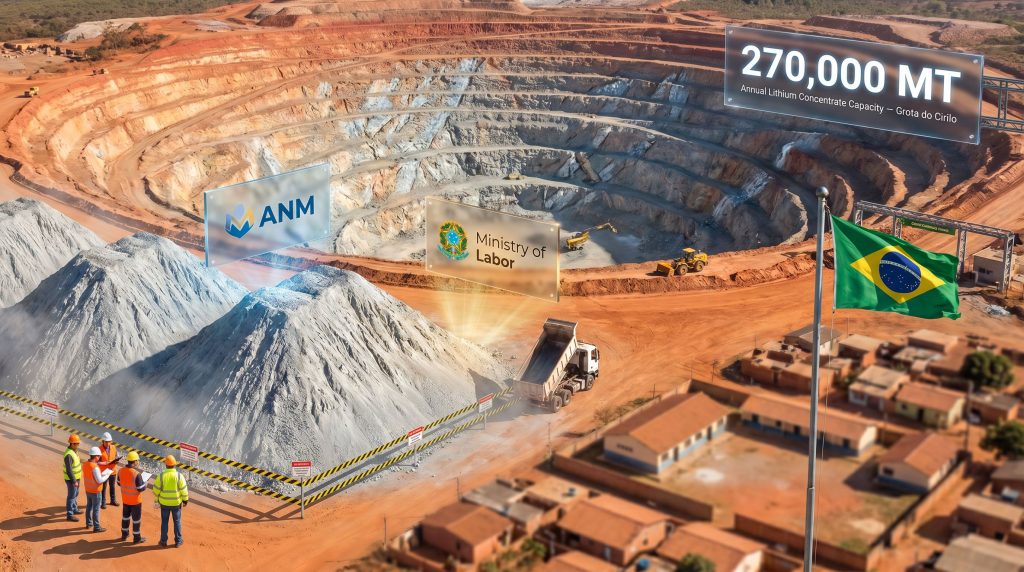
Few sectors expose the fault lines of regulatory architecture quite like hard-rock mining. When a single producing asset sits at the intersection of geological safety law, occupational health regulation, and community protection frameworks, the risk is not just operational, it is structural. The case of Brazilian inspectors fining Sigma Lithium for using a banned waste pile near the community of Poco Dantas is not simply a compliance story. It is a window into what happens when two independent arms of government reach contradictory conclusions about the same infrastructure, and a company caught between them decides to keep operating anyway.
When big ASX news breaks, our subscribers know first
The Regulatory Fault Line: Understanding Brazil's Split Oversight System
How Two Government Bodies Reached Opposite Conclusions on the Same Waste Piles
Brazil's mining sector operates under a layered oversight model where jurisdiction is divided not by geography but by risk category. The National Mining Agency (ANM) governs the geotechnical and geological dimensions of mining operations, including the structural integrity of waste infrastructure. The Ministry of Labor and Employment governs workplace safety and community risk arising from industrial activity. These mandates are codified independently and enforced separately.
This division creates an unusual legal condition: both agencies can assess the same physical infrastructure and reach non-overlapping conclusions, neither of which cancels out the other. In practice, when the ANM determined in January 2026 that Sigma Lithium's waste piles at Grota do Cirilo presented no geotechnical anomaly indicating imminent risk, that finding did not dissolve the shutdown order issued by labor inspectors the previous December. The two assessments operate on different regulatory wavelengths entirely.
Brazil's ANM vs. the Ministry of Labor: Who Actually Has Authority?
The answer is both, simultaneously. The ANM's authority derives from mining law and focuses on the structural, geological, and geotechnical performance of mine infrastructure. Labor inspectors draw authority from employment and community safety statutes that are specifically designed to protect workers and proximate communities from occupational hazard, independent of whether the underlying infrastructure meets geological stability thresholds.
A key regulatory principle confirmed by the Reuters reporting on this dispute is that the ANM's assessment does not override a labor shutdown order. Both agencies operate independently, and a company cannot resolve one agency's prohibition simply by obtaining a favourable determination from the other.
Why Regulatory Fragmentation in Mining Creates Operational Deadlock
When agencies responsible for the same physical asset operate under different legislative mandates, companies face a condition that legal scholars sometimes describe as regulatory deadlock. There is no single competent authority to issue a binding clearance. Sigma Lithium's decision to resume mining in February 2026 after receiving a favourable ANM assessment, while a labor shutdown order remained active, illustrates precisely this dynamic.
The company appears to have treated the ANM's determination as sufficient authorisation, while labor inspectors continued to enforce their December 2025 order as independently binding.
What Are Waste Piles in Lithium Mining, and Why Do They Matter?
The Difference Between Tailings and Hard Rock Waste Stacking
In lithium mining, particularly hard-rock spodumene operations like Grota do Cirilo, the term "waste pile" describes something technically distinct from conventional tailings dams. Understanding how lithium mining works is essential context here. Traditional tailings facilities store fine-grained, water-saturated slurry, the residue from mineral processing. Hard-rock waste piles, by contrast, consist of coarser crystalline material, overburden, and processing byproducts that are stacked and compacted rather than stored in liquid suspension.
This distinction matters enormously in regulatory and risk terms:
| Waste Type | Composition | Primary Risk | Regulatory Category |
|---|---|---|---|
| Wet tailings dam | Fine slurry, water-mixed | Dam failure, downstream flooding | Strictly regulated post-Brumadinho |
| Dry-stacked waste | Compacted hard rock | Slope instability, surface erosion | Classification contested in Sigma dispute |
| Hard schist rock waste | Coarse crystalline byproduct | Lower mass failure risk (per ANM) | Subject to ongoing legal dispute |
Dry Stacking vs. Wet Tailings: Environmental and Safety Implications
Dry stacking is widely considered the technically superior approach to tailings and waste management in modern mining practice. By reducing water content and compacting waste into engineered landforms, operators lower the probability of catastrophic liquefaction failure that has defined some of Brazil's worst industrial disasters. However, dry-stacked facilities are not risk-free.
Slope stability under heavy rainfall, surface erosion exposing toxic minerals, and proximity to communities all remain legitimate safety concerns even when structural collapse risk is low. Furthermore, effective mining waste management requires continuous monitoring regardless of the dry or wet classification applied to a facility.
The debate at Grota do Cirilo appears to hinge on exactly where the waste piles in question fall along this risk spectrum. Sigma's position, reflected in its legal filings, treats the piles as low-risk hard rock waste. Labor inspectors, observing physical evidence of what they characterised as a partial rupture near a school, arrived at a substantially different conclusion.
Why the Classification of Mining Waste Is Central to the Sigma Lithium Dispute
The classification of waste material determines which regulatory framework applies, what monitoring obligations attach, and which agency holds primary oversight. A pile classified as low-risk hard rock waste faces a lighter regulatory burden than one classified as a tailings facility or a structure posing community hazard. Sigma's dispute with Brazilian inspectors is therefore partly a classification argument, with major operational and financial consequences attached to the outcome.
What Did Brazilian Inspectors Actually Find at the Grota do Cirilo Mine?
Timeline of Events: From the December Shutdown to the May 2026 Fine
The sequence of regulatory events at Grota do Cirilo unfolded across seven months, with each development revealing additional complexity in the dispute:
-
October 2025: Sigma Lithium terminates its mine operator contractor, rendering Grota do Cirilo inactive.
-
December 2025: Labor inspectors issue a shutdown order covering three waste piles, citing grave and imminent risk to workers and the Poco Dantas community. A partial rupture is documented at a pile situated near a school within the community.
-
January 20, 2026: ANM technicians conduct an on-site inspection and find no geotechnical anomalies consistent with imminent structural failure, reclassifying the observed damage as localised erosion.
-
February 2, 2026: The ANM formally declares the waste piles do not present imminent geotechnical risk. Sigma announces resumption of mining activities at Grota do Cirilo.
-
May 2026: Labor inspectors return to the area surrounding the work site and observe, from outside the mine perimeter, trucks actively depositing waste material onto the same pile shut down in December. Fines are issued for unauthorised waste deposition and obstruction of official inspection access.
The "Partial Rupture" vs. "Localised Erosion" Debate: Competing Technical Assessments
The language used by each agency to describe physical conditions at the same waste pile is instructive. Labor inspectors described what they observed as a partial rupture, a term carrying connotations of structural failure and ongoing mass movement. The ANM, conducting its assessment approximately three weeks later, used the term localised erosion, a characterisation suggesting surface-level material loss rather than structural compromise.
Both descriptions may be technically defensible depending on the inspection methodology, the time elapsed between observations, and the specific measurement criteria applied. What they share is the same underlying event: a physical change in the waste pile that prompted two agencies to assign it fundamentally different risk ratings.
What Inspectors Observed From Outside the Mine Site
One of the more procedurally significant details in the May 2026 enforcement action is that labor inspectors documented the ongoing waste deposition from outside the mine boundary after being denied entry. Brazilian labor law grants inspectors the right to access work sites to assess working conditions, making Sigma's refusal to allow entry a separately penalised violation. The fact that inspectors could nonetheless observe trucks using the prohibited pile from the site perimeter suggests the waste infrastructure is visible from publicly accessible land, a detail that may matter in subsequent legal proceedings.
Why Did Sigma Lithium Resume Operations Despite the Shutdown Order?
The February 2026 Resumption Decision: Operational Justification vs. Regulatory Compliance
The decision to resume mining at Grota do Cirilo in February 2026, while the labor shutdown order remained in force, reflects the acute commercial pressure facing any mining company with a single productive asset. Sigma Lithium framed its legal challenge around the operational and economic consequences of losing access to the waste piles, arguing that continued prohibition would jeopardise the continuity of mining activity at its only operating mine.
From a purely business perspective, this position is understandable. Grota do Cirilo carries an annual processing capacity of approximately 270,000 metric tonnes of lithium concentrate, and the mine had already been inactive since October 2025 following the contractor termination. Each month of additional stoppage represents a material portion of annual production capacity foregone.
The "Significant Operational and Economic Impacts" Argument
In its legal filings contesting the shutdown order, Sigma argued that restricted access to the waste piles would cause significant operational and economic impacts. This framing positions the lawsuit not merely as a regulatory appeal but as an economic necessity argument, asking Brazilian courts to weigh the commercial consequences of enforcement against the risk-based rationale for the original shutdown order.
Courts in mining jurisdictions have sometimes granted temporary injunctions in comparable situations, particularly where the company can demonstrate that the regulatory determination being challenged is credibly disputed. Whether Brazilian courts will accept this argument in the context of community safety risk near a school remains an open question as of May 2026.
Annual Production Capacity at Stake: The 270,000 Metric Tonne Question
Grota do Cirilo is not simply Sigma Lithium's largest asset. It is the company's only productive asset, processing approximately 270,000 metric tonnes of lithium concentrate per year at full capacity. With no alternative operation to absorb the shortfall, any sustained disruption translates directly into zero production revenue for the company.
This single-asset dependency represents a structural vulnerability that compounds the regulatory dispute. Companies operating across multiple projects can absorb regulatory interruption at one site. A company with only one producing mine, however, cannot.
What Are the Specific Fines Issued Against Sigma Lithium?
Fine 1: Depositing Waste on a Prohibited Pile Near Poco Dantas
The primary citation issued by Brazilian labor inspectors in May 2026 relates to the continued use of a waste pile that had been formally shut down in December 2025. The same pile where a partial rupture was reported adjacent to a school in Poco Dantas was observed receiving active waste deposition from trucks, in direct contravention of the shutdown order. This violation establishes that the prohibited activity continued for at least five months following the original enforcement action.
Fine 2: Obstructing Inspectors' Legal Right to Access the Work Site
The secondary citation addresses Sigma's refusal to allow labor inspectors to enter the work site to assess working conditions. Under Brazilian labor law, inspectors hold a statutory right of access that companies cannot unilaterally deny. The fact that this obstruction was cited as a separate violation, rather than absorbed into the primary waste deposition offence, suggests Brazilian labor authorities treated it as a substantively independent breach of regulatory obligations.
The two fines together establish a pattern of both substantive non-compliance (using a prohibited pile) and procedural non-compliance (obstructing the inspection that would document it).
What Penalties Can Brazilian Labor Authorities Impose on Mining Companies?
Specific fine amounts for these violations were not disclosed in available reporting as of May 2026. Brazilian labor enforcement has a tiered penalty structure that can escalate from administrative fines through to criminal referrals and production suspension orders for continuing violations. According to Reuters reporting, it remains unclear what steps the Brazilian government could take next if the firm continues to use the pile despite the shutdown order.
The next major ASX story will hit our subscribers first
Is the Poco Dantas Community at Risk? Examining the Safety Evidence
The School Proximity Factor: Why the Waste Pile Location Escalated Regulatory Concern
The specific waste pile that remains the subject of enforcement action is the one labor inspectors identified as proximate to a school within the Poco Dantas community. School proximity is widely treated in community safety regulation as a risk multiplier, both because children represent a vulnerable population and because schools typically operate continuous occupancy during daylight hours, the same hours when mining operations and potential slope events are most likely.
The fact that inspectors specifically identified this pile, rather than the other two shuttered piles, as the site of ongoing unauthorised activity in May 2026 suggests either operational necessity on Sigma's part or a judgement that the ANM's risk reclassification adequately addressed the safety basis for the original shutdown order. Labor inspectors demonstrably disagree with that judgement.
ANM's Geotechnical Assessment vs. Labor Inspectors' Field Observations
The competing risk narratives from the two agencies highlight a methodological divergence as much as a factual one. Geotechnical assessment by the ANM focuses on engineering parameters such as slope angles, material compaction, drainage performance, and structural failure probability. Labor safety inspection uses a broader standard encompassing visible conditions, proximity to vulnerable populations, and observable evidence of physical change.
Under this framework, the same waste pile can simultaneously present no geotechnical anomaly by ANM criteria and constitute a grave and imminent risk under labor safety standards. Neither agency is necessarily wrong within its own mandate.
What "Grave and Imminent Risk" Means Under Brazilian Labor Law
Under Brazilian labor regulations, a grave and imminent risk designation empowers the Ministry of Labor to issue immediate shutdown orders without requiring judicial approval. This standard is deliberately distinct from the geotechnical thresholds applied by the ANM, and is designed to enable rapid intervention where workers or communities face acute hazard.
This regulatory design reflects lessons drawn from Brazil's history of industrial disasters, where delays in enforcement action pending technical verification have contributed to catastrophic outcomes.
How Does Brazil's Post-Brumadinho Regulatory Environment Shape This Dispute?
The Legacy of Brumadinho and Mariana: How Tailings Disasters Reshaped Brazilian Mining Law
Brazil has experienced two of the most consequential tailings dam failures in modern mining history. The Mariana disaster in November 2015 and the Brumadinho collapse in January 2019 together claimed hundreds of lives and released billions of litres of toxic mining waste into Brazilian river systems. The Brumadinho failure alone killed 270 people when a tailings dam operated by Vale collapsed in Minas Gerais state, the same state where Grota do Cirilo is located.
These disasters triggered wholesale revision of Brazilian mining regulation, including tighter oversight of waste infrastructure, mandatory decommissioning of upstream-constructed tailings dams, and expanded authority for labor inspectors to issue site-specific shutdown orders without court approval. Consequently, the community of Poco Dantas sits in the same regulatory and geographic context shaped by those disasters.
Why Community Proximity to Waste Infrastructure Has Become a Flashpoint
Post-Brumadinho reforms specifically elevated community proximity as a risk factor in waste infrastructure assessment. Residential areas, schools, hospitals, and other populated structures within defined distances of mining waste infrastructure now trigger additional oversight obligations under Brazilian law. The proximity of a school to the waste pile at Poco Dantas is therefore not incidental to the enforcement action but is likely central to the legal basis for the grave and imminent risk designation.
In addition, robust mine reclamation obligations now form part of the broader post-disaster regulatory framework, placing further responsibility on operators to plan for safe long-term waste management from the outset.
The Political Dimension: Mining Revenue vs. Environmental and Worker Protection
Brazil's lithium sector sits at the intersection of significant economic interest and post-disaster regulatory reform. The country hosts substantial hard-rock lithium resources and has attracted investment from producers seeking to diversify supply away from Australian and Chilean sources. At the same time, the political and legal legacy of Brumadinho means that regulatory authorities face intense public scrutiny when mining companies challenge safety-based enforcement actions. The Sigma dispute plays out squarely against this backdrop.
What Happens Next? Escalation Pathways and Regulatory Outcomes
Sigma's Legal Challenge to Overturn the Shutdown Order: Current Status
As of May 2026, Sigma Lithium's lawsuit against the Brazilian government to overturn the labor shutdown order remains active. The company has publicly documented its legal position, arguing economic necessity and relying on the ANM's favourable risk assessment as supporting evidence. Brazilian courts will need to adjudicate the question of whether an ANM clearance is sufficient to overcome a labor ministry shutdown order, a question with implications well beyond this single case.
Potential Scenarios: Negotiated Resolution, Forced Suspension, or Judicial Override
The dispute's trajectory depends on several variables, including court timelines, regulatory escalation decisions, and Sigma's operational choices in the interim:
| Scenario | Trigger Condition | Likely Outcome |
|---|---|---|
| Negotiated compliance | Sigma agrees to remediate the waste pile and halt unauthorised use | Fines settled; operations continue under monitoring |
| Judicial injunction | Court accepts Sigma's economic impact argument | Temporary operational continuity; regulatory uncertainty persists |
| Escalated enforcement | Continued non-compliance detected by labor inspectors | Production suspension order; potential criminal referral |
| Inter-agency resolution | ANM and Labor Ministry develop shared risk framework | Regulatory clarity; new waste management conditions imposed |
Reuters reporting notes explicit uncertainty about what the Brazilian government's next steps would be if non-compliance continues, suggesting no automatic escalation mechanism is currently in motion.
What Does This Mean for Brazil's Lithium Supply Chain?
Grota do Cirilo's Role in Global Lithium Concentrate Supply
Sigma Lithium holds the title of Brazil's largest lithium producer, and Grota do Cirilo is its sole operating asset. With annual processing capacity of approximately 270,000 metric tonnes of lithium concentrate, the mine represents a meaningful contributor to Brazil's lithium output. Prolonged operational disruption at a single site of this scale does not destabilise global lithium markets on its own, but it reinforces the supply concentration risk that affects any jurisdiction relying heavily on single-asset producers.
How Regulatory Disruption at a Single Asset Creates Downstream Uncertainty
Lithium concentrate from hard-rock operations like Grota do Cirilo feeds downstream processing chains that convert spodumene extraction outputs into battery-grade lithium chemicals. Offtake customers, refinery operators, and battery manufacturers who rely on contracted supply from this source face uncertainty whenever production continuity is at risk. Even if Sigma maintains some level of output during the dispute, the regulatory cloud hanging over its waste pile access creates planning uncertainty for downstream partners.
Brazil's Lithium Sector Ambitions vs. Its Regulatory Credibility
Brazil's ambition to become a significant supplier in the global critical minerals economy depends not only on its geological endowment but on demonstrating that its regulatory environment is predictable and that compliance with safety and environmental standards is enforced consistently. Furthermore, advances in direct lithium extraction technology are reshaping how the industry approaches resource recovery globally, making Brazil's ability to attract investment even more contingent on regulatory stability. A scenario where a major lithium producer openly operates in breach of labor safety orders raises serious questions for investors and trading partners about the enforceability of Brazilian mining regulation.
This article is based on publicly available reporting and regulatory information. It does not constitute financial advice. Investors should conduct independent due diligence before making any investment decisions related to companies or projects mentioned herein. Regulatory outcomes, legal proceedings, and operational timelines referenced in this article are subject to change.
Frequently Asked Questions: Sigma Lithium and the Brazilian Waste Pile Dispute
What waste piles were shut down at Sigma Lithium's mine?
Three waste piles at the Grota do Cirilo mine in Minas Gerais state were shut down by Brazilian labor inspectors in December 2025, citing grave and imminent risk to workers and the nearby Poco Dantas community.
Why did the ANM say the piles were safe while labor inspectors said they were dangerous?
The two agencies operate under different legislative mandates and apply different risk thresholds. The ANM assesses geotechnical and geological structural integrity, while labor inspectors assess occupational and community safety risk. A pile can satisfy ANM criteria without satisfying the separate requirements of labor safety law.
Can Sigma Lithium continue mining while the shutdown order is in place?
Sigma announced resumption of mining in February 2026 following the ANM's favourable assessment, but the labor shutdown order remained active. Brazilian inspectors subsequently fined the company for using a prohibited pile, indicating that the labor order was not considered superseded by the ANM determination.
What is the Grota do Cirilo mine, and why is it significant?
Grota do Cirilo is Sigma Lithium's flagship and only producing mine, located in Minas Gerais, Brazil. It has an annual processing capacity of approximately 270,000 metric tonnes of lithium concentrate, making Sigma the country's largest lithium producer.
What legal action has Sigma Lithium taken against the Brazilian government?
Sigma has filed a lawsuit seeking to overturn the labor shutdown order, arguing that restricted access to the waste piles would cause significant operational and economic impacts and jeopardise the continuity of mining activity at Grota do Cirilo.
What fines has Sigma Lithium received from Brazilian inspectors?
Two fines were issued in May 2026: one for depositing waste onto a pile that had been formally shut down near Poco Dantas, and one for refusing to allow labor inspectors to enter the work site to conduct their legally authorised assessment. Brazilian inspectors fining Sigma Lithium for using a banned waste pile in this manner represents a significant escalation in the ongoing regulatory standoff.
Key Takeaways: The Sigma Lithium Regulatory Dispute at a Glance
| Factor | Detail |
|---|---|
| Mine affected | Grota do Cirilo, Minas Gerais, Brazil |
| Annual processing capacity | Approximately 270,000 metric tonnes of lithium concentrate |
| Waste piles shut down | Three piles, December 2025 |
| ANM finding (January 2026) | No imminent geotechnical risk; localised erosion classification |
| Labor inspector finding | Grave and imminent risk to workers and Poco Dantas community |
| Community at risk | Poco Dantas (school located in proximity to affected pile) |
| Fines issued (May 2026) | Unauthorised waste deposition; obstruction of inspection access |
| Legal status | Sigma suing Brazilian government to overturn shutdown order |
| Regulatory context | Post-Brumadinho environment; elevated community proximity scrutiny |
Want To Stay Ahead of Significant ASX Mineral Discoveries Before the Broader Market Does?
Discovery Alert's proprietary Discovery IQ model delivers real-time alerts on major ASX mineral discoveries, transforming complex geological and commodity data into clear, actionable investment insights for both short-term traders and long-term investors. Start your 14-day free trial at Discovery Alert today, or explore how historic discoveries have generated substantial returns on the dedicated discoveries page.