Precious metals markets have long fascinated investors seeking portfolio diversification and hedge against economic uncertainty. While gold maintains its reputation as the ultimate store of value, silver presents a fundamentally different investment proposition characterized by dramatic price fluctuations that can dwarf its golden counterpart. Understanding the underlying mechanisms driving these pronounced volatility patterns becomes essential for investors navigating precious metals analysis in their portfolios.
Understanding the Fundamental Differences Between Silver and Gold Market Dynamics
The structural differences between silver and gold markets create an environment where silver set for sharper swings compared to gold's relatively stable trajectory. These disparities stem from fundamental market characteristics that influence price discovery mechanisms and volatility patterns across different economic cycles.
Furthermore, understanding these dynamics becomes crucial for investors considering volatility hedging strategies in their portfolios.
Silver's Dual Nature as Industrial Metal and Precious Metal
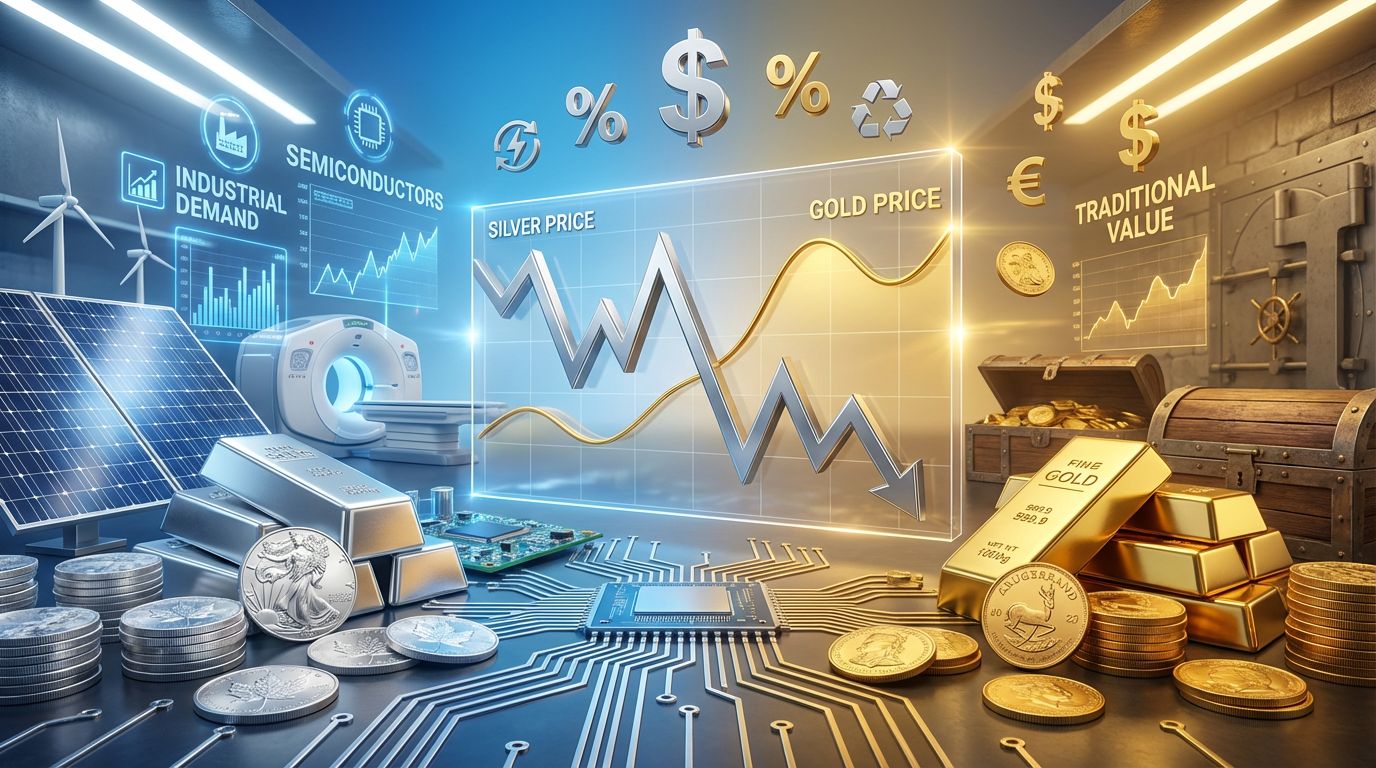
Silver occupies a unique position in global markets, functioning simultaneously as both an industrial commodity and a precious metal store of value. This dual nature creates competing demand forces that significantly amplify price volatility compared to gold's primarily monetary and investment-focused applications.
Industrial applications account for approximately 50-60% of annual silver demand, with electronics manufacturing, solar panel production, and medical devices representing the largest consumption categories. The semiconductor industry alone consumes substantial quantities of silver for its superior electrical conductivity properties, creating direct linkages between technology sector growth cycles and silver pricing dynamics.
Solar panel manufacturing has emerged as a particularly volatile demand driver, with silver consumption in photovoltaic applications increasing by over 85% since 2010. This renewable energy sector growth introduces cyclical demand patterns tied to government policy changes, subsidy programs, and climate initiatives that can shift dramatically based on political developments.
Medical applications represent another growing industrial demand segment, where silver's antimicrobial properties drive consumption in surgical instruments, medical implants, and wound care products. Unlike gold's limited industrial applications, these diverse silver use cases create multiple demand vectors that can move independently, amplifying overall price volatility.
Market Size Disparities Creating Volatility Gaps
The substantial difference in market capitalisation between silver and gold markets creates inherent structural volatility advantages for silver price movements. Gold's global market capitalisation exceeds $13 trillion, while silver's market size remains approximately $1.4 trillion, creating a liquidity differential that magnifies the impact of large institutional trades on silver pricing.
This size disparity means relatively modest capital flows can create significant price movements in silver markets. When institutional investors allocate even small percentages of their portfolios to silver exposure, the resulting demand can overwhelm available supply, creating sharp upward price movements that would barely register in gold markets.
Daily trading volumes further illustrate this liquidity gap, with gold futures averaging $100-150 billion in daily turnover compared to silver's $10-15 billion. Lower liquidity levels mean bid-ask spreads remain wider during volatile periods, amplifying transaction costs and creating additional friction that can exacerbate price movements.
Market maker participation levels vary significantly between silver and gold markets, with fewer large financial institutions maintaining active silver trading operations. This reduced market-making capacity creates gaps in liquidity provision during stressed market conditions, contributing to the sharp price swings characteristic of silver markets.
How Do Macroeconomic Factors Amplify Silver Price Volatility?
Macroeconomic conditions affect silver pricing through multiple transmission mechanisms that create compounding volatility effects. Silver's higher beta relationship to economic cycles means it experiences amplified responses to monetary policy changes, currency fluctuations, and growth expectations compared to gold's more stable monetary role.
In addition, these factors often contribute to broader market conditions that trigger silver market squeeze scenarios.
Interest Rate Sensitivity and Monetary Policy Impacts
Silver demonstrates heightened sensitivity to Federal Reserve policy changes due to its industrial demand components and speculative investment characteristics. During the 2020-2022 monetary expansion period, silver prices increased by over 85% compared to gold's 40% gain, illustrating the metal's amplified response to accommodative monetary conditions.
Rising interest rates create multiple headwinds for silver pricing through reduced industrial demand and opportunity cost considerations. Higher borrowing costs slow economic growth, directly impacting industrial silver consumption in electronics, automotive, and construction applications. Simultaneously, increased yields on risk-free assets make non-yielding silver holdings less attractive relative to income-producing investments.
The transmission of monetary policy through industrial channels creates delayed but pronounced effects on silver demand. Manufacturing sector weakness typically emerges 6-12 months after policy tightening begins, creating lagged demand destruction that can surprise silver markets accustomed to more immediate precious metals responses to policy changes.
Quantitative easing programmes have historically created particularly volatile environments for silver pricing. The combination of increased liquidity, currency debasement concerns, and industrial demand recovery creates multiple bullish forces that can drive explosive silver price movements during accommodative policy cycles.
Currency Fluctuation Multiplier Effects
Dollar strength impacts silver pricing through both direct and indirect channels that create multiplier effects exceeding those experienced by gold. A 10% dollar appreciation typically correlates with 15-20% silver price declines, compared to gold's 8-12% sensitivity to currency movements.
Emerging market currency instability creates particular vulnerability for silver demand patterns. Many developing economies represent significant industrial silver consumers, and currency devaluations in these regions can rapidly reduce import capacity for silver-intensive manufactured goods, creating sudden demand shocks.
Cross-currency hedging challenges amplify silver price volatility for international market participants. The smaller size of silver markets relative to major currency markets means hedging activities can themselves become significant price drivers, creating feedback loops where risk management activities contribute to the volatility they seek to mitigate.
International trade dynamics introduce additional currency-related volatility factors. Silver's extensive use in global manufacturing supply chains means trade disputes, tariff changes, and supply chain disruptions can create rapid shifts in regional demand patterns that manifest as sharp price movements.
What Role Does Industrial Demand Play in Silver's Price Instability?
Industrial demand represents the primary differentiating factor between silver and gold volatility patterns, creating price dynamics more similar to industrial metals than traditional precious metals. This demand source introduces cyclical, seasonal, and technological disruption factors that significantly amplify silver price movements.
Technology Sector Demand Cycles
The semiconductor industry's silver consumption patterns create direct linkages between technology sector growth cycles and silver pricing. Global semiconductor silver consumption exceeds 250 million ounces annually, representing approximately 25% of total industrial silver demand and creating significant price sensitivity to technology sector developments.
Renewable energy sector growth introduces additional volatility through solar panel manufacturing demand. Each gigawatt of solar panel production requires approximately 20-25 tons of silver, meaning renewable energy policy changes can create substantial demand shifts that ripple through silver markets with minimal advance warning.
Electric vehicle adoption rates affect silver demand through both direct component applications and indirect charging infrastructure requirements. The average electric vehicle contains 50-80% more silver than conventional vehicles, creating demand growth potential tied to automotive electrification trends that remain highly dependent on government incentives and battery technology developments.
Technological advancement creates both positive and negative demand pressures simultaneously. While new applications drive increased consumption, technological substitution efforts and efficiency improvements can reduce silver intensity in existing applications, creating competing forces that contribute to demand uncertainty and price volatility.
Supply Chain Disruption Vulnerabilities
Geographic concentration of silver mining operations creates supply-side vulnerability that amplifies price volatility during disruption periods. Mexico, Peru, and China account for over 60% of global silver production, meaning regional disruptions can rapidly affect global supply balances and create sharp price movements.
Processing bottlenecks represent critical supply chain vulnerabilities given silver's complex refining requirements. Unlike gold's relatively straightforward refining process, silver extraction often involves complex metallurgical processes tied to base metal production, creating interdependencies that can amplify supply disruptions.
Inventory management challenges across industrial supply chains create additional volatility amplification mechanisms. Industrial silver inventories typically represent 60-90 days of consumption, compared to gold's multi-year government and institutional stockpiles, meaning supply disruptions can rapidly affect industrial production and create panic buying scenarios.
Transportation and logistics constraints affect silver markets differently than gold due to the metal's lower value-to-weight ratio. Physical silver shipments require more specialised handling and storage infrastructure, creating additional supply chain friction points that can contribute to regional price dislocations during stressed market conditions.
How Do Investment Flows Create Sharp Silver Price Movements?
Investment demand patterns in silver markets exhibit characteristics that amplify volatility beyond levels experienced in gold markets. Retail investor sentiment swings and institutional positioning changes create concentrated buying and selling pressure that can overwhelm industrial demand patterns and drive sharp price movements.
However, understanding these flows helps investors develop effective silver squeeze strategies during volatile periods.
ETF and Institutional Investment Patterns
Silver ETF flows demonstrate extreme concentration patterns that contribute to price volatility. The largest silver ETF holds over 17,000 tons of silver, representing nearly 20% of annual global production and creating scenarios where fund flow patterns can significantly affect physical silver availability for industrial applications.
Institutional investment strategies in silver markets often involve tactical allocation approaches rather than strategic long-term holdings. This creates momentum-driven buying and selling patterns that amplify price trends, as institutional investors tend to chase performance during bull markets and rapidly exit positions during downturns.
Hedge fund positioning in silver markets exhibits higher leverage ratios compared to gold positioning, amplifying the market impact of institutional strategy changes. Average hedge fund silver positions utilise 3-5x leverage, compared to 1.5-2x typical leverage in gold positions, meaning position adjustments create outsized market impacts.
Social media influence on retail silver investment has created new volatility dynamics, particularly evident during coordinated buying campaigns that can overwhelm traditional market-making capacity. These episodes demonstrate how modern communication technologies can rapidly mobilise retail investment capital in ways that create extreme short-term price distortions.
Speculative Trading Dynamics
Futures market positioning in silver exhibits higher speculative intensity compared to gold markets, with speculative long positions frequently exceeding industrial hedging requirements by 300-400%. This creates market conditions where speculative position liquidation can drive prices below industrial user comfort levels, creating artificial scarcity or abundance scenarios.
Options market activity creates additional volatility through gamma exposure effects that amplify underlying price movements. Silver options markets demonstrate higher implied volatility levels and greater sensitivity to time decay factors, meaning options-related hedging activities can contribute to intraday price swings that exceed fundamental supply-demand justifications.
High-frequency trading algorithms in silver markets operate in a less liquid environment compared to gold, creating scenarios where algorithmic trading strategies can temporarily exhaust available liquidity and create flash crash or spike events that would be impossible in larger, more liquid markets.
Cross-commodity arbitrage strategies introduce additional speculative elements, particularly gold-silver ratio trading that can drive short-term dislocations from fundamental value relationships. These arbitrage activities can create periods where silver prices move independently of both industrial fundamentals and monetary factors.
What Are the Key Technical Factors Behind Silver's Sharp Swings?
Technical market structure elements unique to silver trading create mechanical amplification of price movements through liquidity constraints, timing factors, and cross-market interactions. These structural characteristics ensure that silver set for sharper swings regardless of fundamental supply-demand conditions.
Market Structure and Liquidity Considerations
Silver trading hours create vulnerability windows where reduced market maker participation amplifies price movements. Asian trading sessions often experience 40-60% lower liquidity levels, creating conditions where modest news events or technical level breaks can create outsized price moves that persist until Western markets reopen.
Bid-ask spreads in silver markets widen significantly during volatile periods, with spreads increasing from typical 0.1% levels to 0.5-1.0% during stress conditions. This spread widening creates transaction cost barriers that can trap momentum traders and amplify directional price movements once volatility thresholds are exceeded.
Market maker participation levels fluctuate more dramatically in silver than gold markets, with fewer large financial institutions maintaining continuous two-way markets. During extreme volatility periods, reduced market-making capacity can create temporary liquidity voids that allow relatively modest order flow to drive significant price dislocations.
Electronic trading platform limitations become more pronounced in silver markets during high-volume periods. Silver markets experience trading halts and system capacity constraints 3-4 times more frequently than gold markets, creating additional uncertainty that can amplify volatility as traders anticipate potential execution difficulties.
Gold-Silver Ratio as a Volatility Indicator
The gold-silver ratio serves as both a fundamental value indicator and a technical volatility predictor, with historical ratios ranging from 15:1 to 120:1 over the past century. Extreme ratio readings often precede periods of exceptional silver volatility as arbitrage activities and mean reversion forces create competing price pressures.
Furthermore, comprehensive gold-silver ratio analysis reveals these patterns provide valuable insights for timing investment decisions.
Arbitrage opportunities emerge when the ratio deviates significantly from historical norms, creating systematic buying or selling pressure that can drive silver prices independent of fundamental factors. Professional traders typically initiate ratio trades when the ratio exceeds 80:1 or falls below 50:1, creating predictable but volatile price dynamics during ratio normalisation periods.
Cross-metal hedging strategies amplify silver volatility through portfolio rebalancing activities. Large precious metals funds often maintain target ratio exposures, meaning significant moves in either gold or silver can trigger automatic rebalancing that amplifies the initial price movement in silver due to its smaller market size.
Historical analysis reveals that silver volatility increases by 150-200% when the gold-silver ratio reaches extreme levels, suggesting that ratio-based trading strategies create systematic amplification effects that contribute to silver's characteristic sharp price swings.
Which Economic Scenarios Could Trigger Extreme Silver Volatility?
Economic scenario analysis reveals specific conditions that create exceptional silver volatility potential through the convergence of multiple amplification factors. Silver's dual industrial-monetary nature makes it particularly susceptible to economic scenarios that simultaneously affect industrial demand and investment flows.
Inflation and Deflation Impact Scenarios
Stagflation scenarios create particularly complex dynamics for silver markets, combining reduced industrial demand from economic weakness with increased investment demand from currency debasement concerns. Historical analysis of 1970s stagflation periods shows silver volatility exceeding 60% annualised levels, compared to gold's 35% volatility during similar periods.
Deflationary environments create competing forces that amplify silver volatility through industrial demand destruction coinciding with potential safe-haven demand increases. The magnitude and timing of these competing forces create unpredictable price dynamics that can shift rapidly based on evolving economic conditions.
Rapid inflation acceleration scenarios can trigger explosive silver price movements as industrial users attempt to secure supply ahead of anticipated cost increases while investment demand simultaneously increases. Silver prices increased over 400% during the 1979-1980 inflation spike, demonstrating the metal's potential for extreme volatility during inflationary periods.
Central bank policy response uncertainty during inflationary periods creates additional volatility through changing expectations regarding real interest rates and currency stability. Silver markets often exhibit delayed but amplified responses to policy changes as industrial demand adjustments lag monetary policy transmission effects.
Geopolitical Risk Transmission Mechanisms
Supply disruption scenarios from major producing regions create immediate silver market volatility through physical supply constraints. Political instability in Mexico or Peru could affect 40% of global silver supply, creating supply shock potential that exceeds comparable risks in gold markets due to silver's more concentrated production base.
Trade war implications for silver markets extend beyond direct tariff effects to include disruptions in global manufacturing supply chains. Industrial silver demand can decline 20-30% during major trade disruptions, while safe-haven investment demand may simultaneously increase, creating volatile and unpredictable price dynamics.
Sanctions regimes affect silver trading flows through restrictions on precious metals financing and international settlement mechanisms. Unlike gold's established central bank trading networks, silver markets rely more heavily on commercial financing arrangements that can be rapidly disrupted by sanctions implementations.
Regional conflict scenarios create additional complexity through simultaneous supply and demand disruptions. Military equipment production increases industrial demand while conflict regions may experience supply disruptions, creating rapid shifts in global market balances that can drive extreme price volatility.
How Can Investors Navigate Silver's Increased Volatility?
Managing silver exposure requires specialised risk management approaches that account for the metal's unique volatility characteristics and amplification factors. Successful silver investment strategies must balance the metal's significant upside potential against its capacity for sharp downside movements that can exceed investor risk tolerance levels.
Risk Management Strategies for Silver Exposure
Position sizing considerations for silver investments typically require 50-70% smaller allocations compared to equivalent gold positions due to the amplified volatility characteristics. Risk-adjusted portfolio construction should account for silver's tendency to experience sharp drawdowns that can persist for extended periods before recovery begins.
Hedging techniques using derivatives require careful consideration of liquidity constraints and basis risk factors unique to silver markets. Silver options typically trade at 15-25% higher implied volatility premiums compared to gold options, making protective strategies more expensive but potentially more necessary given the underlying volatility differences.
Portfolio allocation frameworks should incorporate silver's correlation patterns with other asset classes during different market regimes. Silver correlations with equity markets increase to 0.7-0.8 during risk-off periods, compared to gold's typical 0.3-0.4 correlations, meaning silver provides less diversification benefit when portfolio protection is most needed.
Stop-loss strategies require wider thresholds in silver investments to avoid premature exits from positions due to normal volatility patterns. Technical analysis suggests 15-20% stop-loss levels for silver positions, compared to 8-12% levels typically appropriate for gold investments, reflecting the metal's tendency for sharp but temporary price swings.
Timing and Entry Strategy Considerations
Technical analysis approaches must account for silver's tendency to experience false breakouts and rapid trend reversals that can trap momentum-based strategies. Silver markets experience 40-50% more failed technical signals compared to gold markets, requiring more conservative confirmation criteria before implementing trend-following strategies.
According to recent CNBC analysis, silver's volatile nature continues to challenge investors while offering significant opportunities.
Fundamental analysis integration requires monitoring both precious metals factors and industrial demand indicators simultaneously. Economic leading indicators for industrial metals often provide better silver price signals than traditional precious metals fundamental analysis, particularly during periods when industrial demand dominates investment flows.
Dollar-cost averaging strategies can help smooth silver's volatility for long-term investors, though the approach requires psychological preparation for periods when accumulated positions experience significant unrealised losses. Historical analysis suggests 18-24 month dollar-cost averaging periods provide optimal risk-adjusted results for silver accumulation strategies.
Tactical allocation approaches may prove more suitable than strategic allocations given silver's cyclical nature and extreme valuation swings. Professional managers often employ 0-10% tactical silver ranges rather than fixed strategic allocations, allowing for complete position elimination during unfavourable risk-reward periods.
What Does Silver's Volatility Mean for Long-Term Investment Outlook?
Long-term silver investment prospects require balancing structural demand growth potential against persistent volatility challenges that may limit institutional adoption. The green energy transition represents a significant long-term demand driver, though implementation timelines and technological developments introduce substantial uncertainty regarding magnitude and timing.
Structural Demand Growth vs. Price Stability Trade-offs
Green energy transition initiatives could drive silver demand increases of 200-300% over the next two decades, primarily through solar panel installation growth and electrical grid modernisation requirements. However, this demand growth may paradoxically increase price volatility as supply chain capacity struggles to match rapidly evolving demand patterns.
Technology advancement effects create competing forces through increased applications and improved efficiency simultaneously. Miniaturisation trends in electronics reduce silver content per device, while expanding device proliferation and new applications like 5G infrastructure create net demand growth with uncertain timing and magnitude.
Mining supply response capabilities face significant constraints due to silver's status as a byproduct of base metal mining operations. Approximately 70% of silver production comes from lead, zinc, and copper mines, meaning supply response to silver price signals remains limited and delayed, potentially amplifying future volatility cycles.
Investment demand evolution may shift toward more sophisticated institutional strategies that could reduce volatility over time. Development of silver-backed stablecoins and DeFi applications could create new demand sources with different volatility characteristics compared to traditional investment vehicles.
Portfolio Diversification Implications
Silver's correlation patterns with other asset classes demonstrate regime-dependent characteristics that complicate traditional portfolio optimisation approaches. During normal market conditions, silver correlations remain modest, but these relationships can shift rapidly during stress periods, reducing diversification benefits when they are most needed.
Volatility clustering effects in silver markets create periods where risk management becomes particularly challenging. Silver volatility tends to cluster in 6-18 month cycles, meaning risk models based on average volatility levels may significantly underestimate risk during cluster periods.
Strategic allocation considerations must weigh silver's return potential against its capacity to create portfolio instability. Professional portfolio managers typically limit silver allocations to 2-5% of total assets, compared to 5-15% typical allocations for gold, reflecting the additional complexity that silver volatility introduces to portfolio management.
The evolution of precious metals markets toward greater institutional participation may gradually reduce silver volatility over extended time periods. However, silver's fundamental industrial demand characteristics ensure that volatility will remain elevated relative to gold, making it a permanent consideration for investors contemplating silver exposure.
Disclaimer: This analysis is for educational purposes only and does not constitute investment advice. Silver investments involve substantial volatility and risk of loss. Past performance does not guarantee future results. Investors should consult qualified financial advisors before making precious metals investments and carefully consider their risk tolerance and investment objectives.
Are You Ready to Capitalise on Silver's Volatile Market Movements?
Discovery Alert's proprietary Discovery IQ model delivers instant notifications on significant ASX mineral discoveries, including precious metals opportunities that can benefit from silver's characteristic sharp price swings. Start your 30-day free trial today to gain real-time insights into actionable trading opportunities, turning complex market volatility into potential investment advantages ahead of the broader market.