
June 25, 2026
The Arithmetic of a Chokepoint: Why Hormuz Holds the World's Energy System Hostage
Few geographic features carry the economic weight of the Strait of Hormuz. Stretching barely 33 kilometres at its narrowest navigable point, this sliver of water connecting the Persian Gulf to the Gulf of Oman functions as the central artery of global petroleum supply. Under normal operating conditions, roughly 20 to 21 percent of the world's petroleum liquids transit this single passage daily, with between 125 and 140 vessels moving through each 24-hour period. For the economies that depend most heavily on Gulf crude, including China, Japan, South Korea, and India, the strait is not merely a shipping lane. It is the foundational assumption upon which their entire energy import architecture rests.
That assumption was violently stress-tested when U.S.-Iran hostilities escalated in late February 2026, triggering what became an effective commercial blockade of the waterway. Tehran's closure of the strait to non-Iranian commercial shipping produced one of the most significant supply disruptions in modern energy market history, accumulating a backlog exceeding 2,300 vessels in the Persian Gulf and Gulf of Oman, of which approximately 255 were fully loaded oil tankers. The world had not seen a Hormuz closure of this duration or severity since the tanker wars of the 1980s, and the economic consequences rippled from crude benchmarks to freight rates to the strategic petroleum reserve calculations of governments across three continents.
The question energy markets are now grappling with is not whether Strait of Hormuz oil tanker traffic resuming represents positive news. It clearly does. The real question is what degree of confidence investors, refiners, and policymakers can place in the durability and pace of that recovery. Furthermore, understanding the broader crude oil price trends helps contextualise just how far-reaching this disruption has been.
When big ASX news breaks, our subscribers know first
Reading the Recovery Data Honestly
What the Traffic Numbers Actually Reveal
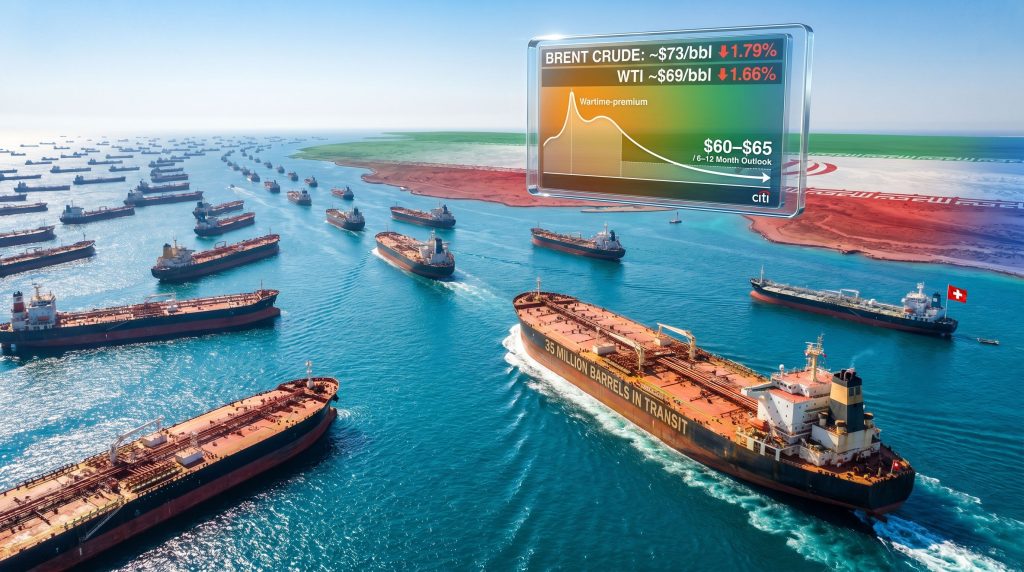
The phrase "Strait of Hormuz oil tanker traffic resuming" has circulated widely since late June 2026, but the underlying data requires careful interpretation. According to trade-tracking firm Kpler, more than 20 oil tankers carrying approximately 35 million barrels of crude have passed through the strait since the U.S.-Iran reopening agreement was reached. The highest single-day figure recorded post-conflict was approximately 20 to 25 vessels on June 19, 2026, representing the most active transit day since early June.
On the surface, these figures suggest meaningful progress. In context, however, they reveal the scale of what remains unresolved.
| Metric | Pre-War Baseline | Current Status (Late June 2026) |
|---|---|---|
| Daily vessel transits | 125-140 vessels/day | ~20-25 vessels on peak recovery days |
| Daily crude throughput | ~17-20 million barrels/day | Significantly below pre-war levels |
| Deadweight tonnage utilisation | ~100% of normal | Under 2% of normal daily DWT |
| Vessel backlog (Gulf + Gulf of Oman) | Near zero | 2,300+ vessels including 255 loaded tankers |
| Strait commercial status | Open | Conditionally restricted |
The deadweight tonnage figure is particularly telling. Even with tankers physically moving through the passage, the aggregate volume of cargo being cleared remains a fraction of pre-conflict daily throughput. Some maritime tracking systems continue to classify the strait as officially closed for unrestricted commercial navigation, a distinction that matters enormously for shipping insurance underwriters, cargo operators, and charter rate pricing.
The Timing Gap Between Market Pricing and Physical Reality
Oil markets moved decisively on the news of traffic resumption. Brent crude declined approximately 1.79% to under $73 per barrel, while WTI crude for August delivery dropped approximately 1.66% to around $69 per barrel, with both benchmarks retreating to levels consistent with pre-conflict February 2026 valuations, effectively erasing the wartime risk premium that had been embedded since hostilities began.
However, this price movement reflects expectation repricing rather than confirmed physical delivery. The vessels that departed the Persian Gulf following the reopening agreement are not expected to reach their Asian destination ports until early August 2026, meaning actual barrel-level supply relief is several weeks away from affecting physical markets. This creates a structural temporal gap that experienced energy traders and commodity analysts must account for in their positioning.
The danger in energy market recoveries like this one is that financial prices can fully reprice a supply restoration weeks before a single additional barrel reaches a refinery. Positions built on that assumption are exposed to any diplomatic or operational setback in the intervening period.
The IRGC Caveat: A Conditionally Open Strait
Understanding Tehran's Retained Leverage
The diplomatic architecture behind the partial reopening centres on high-level bilateral discussions that took place in Switzerland, where U.S. Vice President JD Vance met with an Iranian delegation on June 22, 2026. The agreement to allow commercial transit emerged as a confidence-building component of the broader ceasefire framework, but the terms established by Iran's Islamic Revolutionary Guard Corps Navy fundamentally shape what "open" actually means in practice.
The IRGC issued a formal directive following the agreement: safe passage through the Strait of Hormuz would only be permitted via specific transit corridors designated by Tehran. Vessels deviating from these designated routes were explicitly warned they would face consequences. This is not a minor procedural footnote. It represents a deliberate retention of operational authority over the waterway, preserving Iran's coercive capacity even while nominally permitting traffic to resume.
For commercial operators, this creates a compliance framework unlike anything in normal international maritime law. Under the United Nations Convention on the Law of the Sea, the Strait of Hormuz is subject to the right of transit passage, which in principle cannot be suspended by any single coastal state. The IRGC's corridor designation effectively imposes a unilateral overlay on that right, creating legal and operational ambiguity that shipping companies, insurers, and charterers must navigate carefully. Consequently, the geopolitical trade tensions surrounding this arrangement continue to reverberate well beyond the immediate shipping lanes.
Three Scenarios That Could Reverse the Current Recovery
The fragility of the current arrangement becomes clearer when the most plausible re-escalation pathways are mapped out:
Scenario 1: IRGC Enforcement Against a Non-Compliant Vessel
- A commercial operator unfamiliar with or unwilling to comply with IRGC-designated routing could trigger an enforcement incident
- Even a minor interdiction would immediately reprice the Hormuz risk premium across global crude benchmarks
- Insurance underwriters would likely respond within hours, raising war-risk surcharges across all Gulf-transiting tonnage
Scenario 2: Diplomatic Breakdown in Post-Ceasefire Negotiations
- The Switzerland framework represents an early-stage understanding, not a ratified agreement
- Core disagreements over sanctions relief, nuclear programme terms, and military posture remain unresolved
- Tehran retains the physical and operational capacity to re-close the strait within hours of any diplomatic rupture
Scenario 3: Third-Party Spoiler Dynamics
- The 2019 tanker attacks in the Gulf of Oman demonstrated that proxy actors can manufacture maritime crises with minimal resources
- Regional actors with a vested interest in elevated oil prices or continued U.S.-Iran tension could attempt to provoke incidents within or near the transit corridors
- Attribution complexity in such scenarios often delays market reassurance, extending any associated price spike
Citi's Bearish Structural Case and What It Signals
The $60 to $65 Brent Forecast: Dissecting the Logic
Citi analysts framed the Hormuz reopening as a potential inflection point for commodities curve-carry strategies, which had been severely disrupted by the conflict-driven front-end price spike. The bank's base case scenario now centres on major de-escalation, with a Brent crude price target of $60 to $65 per barrel over a 6 to 12 month horizon, conditional on Hormuz flows returning to something approaching normalcy.
Critically, Citi's tactical guidance characterises any temporary summer 2026 oil price rally as an opportunity to reduce exposure, advising that such moves should be treated as selling opportunities rather than momentum signals. This framing reflects a structural bearish conviction that the wartime supply premium is definitively unwinding, with fundamental oversupply dynamics reasserting themselves as the backlog clears. In addition, the OPEC market influence on pricing decisions during this period remains a critical variable worth monitoring closely.
The Citi forecast rests on several interdependent assumptions that investors should stress-test independently:
- Hormuz flows normalise sustainably over the coming months
- OPEC+ production discipline does not tighten sharply to defend higher prices
- No additional geopolitical shocks emerge in other major production regions
- Asian demand recovery from the supply disruption period does not create a sharper-than-expected demand pulse
Commodities Curve-Carry: A Technical Insight
The reference to curve-carry strategies is worth unpacking for investors less familiar with commodity derivatives markets. A standard carry trade in crude oil involves selling near-term futures contracts (benefiting from their premium when markets are in backwardation) while simultaneously buying longer-dated contracts. During the Hormuz blockade, the extreme front-end price spike associated with near-term supply scarcity compressed or reversed this spread in ways that inflicted significant losses on funds running these strategies. The reopening, by relieving near-term supply anxiety, allows the forward curve to return toward a more normal structural shape, partially restoring the carry trade's profitability.
The Backlog Problem: Full Normalisation Is a Multi-Month Process
Why 2,300 Stranded Vessels Cannot Clear Overnight
Even under an optimistic scenario where the IRGC's transit corridor conditions hold and diplomacy progresses constructively, the physical logistics of clearing the accumulated vessel backlog will impose constraints on market normalisation for months. The 2,300 vessels waiting in the Gulf and Gulf of Oman represent an extraordinary concentration of shipping capacity that cannot be released in an orderly flow without creating significant secondary disruptions.
Port congestion at Asian destination terminals is one of the most underappreciated downstream risks. When the first wave of released tankers converges on Chinese, South Korean, and Japanese ports in early August, those facilities will face simultaneous high-volume arrivals across product categories, not just crude oil but refined products, LNG, and dry bulk cargoes. Berth availability, pilot scheduling, and customs processing capacity will all be tested simultaneously.
On the freight rate side, the sudden release of stranded tonnage creates an acute oversupply of vessel capacity, which will likely compress tanker charter rates significantly. This dynamic is beneficial for cargo owners and refiners but creates earnings pressure for tanker operators and shipping companies that had been benefiting from elevated war-risk charter premiums during the blockade period.
Alternative Route Economics: The Cape of Good Hope Detour
During the blockade period, some cargo operators explored the viability of routing vessels around the Arabian Peninsula via the Cape of Good Hope, adding approximately 15 to 20 additional transit days per voyage. The economics of this detour were punishing: significantly higher bunker fuel consumption, extended crew costs, and dramatically longer vessel turnaround times that effectively reduced the productive capacity of the global tanker fleet on a per-vessel basis.
Saudi Arabia's East-West Pipeline, known as Petroline, provided a partial bypass route for Saudi crude, with a theoretical capacity of approximately 5 million barrels per day. This offered meaningful relief for Saudi exports but could not accommodate the full volume of Gulf production transiting Hormuz under normal conditions, and it could not be accessed by non-Saudi producers.
Downstream Vulnerability: Asia's Structural Exposure
The Dependency Map That Hasn't Changed
One of the most significant structural conclusions to emerge from the 2026 Hormuz closure is the degree to which Asian energy security remains dependent on a single chokepoint. Japan, South Korea, and Taiwan source the overwhelming majority of their crude imports from Gulf producers, with no credible alternative supply infrastructure capable of substituting for Hormuz-routed volumes at scale. These oil market impacts have reinforced calls across the region for a fundamental rethink of energy security strategy.
China's strategic petroleum reserve drawdown during the blockade period means that once commercial flows normalise, Chinese state refiners will face the dual pressure of meeting current demand while rebuilding reserve inventory, creating a sustained demand pulse for Gulf crude that could partially offset the bearish price pressure anticipated by Citi's forecast models.
India's refining sector pursued a partial pivot to alternative supply routes during the blockade, sourcing additional volumes from West Africa and the Americas. As Hormuz-routed cargoes resume, Indian refiners face logistical recalibration costs and the need to unwind the pricing relationships they established with alternative suppliers during the disruption period.
The next major ASX story will hit our subscribers first
What the 2026 Hormuz Crisis Changes Permanently
Energy Security Architecture Under Reassessment
The four-month effective closure of the Strait of Hormuz has provided the most significant empirical test of global energy system resilience since the 1973 oil embargo. The experience has demonstrated, unambiguously, that the world's major economies remain acutely vulnerable to the deliberate weaponisation of a single 33-kilometre waterway.
Expected policy responses include:
- Accelerated investment in strategic petroleum reserve capacity across importing nations, particularly in Asia
- Renewed evaluation of the LNG supply outlook in the U.S., Australia, and Qatar as importing nations seek to reduce exposure to liquid tanker chokepoints
- Strengthened bilateral energy security agreements between Gulf producers and Asian importers that include provisions for alternative delivery mechanisms
- Increased investment in pipeline interconnection across the Arabian Peninsula to reduce Hormuz dependency for at least some portion of Gulf export volumes
| Market Assumption | Key Risk to That Assumption |
|---|---|
| De-escalation is the durable base case | IRGC enforcement action or political shift in Tehran |
| Brent falls to $60-$65 over 12 months | Summer demand surge plus any renewed supply disruption |
| Tanker backlog clears by Q3 2026 | Port congestion and vessel scheduling constraints |
| Asian refiners resume normal procurement | Freight rate volatility disrupting cargo economics |
| Switzerland diplomatic framework holds | Third-party spoiler dynamics or domestic political pressures |
Frequently Asked Questions
Is the Strait of Hormuz fully open for oil tanker traffic in 2026?
As of late June 2026, the strait is partially open under conditions established through a U.S.-Iran agreement, but commercial shipping remains restricted. The IRGC has mandated specific transit corridors, and daily vessel traffic remains far below the pre-conflict baseline of 125 to 140 vessels per day. Furthermore, tanker movements through the strait continue to be closely monitored by maritime analysts tracking the pace of normalisation.
How many oil tankers have passed through since the reopening agreement?
According to Kpler trade-tracking data, more than 20 oil tankers carrying approximately 35 million barrels of crude oil have transited the strait following the U.S.-Iran reopening agreement. The highest single-day figure recorded post-conflict was approximately 20 to 25 vessels on June 19, 2026.
When will oil prices return to pre-conflict levels?
Brent crude has already retreated toward pre-conflict levels of approximately $73 per barrel as of late June 2026. Citi projects a further decline to $60 to $65 per barrel over the next 6 to 12 months if Hormuz flows fully normalise, though this forecast carries meaningful downside risks tied to diplomatic fragility and potential seasonal demand dynamics.
How long until stranded tankers reach their destinations?
Most vessels that departed the Persian Gulf following the reopening agreement are expected to arrive at Asian destination ports by early August 2026, representing a transit time of approximately 3 to 6 weeks depending on the specific destination port.
What role does the IRGC play in Hormuz transit after the agreement?
Iran's Islamic Revolutionary Guard Corps Navy has retained operational authority over transit routing within the strait. The IRGC has designated specific corridors through which commercial vessels must pass and has issued warnings that vessels deviating from these routes will face consequences. This arrangement preserves Iran's strategic leverage over the waterway even within the current reopening framework.
Disclaimer: This article contains forward-looking statements, price forecasts, and scenario analyses drawn from publicly available sources including Kpler trade-tracking data and Citi analyst commentary as reported by CNBC. These projections involve significant uncertainty and should not be construed as investment advice. Energy market conditions in the Strait of Hormuz remain highly dynamic and subject to rapid change. Readers should conduct independent due diligence before making any investment or commercial decisions based on the information presented here.
Want to Capitalise on the Commodity Market Shifts Driving Today's Energy Headlines?
Discovery Alert's proprietary Discovery IQ model delivers real-time alerts on significant ASX mineral discoveries, instantly translating complex commodity market movements into actionable investment opportunities — explore historic discoveries and their extraordinary returns to understand the magnitude of what early positioning can achieve, then begin your 14-day free trial at Discovery Alert to secure your edge before the broader market catches on.