Livium Ltd
- ASX Code: LIT
- Market Cap: $20,641,071
Strategic Consolidation Delivers Immediate Efficiency Gains
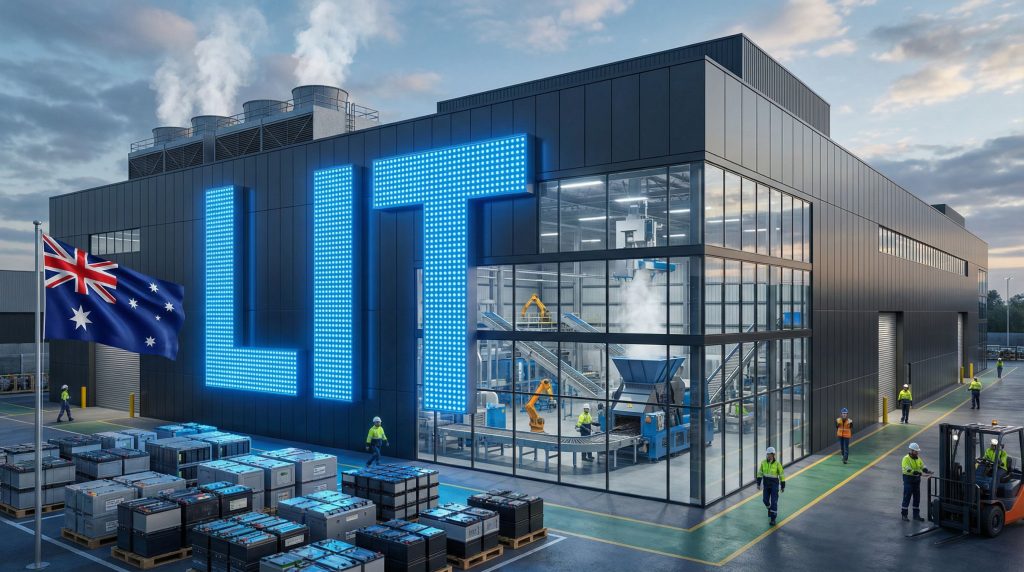
The Derrimut facility represents a comprehensive operational optimisation strategy. By consolidating three separate Melbourne sites into one 6,000m² warehouse and 600m² office space, the Livium Ltd battery recycling hub is targeting multiple strategic objectives simultaneously.
The consolidation delivers immediate operational benefits through reduced overhead costs and streamlined logistics operations. Furthermore, the facility design specifically accommodates Livium's low-capex, high fixed-cost operating model, enabling scalability from current 2,400tpa to potential 10,660tpa capacity. Enhanced safety systems include ESFR fire suppression and 355kL water storage, supporting 24/7 operations capability for higher throughput volumes.
CEO Commentary:
"Consolidating our operations into a facility that allows for disciplined, incremental scaling enables us to grow capacity in line with demand, without materially increasing our cost base," said Simon Linge, CEO and Managing Director.
Facility Implementation Timeline:
- March 2026: Laverton North operations relocate
- Mid-2026: Commercial office consolidation
- Later date: Campbellfield processing relocation (subject to approvals)
When big ASX news breaks, our subscribers know first
Understanding Australia's Battery Recycling Opportunity
Battery recycling involves recovering valuable materials including lithium, cobalt, nickel, and manganese from end-of-life batteries, creating circular supply chains that reduce dependence on mining new materials. The sector operates on a reverse logistics model where waste streams become revenue streams—creating compelling economics as volumes scale.
Australia's battery recycling industry faces a fundamental structural shift driven by regulatory pressure and natural battery lifecycle dynamics. In addition, the sector currently processes a fraction of available volumes, with significant leakage through stockpiling and export pathways that regulatory reform could redirect toward domestic processing.
Key Market Dynamics:
- Resource Security: Reduces reliance on imported battery materials
- Regulatory Compliance: Addresses growing government pressure on battery waste exports
- Economic Recovery: Valuable materials generate revenue while solving environmental waste problems
- Strategic Timing: Australia positioned to lead recycling despite limited domestic battery manufacturing
The timing advantage becomes critical as early electric vehicle (EV) and energy storage system (ESS) batteries approach end-of-life around 2028-2030, creating a volume inflection point for the entire industry.
Regulatory Reform Catalyst Drives Growth Projections
According to the announcement, Livium's growth thesis centres significantly on regulatory reform driving structural market expansion. However, the company currently processes approximately 20% of available battery volumes in Australia, with management estimating that 70% of current volumes flow through stockpiling or export channels rather than domestic processing.
| Growth Scenario | Volume Impact | Livium Opportunity |
|---|---|---|
| Base Growth (2030) | ~5x current volumes | Natural EV/ESS end-of-life cycles |
| Regulatory Reform | Additional ~7x multiplier | Captures exported/stockpiled volumes |
| Combined Scenario | ~12x total growth potential | Market leadership positioning |
Market Volume Analysis:
- FY25 baseline: 667 tonnes processed by Livium
- Available market: 3,360 tonnes (indicating 20% current market share)
- Regulatory uplift potential: 117% increase in collections if reform succeeds
- 2030 projection: Substantial volume growth as first-generation EV batteries reach end-of-life
B-cycle data suggests total available EV and ESS battery volumes reached 3,360 tonnes in 2025. Under regulatory reform scenarios that drive 50% increases in available volumes, consequently, Livium's collections could increase by approximately 117%, assuming the company maintains its current estimated market share position.
Strategic Insight:
"The regulatory reform represents the single largest catalyst for growth in the Australian battery recycling sector. We are positioning Livium to capture this structural shift," according to management commentary.
Technology Integration and Future Revenue Streams
The Derrimut facility design anticipates growth beyond traditional battery recycling operations. For instance, the site provides capacity to co-locate technology partners for processing black mass, recycling solar panels, and recovering rare earth elements—potentially creating additional revenue streams and operational synergies.
Strategic Flexibility Features:
- Modular expansion capability supporting staged capacity increases
- Technology partner accommodation for value-add processing operations
- Adjacent market opportunities in solar panel and rare earth recycling
- Innovation platform for testing and scaling new processes
This approach aligns with Livium's broader technology portfolio, which includes the LieNA® lithium extraction process (joint venture with Mineral Resources) and VSPC cathode materials technology, positioning the company across multiple points in the battery value chain.
Investment Positioning Ahead of Volume Inflection
Livium's recycling hub strategy positions the company ahead of fundamental shifts in Australia's energy landscape. Furthermore, the facility represents infrastructure investment ahead of what management describes as the most significant growth phase in Australian battery recycling history.
Core Investment Drivers:
Market Leadership Position
Livium currently processes 20% of national battery volumes through established collection network relationships and proven profitable operations via its Envirostream subsidiary. This market position provides foundation for capturing expanded volumes as regulatory changes redirect waste flows toward domestic processing.
Regulatory Tailwind Benefits
Government pressure continues increasing on battery waste exports, with 50% volume uplift potential through regulatory reform creating compliance advantages for established domestic processors like Livium.
Operational Leverage Model
The company's low-capex expansion model aims to drive margin improvement through higher volumes. Moreover, fixed cost structures leverage across increased throughput, with 4.4x capacity expansion potential from current 2,400tpa to 10,660tpa capability.
Strategic Timing Advantage
Livium positions itself ahead of the 2028-2030 EV battery end-of-life inflection point, establishing processing infrastructure before volume surge impacts the sector. Consequently, this first-mover positioning in large-format battery processing could provide competitive advantages.
Financial and Operational Framework
Envirostream operates under a low-capex, high fixed-cost model where increased throughput achievement occurs primarily through additional variable operating costs. This structure allows cost per unit leverage as volumes grow, supporting margin expansion during volume scale-up phases.
Capacity Expansion Economics:
- Current capacity: 2,400 tonnes per annum at Campbellfield
- Expanded potential: 10,660tpa through larger-format equipment installation
- Operating model: 24/7 operations capability supporting higher throughput
- Cost structure: Variable cost scaling enables unit cost leverage
The facility provides physical platform maintenance for Livium's market-leading position while preserving flexibility for measured, disciplined capacity scaling aligned with demand growth rather than speculative expansion.
Facility Infrastructure and Safety Systems
The Derrimut hub incorporates comprehensive safety and operational systems designed for industrial-scale battery processing operations. Infrastructure includes Early Suppression Fast Response (ESFR) fire systems and 355kL water storage capacity, enabling continued safe and compliant operations as volumes increase.
Facility Specifications:
- Location: 15 Marwen Drive, Derrimut, Melbourne
- Warehouse space:
6,000m² (60% increase over current facilities) - Office space: ~600m²
- Lease terms: 5-year initial term with three 5-year extension options
- Safety systems: ESFR fire suppression and substantial water storage capacity
The facility design accommodates both current operational requirements and future expansion scenarios, providing operational flexibility as the Australian battery recycling sector evolves.
Industry Context and Competitive Positioning
Australia's battery recycling landscape faces structural transformation as EV adoption accelerates and energy storage deployments expand. Early applications of large lithium-ion batteries in EV and ESS applications approach end-of-life over coming years, with volume inflection anticipated around 2028-2030.
Livium's strategic positioning reflects management's assessment that regulatory reform represents the primary catalyst for sector growth. In addition, the company's established market position, proven profitability through Envirostream, and infrastructure investment ahead of volume growth creates potential competitive advantages.
Market Development Factors:
- Regulatory pressure: Increasing government focus on domestic battery waste processing
- Volume timing: EV and ESS batteries approaching end-of-life cycles
- Export displacement: Potential redirection of currently exported volumes
- Technology advancement: Processing capabilities for large-format battery types
The Derrimut facility positions Livium to respond to larger-format EV and ESS battery volumes as they enter end-of-life phases, supporting the company's broader strategy across battery value chain segments.
The next major ASX story will hit our subscribers first
Strategic Outlook and Growth Trajectory
Livium's new recycling hub represents calculated infrastructure investment ahead of projected structural growth in Australian battery recycling. However, the facility consolidation and capacity expansion positions the company to capture market share as regulatory reforms potentially unlock significant volumes currently flowing through export and stockpiling channels.
The company's measured approach—increasing capacity aligned with demand rather than speculative scaling—demonstrates management focus on capital efficiency and sustainable returns. Furthermore, this operational discipline, combined with market-leading position and regulatory tailwinds, creates foundation for potential value creation as Australia's battery stewardship landscape evolves.
Investment Summary:
"With the new recycling hub operational by 2026 and regulatory reforms potentially unlocking 12x growth by 2030, Livium positions itself to capture Australia's structural shift toward battery stewardship and circular resource recovery. The company's market-leading position, profitable operations, and strategic infrastructure investment create exposure to the country's energy transition trajectory."
Key Investment Considerations:
- Market position: 20% share of national battery volumes with expansion capability
- Infrastructure advantage: Purpose-built facility ahead of volume inflection
- Regulatory alignment: Positioned to benefit from domestic processing requirements
- Operational leverage: Low-capex model supporting margin expansion through volume growth
- Strategic timing: Infrastructure ready before projected 2028-2030 volume surge
The Derrimut hub represents Livium's commitment to battery recycling as core business while positioning for disciplined participation in what management describes as the sector's most significant growth phase.
Ready to Explore Livium's Battery Recycling Opportunity?
With Livium's new Derrimut recycling hub set to consolidate operations by 2026 and position the company ahead of Australia's projected 12x battery recycling growth by 2030, this infrastructure investment could represent significant value creation potential. The company's market-leading 20% share of national battery volumes, combined with regulatory tailwinds and operational leverage capabilities, positions Livium at the forefront of Australia's energy transition. To discover more about Livium's strategic positioning, facility expansion plans, and investment opportunity in Australia's battery recycling sector, visit their investor hub for comprehensive company information and project details.