Strategic Energy Infrastructure Development as Regional Catalyst
The global energy sector faces unprecedented transformation pressures from technological advancement, climate policy shifts, and evolving capital allocation frameworks. Within this context, certain jurisdictions are repositioning themselves through comprehensive regulatory modernisation and strategic licensing methodologies. These approaches reflect sophisticated understanding of how upstream petroleum development integrates with broader economic diversification objectives and fiscal sustainability requirements.
Traditional resource-dependent economies increasingly recognise that passive resource extraction models no longer generate sufficient returns to support long-term development trajectories. Instead, successful strategies require active sector management, regulatory innovation, and strategic partnerships that balance immediate revenue needs with sustainable production planning. This evolution from reactive to proactive resource stewardship represents a fundamental shift in how petroleum-rich nations approach sector development.
Contemporary licensing frameworks must accommodate diverse investor profiles while maintaining competitive returns and operational efficiency. The most successful approaches integrate multiple licensing pathways, flexible fiscal terms, and streamlined administrative procedures that reduce transaction costs without compromising regulatory oversight. These comprehensive frameworks create investment certainty while preserving government revenue optimisation capabilities.
Transformative Regulatory Architecture Since 2019
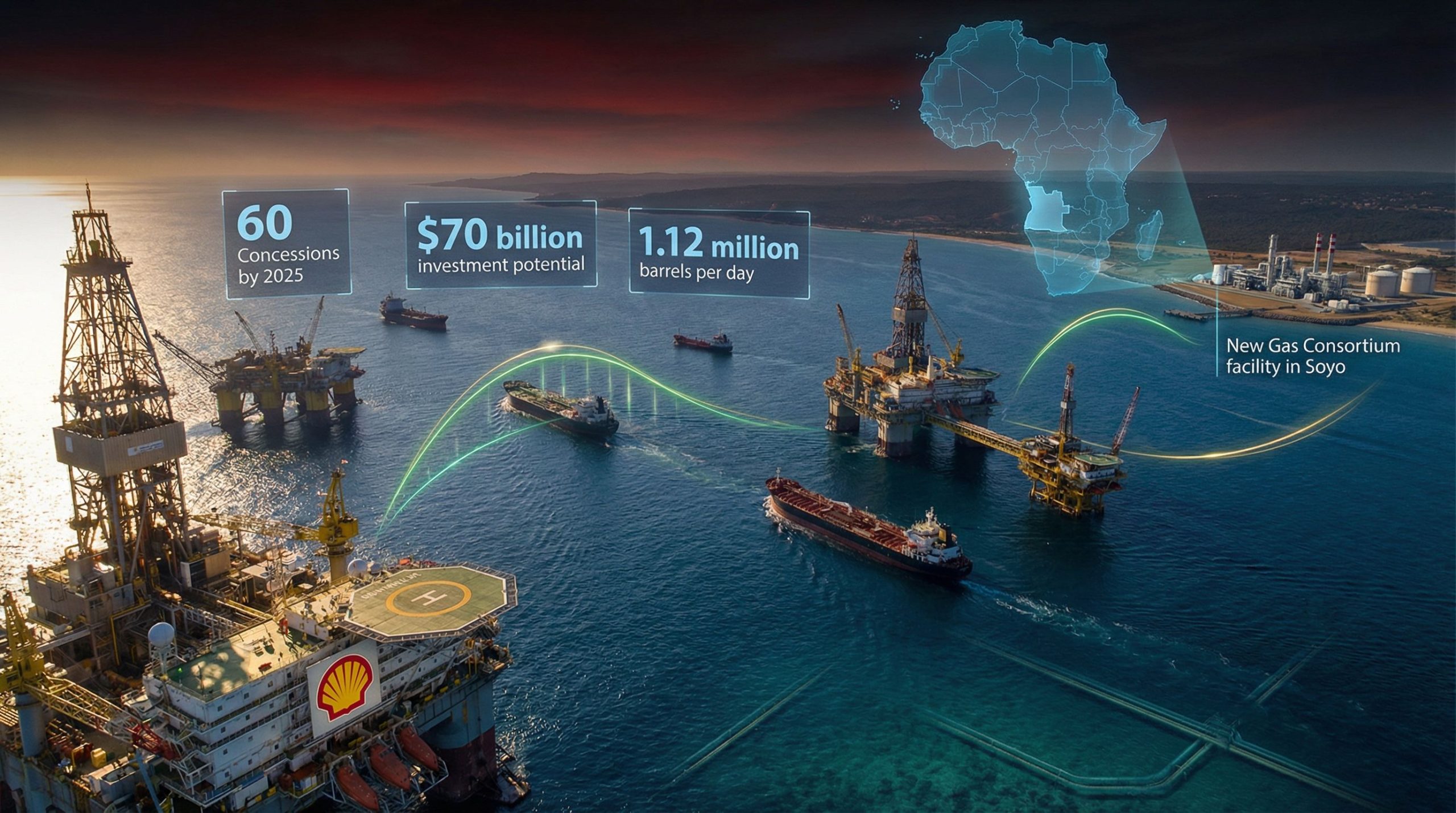
Angola's energy sector has undergone systematic regulatory modernisation that fundamentally restructures the relationship between state oversight and commercial operations. The National Agency for Petroleum, Gas and Biofuels (ANPG) has awarded more than 50 concessions since implementing new procedures, targeting 60 total awards by year-end 2025. This acceleration represents a strategic departure from previous decades' more limited licensing activity.
The licensing drive and new exploration deals in Angola demonstrate remarkable transformation, with regulatory changes creating unprecedented opportunities for international investment. Furthermore, this regulatory transformation centres on institutional separation between concessionaire functions and national oil company operations. Previously, Sonangol operated simultaneously as both state concessionaire and commercial operator, creating potential conflicts between regulatory oversight and commercial interests.
The post-2019 framework establishes ANPG as independent concessionaire, whilst Sonangol focuses on commercial operations and technical services. In addition, recent developments in regional markets provide valuable context, as evidenced by Saudi exploration licenses and oil price rally insights that influence global investment patterns.
Streamlined Authorisation Mechanisms
Current procedures integrate three distinct licensing pathways designed to accommodate different project types and investor categories:
• Competitive bidding processes target frontier exploration areas and strategically significant blocks requiring substantial capital deployment
• Direct negotiation frameworks facilitate mature field development and regional operator expansion initiatives
• Permanent offer regimes provide continuous block availability for previously unbid acreage, eliminating artificial bid round timing constraints
This multi-track approach recognises that major international oil companies, regional operators, and specialist service providers respond to different contractual structures and timeline requirements. However, flexible procedures reduce administrative bottlenecks whilst maintaining competitive allocation processes where appropriate.
Fiscal Framework Adaptation
Updated fiscal terms incorporate variable structures that adjust to project economics and development phases. Rather than standardised take-or-leave-it approaches, negotiable elements include production sharing percentages, cost recovery limits, and signature bonus structures. These adaptations enable project-specific optimisation whilst preserving government revenue streams.
Regional energy industry discussions indicate that simplified approval procedures and clearer fiscal guidelines provide investors with enhanced return visibility and encourage longer-term capital commitments. Consequently, this regulatory predictability proves particularly valuable for capital-intensive deepwater developments requiring 5-7 year development timelines.
Investment Architecture Driving Licensing Expansion
Angola's 60-concession target reflects sophisticated geographic and investor segmentation strategy. Different basin areas attract distinct operator profiles based on geological complexity, infrastructure requirements, and development timelines. This targeted approach maximises licensing efficiency whilst optimising overall sector investment attraction.
Geographic Development Strategy
Kwanza Basin Focus Areas:
| Play Type | Target Operators | Development Characteristics | Infrastructure Requirements |
|---|---|---|---|
| Pre-salt Reservoirs | Major IOCs | High-complexity, high-reward | Advanced subsea, specialised drilling |
| Post-salt Plays | Regional + IOCs | Moderate complexity | Established infrastructure leverage |
| Proven Extensions | Regional operators | Lower risk, faster development | Existing tie-in opportunities |
Benguela Basin Integration:
Onshore-offshore development integration reduces capital requirements by leveraging existing onshore infrastructure to service offshore production. For instance, this approach particularly attracts regional operators with established onshore experience seeking offshore expansion opportunities.
Ultra-Deepwater Positioning:
Deepwater blocks in excess of 1,500-metre water depths target technology-intensive operators with specialised subsea engineering capabilities. Economic thresholds typically require 200-400 million barrel reserves for project sanctioning, limiting viable operators to well-capitalised IOCs and specialised deepwater companies.
Namibe Basin Frontier Development:
Emerging exploration opportunities in less-developed geological areas attract pure-play exploration companies willing to accept higher discovery risk in exchange for significant upside potential if commercial discoveries are made.
Licensing Distribution Methodology
The permanent offer regime represents particular innovation by removing artificial timing constraints on block applications. Previously unbid areas maintain continuous availability, allowing operators to submit applications when internal capital allocation and market conditions align optimally. This market-driven timing eliminates arbitrary bid round deadlines that may not correspond to investor decision-making cycles.
Competitive bidding continues for frontier areas requiring substantial exploration investment and technical capability. Direct negotiation pathways facilitate existing operator expansion and field optimisation projects where competitive processes would add unnecessary administrative complexity.
Market Confidence Recovery Through Strategic Partnerships
Recent high-profile exploration agreements signal significant investor confidence recovery in Angola's petroleum sector. Shell's exclusive negotiations for Blocks 19, 34, and 35, along with additional ultra-deepwater areas, represent the company's first major Angola re-engagement following approximately 25 years of limited presence.
Shell's Strategic Re-engagement Analysis
Shell's return carries particular significance given the company's rigorous investment screening processes and global portfolio prioritisation. Major IOCs conduct comprehensive risk-adjusted return analysis across multiple basins; Shell's renewed Angola commitment suggests internal assessment that the country offers competitive returns versus alternative African deepwater opportunities and global exploration portfolios.
Investment Structure Details:
| Component | Scope | Strategic Significance |
|---|---|---|
| Block Portfolio | Blocks 19, 34, 35 + ultra-deepwater | Diversified risk-reward profile |
| Negotiation Status | Exclusive discussions phase | Demonstrates serious commitment |
| Investment Timeline | Multi-year exploration program | Long-term strategic positioning |
| Technology Transfer | Local capacity building requirements | Sustainable development focus |
The block portfolio structure indicates sophisticated risk management, balancing near-term production potential from developed areas with longer-cycle exploration upside from ultra-deepwater prospects. This diversification approach reduces overall portfolio risk whilst maintaining significant upside exposure.
Broader Industry Participation Trends
Beyond new market entrants, existing operators continue expanding through field optimisation and additional well drilling programmes. This incumbent operator expansion pattern demonstrates sustained confidence in Angola's long-term production potential and regulatory stability.
Joint venture structures increasingly balance risk distribution among partners with complementary capabilities. Technical partnerships between international operators and domestic companies facilitate knowledge transfer whilst satisfying local content requirements. These collaborative approaches reduce individual operator risk exposure whilst accelerating project development timelines.
Regional energy industry analysis indicates growing recognition that Angola's regulatory framework provides sufficient investment certainty for long-term capital commitments. The combination of clear fiscal terms, streamlined procedures, and infrastructure development support creates favourable investment conditions compared to alternative African petroleum jurisdictions.
Production Sustainability and Performance Metrics
Angola maintains daily production levels of approximately 1.12 million barrels per day, with October 2025 monthly output reaching 33 million barrels. These production levels demonstrate sustained operational capacity despite mature field decline challenges affecting most producing assets. Active decline mitigation programmes across 15+ major fields indicate comprehensive reservoir management rather than passive production acceptance.
Current Output Analysis
Production Performance Indicators (2025):
• Daily production capacity: 1.12 million barrels per day
• Monthly output consistency: ~33 million barrels (October 2025)
• OPEC quota compliance: Maintained within allocated parameters
• Field optimisation programmes: Active across 15+ major producing assets
OPEC compliance demonstrates both production control capability and cartel discipline adherence, providing policy stability confidence to investors concerned about production forecasting reliability. Consistent monthly output levels indicate effective reservoir management and infrastructure maintenance rather than erratic production patterns typical of declining fields without technical intervention.
Future Production Modelling Scenarios
Base Case Projections:
Sustained production above 1.0 million barrels per day through 2030 requires successful exploration conversion from current licensing rounds and continued investment in enhanced recovery systems. This target acknowledges natural decline from ageing reservoirs whilst incorporating new field additions and optimisation gains.
Optimistic Development Pathway:
Production expansion to 1.3 million barrels per day depends on accelerated exploration success, rapid field development execution, and sustained capital investment from new exploration deals. This scenario requires multiple large discoveries reaching production within 5-7 year development timelines.
Risk Management Considerations:
• Mature field decline rates: Typical 3-7% annual production loss without technical intervention
• Enhanced recovery requirements: Continuous investment in pressure maintenance, artificial lift, and reservoir optimisation
• New field development timelines: 5-7 years from discovery to production commencement
• Infrastructure bottlenecks: Potential constraints in processing capacity and export facilities
Technical Production Sustainability
Enhanced oil recovery (EOR) techniques including polymer flooding, water injection optimisation, and extended reach drilling can reduce natural decline rates from 5-7% annually to 2-3% with proper implementation. Angola's application of these technologies across major producing fields demonstrates sophisticated reservoir management capabilities.
Production sustainability beyond 2030 depends significantly on exploration success from current licensing rounds. New field discoveries typically require 5-7 years for development, meaning 2025-2026 exploration results directly impact 2030-2032 production levels. This timeline emphasises the critical importance of current licensing drive and new exploration deals in Angola for medium-term production stability.
Gas Development Complementing Oil Strategy
Angola's natural gas development strategy integrates both associated and non-associated gas resources to create diversified energy revenue streams. The New Gas Consortium (NGC) facility launching in Soyo during late 2025 represents significant infrastructure investment targeting both domestic utilisation and LNG export markets.
Non-Associated Gas Infrastructure Development
NGC Facility Strategic Components:
• LNG export capacity: Targeting regional and international markets
• Industrial gas supply: Supporting domestic manufacturing and petrochemical development
• Power generation integration: Reducing electricity import dependency
• Gas processing optimisation: Maximising value extraction from natural gas resources
The Soyo location provides strategic access to both offshore gas resources and export infrastructure. Regional LNG demand growth, particularly from West African countries seeking energy security improvements, creates potential export markets beyond traditional international destinations.
Understanding broader energy market dynamics, including oil futures analysis and LPG pricing benchmarks, provides crucial context for gas development planning.
Associated Gas Monetisation Strategy
Angola's associated gas production from oil operations historically suffered from limited infrastructure for gas capture and utilisation. New monetisation programmes address both environmental compliance requirements and economic optimisation opportunities:
Flare Reduction Programmes:
Environmental regulations increasingly penalise gas flaring, whilst carbon capture initiatives align with international climate commitments. Gas capture systems convert waste streams into revenue-generating activities.
Gas-to-Power Development:
Domestic electricity generation using natural gas reduces import dependency whilst providing stable baseload power for industrial development. This energy security improvement supports broader economic diversification objectives.
Petrochemical Feedstock Applications:
Natural gas serves as feedstock for fertiliser production, plastic manufacturing, and other chemical processes. Domestic petrochemical development creates value-added manufacturing opportunities beyond raw material export.
Market Integration and Export Potential
| Application | Market Focus | Development Timeline | Strategic Benefit |
|---|---|---|---|
| LNG Export | Regional + International | 2025-2027 | Foreign exchange earnings |
| Domestic Power | Industrial + Residential | Ongoing | Energy security |
| Petrochemicals | Domestic + Regional | Medium-term | Value chain development |
| Industrial Gas | Manufacturing Support | Near-term | Economic diversification |
Regional energy market analysis indicates growing natural gas demand across West Africa as countries seek cleaner energy alternatives to heavy fuel oil and diesel generators. Angola's geographic position and gas resource base create competitive advantages for regional supply relationships.
Fiscal Integration and Macroeconomic Factors
Angola's energy sector development directly supports broader fiscal sustainability objectives as the country manages substantial debt service obligations whilst pursuing economic diversification. The latest budget projections indicate 4.2% GDP growth for 2026, supported by stable hydrocarbon production and continued sector investment attraction.
Budget Integration Dynamics
Fiscal Metrics and Energy Sector Integration:
| Budget Component | 2025 Baseline | 2026 Projection | Energy Sector Impact |
|---|---|---|---|
| GDP Growth Rate | 3.8% (estimated) | 4.2% (projected) | Sustained production support |
| Debt Service Ratio | ~45% of budget | ~47% of budget | Revenue stability imperative |
| Oil Revenue Dependency | ~60% total revenue | Gradual reduction target | Diversification pressure |
| Capital Investment | Infrastructure focus | Continued expansion | Sector development support |
Debt service absorbing nearly half of the 2026 budget creates pressure to maintain stable energy revenues whilst developing alternative revenue sources. The licensing drive and new exploration deals in Angola provide medium-term production sustainability, supporting fiscal planning predictability.
Furthermore, policy change in oil markets globally influences Angola's strategic positioning and revenue planning.
Capital Market Development Strategy
Angola increasingly utilises domestic capital markets for financing, reducing external vulnerability whilst supporting local financial sector development. Oil revenue stability enables government bond markets and provides collateral for infrastructure development financing.
Domestic Financing Advantages:
• Currency risk reduction: Local currency financing eliminates exchange rate exposure
• Financial sector development: Government bond markets support banking sector growth
• Capital recycling: Oil revenues reinvested domestically through financial markets
• External shock resistance: Reduced dependency on international capital market conditions
Foreign exchange earnings from energy exports support import capacity whilst domestic financing reduces external debt accumulation. This balanced approach improves fiscal resilience during commodity price volatility periods.
Local Content and Economic Multiplier Effects
Energy sector regulations require local content participation, creating multiplier effects throughout the economy. Service companies, equipment suppliers, and skilled workforce development generate employment and tax revenue beyond direct petroleum operations.
Infrastructure investment required for deepwater field development creates construction employment, equipment procurement, and technical services demand. These investments provide economic benefits extending beyond petroleum project timelines, supporting long-term development objectives.
Risk Assessment and Challenge Identification
The licensing drive and new exploration deals in Angola face several operational, technical, and market risks that could impact success rates and investment attraction. Comprehensive risk assessment identifies potential obstacles whilst highlighting mitigation strategies and contingency planning requirements.
Technical and Operational Risk Factors
Deepwater Development Complexity:
Ultra-deepwater projects exceeding 1,500-metre water depths require advanced subsea engineering, sophisticated drilling technology, and specialised vessel fleets. Technical challenges include high-pressure/high-temperature reservoir management, subsea equipment reliability in corrosive environments, and complex logistics for remote operations.
Infrastructure and Capacity Constraints:
• Service sector limitations: Specialised deepwater services require significant local capacity building
• Port and logistics infrastructure: Export facilities may require expansion for increased production
• Skilled workforce availability: Technical expertise for advanced petroleum operations needs continued development
• Environmental compliance systems: Increasingly stringent standards require advanced monitoring and mitigation capabilities
Market and Economic Risk Variables
Global Oil Price Volatility:
Petroleum project economics depend heavily on sustained oil prices above development breakeven levels. Deepwater projects typically require $50-70 per barrel minimum prices for economic viability, making price forecasting critical for long-term investment decisions.
Regional Competition Dynamics:
Other African petroleum jurisdictions offer competing investment opportunities with different risk-reward profiles. Nigeria's marginal field development programmes, Ghana's deepwater licensing rounds, and Equatorial Guinea's mature field optimisation create alternative investment destinations for capital-constrained operators.
International Energy Transition Pressures:
Global climate policies and energy transition commitments affect long-term petroleum demand projections. IOCs increasingly focus capital allocation on projects with shorter payback periods and lower carbon intensity profiles.
Regulatory and Political Risk Management
Policy Continuity Requirements:
Sustained regulatory stability proves essential for long-term project development spanning multiple government cycles. Consistent application of licensing terms, fiscal frameworks, and environmental standards provides investment certainty necessary for deepwater developments.
International Relations Considerations:
Geopolitical factors including sanctions regimes, trade relationships, and diplomatic stability affect international operator participation. Maintaining positive relationships with major petroleum consuming countries supports market access and technology transfer opportunities.
Regional Competitive Positioning Analysis
Angola competes within the broader West African petroleum investment landscape against several established producing countries offering alternative development opportunities. Comparative analysis reveals competitive advantages and potential disadvantages relative to regional alternatives.
West African Petroleum Investment Landscape
Nigeria's Strategic Focus:
Nigeria emphasises marginal field development programmes targeting smaller operators whilst pursuing gas monetisation for domestic power generation and LNG export. The country's larger market size and established infrastructure provide certain advantages, whilst security concerns and regulatory complexity create investment barriers.
Ghana's Positioning:
Ghana targets deepwater exploration through competitive licensing rounds whilst maintaining strong local content requirements. Recent petroleum revenue management reforms and political stability attract IOC investment, though limited infrastructure requires higher capital investment per project.
Equatorial Guinea's Approach:
Equatorial Guinea focuses on mature field optimisation and regional cooperation initiatives, particularly gas processing and LNG export collaboration. Smaller market size limits major project opportunities whilst geographic proximity enables infrastructure sharing possibilities.
Comparative Competitive Analysis
| Jurisdiction | Primary Strategy | Key Advantages | Investment Constraints |
|---|---|---|---|
| Angola | Diversified licensing, production stability | Established infrastructure, geological prospectivity | Debt service pressure, mature fields |
| Nigeria | Marginal fields, gas development | Large market, extensive infrastructure | Security challenges, regulatory complexity |
| Ghana | Deepwater exploration, local content | Political stability, newer discoveries | Limited infrastructure, high development costs |
| Equatorial Guinea | Field optimisation, regional cooperation | Established operations, strategic location | Small market size, limited diversification |
Differentiation Strategy Elements
Angola's Competitive Advantages:
• Infrastructure maturity: Existing production facilities reduce development capital requirements
• Geological database: Decades of exploration data inform investment decisions and reduce exploration risk
• Regulatory predictability: Post-2019 reforms provide consistent framework for long-term planning
• Strategic location: Geographic position supports both Atlantic Basin export and regional supply relationships
Regional Hub Development Potential:
Angola's established infrastructure and strategic location create opportunities for regional service hub development, supporting petroleum operations across West Africa whilst generating additional economic benefits through service exports and technical expertise sharing.
The combination of diversified licensing mechanisms, production stability programmes, and strategic partnerships positions Angola competitively within the regional investment landscape whilst addressing specific challenges through targeted policy responses.
Long-Term Development Scenarios and Strategic Outcomes
Angola's accelerated licensing strategy creates multiple potential development pathways depending on exploration success rates, global energy market conditions, and policy implementation consistency. Scenario analysis provides framework for understanding possible outcomes and required adaptation strategies.
Optimistic Development Trajectory
High-Growth Scenario Parameters:
• Investment attraction: $70 billion capital expenditure over five-year period
• Production performance: Sustained output above 1.2 million barrels per day through 2030+
• Infrastructure development: Regional energy hub status with integrated gas infrastructure
• Technology advancement: West Africa technology centre supporting regional operations
This optimistic pathway requires successful exploration outcomes from current licensing rounds, sustained global oil prices above $65 per barrel, and consistent policy implementation across multiple government cycles. Infrastructure investment supports both domestic development and regional service export capabilities.
Regional Hub Development Components:
Advanced petroleum technology centre, specialised workforce training facilities, and integrated logistics infrastructure supporting operations across West Africa. Service export earnings provide additional revenue streams beyond domestic petroleum production.
Base Case Strategic Projection
Moderate Growth Scenario:
Gradual production stabilisation above 1.0 million barrels per day through selective high-value project development and balanced domestic/international operator participation. This scenario assumes measured exploration success with some significant discoveries supporting medium-term production levels.
Balanced Development Approach:
Mixed project portfolio including both deepwater exploration and mature field optimisation programmes. International operator partnerships provide technology transfer whilst domestic companies gain operational experience and market participation.
Fiscal Integration Success:
Steady petroleum sector contribution supporting economic diversification through infrastructure investment, education system development, and alternative industry promotion. Reduced oil revenue dependency achieved gradually through sustained non-oil sector growth.
Risk Scenario Contingency Planning
Challenging Development Conditions:
• Limited exploration success: Discovery rates below economic thresholds for major project development
• Energy transition acceleration: Faster global petroleum demand decline than anticipated
• Regional competition intensification: Alternative jurisdictions offering more attractive investment terms
• Technical development challenges: Ultra-deepwater projects experiencing cost overruns and timeline delays
Adaptation Strategies:
Focus on lower-cost field optimisation projects, enhanced recovery system implementation, and gas development acceleration for domestic energy security. Regional cooperation initiatives share infrastructure costs whilst maintaining competitive positioning.
Strategic Success Measurement Framework
Key Performance Indicators:
| Metric Category | Success Threshold | Measurement Timeline | Strategic Significance |
|---|---|---|---|
| Production Stability | >1.0 million bpd sustained | Annual assessment | Core revenue maintenance |
| Investment Attraction | $50+ billion committed | 5-year evaluation | Long-term viability |
| Exploration Success | 2+ major discoveries | 3-year cycle | Future production pipeline |
| Gas Development | NGC facility operational + export growth | 2-year milestones | Revenue diversification |
Success measurement requires consistent monitoring across multiple performance dimensions whilst maintaining flexibility for strategy adaptation based on changing market conditions and exploration outcomes.
Strategic Energy Transformation and Investment Framework
Angola's comprehensive approach to petroleum sector development through accelerated licensing, strategic partnerships, and integrated gas development represents fundamental transformation from traditional resource extraction to proactive sector management. The combination of regulatory modernisation, investor-friendly procedures, and infrastructure development creates multiple pathways for sustained economic contribution.
The success of this transformation strategy depends critically on execution consistency, competitive fiscal term maintenance, and local capacity development supporting increasingly complex technical operations. With potential investment commitments approaching $70 billion and 60 concessions targeted for completion by year-end 2025, Angola positions itself strategically as West Africa's primary destination for petroleum investment capital.
Integration of oil and gas development programmes, coupled with domestic market expansion and regional export positioning, suggests comprehensive energy sector transformation extending beyond traditional upstream operations. This diversified approach addresses both immediate revenue requirements and long-term economic sustainability through multiple energy revenue streams and value-added processing capabilities.
The strategic framework's ultimate success requires sustained policy implementation, continued exploration success, and effective management of global energy transition challenges whilst maintaining competitive positioning within the evolving African energy investment landscape. These factors will determine whether Angola's ambitious exploration initiatives and comprehensive African production strategy reforms achieve their potential for economic transformation and fiscal sustainability enhancement.
Ready to Capitalise on Africa's Next Energy Boom?
Discovery Alert's proprietary Discovery IQ model delivers real-time insights on significant ASX mineral discoveries, including energy and critical mineral opportunities that complement major global resource developments. Begin your 30-day free trial with Discovery Alert today and understand why major resource discoveries can generate exceptional returns by exploring our discoveries page showcasing historic examples of transformative market outcomes.