August 7, 2026
Strategic Pricing Mechanics in Global Energy Markets
Global energy procurement strategies undergo continuous recalibration as major suppliers adjust their competitive positioning through sophisticated pricing mechanisms. The petroleum market's structural dynamics reflect complex interactions between state-owned enterprises, independent refiners, and international trading houses, all operating within frameworks of bilateral agreements and spot market fluctuations.
Market participants navigate these environments by analysing differential pricing structures, geographic supply chain advantages, and regulatory quota systems that determine access to crude oil resources. Understanding these mechanisms provides insight into broader energy security considerations and investment opportunities across international markets.
When big ASX news breaks, our subscribers know first
Understanding Saudi Arabia's Market Positioning Strategy
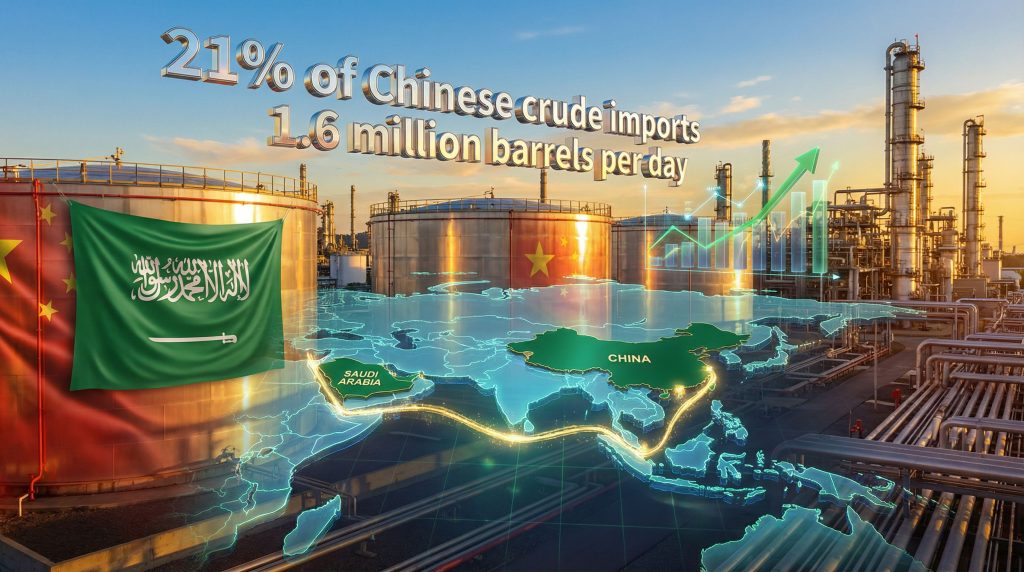
Saudi Arabia's approach to global crude oil markets demonstrates sophisticated strategic pricing designed to maintain competitive positioning whilst preserving long-term market relationships. The kingdom's January 2026 allocation to China reached 49.5 million barrels (approximately 1.60 million barrels per day), representing the highest monthly volume since October 2025 and marking a significant increase from the previous two months when volumes remained under 40 million barrels.
This volume surge directly correlates with Saudi Aramco's strategic price adjustment for Arab Light crude oil, which was reduced by $0.60 per barrel above the Oman/Dubai average benchmark, reaching the lowest differential level in five years. Furthermore, the Saudi crude oil supply to China pricing strategy creates compelling economics for term contract buyers, particularly when Official Selling Prices (OSP) fall below prevailing spot market rates.
Competitive Response Mechanisms
The kingdom's pricing adjustments reflect sophisticated market intelligence regarding competitor positioning and buyer preferences. When OSP pricing becomes more attractive than spot market alternatives, traditional term buyers accelerate their procurement decisions, creating measurable demand increases.
Companies responding positively to the January price adjustment include:
- PetroChina (state-owned refiner expanding allocations)
- Rongsheng Petrochemical (independent refiner increasing volumes)
- Shenghong Petrochemical (independent refiner expanding purchases)
Conversely, CNOOC and Hengli Petrochemical reduced their January allocations, suggesting differential refinery economics or alternative sourcing strategies. However, this pattern reflects the complex dynamics that often lead to oil price stagnation in certain market segments.
China's Energy Security Architecture
Multi-Supplier Procurement Framework
China's crude oil import strategy demonstrates sophisticated risk management through geographic diversification and competitive sourcing. Saudi Arabia maintains its position as the second-largest crude supplier to China, accounting for approximately 21% of total Chinese crude imports. This positioning reflects China's strategic approach to energy security, balancing supply reliability with pricing competitiveness.
The timing of increased Saudi allocations coincides with Chinese independent refiners receiving their first batch of 2026 import quotas in late November 2025. This regulatory development expands market access for private refiners, increasing competition among international suppliers for market share.
Independent Refiner Market Dynamics
China's independent refining sector represents a critical growth driver for international crude suppliers. These facilities operate with greater procurement flexibility compared to state-owned enterprises, enabling rapid response to pricing opportunities and supply availability.
The quota allocation system creates distinct market segments:
- State-owned enterprise (SOE) allocations – typically governed by long-term strategic relationships
- Independent refiner quotas – more responsive to market pricing and commercial terms
- Processing capability matching – technical requirements driving crude selection decisions
Benchmark Pricing and Market Arbitrage
Price Discovery Mechanisms
The Oman/Dubai benchmark system provides standardised pricing reference points for Asian-bound crude oil transactions. Saudi Arabia's Arab Light pricing at $0.60 above this benchmark creates transparent valuation frameworks for both buyers and sellers.
| Pricing Component | Market Impact | Strategic Significance |
|---|---|---|
| OSP Reductions | Enhanced term contract appeal | Market share preservation |
| Spot Premium Compression | Alternative supplier pressure | Supply flexibility maintenance |
| Benchmark Differentials | Regional competitiveness | Transportation optimisation |
When OSP pricing falls below spot market equivalents, arbitrage opportunities emerge that favour contracted supply arrangements over immediate market purchases. This dynamic influences buying patterns and supplier selection across regional markets, particularly as tariff market dynamics continue to reshape global trade relationships.
Transportation Economics
Geographic proximity creates inherent cost advantages for regional suppliers, whilst transportation infrastructure capacity can limit supply flexibility during peak demand periods. Standard Very Large Crude Carriers (VLCCs) with capacities of 250,000-320,000 barrels traverse established routes from Middle Eastern loading terminals through critical maritime chokepoints to Asian receiving facilities.
Regional Competition Dynamics
Alternative Supplier Positioning
Saudi Arabia's pricing strategy responds to competitive pressure from multiple international suppliers, each offering distinct crude specifications and commercial terms. Russia maintains the largest market share in Chinese crude imports, whilst Iranian supplies fluctuate based on international sanctions regimes.
The five-year low in Saudi pricing differentials suggests intensified competition for Asian market access, particularly as alternative suppliers adjust their own pricing strategies and production capabilities. In addition, Saudi Arabia exploration initiatives continue to expand the kingdom's production potential.
Technical Specifications and Processing Compatibility
Refinery configurations determine crude slate compatibility, with different processing units optimised for specific gravity and sulphur content ranges. Arab Light crude specifications align well with conventional fluid catalytic cracking (FCC) units prevalent in Chinese independent refineries, creating natural demand affinity for Saudi exports.
Processing considerations include:
- API gravity compatibility with existing refinery equipment
- Sulphur content management for environmental compliance
- Product yield optimisation for local market requirements
- Petrochemical integration potential for value-added processing
Investment Implications and Market Scenarios
Infrastructure Development Requirements
Sustained trade volume growth requires continued investment in loading terminal capacity, receiving infrastructure, and transportation systems. Port facility optimisation and pipeline connectivity projects support long-term supply relationship development.
Chinese refiners' allocation decisions reflect not only pricing considerations but also infrastructure access capabilities and logistical coordination requirements. Furthermore, China's November crude oil imports reached their highest daily level in 27 months, indicating robust demand recovery.
Market Scenario Analysis
Demand Expansion Scenario:
- Chinese economic growth drives increased energy consumption
- Saudi production capacity utilisation rates increase
- Long-term supply agreements gain strategic importance
Competitive Rebalancing Scenario:
- Alternative suppliers intensify pricing competition
- Contract flexibility becomes key differentiator
- Diversification strategies accelerate across buyer portfolios
Energy Transition Scenario:
- Petrochemical feedstock demand maintains growth
- Transportation fuel demand moderates
- Strategic inventory management gains importance
However, the potential for an oil price rally remains dependent on broader geopolitical developments and supply-demand fundamentals.
The next major ASX story will hit our subscribers first
How Does Trade Policy Impact Energy Markets?
The interconnected nature of global trade and energy markets means that bilateral relationships between major economies significantly influence commodity flows. The trade war impact on global markets continues to create ripple effects across energy procurement strategies.
Consequently, energy security considerations increasingly factor into diplomatic relationships and trade policy decisions. The Saudi crude oil supply to China relationship exemplifies how commercial energy partnerships adapt to changing geopolitical landscapes whilst maintaining mutual economic benefits.
Future Market Development Considerations
The evolution of Saudi crude oil supply to China reflects broader transformations in global energy trade relationships. Strategic pricing adjustments, infrastructure investments, and regulatory developments continue reshaping bilateral energy partnerships.
Market participants must monitor Official Selling Price trends, quota allocation policies, and refinery capacity expansions to anticipate shifts in procurement patterns and supply chain dynamics. The Saudi-China energy relationship exemplifies how traditional supplier-buyer relationships adapt to changing market conditions whilst maintaining strategic importance for both parties.
Understanding these market mechanisms provides valuable insight into investment opportunities across energy infrastructure, transportation systems, and processing facilities that support international crude oil trade flows. The interplay between pricing strategies, regulatory frameworks, and technical capabilities will continue driving market evolution in global energy sectors.
"The strategic considerations of the Sino-Saudi oil deal extend beyond commercial arrangements to encompass broader regional influence and energy security imperatives," according to industry analysts tracking Asian energy markets.
Disclaimer: This analysis is based on publicly available market information and should not be construed as investment advice. Energy market conditions and trade relationships are subject to change based on economic, political, and regulatory developments. Readers should conduct independent research and consult qualified professionals before making investment decisions.
Ready to Capitalise on Energy Market Shifts?
Discovery Alert's proprietary Discovery IQ model delivers real-time alerts on significant ASX mineral discoveries, including energy and resource opportunities that drive market movements. Explore how historic mineral discoveries have generated substantial returns and begin your 30-day free trial today to position yourself ahead of evolving global commodity markets.